REVIEW · KYOTO
Kyoto: Newly Opened Tea Ceremony – Sanjo Chasuian
Book on GetYourGuide →Operated by Sanjo Chasuian · Bookable on GetYourGuide
A tea room with a crawl-in door sounds odd. Then you taste matcha, whisk your own, and it suddenly makes sense. I like the hands-on format (you make a bowl) and the two matcha servings (host first, then your turn). One catch: timing is strict, because the door locks once the session begins, and late entry means no participation.
This is also a great “slow down” reset in central Kyoto. You get history and meaning in English, plus seasonal sweets from a Kyoto confectioner with over 100 years of experience. If you want something very casual, expect to follow the ceremony rules and keep the mood calm.
In This Review
- Key highlights at a glance
- Sanjo Chasuian: a quick subway hop to real tea calm
- The ceremony layout: what happens once you’re inside
- Two bowls of matcha, with a real learning curve
- Nijiriguchi: the crawl-in entrance that changes your mindset
- Matcha practice: whisking your own bowl without the confusion
- Seasonal sweets from Kyoto: the taste break that still fits the ritual
- Who it’s for (and who should skip it)
- Price and value: $31 for two bowls, not just a show
- Socks, chairs, and the small rules that prevent disappointment
- English hosts like Yuko and Reina, and what that means for your experience
- After the ceremony: buying matcha and tea tools (if you want)
- Should you book Sanjo Chasuian? My decision rule
- FAQ
- How long is the Kyoto tea ceremony at Sanjo Chasuian?
- What does it cost?
- Is the tea ceremony instruction available in English?
- What is included in the price?
- Where is Sanjo Chasuian located?
- What do I need to bring?
- Can I arrive late?
- Is kimono rental included?
- Is this suitable for children or wheelchair users?
- Can I cancel or pay later?
Key highlights at a glance
- 5-minute walk from Karasuma Oike Station for an easy fit into a busy day
- Nijiriguchi crawl-in entrance that sets the tone immediately
- Two bowls of matcha: one prepared by the host, one whisked by you (or with a companion)
- Seasonal Kyoto sweets included, from a confection shop with 100+ years behind it
- Small shared group (max 10) with English guidance for a steady pace
- Bring/wear socks (required), plus chairs available if you prefer them
Sanjo Chasuian: a quick subway hop to real tea calm
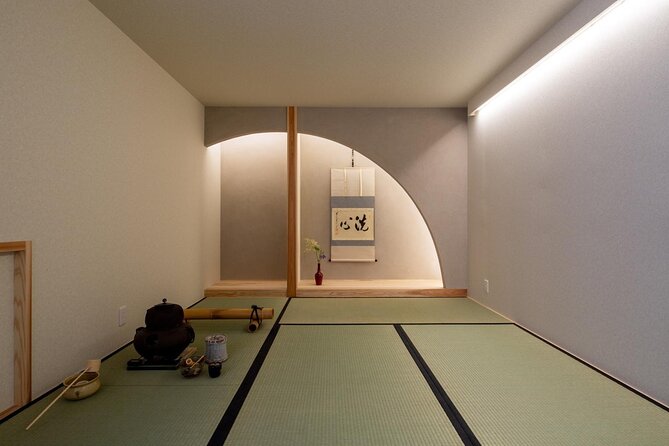
Kyoto can feel like a nonstop parade. This experience gives you one hour where the volume drops and your brain has something specific to do.
Sanjo Chasuian is in Honshu, Japan, and it’s an easy approach: it’s about a 5-minute walk from Subway Karasuma Oike Station. For a first-timer, that matters. You don’t want to spend your only tea ceremony of the trip hunting for the entrance.
The price is $31 per person for a 1-hour session. That sounds simple, but here’s why it can be good value: you’re not just watching. You’re learning the flow and then making matcha with your own hands, plus you get two bowls total and seasonal sweets included.
A practical heads-up: this is a shared plan session. So even though the group is small, you’ll still be sharing the space and the pace with other international guests.
You can also read our reviews of more tours and experiences in Kyoto.



The ceremony layout: what happens once you’re inside
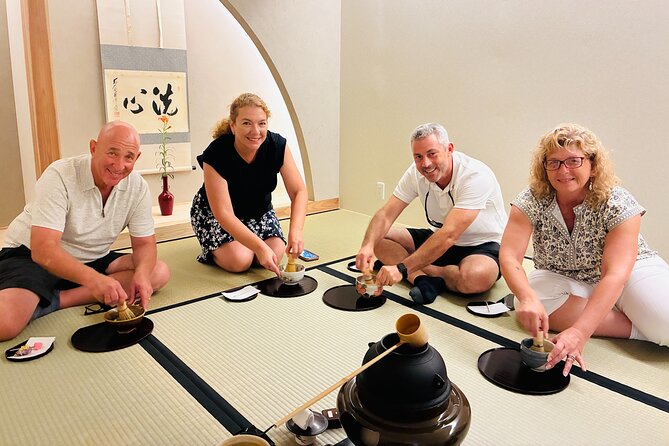
The ceremony follows a clear arc, and it’s designed so you understand what’s happening before you start doing it.
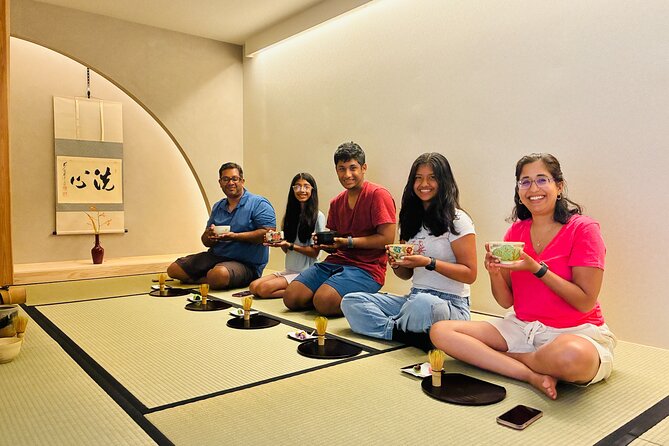
You’ll begin with an introduction to the tea ceremony’s history and meaning. Then you’ll enjoy matcha and a sweet prepared for you in the usual order: first the host’s cup, then your turn.
The format feels like “watch, learn, practice,” not “sit politely and hope you remember later.” Several guides mention they explain the process in English step-by-step, then walk you through how to whisk and serve your own bowl.
Two bowls of matcha, with a real learning curve
This is one of the most loved parts of the experience. You’ll have:
- One bowl made by the host
- One bowl you whisk yourself or with a companion
That host-made bowl is more than a taste. It’s your model. Watch how the whisking looks, how the motions stay controlled, and how the utensils are handled. Then your second bowl becomes less guesswork.
In reviews, hosts such as Yuko and Reina are repeatedly praised for clear English explanations and calm guidance. That’s exactly what you want here. Tea ceremony isn’t hard, but it’s precise. Good instruction saves you from doing it “almost right.”
Nijiriguchi: the crawl-in entrance that changes your mindset
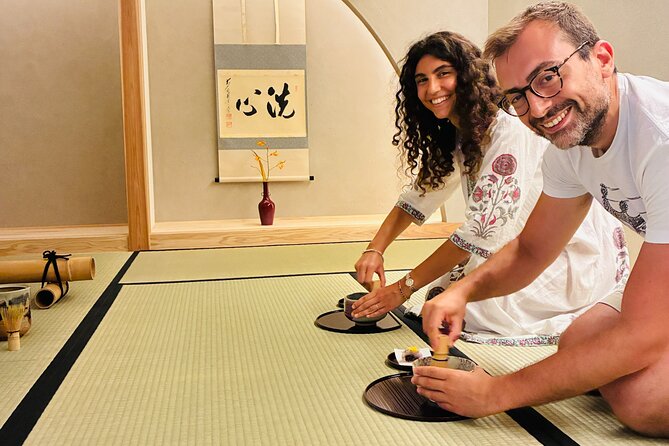
The Nijiriguchi is a crawl-in entrance that leads to the heart of the ceremony space. It’s not a gimmick. It’s a physical reminder that you’re stepping into a different world.
Why does it work? Because you have to slow down your body. You lower yourself, you pass through a smaller threshold, and you instantly stop thinking like a tourist and start thinking like a guest in a ritual space.
If you prefer not to kneel or you want comfort, the good news is chairs are available. That helps you focus on the tea without feeling physically punished by tradition.
Matcha practice: whisking your own bowl without the confusion
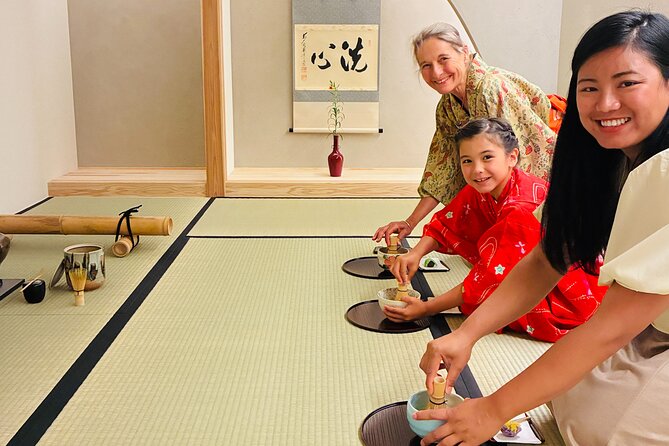
This is where your hour becomes worth it.
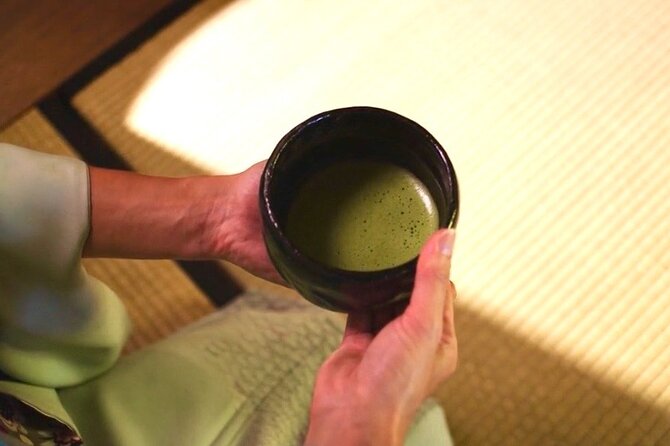
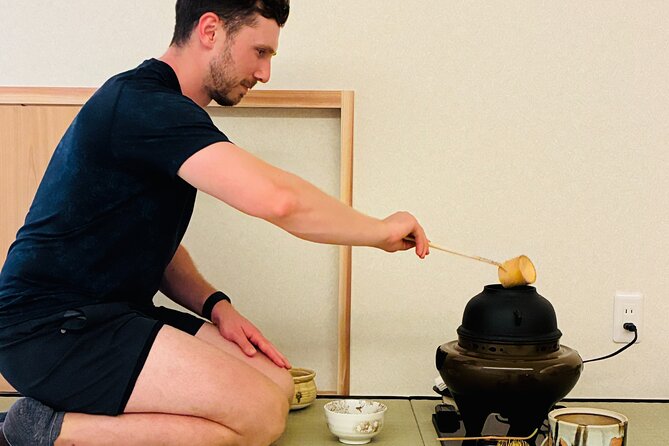
You’ll select a tea bowl and whisk your matcha. The host demonstrates the movements first, then you copy the pattern with your own whisking. You also get to observe how the space, utensils, and pacing support mindfulness and respect for the moment.
If you’ve only ever had matcha as a latte, this will feel different. Tea ceremony matcha is not about sweetness or speed. It’s about the texture and the choreography: whisking, handling the bowl, and serving in a calm order.
One practical detail: some hosts will help you with photos or videos during your matcha-making. That can be a nice souvenir, because the ceremony moves quickly once you’re hands-on.
And yes, matcha quality matters. You’ll have the chance to purchase matcha and select tea ceremony items afterward. More than one person mentioned buying a set or a container to bring home, which is a strong sign the products are usable—not just a sales table.

Seasonal sweets from Kyoto: the taste break that still fits the ritual
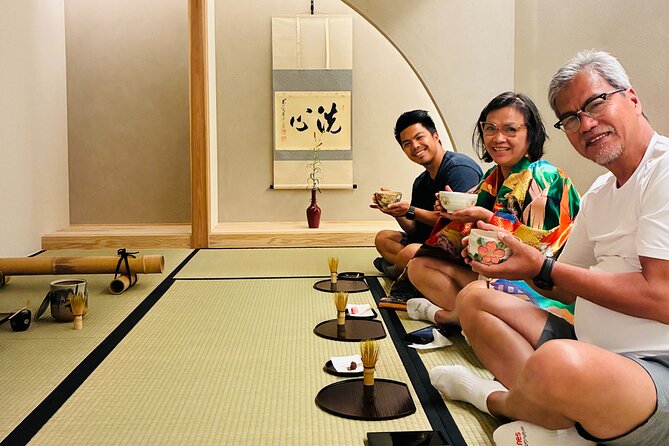
The included seasonal Japanese confectionary comes from a Kyoto sweets shop with over 100 years of history. This is often the moment you’ll pause and reset your palate.
From the way sweets are described, you may encounter wagashi-style treats that match the season. Even if you’re not a sweets person, try one bite slowly. In tea ceremony, the sweet is part of the rhythm, not an afterthought.
Also: don’t expect a heavy dessert experience. This is typically lighter, more delicate, and meant to pair with matcha’s bitterness and vegetal notes.
Who it’s for (and who should skip it)
This is ideal for you if:
- You want an authentic cultural activity without needing Japanese language skills
- You like hands-on learning (you’ll whisk)
- You want a calm hour away from Kyoto crowds
- You appreciate detail and order, even if you’re new to tea
It may not be your best match if:
- You need wheelchair accessibility. Wheelchair users are not suitable.
- You’re traveling with kids under 6 years old. It’s not suitable for children under 6.
- You hate structure. Once the session begins, the space needs quiet and you’re expected to respect the pacing.
There’s also a note on children under 5: if you’re in that situation, the guidance is to book the Private Plan. Practically speaking, that aligns with the under-6 rule.
Price and value: $31 for two bowls, not just a show
Let’s talk money like an adult, not like a brochure.
At $31 per person for one hour, you’re paying for:
- Two matcha servings (host + your bowl)
- Included seasonal sweets
- English instruction and a focused, small-group setting (limited to 10 participants)
- Ceremonial guidance and tools for the experience
Compare this to the classic “tea ceremony show” where you watch and sip one cup. Here, you actually make the tea. That’s the difference.
Also, the facility is newly opened, and there’s a grand opening discount until September 15th. If you’re booking during that window, it’s one of the better-priced ways to do the full matcha cycle.
Optional add-on: the uchikake (coat-style kimono) experience is available for ¥1,500 (tax included). It’s limited and they don’t accept advance reservations, so plan for the “if available” reality. Importantly, there’s no standard kimono rental or dressing service included.
Socks, chairs, and the small rules that prevent disappointment
Tea ceremony has rules. Most are there to protect the calm and keep the flow moving.
Here’s what you need to know before you go:
- Bring or wear socks. This is required.
- Entry is allowed from 5 minutes before the start time. Once the session begins, the door will be locked.
- If you arrive even a minute late, you can’t join and no refunds apply.
That last part is not meant to scare you. It’s meant to keep expectations straight. If you’re trying to squeeze this between trains and dinner, build in margin.
And about comfort: chairs are available if you prefer them. So you can enjoy the ritual without forcing an uncomfortable pose for the full hour.
English hosts like Yuko and Reina, and what that means for your experience
The ceremony is designed for international guests. Guidance and explanations are provided in English, and the instructor is listed as English.
In reviews, multiple hosts are mentioned by name, especially Yuko and Reina, with praise for being kind, patient, and precise. That matters because tea ceremony is a sequence. If you miss one step, your hands can still do it, but your mind won’t understand why.
One thoughtful consideration: English clarity can vary by person. For most people this won’t be a problem, but if you’re sensitive to accents, choose a session time where you’ll arrive rested.
After the ceremony: buying matcha and tea tools (if you want)
You’ll also see that matcha, tea bowls, and select items are available for purchase. That’s useful if you want to practice later at home.
A couple of people specifically mentioned buying matcha and a tea set afterward. That’s not just a souvenir impulse. It suggests the items are reasonably aligned with what you used during the ceremony.
If you buy anything, do it with a simple goal: one practical thing you’ll actually use (like matcha you can whisk properly, or a bowl that feels right in your hands).
Should you book Sanjo Chasuian? My decision rule
Book it if you want the full tea ceremony experience in one hour, with two matcha bowls and real practice, in English, near a major subway stop. The strict timing is manageable if you leave a little buffer.
Skip it if you need wheelchair access or you’re traveling with children under 6, since the experience isn’t suitable for those situations. Also skip it if you hate quiet, because this is built to keep a calm atmosphere.
If you’re asking me what makes it a strong Kyoto pick, it’s simple: you’re not just tasting. You’re learning the ritual through your own hands, then leaving with matcha you can use again.
FAQ
How long is the Kyoto tea ceremony at Sanjo Chasuian?
The experience lasts 1 hour.
What does it cost?
It’s listed at $31 per person.
Is the tea ceremony instruction available in English?
Yes. The instructor provides guidance and explanations in English.
What is included in the price?
You’ll receive two cups of matcha (one made by the host and one you whisk yourself or with a companion) plus traditional seasonal Japanese confectionary.
Where is Sanjo Chasuian located?
It’s about a 5-minute walk from Subway Karasuma Oike station.
What do I need to bring?
You should bring or wear socks during the experience.
Can I arrive late?
Entry is allowed from 5 minutes before the start time. Once the session begins, the door will be locked, and even 1 minute late means you can’t join and refunds are not given.
Is kimono rental included?
Standard kimono rental or dressing services are not offered. An optional uchikake (coat-style kimono) experience is available for ¥1,500 tax included, with limited quantities.
Is this suitable for children or wheelchair users?
It is not suitable for children under 6 years old, and wheelchair users are not suitable.
Can I cancel or pay later?
Free cancellation is available up to 24 hours in advance for a full refund, and there is also a reserve now & pay later option.