REVIEW · KYOTO
Kyoto: Tea Ceremony with Maiko Premium
Book on GetYourGuide →Operated by B.B.Advisors Inc. AN KYOTO · Bookable on GetYourGuide
Meeting a maiko feels like stepping sideways in time. This Kyoto tea ceremony program pairs matcha-making with close conversation, a Q&A session, two dance performances, and a photo taken right beside your performer. The result is a fast, high-impact taste of Kyoto’s living tradition.
I love the hands-on matcha experience with your maiko instructor, and I especially like the direct Q&A where you can ask real questions instead of just watching from the back of a room. One thing to keep in mind: the venue is not an ochaya-style tea house, and the setting can feel more modern than you’d expect, which can affect the vibe and photos.
In This Review
- Key things that make this Kyoto Maiko experience special
- Meeting Your Maiko Near Gojo Station: Location and First Impressions
- Premium Tea Ceremony Flow: Matcha, Sweets, and Hands-On Learning
- Q&A With a Maiko: Questions You’ll Be Glad You Asked
- Up Close Photos and the Senjyafuda Lucky Charm
- Two Dances and an Interactive Game: The Evening’s Real Energy
- Price and Value for Money: Is It Worth $50?
- Best-Fit Travelers: Who Will Enjoy This Most?
- Practical Tips for a Smoother, Better Evening
- Should You Book Kyoto: Tea Ceremony with Maiko Premium?
Key things that make this Kyoto Maiko experience special
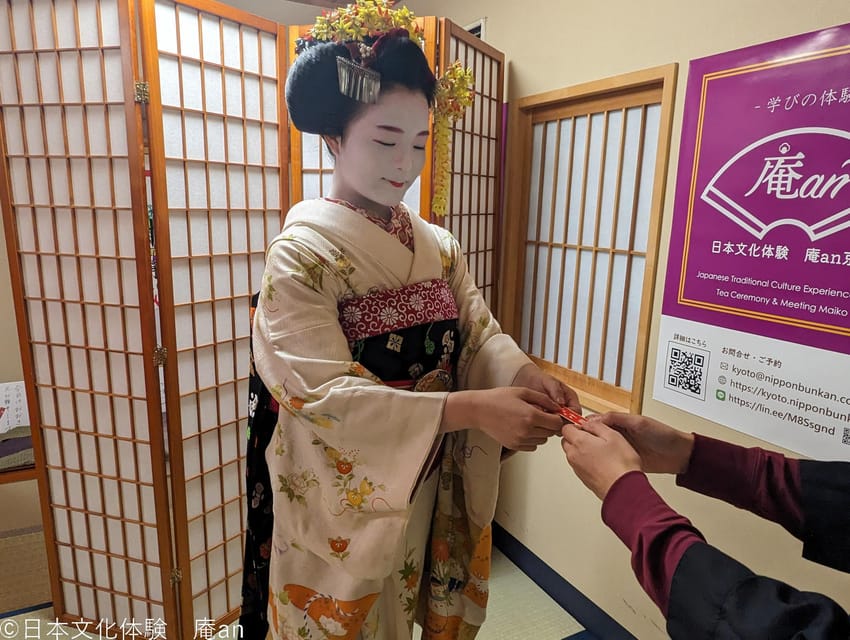
- Close-up interaction with a maiko (or Geiko): you’re not stuck at a distance, and you get a photo opportunity right beside her
- You make the matcha: it’s not only a demo, you get to do it yourself
- Q&A that actually goes somewhere: the session is built for your questions about training and daily life
- Two dances plus an interactive game: the entertainment isn’t an add-on, it’s part of the program’s rhythm
- The Senjyafuda lucky charm: you’ll receive a commemorative charm as part of the experience
Meeting Your Maiko Near Gojo Station: Location and First Impressions
This is easy to reach if you’re already using Kyoto’s subway. You meet about a one-minute walk from Exit 1 of Gojo Station on the Karasuma Line. The store entrance faces Gojo-dori (the main street), so you won’t have to play “guess where the meeting spot is” for long.
Now for the reality check. The experience is not held in a traditional ochaya house. It’s in a building, and you’ll be in a room with tables and chairs rather than a quiet tatami tea room. That doesn’t kill the experience, but it does change the feel. Think friendly, structured, and efficient over candlelit, hushed, and historical.
Also note the practical stuff: there’s no elevator, so you’ll use stairs to reach the rooms. If anyone in your group has mobility limits, plan for that before you go.
Finally, be ready for the “maiko” part to be flexible. Depending on the situation, the program may invite a Geiko instead of a Maiko. It’s still the same format: tea, Q&A, performances, and interaction, just with a different performer from Kyoto’s world of traditional arts.
You can also read our reviews of more tours and experiences in Kyoto.


Premium Tea Ceremony Flow: Matcha, Sweets, and Hands-On Learning
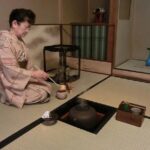
The whole program runs about 90 minutes, and it moves in a clear sequence. When you arrive, there’s a greeting from the maiko (or the performer for the day), followed by the tea portion.
Here’s what you’ll do with your tea ceremony moment:
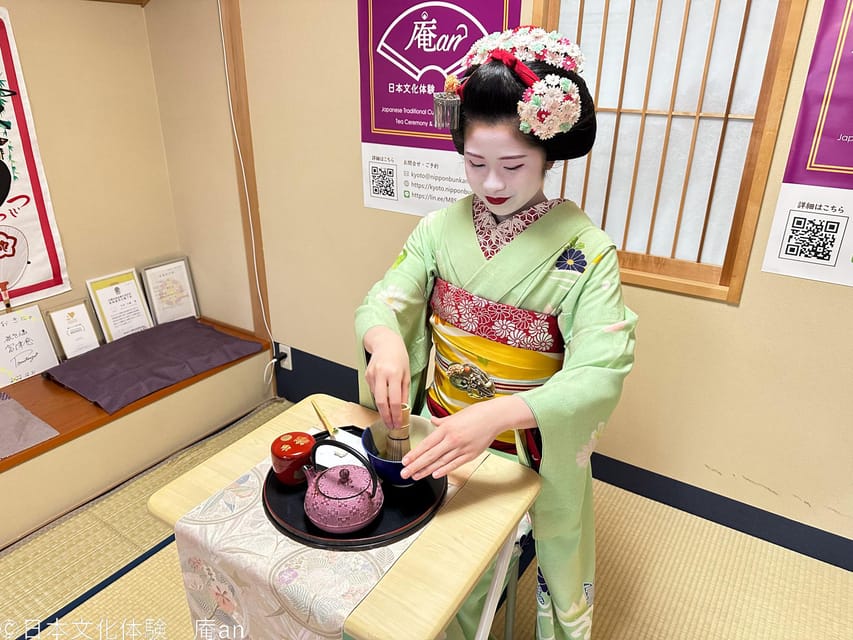
- Learn and then make matcha yourself
- Enjoy two Japanese sweets along with the tea
The program description notes the sweets are a dried-type Japanese sweet. That matters because it changes how you’ll pace your tasting. Instead of a fresh confection that melts fast, you tend to nibble slowly while you practice and listen.
One of the best parts is that it’s not only “watch and clap.” You get guided instruction on how to do the matcha ceremony steps, then you perform the motions yourself. That’s where the experience becomes memorable, because you’re building a tiny skill you can talk about later.
And while you do the tea work, the vibe tends to stay relaxed. You’re not required to dress up or prepare anything special. You can show up as you are, though a bit of neatness helps for photos and for feeling comfortable sitting upright during the ceremony.
Q&A With a Maiko: Questions You’ll Be Glad You Asked
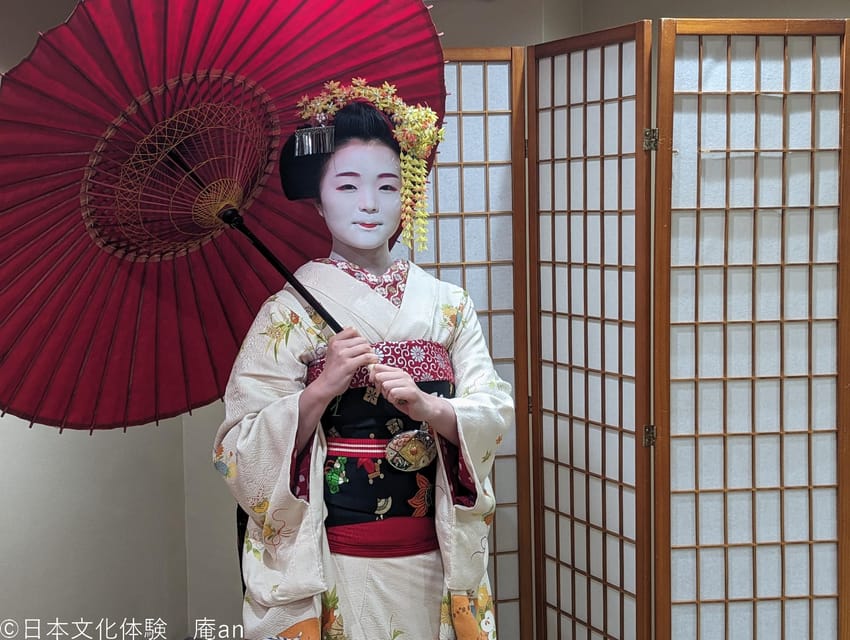
This is the heart of why this program works. The Q&A session isn’t framed like a stage interview. It’s set up so you can ask questions directly and get answers in a natural back-and-forth way.
Your guide is an instructor, and English translation is provided as much as possible. That’s important because it’s what allows the conversation to feel personal instead of generic. You’re learning what it’s like from the inside: how training works, what daily routines can look like, and what tradition means to someone living it now.
What you should ask?
- How the training started and what milestones look like
- What daily life feels like between performances
- What people misunderstand most about maiko culture
- How they practice to get movements and timing right
Even if you don’t ask all of those, you’ll still come away with a clearer picture of the discipline behind the elegance. The “tea ceremony” piece gives you the calm, and the Q&A gives you the story.
It also helps that the session is structured. You’re not left waiting for a microphone while the room slowly turns into a group conversation. The timing keeps energy up and keeps things fair for everyone.
Up Close Photos and the Senjyafuda Lucky Charm
You get more than one “smile and move on” moment. There’s a dedicated photo opportunity where you take a commemorative picture right beside your maiko. This is one of the most praised parts, because you’re close enough to feel the moment, not just capture a distant performance.
As an added keepsake, your maiko will present you with a lucky charm called a Senjyafuda. It’s small, but that’s exactly why it works. It becomes an object you can hold onto later and remember what you did in that room.
A practical photo tip: while you’ll be able to take pictures, the room setting isn’t always the most camera-friendly. Some people found background signage and plain walls showed up in photos, so you may want to take a few test shots early and adjust your angle. If you’re chasing a clean background, stand where you can keep the focus on your performer.
Also, if you want a best-case photo moment, don’t rush right after the stage moments. Stay alert for the photo cue and keep your phone ready before your turn.
Two Dances and an Interactive Game: The Evening’s Real Energy
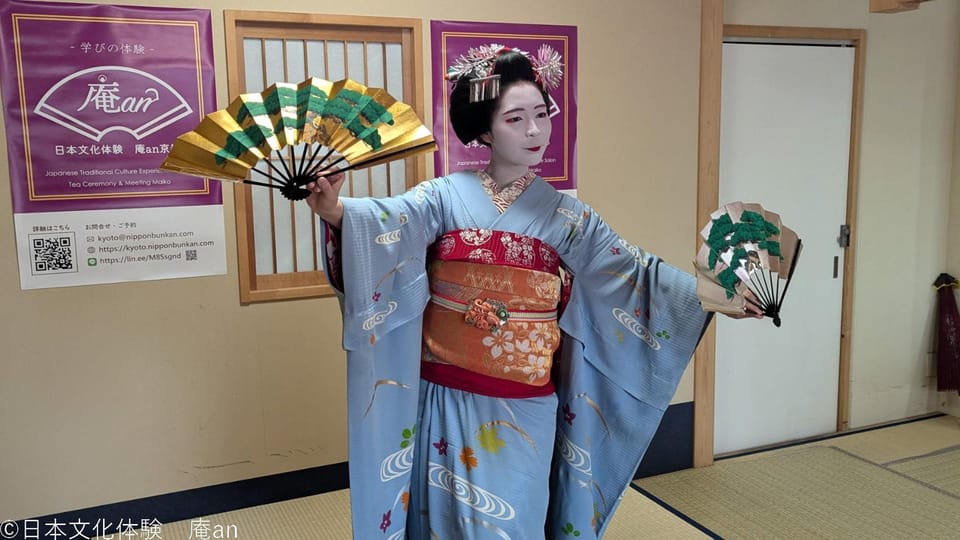
After the tea and Q&A, the program shifts to performance mode. You’ll see two traditional dances. The program description frames these dances as expressing seasonal beauty, love stories, or everyday life. You’ll feel the difference between the tea portion (quiet, careful) and the dance portion (precision, presence).
People in the program highlight the dance as a strong emotional moment. One reviewer described goosebumps from how beautiful the dances were. Whether you’re into Japanese arts already or this is your first time, the choreography lands because the movements look controlled yet effortless.
Then comes the part that makes the evening feel less like a lecture: the interactive game. The program says maiko sometimes play simple but exciting games with guests as part of their hospitality, and volunteers may be invited to join. Even if you’re not selected, watching can still be fun, because it pulls your group into the moment.
A note on expectations. This is still a group experience. Even with an interactive game, you’re sharing the room with other people. That’s not a flaw, but it is something to be honest about. If you’re hoping for a silent, almost private one-on-one experience, this isn’t built that way.
On the plus side, the structure keeps it entertaining. You don’t just sit for 60 minutes and hope you’ll remember a cultural explanation later. You do, because you have a role: ask questions, make tea, take photos, watch dancing, maybe even play along.
Price and Value for Money: Is It Worth $50?
At $50 per person for about 90 minutes, you’re paying for a very specific bundle: an instructor-led matcha experience, two Japanese sweets, a Q&A with a maiko, a close photo, a Senjyafuda charm, plus two dance performances and an interactive game. You also get free snacks and drinks as part of the included items.
Is that “cheap”? No, not really. But it’s not just a tea tasting either. You’re paying for access: learning directly from a living performer and being close enough to have a real moment together.
Where value is highest:
- You want more than watching (you want participation)
- You like cultural context, not just a craft demo
- You want photos taken with your performer
- You’re okay with a group format
Where value might feel lower:
- You expected a fully traditional, tatami-style ochaya setting
- You’re very sensitive to modern background distractions in photos
- You want a long, slow tea ritual with no performance elements
One smart move if photos matter to you: consider arriving with a “quick adjustments” mindset. The experience is built around interaction and performance, and the setting is a compromise to make it practical and accessible for groups.
Best-Fit Travelers: Who Will Enjoy This Most?
This Kyoto maiko premium experience is a great fit if you want a clear cultural hit in a short window. With 90 minutes, it suits busy itineraries in Kyoto where you’re bouncing between temples, markets, and neighborhoods.
I also think it works especially well for:
- Families: the program is lively enough that kids often stay engaged
- First-timers: you get the basics of matcha and maiko life without needing deep background knowledge
- People who love conversation: the Q&A is a major reason to book
- Anyone who wants a Kyoto memory they can actually show: the photo + Senjyafuda helps
It may feel less ideal if you strongly prefer museum-style quiet. Because it includes games and performances, the room has momentum. You’ll hear laughter, clap along, and follow a schedule.
And remember the venue reality. Even though the performer and traditions are the main event, the location is a building rather than a traditional tea house. The “authentic” part is the person, the training, and the tea ceremony skills, not the furniture and wallpaper.
Practical Tips for a Smoother, Better Evening
A few small moves can make a big difference here.
Arrive early. People report that arriving about 10–15 minutes ahead helps you catch maiko arrival by taxi, which adds a neat “movie set” feeling before the program starts.
Plan around stairs. There’s no elevator, so if anyone needs step-free access, you’ll want to think ahead.
Bring a simple photo strategy. Background signage and a plain wall can show up in photos, so:
- Take a couple shots from different angles
- Keep your body position steady during the photo moment
- Don’t wait until the performer is mid-motion to adjust your framing
Expect a structured timeline. The sequence runs: greeting, matcha ceremony with sweets, Q&A, photo and Senjyafuda, dance performances, and a game, then wrap-up time before you leave. The event is designed to keep moving, so late arrivals can’t be accommodated.
If you’re sensitive to disruptions, choose your mindset. It’s a group experience, and the setting is open enough that noise from others can happen. If you’re easily bothered, pick a seat that gives you a clear line of sight to the performer and focus on the Q&A and tea work where you can tune out the rest.
Should You Book Kyoto: Tea Ceremony with Maiko Premium?
Book it if you want one unforgettable Kyoto hour-and-a-half where you actually do something, not just watch. The strongest reasons are the close maiko/Geiko interaction, the chance to make matcha, the Q&A, and the photo + Senjyafuda charm. The dance performances and interactive game help it feel lively and memorable.
Skip it or adjust expectations if you’re chasing a traditional, quiet tatami ochaya atmosphere. The venue is modern and practical, and the background can be distracting in photos. Also, if you only want tea and nothing else, this program is built to include performance elements.
If you fall in the middle, don’t worry too much about the room. The focus here is the person, the craft, and the chance to learn directly from a professional in Kyoto’s traditional world.