REVIEW · KYOTO
Kyoto: Traditional Concert at Townhouse or Bathhouse
Book on GetYourGuide →Operated by Gen · Bookable on GetYourGuide
A quiet evening in Kyoto can sound like this. This experience puts professional koto and shamisen music right in front of you, with short explanations in English as the notes fly. You can choose a cozy townhouse for solo pieces or a historic bathhouse hall where sound bounces off tiled walls for a more dramatic feel.
I especially love the small-group setup. In the townhouse, it can be around a dozen people, so you catch the small details: how the hands move, how the instrument responds, and how the music shifts from classical to more modern styles. Second, I like the way the program stays practical, not just performative, with instrument intro, bilingual mini-commentary, and a post-concert Q&A where you can ask questions like a real music nerd (in a nice way).
The main thing to consider is logistics: the bathhouse option runs irregularly on Mondays, so you may have fewer choices for that venue. And like many small, off-the-map Kyoto spots, the meeting location can be a bit tricky without good directions.
In This Review
- Key highlights worth getting excited about
- Two Kyoto venues: townhouse intimacy vs bathhouse resonance
- What happens during the 45–105 minute program
- The music program: from classical titles to modern arrangements
- Q&A and getting your hands on the koto
- How to pair the concert with Kyoto sights (without rushing)
- Price and value: what $32 really buys you
- Who this koto and shamisen concert suits best
- Should you book this Kyoto koto and shamisen concert?
- FAQ
- What instruments will I hear?
- How long does the concert last?
- Are there two different venues, or just one?
- Is the workshop available at both venues?
- Is this difficult if I don’t know Japanese?
- When does the bathhouse hall performance happen?
- Is this suitable for babies?
- What’s included with the ticket?
Key highlights worth getting excited about
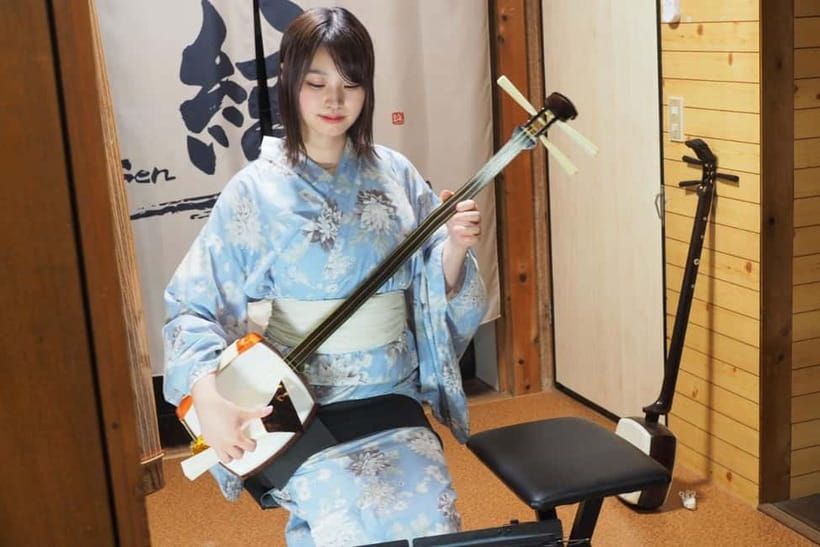
- Townhouse option (solo, up to ~11 guests): warm living-room atmosphere with close-up sound
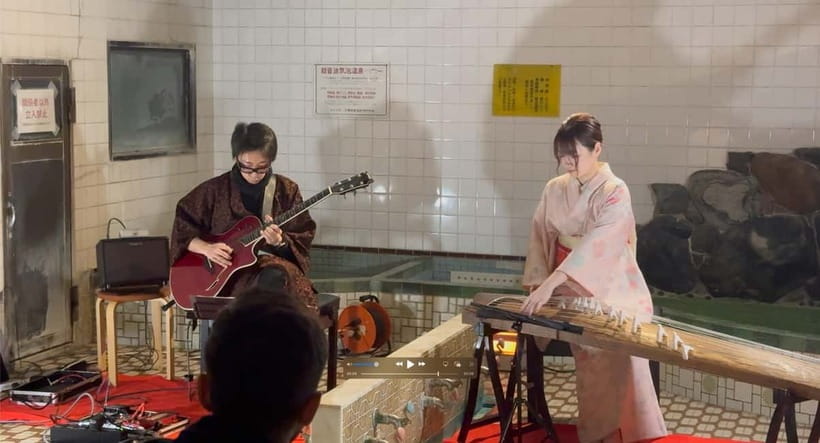
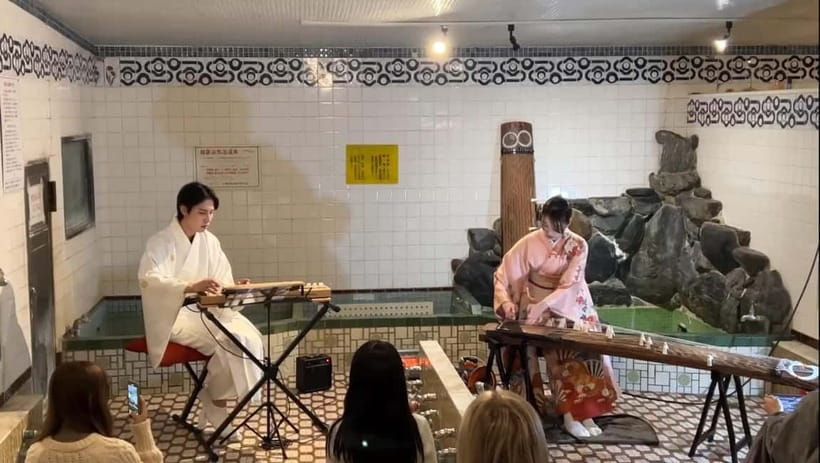
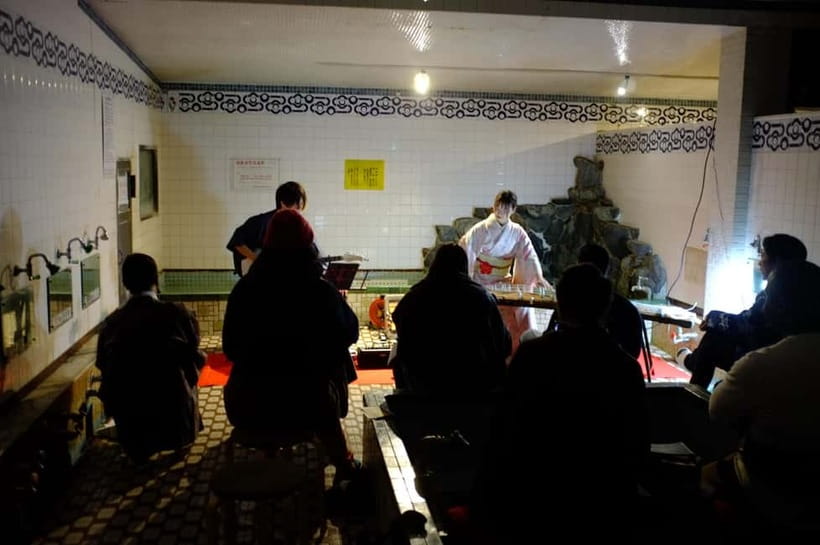
- Historic bathhouse hall (duets, up to ~30 guests): resonant tiled walls that make everything feel bigger
- 4–5 pieces per concert: classical, contemporary, and artist-chosen selections
- Q&A plus photos: meet the artists and hear the stories behind the music
- Optional koto workshop (townhouse only): beginner-friendly hands-on time with sanitized instruments
Two Kyoto venues: townhouse intimacy vs bathhouse resonance
Your biggest decision here is the setting, because it changes how the music lands in your ears.
Traditional Townhouse (cozy solo setting)
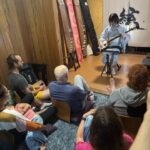
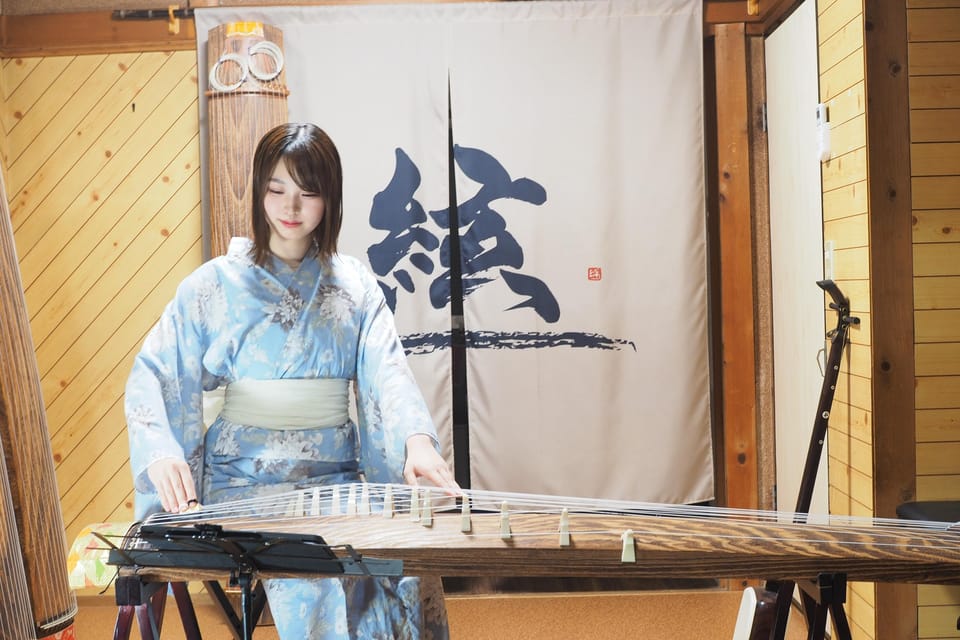
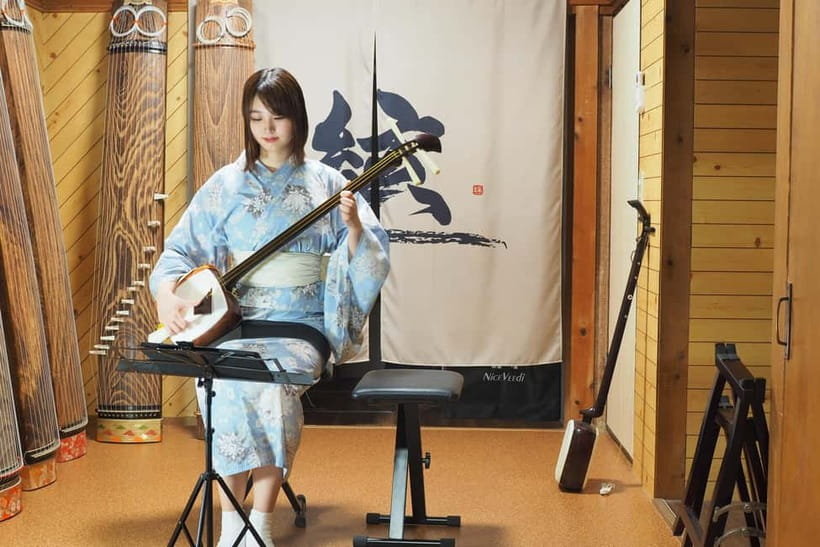
This option is sized for real conversation-level closeness. Capacity is up to about 11 guests, and the performance is built around solo sets on koto and shamisen. You’ll typically hear around 4–5 pieces, mixing Japanese classical material with contemporary works. The vibe feels like being invited into a real Kyoto home—warm, quiet, and detailed. You also get the bonus of an optional hands-on koto workshop (more on that soon).
Historic Bathhouse Hall (resonant duet setting)
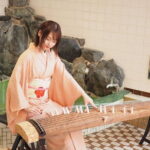
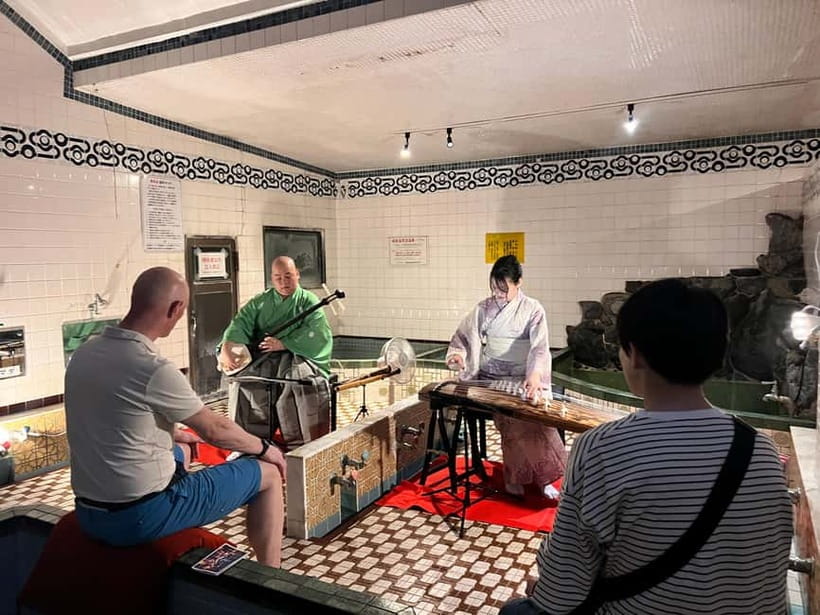
If you want the sound to wrap around you, pick the bathhouse hall. Capacity is up to about 30 guests, but it still feels personal because the group is limited. The music is designed for the acoustics of a tiled, echo-friendly space. Expect koto duets paired with another instrument (shamisen, shakuhachi, taishōgoto, flute, guitar, and more), performed across 4–5 pieces. One note: the duets cover those pieces, and the format includes an opener separate from the 4–5 main items. Also, this venue is offered irregularly on Mondays, so planning around it means checking the next dates ahead of time.
One practical detail that matters: the bathhouse option does not include bathing access. You’re there for the hall performance, seating, and the music, not a soak.
You can also read our reviews of more tours and experiences in Kyoto
What happens during the 45–105 minute program
This experience is built like a mini lesson plus a concert. The whole thing usually runs 45 to 105 minutes, depending on whether you add the townhouse workshop.
Here’s the flow you can expect:
Check-in and seating (about 5–10 minutes)
You’ll get settled and learn basic venue etiquette. In the townhouse, seating is typically cushions or chairs. In the bathhouse hall, it’s rows of seats. Either way, you’re close enough to see the performers’ hands, not just watch from the back.
Instrument introduction (about 10–15 minutes)
This is where the show becomes easier to enjoy. You’ll get an explanation of how koto and shamisen are played, including parts of the instruments, the kinds of picks/bridges used, and how the notation works. Since many people start with little knowledge of these instruments, the pacing is friendly and built to bring you up to speed fast.
Concert (about 25–30 minutes)
The concert itself is compact on purpose: 4–5 pieces performed by professionals, with short commentary along the way. The mini-commentary is bilingual (Japanese/English), so you’re not stuck guessing what you’re hearing.
Q&A and photos (about 5–10 minutes)
This is one of the best parts. After the music, you meet the artists and get a chance to ask questions. It’s also a photo-opportunity time, which helps you remember details later when you’re comparing which piece moved you most.
Optional hands-on koto workshop (about 35–40 minutes, townhouse only)
If you choose the townhouse package with the workshop, the format shifts into a short try-at-it session. Instruments are sanitized, and the guidance is aimed at beginners. You’ll learn basic technique and work on a short phrase rather than needing years of practice.
The music program: from classical titles to modern arrangements
I find that many cultural concerts fail at one thing: they assume you already know the instrument. Here, they don’t. You get enough context to hear differences in tone, timing, and mood.
Townhouse solo programs
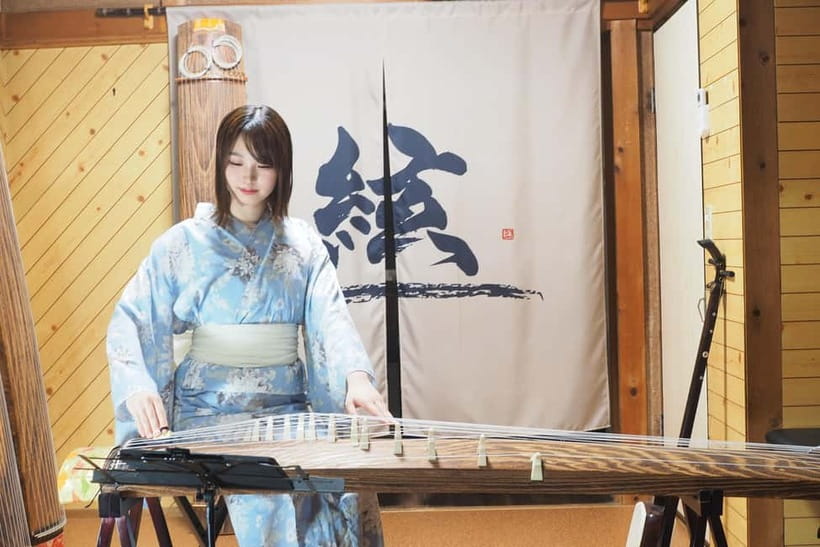
The solo set usually includes 4–5 pieces with an artist-driven selection. The performer curates the program to show their personal style and virtuosity, and it rotates by season. You may hear both traditional Japanese pieces and more modern compositions. Sample titles you could encounter include Kajimakura, Chidorino Kyoku, and Kaede no Hana.
Even if you don’t recognize the titles, the structure helps you. You’ll hear music that behaves like a story—opening themes, repeating motifs, then variations that change the feel. In a small room, those changes are noticeable.
Bathhouse programs with duets
The bathhouse option mixes solo moments with collaborative duets. The duet format matters because it forces the instruments to negotiate space: a koto line answering another instrument’s phrasing, or a shared melody where the texture changes piece to piece. Duet partners might include shamisen, shakuhachi, taishōgoto, flute, or guitar.
The repertoire is also chosen with the hall acoustics in mind. In other words, you’re not just hearing a lineup—you’re hearing a lineup designed for that space.
Q&A and getting your hands on the koto
One reason I’d pick this over a bigger, more scripted show is the interaction level.
After the concert, you get a short but meaningful Q&A. You’ll often hear practical answers about how pieces are constructed, why certain sections work, and what’s behind the musical choices. People also tend to ask the easy questions you wish every live music experience answered: what makes a koto sound warmer, what changes when playing techniques shift, and what to listen for when the music speeds up or softens.
In some sessions, hosts like Gen run the show, and other roles have included names such as Shima or Samuel. If you’re lucky, you’ll get the extra personality that some hosts bring—warm, approachable explanations that don’t talk down to you.
Then there’s the workshop, available only at the townhouse venue. It’s beginner-friendly and designed to be fun, not intimidating. You’ll get sanitized instruments, learn basic hand position and technique, and practice a short phrase. In at least some sessions, guidance has extended to how to sit properly and how to follow the music notation basics. Even if you don’t leave playing a full piece, you’ll walk out knowing what your hands were trying to do when the performer made it sound effortless.
How to pair the concert with Kyoto sights (without rushing)
This is a good activity for evenings, because it’s a clean break from temples-on-temples-on-temples. It also fits nicely between sightseeing blocks because you’re in western Kyoto near transit links.
Here are practical timing ideas based on how close the concert area is to common stops:
- Arashiyama (~25 minutes): walk to Saiin Station, take Hankyu to Katsura, transfer to the Randen Line. This can be a good pre- or post-concert option if you want bamboo-area vibes earlier in the day.
- Nijō Castle (~20 minutes): one stop from Saiin on the Tozai subway line. Easy add-on if you want history before your music hour.
- Kinkaku-ji (~20 minutes): bus from Nishioji Sanjō plus a short walk. Great if you want the Golden Pavilion and still keep your schedule calm.
- Nishiki Market (~25 minutes): direct Hankyu ride to Karasuma or Kawaramachi. Perfect for snacks and last-minute shopping before the concert.
A small scheduling tip: choose the townhouse when you want flexibility, since it’s held almost every day. Choose the bathhouse when Monday fits your itinerary and you’ve confirmed the next date you want.
And if you worry about finding the venue, you’re not alone. Some people report the location can be a little challenging without precise directions. If the address feels unclear, use the provided location details (latitude/longitude) when mapping.

Price and value: what $32 really buys you
At about $32 per person, this is one of those Kyoto activities that feels fair if you compare it to “culture night” alternatives.
Here’s what you get for the price, in real value terms:
- Live performance by professionals (not a recording, not a staged demo)
- Multiple pieces (4–5) per concert, with commentary so you understand what you’re hearing
- Bilingual mini-commentary plus an instrument introduction that bridges the knowledge gap quickly
- Post-concert Q&A so you can ask what the music made you wonder
- For townhouse bookings: optional koto workshop with sanitized instruments and beginner coaching
The small group factor is a huge part of why it feels worthwhile. In a tiny townhouse, you’re paying for access to details you’d never notice in a large hall. In the bathhouse, you get acoustics plus duet performance, still with limited capacity.
If you’re the type who wants one or two “I’ll remember this forever” nights in Kyoto, this is a strong candidate. It’s also a rare activity where you don’t need to study ahead. You just show up, listen, and ask questions.
Who this koto and shamisen concert suits best
This works especially well if you want authentic Kyoto culture in a smaller dose than temple hopping.
It’s a good fit for:
- First-timers to Japanese traditional instruments who still want real explanation
- Music lovers who like close listening and subtle changes in tone
- People who prefer quiet, reflective evenings instead of crowded nightlife
- Anyone interested in learning basic koto technique through the townhouse workshop
It may be less ideal if:
- You need very large venues with big production values
- You dislike small spaces or being within a few feet of instruments and performers
- You have a Monday-only schedule and you’re targeting the bathhouse hall, since those shows are irregularly offered and require checking the calendar
Age note: it’s not suitable for babies under 1 year.
Should you book this Kyoto koto and shamisen concert?
I’d book it if you want something genuinely Kyoto that doesn’t feel like a factory tour. The combination of professional live performance, close-up access, and explanations in English makes the experience easy to enjoy even if you know nothing about koto or shamisen. Add the townhouse workshop if you want a hands-on memory, not just a listening one.
Choose the townhouse if you want cozy and intimate, with the option to try the koto. Choose the bathhouse hall if you want sound to feel bigger and you like the idea of koto duets with other instruments.
If your Kyoto itinerary has only one evening slot that can be quiet, this is a very practical pick.
FAQ
What instruments will I hear?
You’ll hear koto and shamisen performances in both venue options. The bathhouse hall also includes duets pairing koto with another instrument.
How long does the concert last?
The experience duration ranges from about 45 to 105 minutes, depending on whether you add the optional hands-on workshop at the townhouse.
Are there two different venues, or just one?
You can book either venue, or both. The townhouse focuses on solo programs in a small, cozy setting, while the bathhouse hall focuses on duet programs in a resonant hall.
Is the workshop available at both venues?
No. The optional hands-on koto workshop is available only at the traditional townhouse option.
Is this difficult if I don’t know Japanese?
No. There is bilingual mini-commentary (Japanese/English), and instruction is offered in English and Japanese.
When does the bathhouse hall performance happen?
The bathhouse hall is offered irregularly on Mondays, so you’ll want to check the calendar for the next dates.
Is this suitable for babies?
It’s not suitable for babies under 1 year.
What’s included with the ticket?
Included are the live concert performance (4–5 pieces), bilingual mini-commentary, post-concert Q&A, photo time with the performers, and venue seating. The optional townhouse workshop is included only when you book the workshop option.