REVIEW · KYOTO
Kyoto: Japanese Koto & Shamisen Concert and Koto Class
Book on GetYourGuide →Operated by Gen · Bookable on GetYourGuide
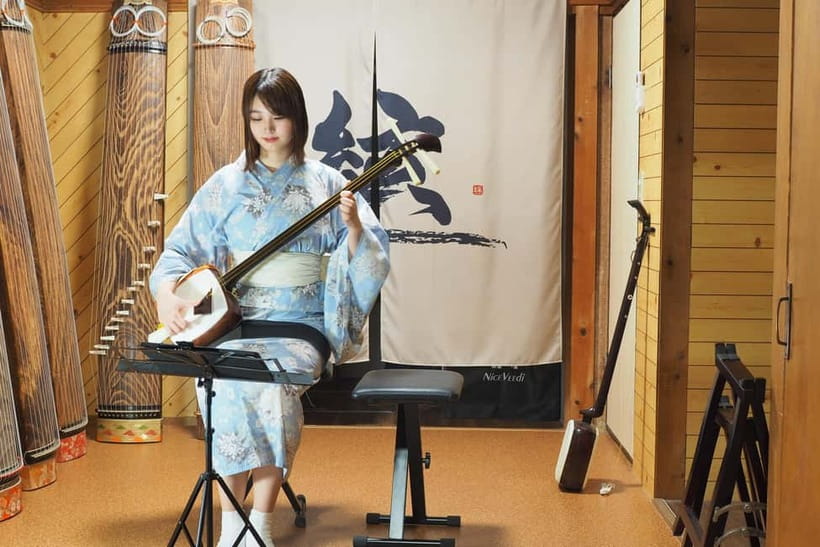
Kyoto can feel temple-and-alley busy, so this concert in a small residential house is a welcome change. You’ll hear koto and shamisen performed live by professionals, then get close enough to ask questions and even try a simple piece. It’s classical, contemporary, and sometimes original music, all in a setting that feels like someone invited you inside.
Two things I really like: the Q&A time after the performance, and the chance to play the koto yourself with step-by-step guidance. You’re not just listening from a seat; you’re learning how these instruments work in real time.
One practical consideration: the house is small and easy to miss, especially if you arrive late or in poor light. Plan extra time to find the location, because late arrivals can shorten your experience.
Key highlights worth your attention
- A real Kyoto home setting: an old, small Japanese house instead of a temple or formal hall
- Close-up Q&A with the performer (and interpreter support in English or Japanese)
- Beginner-friendly koto tryout using provided tools and instructor guidance
- A music mix you can follow: classical, contemporary, and original compositions
- Photos included, so you can remember the hands-on part
In This Review
- Why This Koto and Shamisen Concert in a Kyoto House Feels Different
- Inside the Program: Instrument Intro, Live Performance, and the Real Music Flow
- Q&A Close Enough to Make It Personal
- Trying the Koto: What Beginner-Friendly Actually Means Here
- Classical, Contemporary, and Original Pieces You Can Follow
- Finding the Small House and Timing It With Kyoto Sights
- Value at $38: Why This Price Includes More Than a Show
- Who This Experience Suits Best (And Who Might Want a Different Plan)
- Should You Book This Kyoto Koto & Shamisen Experience?
- FAQ
- How long is the Kyoto Koto & Shamisen concert and class?
- What’s included in the ticket price?
- Will I be able to meet or ask questions to the performer?
- Can beginners join even if they have no music experience?
- What languages are offered during the experience?
- Where do I meet, and does the meeting point stay the same?
- Is transportation or food included?
- Is this suitable for young children?
- What happens if I arrive late?
Why This Koto and Shamisen Concert in a Kyoto House Feels Different
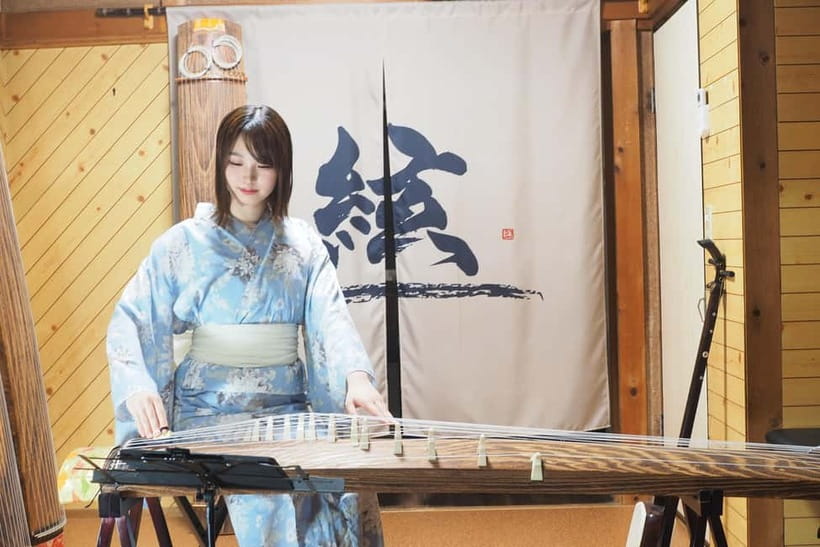
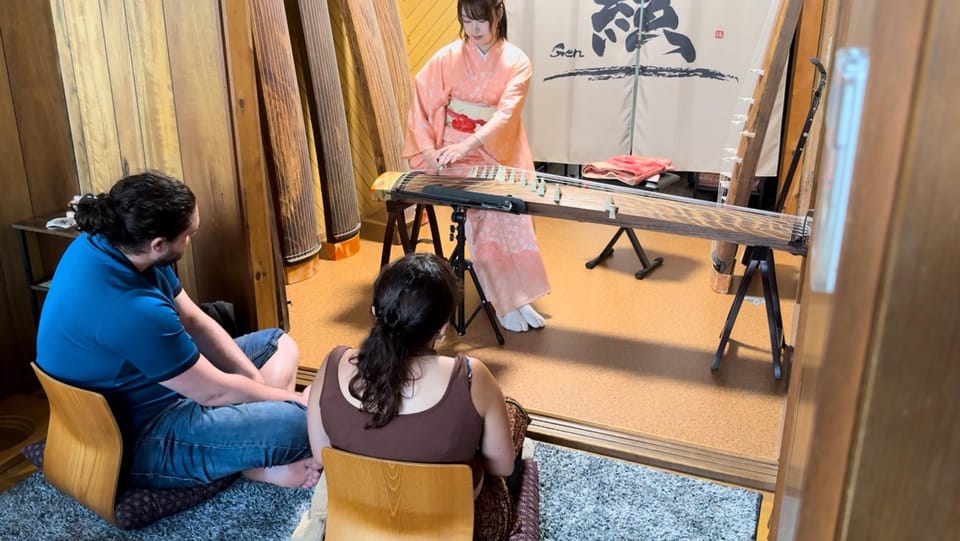
This is one of those Kyoto experiences that swaps the usual sightseeing script for something quieter and more personal. Instead of a big venue, you’re in an old, small Japanese house where the sound fills a smaller room and you can actually see the hands at work.
I like that the event starts with a simple introduction, so you’re not thrown into a wall of unfamiliar terms. You’ll get the basics of the instruments, including the special sheet music, and then the professionals play right after. For your brain, it’s an easy handoff: context first, performance second.
The vibe is warm and homey. One review called out the intimate setting and the privilege of being close to the musicians, and that matches what this format aims for: you’re learning in a space that feels lived-in, not staged.
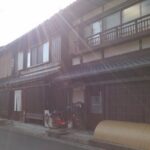
The only real downside is location anxiety. More than one guest noted the small house can be hard to find, with darker alleyways, and you may need a little patience before doors open.
Inside the Program: Instrument Intro, Live Performance, and the Real Music Flow
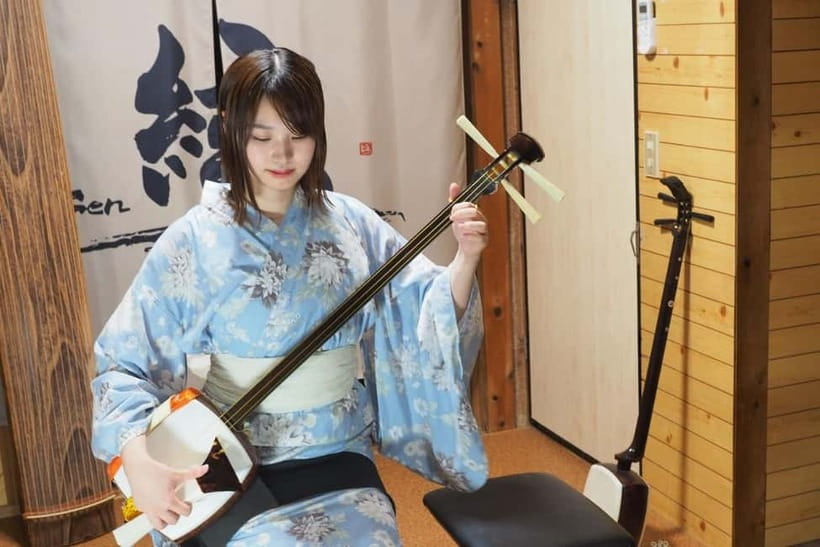
Your evening is built like a mini class and a mini concert, without feeling overly formal. It typically runs about 1 hour to 100 minutes, so it fits nicely between other Kyoto plans.
First comes a brief introduction to Japanese traditional instruments such as the koto and shamisen, plus a short explanation of how the sheet music works. This part matters because koto and shamisen players aren’t just playing notes; they’re performing with specific techniques, timing, and phrasing that make the instruments sound the way they do. When you understand that, even a first-time listen starts to click.
Then you’ll hear live performances by professional musicians. The repertoire is designed to show range, not just one style. You might hear traditional pieces with vocals, and you may also hear contemporary compositions that feel more energetic and modern in rhythm and expression.
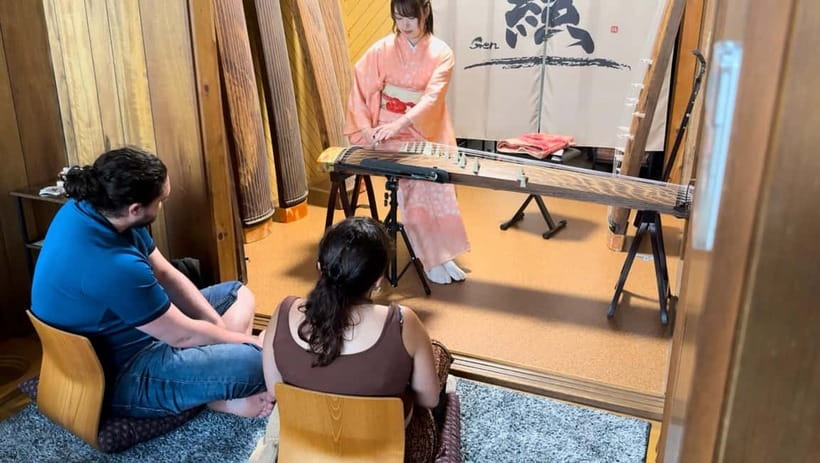
After the music, you get a more personal segment: a close-up Q&A session and time for photos. That part is where the house setting becomes useful. In a big theater, you’re stuck in the crowd. Here, you can ask what you’re actually curious about.
You can also read our reviews of more tours and experiences in Kyoto
Q&A Close Enough to Make It Personal
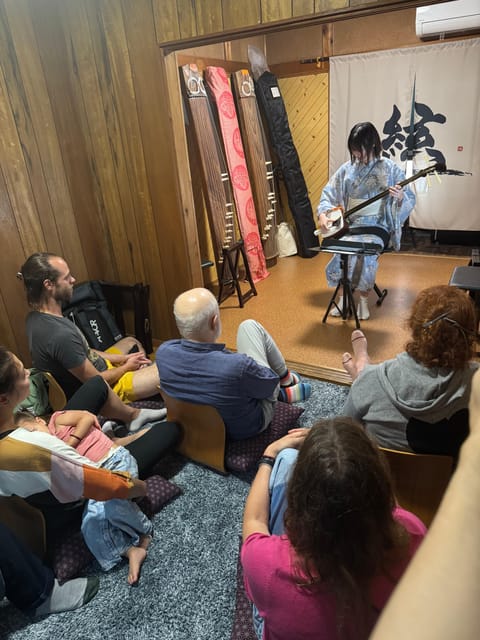
One of the best reasons to book this is the time to talk with the professional. You’re not limited to a quick question at the end; you can ask about instruments, techniques, or even how to read what you saw during the intro.
I also like that there’s interpreter support in English and Japanese, which lowers the barrier for first-timers. Several guests praised the guide/interpreter for being friendly and supportive, and for explaining facts in a way that feels clear instead of academic.
You’ll also get photo time. That sounds small, but it’s a meaningful add-on in an experience like this because it captures the hands-on moment. Photos are included, so you don’t need to worry about whether someone will take them for your group.
Extra touches can happen too. One review mentioned a birthday song played for a guest, which suggests the performers may be willing to make special moments when possible. Don’t assume it’s guaranteed for every booking, but it’s a nice idea if you’re celebrating.
Trying the Koto: What Beginner-Friendly Actually Means Here
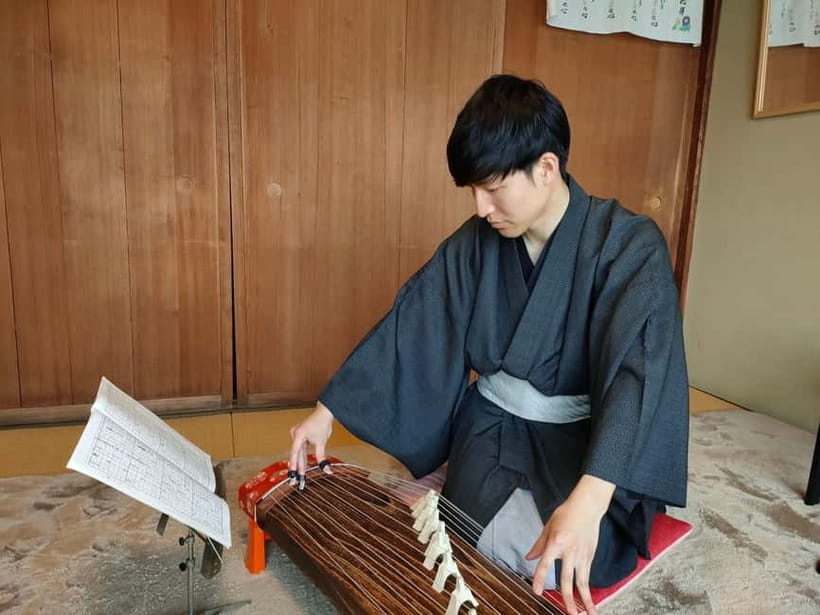
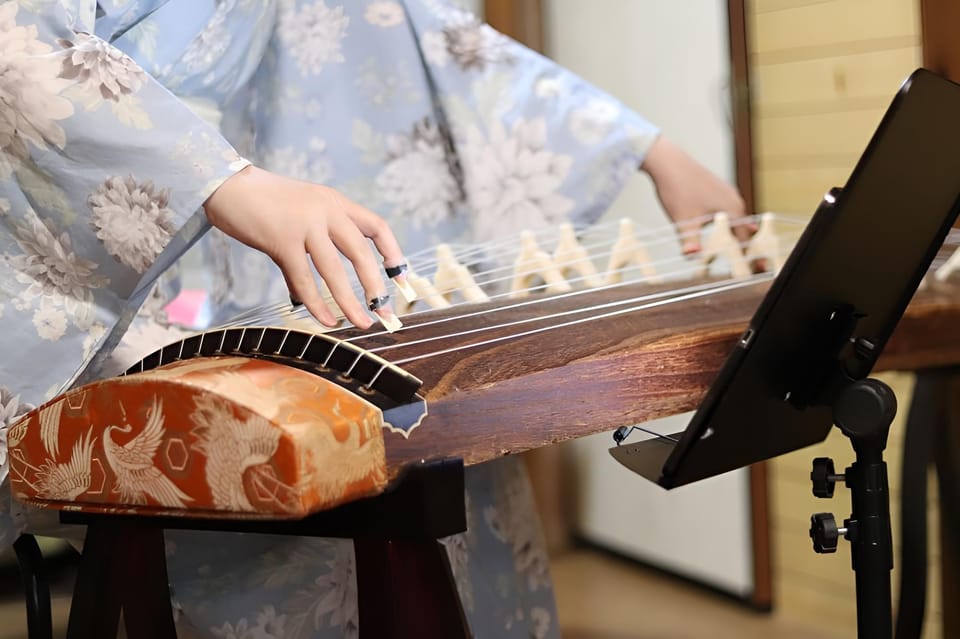
At the end of the program, you can try playing the koto yourself. You’re guided through a simple piece, using instruction that focuses on technique rather than musical background.
This is where the experience earns its value. Learning the basics in a short window is hard in many classes, but this one uses a format that works: a live model first, a guided session second. When the instructor shows how to set your hands and handle timing on an actual instrument, you pick up the feel faster than you would from watching a video at home.
Multiple reviews highlight how patient and encouraging the instructors are, even for people with zero music experience. One guest specifically mentioned getting help with techniques while learning to play during the session. That’s the difference between trying and succeeding: you don’t just sit there; you’re actively supported.
You’ll also be using the instrument during your hands-on portion, and the tools/materials are included. In other words, you’re not arriving with a mystery checklist or needing to buy anything first.
Practical note: if you have any physical limitations, tell the organizers ahead of time. The data specifically asks guests to inform them of limitations or allergies.
Classical, Contemporary, and Original Pieces You Can Follow
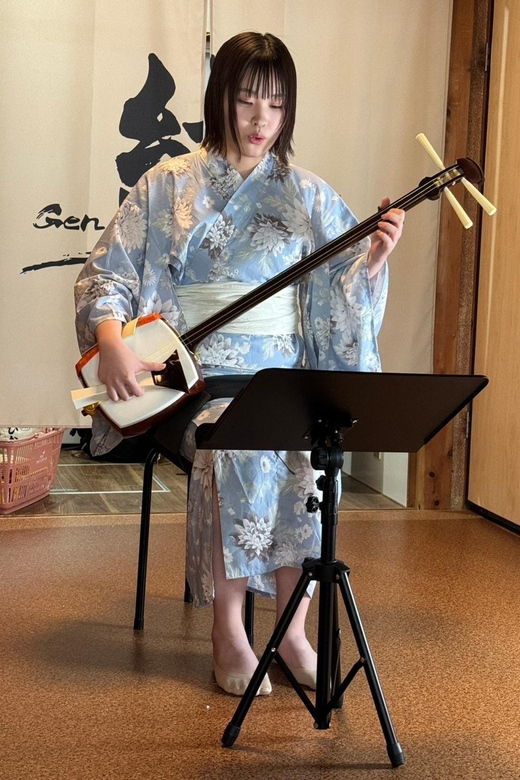
Koto and shamisen can sound “traditional” to your ear, even if you’ve never heard them before. Here, you get variety on purpose, so your experience doesn’t freeze at one mood.
You may hear classical pieces, then shift into contemporary compositions. A couple of reviews mentioned enjoying both the energy of modern selections and the vocals in traditional pieces. That blend helps you understand that these instruments aren’t trapped in the past. They’re still used creatively.
Some performances include original works as well, and the program can change by season or performer. That’s good news for repeat visitors, but it’s also good for you on the first trip: it makes the show feel alive rather than like a script.
If you’re the type who likes to connect sound to context, the included history and cultural introduction are there for that reason. You’ll have something to listen for besides vibes—technique differences, phrasing, and how the sheet music translates into playing.
Finding the Small House and Timing It With Kyoto Sights
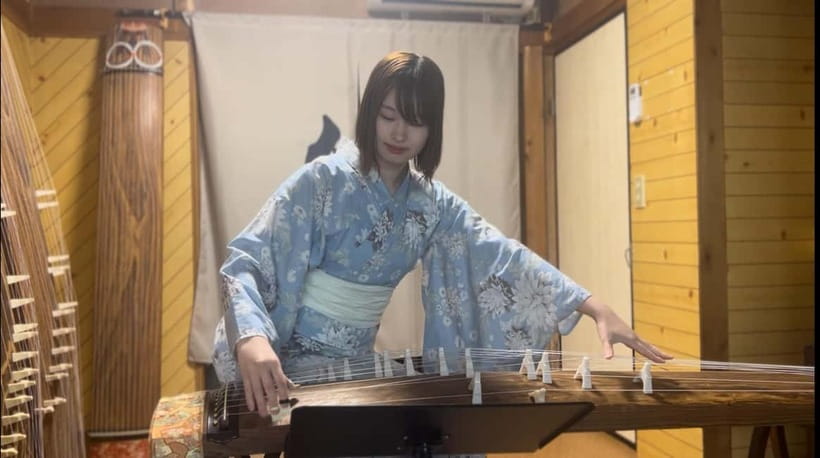
This experience is in a smaller residential area, and that’s part of the charm. It’s also why logistics matter.
Some guests said the house can be slightly tricky to find, especially because of dark alleys and waiting outside until shortly before the show. Here’s how to reduce stress:
- Arrive early enough to locate the entrance without rushing.
- If you use a taxi, ask to be dropped near the meeting point area, then walk slowly with the directions in hand.
- If you’re running late, know that your experience time could be shortened.
For pairing with major sights, you can plan smart connections. The activity is linked to areas like:
- Arashiyama: about 25 minutes by train and on foot
- Nijo Castle: about 20 minutes by train and on foot
- Kinkakuji (Golden Pavilion): about 20–25 minutes using bus plus on-foot time
- Nishiki Market: about 25 minutes by train and on foot
You don’t need to cram everything, but you can use the concert as a calmer evening anchor after your busier temple or market time.
If you’re thinking of a day that includes Arashiyama, Kinkakuji, or Nishiki Market, this is a nice counterbalance: less wandering, more listening.
You can also read our reviews of more tours and experiences in Kyoto




Value at $38: Why This Price Includes More Than a Show
At $38 per person, the best way to judge value is by counting what’s actually included. This isn’t just a performance-only ticket.
Included in your price:
- All necessary materials and tools
- Use of a koto instrument
- Skilled instructor guidance
- A brief history and cultural introduction
- A private session for your group
- Photos of your experience
When you add up the combination—live professional performance, Q&A, and a guided tryout—you’re getting multiple parts that many separate activities charge for individually. And because it’s in a small house, you’re also getting better access than you’d expect from a standard auditorium setup.
If you want a lighter option, one review mentioned there can be a performance-only choice for those looking for a cheaper alternative. If you’re budgeting tightly, it’s worth checking what’s available for your exact date and booking option.
Who This Experience Suits Best (And Who Might Want a Different Plan)
This one fits strongly if you want something authentic but not complicated. It’s beginner-friendly and accessible, which makes it ideal if you’re curious about Japanese music and want a guided first encounter.
It also suits families, with age limits that are clearly stated: it’s not suitable for babies under 1 and children under 2, 3, and 4 (depending on the specific cutoff listed). If your child is old enough, the intimate format can be a memorable cultural moment.
It’s a great pick for adventurous travelers who like to go beyond the usual checklist. If you’ve ever felt museum-style explanations are too distant, this experience is built for you: you’re seeing technique up close and asking questions face-to-face.
One more subtle fit: if you collect traditional instruments or simply feel pulled toward them, this kind of session gives you a stronger mental picture of what players actually do—especially after you try it with your own hands.
If you’re the type who wants long sightseeing time or you dislike waiting in smaller residential areas, you may find the location-finding part annoying. Still, the rewards are typically in the same category as your patience.
Should You Book This Kyoto Koto & Shamisen Experience?
If you want more than a passive show, book it. The mix of professional performance, Q&A, and hands-on koto time is the core reason it’s worth your slot.
I’d especially recommend it when:
- you have evenings free and want a calm cultural activity
- you like intimate settings and close interaction
- you’re curious about traditional instruments but don’t know where to start
Skip it (or think carefully) if:
- you’re highly time-sensitive and hate finding small locations in residential areas
- you’re traveling with very young children who fall under the stated age restrictions
If you can arrive early and you’re open to learning in a small house, this is the kind of Kyoto experience you’ll remember long after you leave.
FAQ
How long is the Kyoto Koto & Shamisen concert and class?
The experience lasts 1 hour to 100 minutes, depending on the starting time and the option you book.
What’s included in the ticket price?
You get all necessary materials and tools, use of a koto instrument, skilled instructor guidance, a brief history and cultural introduction, a private session for your group, and photos of your experience.
Will I be able to meet or ask questions to the performer?
Yes. After the live performance, there is a close-up Q&A session with the professional koto player, and you’ll have time for photos as well.
Can beginners join even if they have no music experience?
Yes. The class is described as beginner-friendly, and at the end you can try playing a simple piece under professional guidance.
What languages are offered during the experience?
The instructor and support are available in English and Japanese.
Where do I meet, and does the meeting point stay the same?
The meeting point may vary depending on the option booked, so you should confirm the exact location for your reservation.
Is transportation or food included?
No. Transportation to and from the location is not included, and meals and drinks are also not included.
Is this suitable for young children?
No for very young ages. It lists not suitable for babies under 1 year and children under 2, 3, and 4 years.
What happens if I arrive late?
Late arrivals may result in a shortened experience time. If timing is tight, give yourself buffer time to find the house.