Kyoto by e-bike feels unfairly easy. This 4-hour guided ride strings together classic temples and quieter backstreets, so you spend less time figuring things out and more time looking. I like the included bike rental (no awkward logistics) and the small group size (so the pace stays friendly and you don’t get separated).
My only note: even though it’s mostly riding, you’ll still do some walking at the stops, so wear comfortable shoes and don’t count on it being 100% sit-and-glide.
From the guides’ comments in recent tours, English-speaking locals like Yuki, Ben, and Jay are a big part of the fun—helping you connect what you’re seeing to the culture around it, and making it easy to ask questions while you’re on the move.
In This Review
- Key things I’d watch for before you book
- Why Kyoto works so well for an e-bike ride
- Getting started at Kyoto Tourist Lounge Gion (and how the flow feels)
- Stop-by-stop: Gion Shirakawa to the Kyoto Imperial Palace
- Gion Shirakawa (around 30 minutes, free)
- Nanzen-ji Temple (around 30 minutes, free)
- Heian Shrine (around 30 minutes, free)
- Honen-in (around 20 minutes, admission not included)
- Shimogamo Jinja (around 30 minutes, free)
- Kyoto Imperial Palace (around 30 minutes, free)
- Philosopher’s Walk (around 30 minutes, free)
- What the guide actually adds (and why it matters in Kyoto)
- E-bike comfort, safety, and how much fitness you need
- How much it costs for four hours of temple time
- Best timing: book early, and bring the right mood
- Who this Kyoto e-bike tour is best for
- Should you book this tour?
- FAQ
- How long is the Kyoto e-bike tour?
- What time does the tour start?
- How much does the tour cost?
- How big is the group?
- What’s included in the price?
- Are temple or shrine admissions included?
- What are the height and fitness requirements?
Key things I’d watch for before you book
- E-bike rental is included so you can focus on Kyoto, not equipment hunts
- Max 8 people keeps the route controlled and the guide easier to follow
- Temple-and-shrine mix hits both major sights and calmer, less-obvious corners
- Photo-friendly canals and gardens come up repeatedly, especially around Gion and Heian-area scenery
- You’ll still walk a bit, so comfy shoes matter more than you think
Why Kyoto works so well for an e-bike ride
Kyoto is perfect for two-wheel sightseeing because the city is full of short, connected routes—dense enough to feel like you’re “inside” the sights, but broken up by parks, canals, and temple grounds that reward slow turns and quick stops. An e-bike lets you travel between areas without burning half your morning on trains and long walks.
That matters here because the route is designed to cover a lot in a short window—temples, shrines, and a couple of famous landmarks—without needing you to plot every turn on a map. You’re also not stuck waiting in one place for the group; you get to keep moving.
You can also read our reviews of more cycling tours in Kyoto
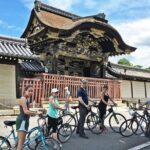
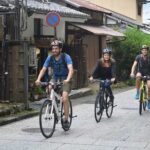
Getting started at Kyoto Tourist Lounge Gion (and how the flow feels)
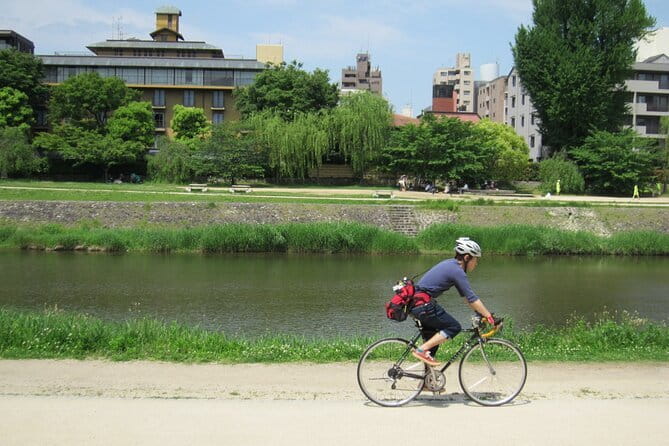
The tour starts at Kyoto Tourist Lounge Gion, and it ends back at the same spot. That simple “loop back” setup is handy in a city where getting across neighborhoods can eat time.
The experience runs for about 4 hours, starting at 9:00 am, with an English-speaking guide leading the group. You’ll get a mobile ticket, and the bikes are provided, so you’re not spending your first hour in Kyoto hunting gear.
One more practical detail: the tour is listed for people with moderate physical fitness, and there’s a height requirement (over 145 cm). The e-bike part is meant to make the ride easier, but you still need to be comfortable handling the bike and hopping off for short visits.
Stop-by-stop: Gion Shirakawa to the Kyoto Imperial Palace
This route has a smart rhythm: start with atmosphere, move into temple scale, then shift back into gardens and scenic walking paths.
Gion Shirakawa (around 30 minutes, free)
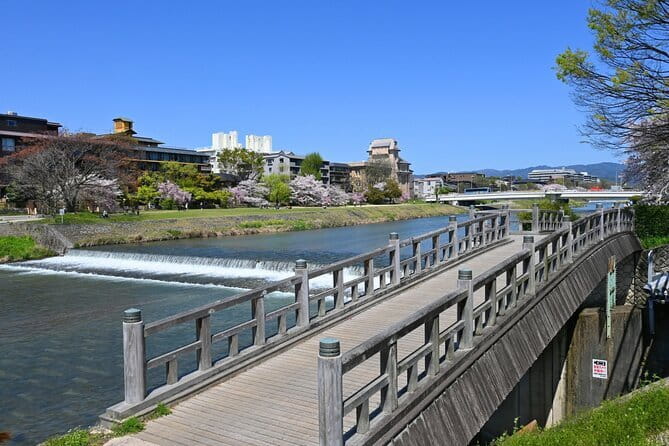
If you want Kyoto “at first glance,” this is a great opening stop. Gion Shirakawa has historic streets and that classic canal-side calm. Riding through the area helps you pick up the neighborhood texture fast—wood-lined streets, quiet corners, and angles that feel made for photos.
What to expect: mostly a light sightseeing pass with chances to pause near the water.
Watch for: early-morning crowds can still happen in Gion, so keep an eye on where you stop and let others get past.
Nanzen-ji Temple (around 30 minutes, free)
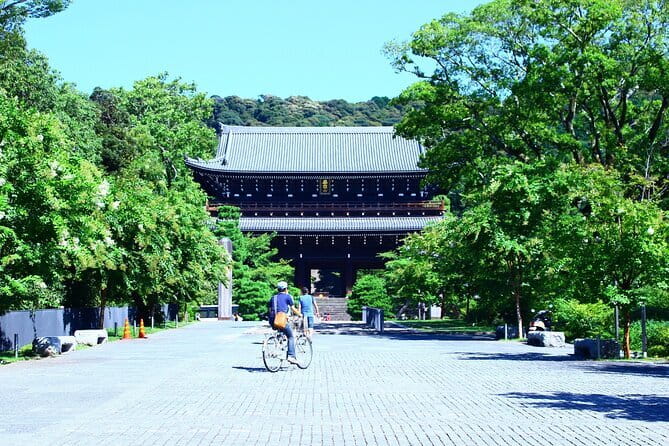
Next you get contrast: Nanzen-ji is one of Kyoto’s big Zen temple complexes, sitting near the foot of the Higashiyama mountains. The scale and traditional architecture make it a “slow look” kind of place, and a bike approach helps you reach it efficiently without losing your morning to transit.
What to expect: time to see the main grounds and absorb the temple layout rather than just rushing by.
Watch for: temple paths can include uneven ground, so take your time when you dismount and walk short segments.
You can also read our reviews of more tours and experiences in Kyoto

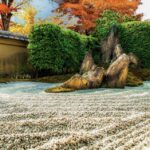
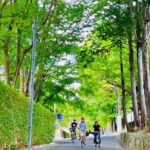
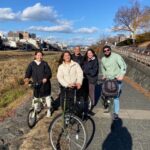
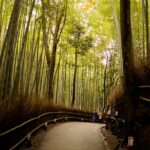
Heian Shrine (around 30 minutes, free)
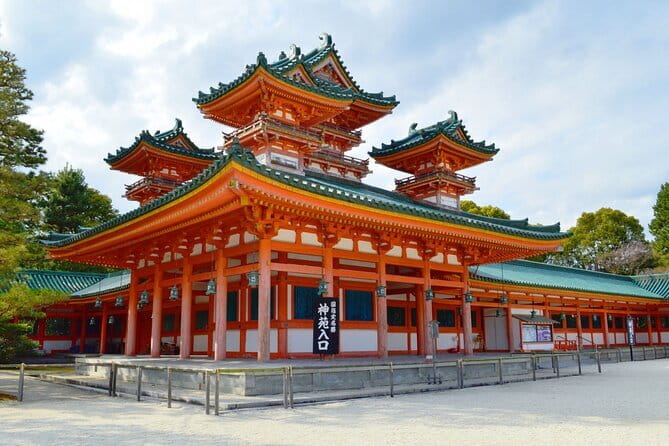
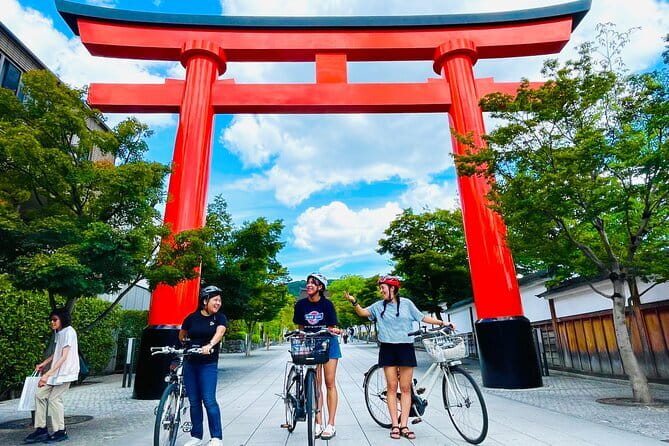
Then you shift to a different temple mood: Heian Shrine, a Shinto shrine known for grand architecture and landscaped gardens. The red-and-white look is instantly recognizable, and it’s the kind of stop where your camera starts doing extra work.
What to expect: garden views and an easier stop rhythm—good for a reset after walking inside temple spaces.
Watch for: garden areas can be photogenic from multiple angles. If your group is moving steadily, don’t block the walkway while you chase the perfect shot.
Honen-in (around 20 minutes, admission not included)
Honen-in is a quieter, more reflective stop. Founded in the 12th century, it’s the kind of place that rewards a slower pace—tree-lined paths, the main hall area, and time to notice how the space supports contemplation.
What to expect: a shorter visit and a bit more on-foot time.
Cost note: admission here is not included, so plan for an extra ticket.
Watch for: because this stop is shorter, you’ll want to arrive ready to look, not ready to wander.
Shimogamo Jinja (around 30 minutes, free)
Then you head toward the older, more nature-linked side of Kyoto. Shimogamo Jinja is one of the city’s oldest and most revered Shinto shrines, and it sits on the northern edge of town surrounded by ancient forest and tranquil paths.
What to expect: a calm atmosphere that feels different from the more central, high-traffic sightseeing areas.
Watch for: some paths can be shaded and cool. It’s a pleasant break—just bring a layer if you run hot to cold quickly.
Kyoto Imperial Palace (around 30 minutes, free)
Now for a big-name landmark: Kyoto Imperial Palace, former residence of Japan’s imperial family, set in the Kyoto Gyoen National Garden. Even if you’re not deep into palace history, it’s a satisfying “scale” stop—traditional architecture in a protected, garden-centered setting.
What to expect: palace grounds and a sense of formality that balances out the earlier temple stops.
Watch for: garden-and-palace areas often involve some walking between photo points, so keep moving rather than getting stuck at just one vantage.
Philosopher’s Walk (around 30 minutes, free)
To close, you ride into one of Kyoto’s most scenic gentle-walk zones. Philosopher’s Walk follows the canal and is lined with cherry trees and traditional tea-house vibes. It’s named after Nishida Kitaro, and the naming makes sense once you’re standing there—quiet, reflective, and slow-paced.
What to expect: mostly a scenic ride-through and/or short look time along the path.
Watch for: cherry-season timing can bring more people. Early in the season, it’s still pretty; fully packed weeks can be more crowded.
What the guide actually adds (and why it matters in Kyoto)
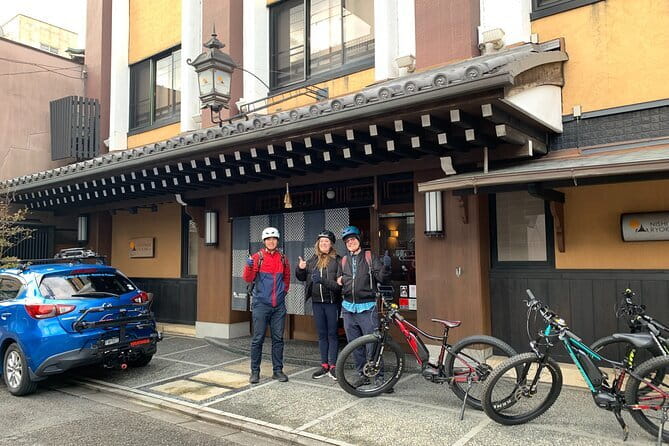
The biggest thing I’d call out is how much value you get from a local guide who can connect places to context. In these tours, English-speaking guides like Yuki, Ben, and Jay are repeatedly praised for how clearly they explain what you’re seeing and for being friendly about questions.
That changes how you experience temples and shrines. Instead of treating them like photo backdrops, you start noticing patterns: how different religious spaces feel different, how gardens shape movement, and why certain areas get attention while other corners stay peaceful.
You’ll also get practical direction that saves time during your broader Kyoto trip. Several guides are known for pointing out good places to eat and how to understand Japanese culture beyond the main sights. Even if you only catch a few tips, it can make the rest of your day easier.
And yes—there’s a real photo advantage. The route includes multiple photo-ready stops: canal scenes near Gion Shirakawa, big-structure temple views at Nanzen-ji, and garden and shrine architecture at Heian Shrine. When you’re not stressed about navigation, you notice better angles.
E-bike comfort, safety, and how much fitness you need
This tour is designed for riders of moderate fitness, and it’s structured to keep you moving at a pace that works for a mixed group. Reviews also highlight that the e-bikes are easy to ride, and even people who don’t want a workout can manage the route.
You should still plan for:
- Short walking segments at temples and shrines
- Dismounting and moving through gates/paths
- Being able to handle the bike safely when you stop for photos
One detail from recent feedback: the bikes and helmets are described as new, and that’s a comfort factor if you worry about gear condition or fit.
If you’re bringing kids: the tour requires height over 145 cm and isn’t recommended for children under 12. If you’re right at that line, you’ll want to judge how comfortable they are with riding and stopping smoothly.
How much it costs for four hours of temple time
At $70 per person, this isn’t the cheapest way to see Kyoto—but it’s also not trying to be a budget “just ride around” deal. Here’s what you’re paying for, in a way that usually makes sense:
- Bike rental included, so you’re not adding separate costs or hunting vendors
- A guide in-person, which saves time and adds context so you’re not just ticking boxes
- A tight 4-hour itinerary that covers multiple neighborhoods without planning
- Many stops with free admission listed for specific sites (Gion Shirakawa, Nanzen-ji, Heian Shrine, Shimogamo Jinja, Kyoto Imperial Palace, and Philosopher’s Walk).
The only notable exception is Honen-in, where admission is not included, so factor in that extra ticket if you want to fully enjoy that stop.
In plain terms: if you want Kyoto highlights and quieter spaces in one morning, and you’d rather not spend your precious time on route research, the value is pretty strong.
Best timing: book early, and bring the right mood
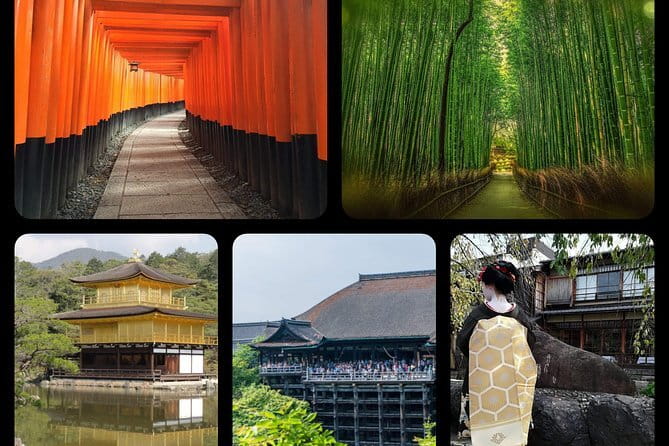
If your Kyoto days are limited, I’d book a tour like this early in your stay. It gives you orientation fast—where the neighborhoods sit, what different religious sites feel like, and what areas you might want to return to later at your own pace.
Also, weather matters. This tour requires good conditions. If it’s canceled due to poor weather, you’ll be offered another date or a full refund. That’s a simple rule that keeps you from showing up on a day when the ride isn’t safe.
Who this Kyoto e-bike tour is best for
This tour fits you best if:
- You want temples and shrines without spending hours on logistics
- You like a plan with freedom built in, so you don’t get stuck waiting around
- You prefer small-group attention rather than a huge crowd dynamic
- You’re okay with comfortable shoes and short walking breaks
It may be less ideal if:
- You want a slow, lingering half-day with lots of long hikes
- You’re hoping for a fully car-free, no-walking experience
- Your group has very limited comfort riding and stopping frequently
Should you book this tour?
I’d book it if you want a confident first pass through Kyoto—Gion Shirakawa, major sights like Nanzen-ji and the Kyoto Imperial Palace, plus calmer spaces like Shimogamo Jinja and the scenic Philosopher’s Walk—all in about 4 hours with an e-bike that removes most navigation stress.
If you’re the type who hates planning, this is built for you. And if you like learning while you move, guides such as Yuki, Ben, and Jay are a real draw. Just come prepared for a little walking, especially at the temple stops, and you’ll get a lot out of your morning.
FAQ
How long is the Kyoto e-bike tour?
It lasts about 4 hours.
What time does the tour start?
The tour starts at 9:00 am.
How much does the tour cost?
The price is $70.00 per person.
How big is the group?
The tour has a maximum of 8 travelers.
What’s included in the price?
The tour includes use of the bicycle and an in-person English-speaking guide.
Are temple or shrine admissions included?
Admission is free for several stops (including Gion Shirakawa, Nanzen-ji, Heian Shrine, Shimogamo Jinja, Kyoto Imperial Palace, and Philosopher’s Walk). Honen-in admission is not included.
What are the height and fitness requirements?
You must be over 145 cm tall, and the tour is for travelers with a moderate physical fitness level.