REVIEW · KYOTO
Pedal Adventure Kyoto’s iconic landmarks on an e-bike tour
Book on Viator →Operated by Pedal Adventure Kyoto · Bookable on Viator
Torii gates feel more fun when you roll up on an e-bike. This Pedal Adventure Kyoto tour strings together Kyoto’s headline sites and quieter neighborhoods, with a guide who explains what you’re actually seeing as you move. You start in the Gion area, then head into Higashiyama, walk through Fushimi Inari-taisha, and finish near Tōfuku-ji with a scenic ride along the Kamogawa River.
I especially like that the e-assist keeps the route approachable. You cover a lot of ground in about four hours without turning it into a leg-day workout. I also love the human side: the local guide (often listed as Maki, sometimes written as Mika) shares personal Kyoto context, answers questions, and keeps the pace comfortable for a small group.
One consideration: lunch is not included, and the schedule is built around a few shorter site visits. If you want hours inside every temple, you may still want to plan follow-up time on your own.
In This Review
- Key highlights worth planning for
- Why This Kyoto E-Bike Loop Works So Well for Most People
- Getting Started: Meeting Point, Bikers Get Fitted Fast
- Stop 1: Gion—Fast Orientation and Geisha District Context
- Stop 2: Higashiyama Ward Temples, Plus a Snack Break
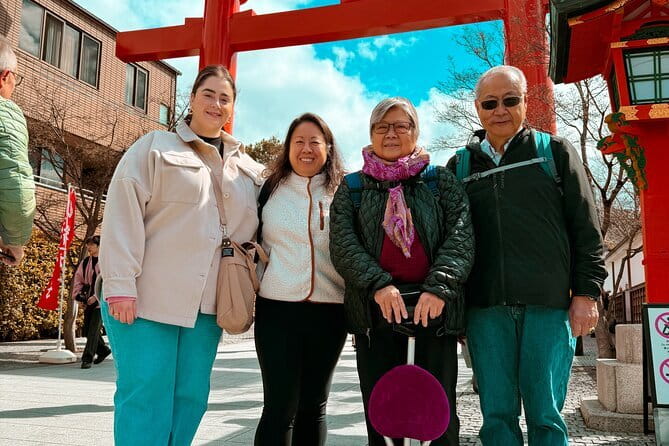
- Stop 3: Fushimi Inari-taisha—Torii Gates and a Guided Way Through
- Stop 4: Tōfuku-ji and the Kamogawa River Finish
- Price and Value: What $86.22 Actually Buys You
- The Guide Makes the Day: Stories, Q&A, and Safety Style
- Weather, Comfort, and E-Bike Reality Checks
- Who Should Book This Tour (And Who Might Skip It)
- Should You Book Pedal Adventure Kyoto?
- FAQ
- How long is the e-bike tour in Kyoto?
- Where does the tour start, and how does it end?
- What major places does the tour visit?
- What’s included in the price?
- Is lunch included?
- How big is the group?
- What is the cancellation policy if the weather is bad?
Key highlights worth planning for
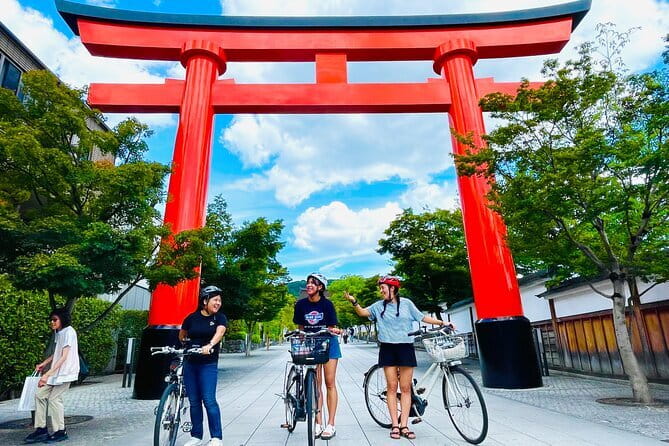
- E-assist bikes and easy pacing for a full Kyoto loop in about four hours
- Small group size (max 8) so you can ask questions and regroup easily
- Stops that mix icons with side streets, including Gion, Fushimi Inari-taisha, and Tōfuku-ji
- Free admission tickets for the scheduled stops
- Comfort extras: helmet, bottled water, snacks, plus practical storage on the bikes
- Local storytelling with safety hand signals and on-the-fly adjustments for conditions
Why This Kyoto E-Bike Loop Works So Well for Most People
Kyoto can feel like two cities at once. There’s the postcard stuff everyone came for. Then there’s the everyday Kyoto you only notice when you’re moving through streets on foot or bike.
This tour does both. You hit major landmarks like Fushimi Inari-taisha and Gion, but the route also includes back streets, bike paths, and calmer stretches that help the day feel less frantic. The payoff is that the “famous” stops don’t become the whole experience. You also learn how the city works as a lived-in place.
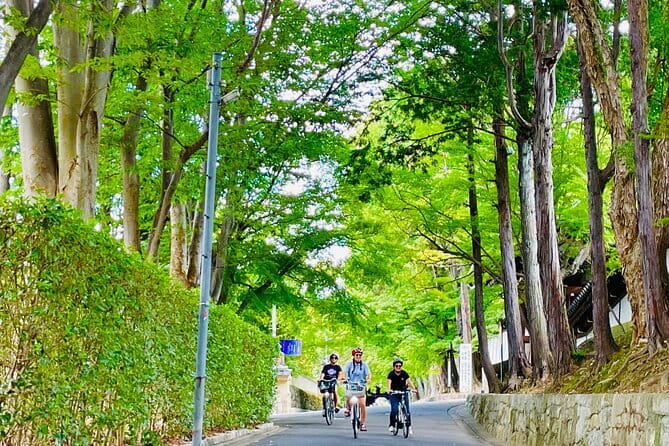
The e-bike part is the big practical win. Even when you’re near busier roads, you’re not doing it at jogging speed or fighting for balance every second. The assistance takes the edge off, so you can stay focused on sights and explanations instead of constantly thinking about your legs.
You can also read our reviews of more cycling tours in Kyoto
Getting Started: Meeting Point, Bikers Get Fitted Fast
You meet at 19 Shōgoin Higashimachi in Sakyo Ward (back at the meeting point at the end). The location is near public transportation, so you can build it around the rest of your Kyoto day without complicated transfers.
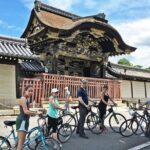
Before you roll out, you’ll get kitted out with the e-bike and helmet. Helmets are included, and that matters more than people think, especially on narrow lanes where you’re sharing space with locals and delivery traffic. A route coordinator in English stays with you and keeps things moving.
One detail I appreciate from the experience format: the tour is timed in a way that balances short riding legs with actual viewing time. After the setup, you get a quick cycle segment—about ten minutes—before you’re in Gion. That keeps you from feeling like the ride is just transportation. It’s part of the sightseeing.
Stop 1: Gion—Fast Orientation and Geisha District Context
Gion is the obvious name in Kyoto. It’s also one of the easiest places to misunderstand if you just rush through the streets without any context.
Here, your stop is short, around ten minutes. In that time you get scenery and an introduction to Geisha culture—enough to give you language for what you’ll notice as you walk past later. It’s not a deep-dive class. It’s more like setting your eyes to the right settings.
The practical upside of such a quick Gion introduction: you don’t waste the best energy of the tour on a stop that many people already see on their own. Instead, you get a starting point and then move on.
The possible downside: if you were hoping for a long stroll through Gion’s side streets, this schedule won’t satisfy that alone. Plan to come back on your own time if you want extended wandering.
Stop 2: Higashiyama Ward Temples, Plus a Snack Break
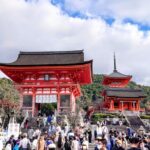
Next you cycle roughly fifteen minutes into the Higashiyama area. This is where the day starts to feel more like Kyoto as a sequence of experiences rather than a checklist.
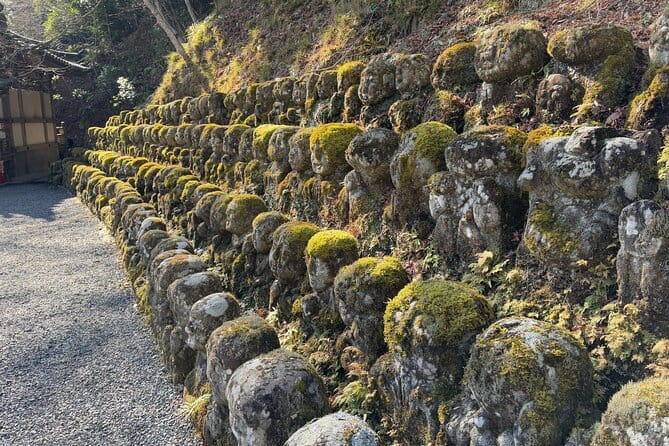
You’ll visit a temple with time to explore—about fifty minutes. Admission is free for this stop, and the guide uses that window to point out meaning behind what you’re seeing. The goal isn’t just photos. It’s understanding how Shinto and Buddhism show up in everyday objects and street life.
You also stop for a quick snack. That sounds small, but it helps a lot when you’re mixing cycling and walking. It keeps the group from turning irritable at the exact wrong moment—like right before a big walk or a crowded entrance.
A realism note: temples and shrine grounds can have uneven paths. The e-bike handles the travel between them, but you’ll still do some walking. If you’re sensitive to stairs or cobblestones, pace yourself and let the group move at your comfort level.
Stop 3: Fushimi Inari-taisha—Torii Gates and a Guided Way Through
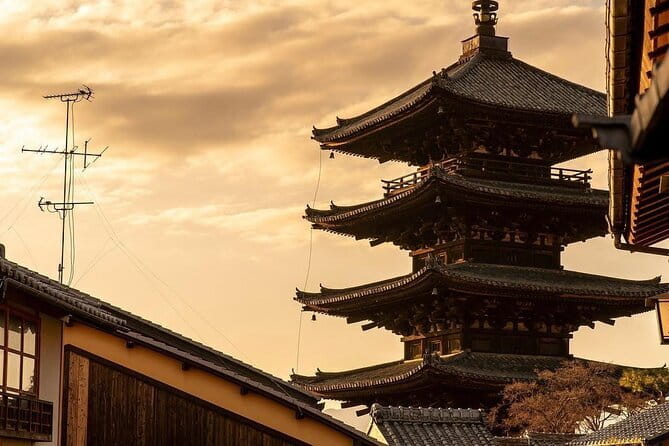
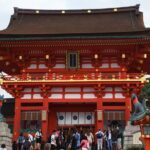
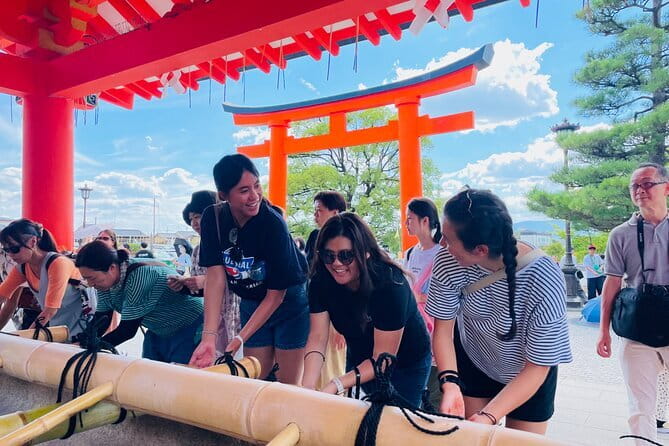
Fushimi Inari-taisha is the star. It’s the torii-gate maze that people recognize even from Instagram thumbnails. Here you get about forty minutes at the shrine.
That’s the sweet spot for many visitors. It’s enough time to experience the main gate areas and feel the atmosphere, without turning your day into a long endurance hike. And because you’re coming with context from the guide, the shrine is easier to interpret than a random forest of gates.
Your route also tends to keep you moving. From the review-style descriptions of the day, the tour includes both bigger roads and quieter lanes. That usually helps with crowd flow, because you’re not only stuck in the busiest corridors.
One practical tip for this stop: wear shoes you’re happy walking in. You can do Fushimi Inari with a calm pace, but you don’t want to be thinking about sore feet halfway up. Bring water even though it’s included—Kyoto heat and humidity can be rude in summer.
You can also read our reviews of more tours and experiences in Kyoto


Stop 4: Tōfuku-ji and the Kamogawa River Finish
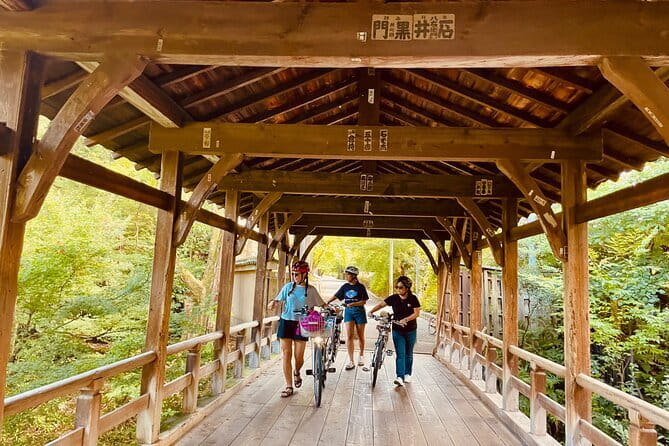
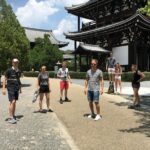
After Fushimi Inari-taisha you cycle about ten minutes to the Tōfuku-ji temple complex. You’ll spend around twenty minutes here, with free admission included.
This stop is shorter than the Higashiyama temple visit. Think of Tōfuku-ji as a meaningful capstone rather than the main act. You get a chance to see a different side of Kyoto’s temple culture and then shift into a more relaxed phase of the tour.
Then comes one of the best parts: you follow the Kamogawa River back toward the start. The ride along the river is often described as scenic, calmer, and less chaotic than the streets near the big landmarks. It’s also a nice way to reset after walking time at Fushimi Inari.
If you like finishing with momentum, this ending works. You close the day with motion and views, not with one more packed schedule stop.
Price and Value: What $86.22 Actually Buys You
At $86.22 per person for about four hours, this isn’t the cheapest way to “see Kyoto.” But it can be good value because the cost covers the things that make a tour actually work.
You’re paying for:
- E-bike use and a helmet
- Bottled water and snacks
- An English-speaking route coordinator
- Free admission tickets for the scheduled stops
- A small-group format (max 8)
The e-bike changes the math. If you tried to do the same set of places by yourself, you’d spend time figuring out transport timing, bike-rental logistics, and route flow. Here, you get a built-in movement plan that keeps you from zigzagging across the city.
The snack and water matter too. Kyoto walking days add up fast. Keeping everyone fed reduces the “hangry gap” that can derail pacing.
Not included is lunch. That’s normal for many tours, but it’s still something you should plan around. If you hate deciding where to eat during a busy day, eat before you meet or plan a post-tour meal nearby.
The Guide Makes the Day: Stories, Q&A, and Safety Style
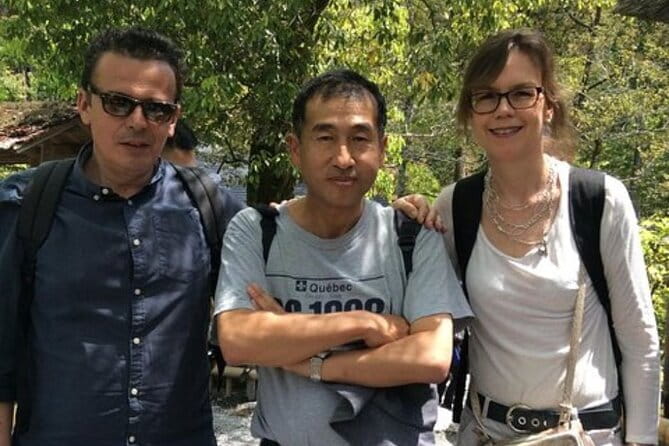
One reason people rate this tour so highly is the host style. Maki (and sometimes spelled Mika in notes) is repeatedly described as funny, friendly, and attentive—someone who can talk culture without turning it into a lecture.
The guide brings personal Kyoto context, including what it means to grow up there and how traditions show up in daily life. You also hear explanations tied to objects in the street and around homes, not just the big official sites.
On the culture side, you’ll get introductions to Shinto and Buddhism, plus samurai-era references and broader customs. One of the fun parts is that the explanations don’t stop at “what.” They include cultural reasons, like why certain chopstick practices are considered taboo. You may also hear odd-but-interesting trivia, such as how some museums even exist for topics you wouldn’t expect.
Safety is handled with clear group habits. Riders use hand signals, and pacing includes practical adjustments. In bad weather moments, a guide may try to keep you dry and find shelter when needed. In heat, extra comfort steps have included water management and cooling help in at least one described outing.
That matters because it makes the tour feel controlled. You’re not just “riding with a stranger.” You’re on a guided flow.
Weather, Comfort, and E-Bike Reality Checks
This experience requires good weather. If conditions are poor, you’ll be offered a different date or a full refund. That’s worth taking seriously in Kyoto because rain can make roads slick and temple paths slippery.
Also, most travelers can participate, but that doesn’t mean the day is zero-effort. You’ll cycle and walk. The e-bike reduces strain, and the route is described as mostly flat, but you still need balance and comfort riding in a group.
Bring practical gear:
- Comfortable shoes for shrine and temple walking
- A light layer if the weather shifts
- Sunscreen in warm months
- Extra water if you tend to get thirsty fast (water is provided, but heat can surprise you)
If you’re traveling in peak summer, plan for the possibility of searching out electrolytes at some point. One group noted a convenience-store stop for electrolytes during brutal heat. You can’t assume that happens every time, but it’s smart to be ready.
Who Should Book This Tour (And Who Might Skip It)
This is a strong match if you:
- Want Kyoto icons without spending the whole day stuck in long walking lines
- Prefer a small-group experience where you can ask questions
- Like learning cultural context while you’re moving through neighborhoods
- Want an easier way to cover distance than walking only
You might want to skip it if you:
- Want to linger for long periods at every temple and shrine
- Don’t feel comfortable on a bicycle, even with e-assist
- Plan to skip snacks and you truly need lunch included (because lunch isn’t part of the package)
Should You Book Pedal Adventure Kyoto?
I think this tour is worth booking when you want a “Kyoto sampler” that still feels thoughtful. You don’t just roll past famous sights. You get context for what the places mean, plus a ride plan that helps you see more without burning out.
If you’re the kind of traveler who enjoys explanations, cultural details, and getting your bearings fast, this tour can save you time and confusion. The e-bike element makes it practical for a wide range of ages and fitness levels, especially since the group size stays small.
If you’re the type who needs to take things slow at major sites, treat the tour as the start. Use it to understand where things are and what matters, then return later on your own for deeper wandering.
FAQ
How long is the e-bike tour in Kyoto?
It runs for about 4 hours (approx.).
Where does the tour start, and how does it end?
The meeting point is 19 Shōgoin Higashimachi, Sakyo Ward, Kyoto, 606-8325, Japan. The tour ends back at the same meeting point.
What major places does the tour visit?
The itinerary includes Gion, a temple stop in the Higashiyama area, Fushimi Inari-taisha Shrine, and Tōfuku-ji Temple, with a ride along the Kamogawa River back afterward.
What’s included in the price?
Included are bicycle use, a helmet, bottled water, snacks, and an English-speaking route coordinator.
Is lunch included?
No, lunch is not included.
How big is the group?
The tour has a maximum of 8 travelers.
What is the cancellation policy if the weather is bad?
You can cancel for a full refund up to 24 hours in advance. The experience requires good weather, and if it’s canceled due to poor weather you’ll be offered a different date or a full refund.