REVIEW · KYOTO
Kyoto Samurai Experience
Book on Viator →Operated by Kyoto Samurai Experience · Bookable on Viator
Samurai training beats a museum stop. You get a real, hands-on session at a preserved samurai house, with time to handle a training sword and learn the philosophy of Bushido. I liked how the class feels practical, not performative, and how the setting matches what you’re studying.
Two stand-out parts for me: the kimono + posture training that makes the whole experience feel real, and the Zen meditation that gives your body a chance to slow down after sword work. One thing to keep in mind is that this is an athletic, instruction-heavy class, so if you’re hoping for nonstop action or a big “samurai show,” you may find it more like focused training than a movie scene.
In This Review
- Key Things to Know Before You Go
- Why This Kyoto Samurai House Lesson Feels Different
- Meeting Point at Kyoto Samurai Experience / Waraku: Get Oriented Fast
- Your 1 Hour 45 Minutes: The Session Flow
- Changing Into a Kimono: More Than a Costume
- Swordsmanship Basics: Handling the Training Sword
- Bushido: The Warrior Code You Can Explain
- Zen Meditation Session: The Mental Reset
- Weather and Comfort: How to Show Up Without Feeling Miserable
- Staff, Language Support, and Pacing That Feels Human
- Price and Value: Is $119.38 a Good Deal for Kyoto?
- Who This Is Best For (and Who Should Skip It)
- Practical Tips to Make Your Session Go Smoothly
- Should You Book the Kyoto Samurai Experience?
- FAQ
- How long is the Kyoto Samurai Experience?
- What is included in the experience?
- Do I choose a morning or afternoon time?
- What are the group size limits?
- Is the activity physically demanding?
- What should I wear?
- Can I cancel for a refund?
Key Things to Know Before You Go
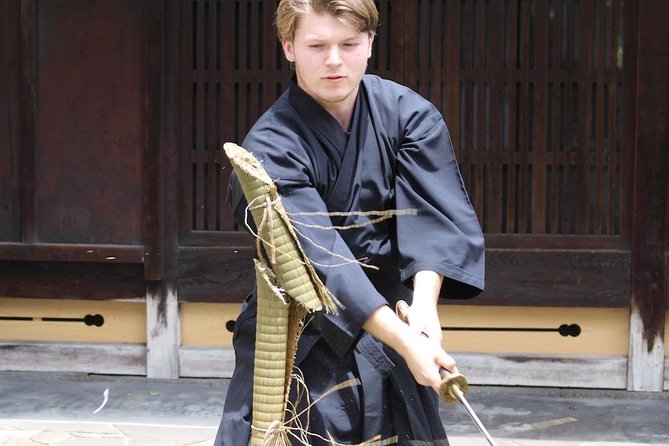
- Small group (max 14) means more personal coaching and fewer people standing around.
- Morning or afternoon sessions help you match the class to your Kyoto plans.
- Kimono time is part of the instruction, not just a photo prop.
- Bushido + Zen turn the sword lesson into something you can actually explain afterward.
- You handle a martial arts training sword, so it’s hands-on from the start.
Why This Kyoto Samurai House Lesson Feels Different
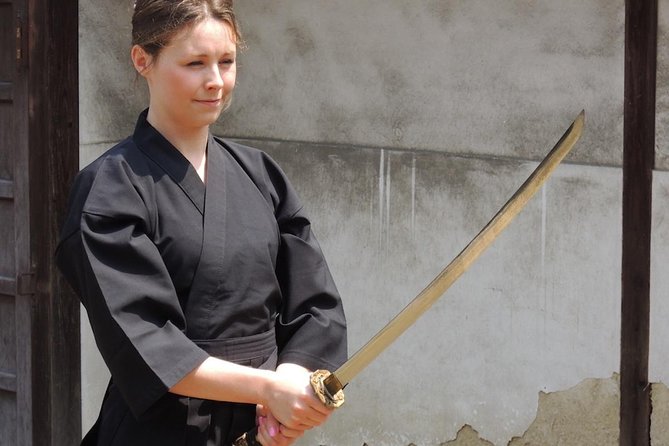
Kyoto has plenty of history you can admire from a distance. This experience is different because you’re doing something—standing a certain way, learning how a sword is held, and practicing the basics under guidance. That’s a big shift from reading captions and moving on.
The location matters too. You’re at a traditional samurai house, and the structure gives you context fast. When you’re wearing a traditional robe and hearing the logic behind warrior codes, it’s easier to understand why daily life and discipline looked the way they did.
If you care about value, this format helps. You’re paying for instruction and a complete arc: culture, training, and reflection. That’s harder to get in short, shopping-oriented “culture” stops.
You can also read our reviews of more tours and experiences in Kyoto.



Meeting Point at Kyoto Samurai Experience / Waraku: Get Oriented Fast
You meet at Kyoto Samurai Experience / Waraku, 111 Inabachō, Nakagyo Ward, Kyoto (604-8803). The tour ends back at the same meeting point, so you don’t have to worry about getting stranded somewhere far from transit.
It’s described as near public transportation, which is a quiet but important win in Kyoto. A lot of great things end up being harder to reach than they should be. Here, you can plan your day without building a whole extra commute around it.
Tip: arrive a little early. With a small-group class and a clothing change, a few minutes of buffer keeps things calm, even if your Kyoto route runs late.
Your 1 Hour 45 Minutes: The Session Flow
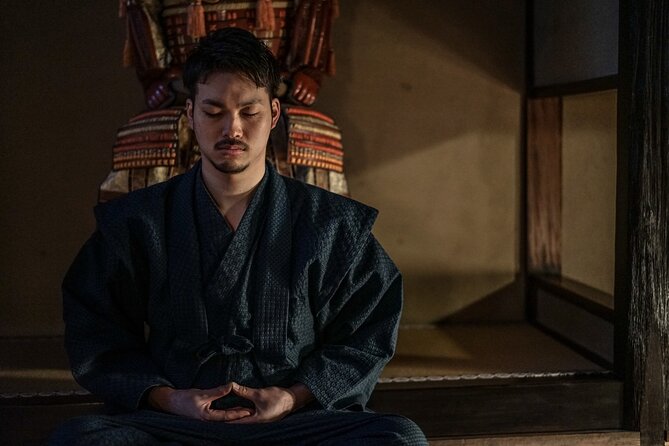
This activity runs about 1 hour 45 minutes. In that time, you’ll cycle through three main phases: welcome and explanation, kimono and sword practice, then Bushido and Zen.
That time limit is part of the value. You get enough time to learn, try, and absorb the lesson without feeling like you’re trapped in a long tour bus schedule. The pacing also shows up in the feedback—people often call out how the session feels structured and not rushed.
What you’ll likely feel: you start curious, then you get hands-on, then you end calmer. Sword practice is physical. Meditation and philosophy are the cool-down, not an afterthought.
Changing Into a Kimono: More Than a Costume
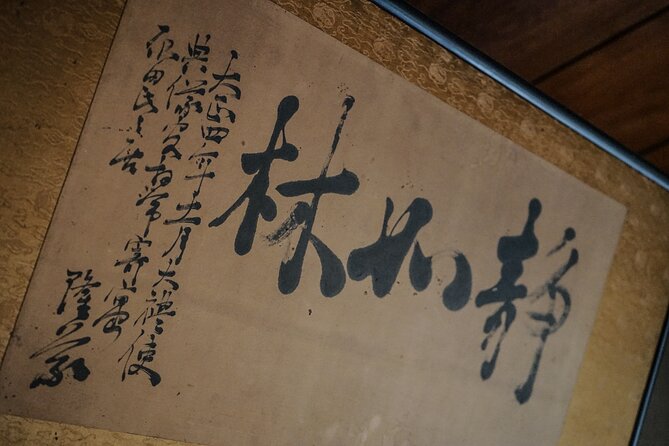
You change into a traditional kimono at the start of the session. It’s not just for pictures. The clothing and the way you wear it help you understand how movement and posture work in traditional settings.
In practical terms, that means you’ll want comfy, flexible basics under the kimono and shoes that you can move in confidently. The experience specifically asks for appropriate footwear for an athletic activity, and that’s because your body will be doing real training movements.
If you’re short on time for getting ready that morning or afternoon, this is still a good choice. You don’t need special pre-knowledge—just show up ready to change, listen, and follow the instructor’s lead.
Swordsmanship Basics: Handling the Training Sword
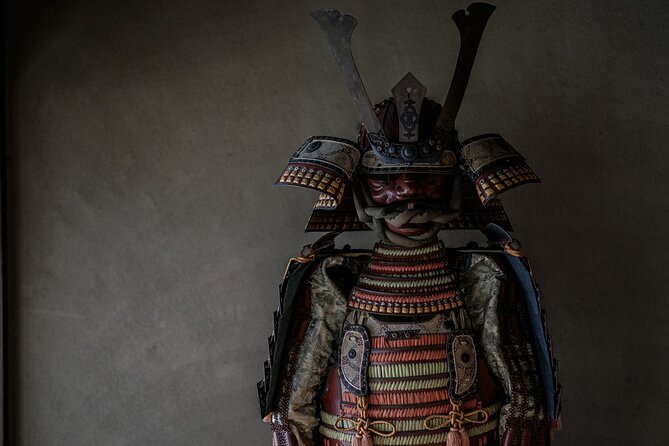
The core activity is swordsmanship basics. You’ll practice under an expert sword instructor who teaches how to handle a martial arts training sword. The lesson is meant to be learnable in one sitting, which is why you won’t need prior experience.
This is where the small group matters. With a maximum of 14, you’re more likely to get hands-on corrections. That’s the difference between “watching someone teach” and actually understanding what to do with your stance and grip.
What I’d watch for in your own practice: don’t rush to get impressive. Focus on the fundamentals—how you hold the sword, where your body weight sits, and how the instructor cues your movement. The session is designed around getting you to do a few key things well.
And yes, you’ll likely leave with the kind of confidence that comes from physically trying. Multiple reviews highlight that the hands-on element and the chance to take a strike/cut attempt made the day feel real.


Bushido: The Warrior Code You Can Explain
Between the sword practice parts, the guide explains Bushido, the Way of the Warrior. This is the “why” behind the “how.” It’s not presented as vague inspirational talk. You’re given a framework so the techniques make cultural sense.
In a good class, philosophy doesn’t float above your body. Here, it connects. If you understand discipline, restraint, and mindset, sword training stops being random movement and becomes a coherent skill set.
This matters for you because Kyoto is full of history—but not always full of meaning. The Bushido portion gives you a way to talk about what you learned when you’re back in your hotel and your brain is trying to sort out temple facts from human stories.
Zen Meditation Session: The Mental Reset
After sword practice, you’ll have a Zen meditation session. This is one of the best ideas in the whole format because meditation is a built-in landing pad.
Sword work creates intensity. Even when it’s beginner-friendly, you’re engaging your muscles and your attention. The meditation part helps you shift gears and feel like the experience is complete, not just a workout you did and left.
If you’ve ever found it hard to “turn off” after physical activities while traveling, this is the fix. Reviews specifically mention that meditation helps them wind down after the exercises. That’s exactly what you want on a Kyoto day that might also include temples, crowds, and long walks.
Weather and Comfort: How to Show Up Without Feeling Miserable
This kind of class depends on conditions. One review described outdoor timing on a cold day and mentioned staff provided hadwarmers and hot tea. Another mentioned hot-day support like water, wet cloths, and electrolyte candies.
You can’t rely on perfect weather, so come prepared to be comfortable enough to focus. Wear layers you can handle if the session shifts between indoor and outdoor space. Comfortable clothes are requested, and the shoes should support athletic movement.
Simple prep that helps: bring a light layer for temperature swings, and keep your day’s plans flexible enough that you’re not sprinting across Kyoto right before your session.
Staff, Language Support, and Pacing That Feels Human
The instructor is described as Japanese and trained in martial arts, and the rest of the team supports with English and Japanese translation. That matters because you’ll learn faster when you can understand cues clearly and ask questions without guessing.
What also stands out is the welcome and pacing. Reviews praise staff for being friendly, clear, and patient, and they mention the session doesn’t feel commercialized or rushed. In plain terms: you’re not herded through. You’re taught.
Some sessions also seem to include small cultural touches, like a brief performance on a traditional instrument, and staff may take and share photos quickly. That’s extra value, as long as you’re realistic about it being a small add-on, not the main product.
Price and Value: Is $119.38 a Good Deal for Kyoto?
At $119.38 per person, this is not a bargain experience. But it can be good value if you care about instruction and a full cultural arc.
Here’s the value logic:
- You’re paying for expert coaching (not just access).
- You get a multi-part program: kimono, sword basics, Bushido, and Zen.
- The group size is capped at 14, which raises the odds you’ll actually learn something instead of just taking turns.
- The setting (a preserved samurai house) is part of the “class,” not a backdrop you glance at once.
A fair drawback that comes up in feedback: some people feel it’s pricier than other samurai experiences and didn’t match the video/photo look they expected. That’s a risk you should watch for anywhere in Japan that mixes training with media-friendly visuals.
My advice: judge this as a skills-and-culture class, not a cinematic stunt show. If you want hands-on training and a thoughtful end, it’s priced in a way that can make sense.
Who This Is Best For (and Who Should Skip It)
This fits best if you want:
- A hands-on way to learn samurai culture, not just watch it
- Something you can do in about two hours without losing your whole day
- A mix of physical practice and calm reflection (sword + Zen)
It also works well for families where kids can safely participate, since minors must be accompanied by an adult. Adults doing this solo, with a partner, or as a parent-child pair also seems to land well.
Skip or reconsider if you:
- Want a fast sightseeing stop with minimal physical effort
- Expect nonstop action or a large-scale performance
- Are extremely sensitive to the idea of paying top price for a class format
Practical Tips to Make Your Session Go Smoothly
A few small choices can improve the whole experience:
- Wear comfortable clothes and athletic shoes suited to moving.
- Bring a calm mindset. Sword basics take a few tries to click.
- Don’t chase speed. Follow the instructor’s cues and focus on correct form.
- Plan around the weather. Dress in layers, and expect that conditions can affect how the class feels.
- If you care about photos, ask when they’ll take them. Staff may share photos quickly, but timing can depend on the session flow.
If you want to get the most out of the Bushido portion, listen actively during the philosophy segments. That’s where you’ll connect the training to the bigger story of warrior ethics.
Should You Book the Kyoto Samurai Experience?
I think this is a strong pick if you want a real, guided practice session inside a traditional samurai house, with kimono, sword basics, Bushido context, and a Zen finish. The small group size and the clear structure are the reasons it keeps getting high marks.
I would not book it if your main goal is a cheap samurai entertainment hit or if you’re uncomfortable with a moderate fitness level. Think of it as disciplined training with cultural meaning, not as a theater production.
If that sounds like your kind of Kyoto day, go ahead and book. It’s one of the better “do something” experiences you can fit into a travel schedule, and you’ll have more than photos to show for it.
FAQ
How long is the Kyoto Samurai Experience?
The session runs about 1 hour 45 minutes.
What is included in the experience?
You’ll practice swordsmanship basics, try on a traditional kimono, learn about Bushido, and take part in a Zen meditation session. You’ll also handle a martial arts training sword.
Do I choose a morning or afternoon time?
Yes. You can select either a morning or an afternoon departure time based on your itinerary.
What are the group size limits?
This tour/activity has a maximum of 14 travelers.
Is the activity physically demanding?
It’s an athletic activity with a moderate physical fitness level requirement, so wear comfortable clothes and appropriate footwear.
What should I wear?
Wear comfortable clothes and appropriate footwear for an athletic activity. You’ll change into a traditional kimono during the experience.
Can I cancel for a refund?
You can cancel up to 24 hours in advance of the experience for a full refund.