REVIEW · KYOTO
160 Years Authentic Seated Archery Experience in Kyoto
Book on Viator →Operated by 株式会社Honey J コーポレーション · Bookable on Viator
Kyoto and a longbow? In one hour, you can study the calm, focused side of Japanese archery in a 160-year-old dojo. I like that this is seated kyudo (not a footwork circus) and that the instruction is beginner-friendly, with an English-speaking translator to keep you on track. You’ll also learn how the discipline of kyudo ties to posture, timing, and intention—so the experience is more than just hitting a target.
One thing to consider: you’ll shoot 16 arrows, and you need a moderate level of physical comfort for the seated stance and handling the bow setup.
In This Review
- Key highlights you’ll care about
- Kyoto Kyudo at a 160-Year-Old Dojo (Maruyama Park area)
- Price and timing: what $96.70 buys you in practice time
- Your 1-hour flow: from video tutorial to real seated shots
- 16 arrows and the calligraphy challenge: how the reward works
- What “seated kyudo” feels like (and why it’s good for beginners)
- English support: how the translator improves the lesson
- Getting there near public transport: start point in Kyoto
- Who should book: families, first-timers, and calm-adventure people
- The bigger value: why kyudo feels different from regular archery
- Should you book this 160 Years authentic seated archery in Kyoto?
- FAQ
- How long is the kyudo experience?
- Where does the experience start?
- Is the experience beginner-friendly?
- Are all kyudo items included?
- Is there English support?
- How many arrows will I shoot?
- What happens if I hit the target 3 times out of 16?
- Is transportation included?
- How many people are in a group?
- Can I cancel for a full refund?
- Final call: book or pass?
Key highlights you’ll care about
- 160-year-old dojo setting tied to traditions going back to the late Edo period
- Seated kyudo format that keeps the lesson focused on technique
- 16-arrow practice with a clear goal: hit 3 times out of 16
- Traditional Japanese calligraphy reward if you meet the mark
- English support plus a 10-minute video tutorial to get you started
Kyoto Kyudo at a 160-Year-Old Dojo (Maruyama Park area)
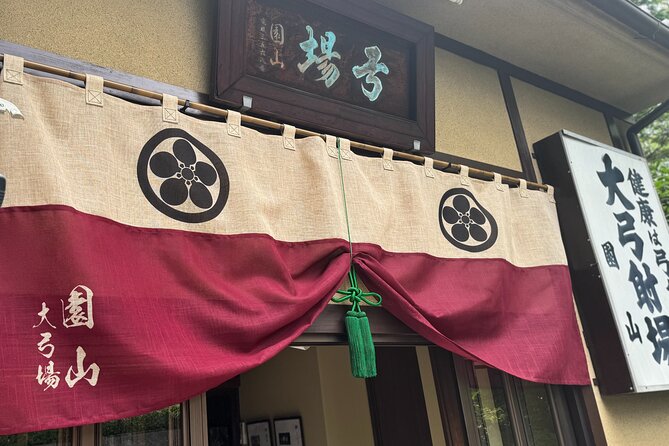
Kyudo has a reputation for being strict, slow, and very deliberate. That’s exactly why this Kyoto seated archery experience works so well for first-timers: you’re not trying to run a gauntlet. You’re learning a sequence—posture, how you draw, how you release—while sitting in a traditional practice setup.
The location matters, too. Your session takes place at a historic dojo linked to a tradition preserved for over 160 years, connected to the late Edo period. Even if you don’t know anything about kyudo, the setting helps you understand the tone. It’s quiet. It’s rule-based. It’s not about speed or style points.
And you get the benefit of being in a small group (maximum 4 travelers). That usually means you’re less likely to feel lost or rushed, especially when your translator is there to clarify the why behind the how.
You can also read our reviews of more tours and experiences in Kyoto.



Price and timing: what $96.70 buys you in practice time
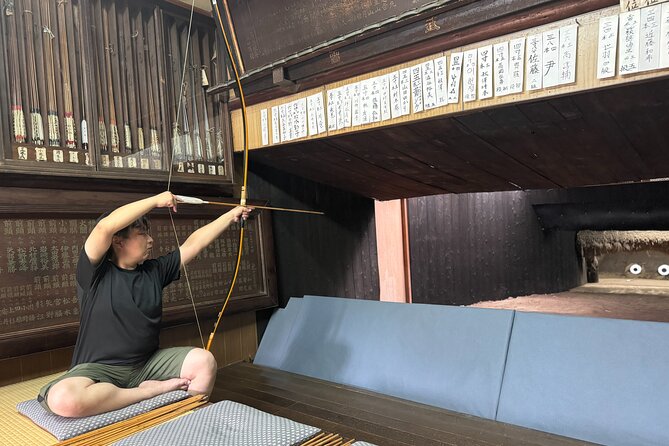
At $96.70 per person for about 1 hour, this isn’t a “watch and clap” activity. The price covers a class fee plus all the equipment basics for kyudo, along with an English-speaking translator and a 10-minute video tutorial.
What I think you’re paying for (beyond the bow and arrows) is structure. The session is short enough that you won’t drift, but long enough for real coaching: you’ll receive hands-on instruction and shoot a full set of arrows (16 total). If you’re the kind of person who likes learning with immediate feedback, that format gives you a satisfying arc.
You’ll also see two small value boosters: group discounts and a mobile ticket. Neither one changes the training itself, but they can make booking easier and sometimes cheaper depending on your group situation.
Your 1-hour flow: from video tutorial to real seated shots
Here’s the practical rhythm you should expect.
First, there’s a 10-minute video tutorial. That’s helpful because kyudo has a lot of terms and a very specific sequence. A quick visual guide helps you avoid the common problem of hearing instructions in the moment but not yet understanding the overall pattern.
Then you’re guided by an in-person team—English/Japanese support and an English-speaking translator. The translation piece is key. Kyudo isn’t just physical. It’s mental. You’ll be taught how to focus and how to match your actions to the intended shot.
After that, you move into the seated archery practice itself. You’ll work with real bows and arrows, using the dojo setup that keeps your attention on technique rather than movement across a range.
One practical detail: since the session is about 1 hour total, the pacing is likely tight. You won’t be standing around waiting for your turn for long. With a group size capped at 4, you should get plenty of individual attention while still shooting a meaningful number of arrows.
16 arrows and the calligraphy challenge: how the reward works
The main event is the scoring goal.
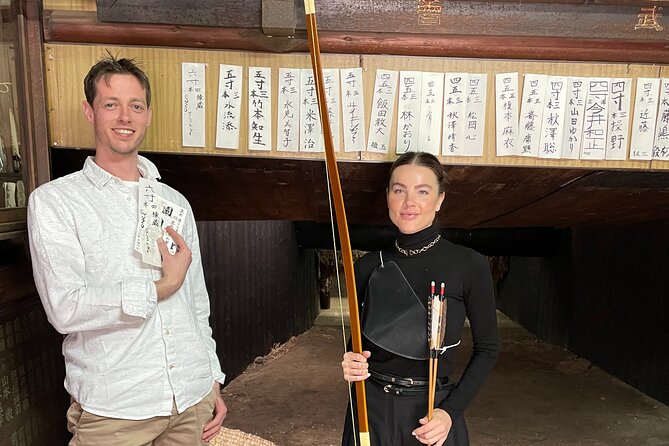
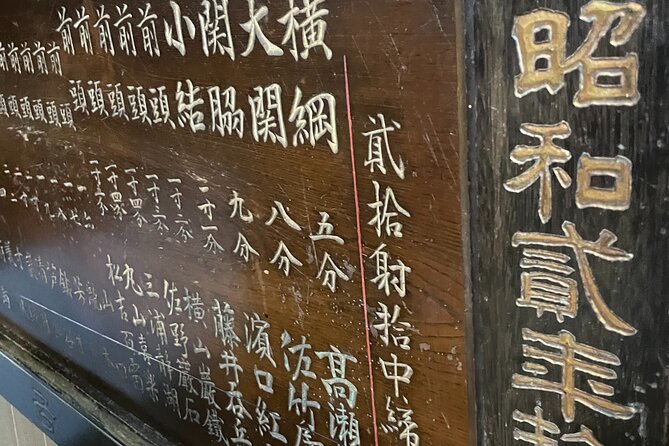
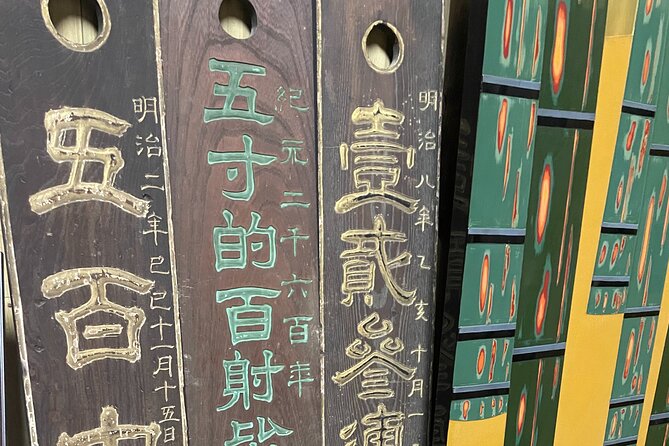
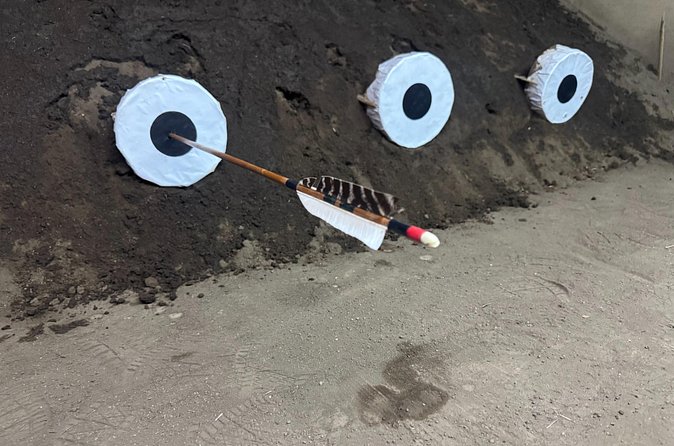
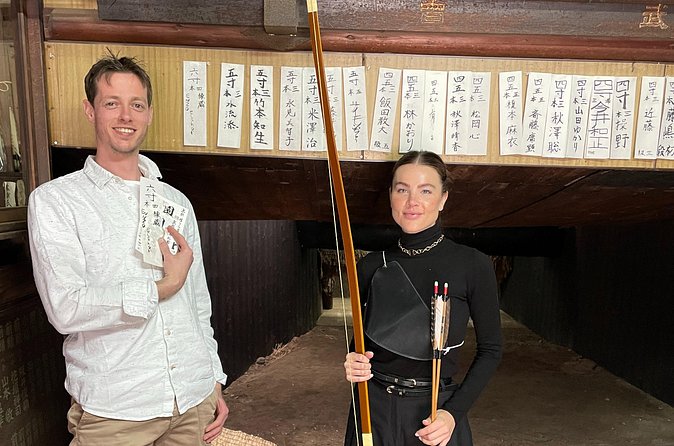
You shoot 16 arrows. If you hit the target 3 times out of 16, you earn the honor of writing your name in traditional Japanese calligraphy. That calligraphy is proudly displayed in the dojo.
This isn’t just a gimmick. It gives the session a clear purpose. Instead of thinking, I hope I do okay, you’ll think, Can I line up the basics and commit to the shot sequence? That mindset often makes beginners more confident, because it turns practice into a goal you can actually work toward.
Also, calligraphy connects directly to kyudo’s cultural framing. Kyudo isn’t only sport; it’s discipline. Having your name written and displayed adds a tangible souvenir that feels rooted in the space rather than generic tourism merch.
What “seated kyudo” feels like (and why it’s good for beginners)
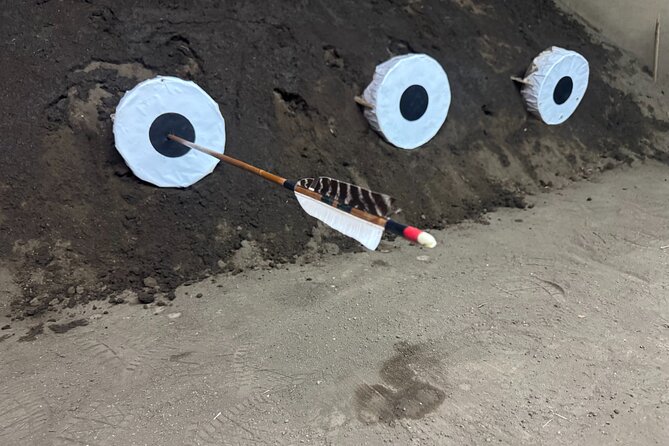
Because this is seated kyudo, you’re not doing long-distance athletic moves. That makes it more approachable if you’re new to archery or if you prefer technique over fitness.
Still, do take the moderate fitness note seriously. Even seated, you’ll manage bow handling and maintain posture long enough to execute the shot sequence properly. If you have stiffness issues, it’s smart to consider whether you can comfortably hold the seated position for the duration of instruction and practice.
The upside: you can focus on what really matters in kyudo.
- Your posture and how you position your body
- Your drawing motion and timing
- A release that matches the sequence you’ve practiced
If you go in expecting a calm, technical lesson, you’ll probably find it easier to follow than you might think.

English support: how the translator improves the lesson
One of the best reasons to book this specific experience is the language setup.
You get an English-speaking translator, plus an in-person guide listed as English/Japanese. And since there’s already a 10-minute video tutorial, your first 10 minutes don’t feel like a blank slate. You’ll be able to connect instructions to what you saw, and then to what you’re doing at the range.
From the review themes, the explanations really land: people call out great explanation of both the history and the technique, and they repeatedly mention how friendly and helpful the team is. In practical terms, that means you should feel comfortable asking questions or seeking clarification if the steps don’t click right away.
If you worry about feeling awkward in class, this combo—video + translator + small group—tends to reduce the pressure fast.
Getting there near public transport: start point in Kyoto
You’ll meet at 園山大弓場 enzan daikyujyo, in Kyoto’s Higashiyama Ward, at Gionmachi Kitagawa, 円山 公園北林 (605-0073). It’s described as near public transportation, which matters in Kyoto, where walking between neighborhoods can add up.
A helpful tip: when you arrive, give yourself a few extra minutes to orient before class starts. Kyudo is traditional and organized, and you’ll want to find the correct area at the dojo without rushing. The activity ends back at the meeting point, so you’re not dealing with a long transfer or a complicated route after class.
Who should book: families, first-timers, and calm-adventure people
This is a strong fit if you want something different from temples and shopping but still want it to feel authentic.
It’s especially good for:
- First-timers who want real instruction (not a demo)
- People who like cultural activities with clear structure
- Small groups who value personal coaching (maximum 4 travelers)
- Families looking for a Kyoto highlight that feels hands-on
The reviews also suggest it can be a memorable family moment, with people describing it as a holiday highlight. If you’re traveling with others who need activities that are active but not chaotic, seated kyudo is a good match.
You might reconsider if you want something long and scenic. This is a compact, focused class. It’s about doing the technique, shooting the arrows, and learning the meaning behind it.
The bigger value: why kyudo feels different from regular archery
Regular archery classes often focus on hitting targets and improving aim. Kyudo is different. It’s tied to discipline, harmony, and a meditative approach. In a good kyudo lesson, you’re learning how to control more than just the arrow’s path.
That’s why a short session can still feel meaningful. The method and mindset you practice—slow precision, intentional movement, respect for the form—can change how you view the act of shooting.
And the dojo setting reinforces that. A historic space isn’t just decoration. It nudges you toward the right behavior: quieter attention, more respect for the process, and a feeling that this is part of a long line of practice rather than a one-off photo moment.
Should you book this 160 Years authentic seated archery in Kyoto?
If you want a hands-on Kyoto experience that feels culturally grounded and not too intimidating, I’d say yes—book it.
Choose this one if:
- You want real kyudo practice with guidance, not a short show
- You like clear goals (3 hits out of 16) and a meaningful reward (calligraphy displayed in the dojo)
- You need English support and a small group size
- You’re happy with a focused 1-hour class near public transport
Skip it or be cautious if:
- You’re expecting a long, wandering tour with lots of sightseeing stops
- You have issues with the seated posture and bow-handling comfort
If you’re weighing options, this stands out for its teaching structure: video first, then coaching, then a full set of arrows, all wrapped in a tradition-rich setting.
FAQ
How long is the kyudo experience?
The experience is about 1 hour.
Where does the experience start?
The meeting point is 園山大弓場 enzan daikyujyo, Kyoto (Higashiyama Ward, Gionmachi Kitagawa, 円山 公園北林, 605-0073). The activity ends back at this meeting point.
Is the experience beginner-friendly?
Yes. The lesson is described as beginner-friendly, with expert instruction.
Are all kyudo items included?
Yes. All items for kyudo are included, along with the class fee.
Is there English support?
Yes. An English-speaking translator is included, and there is an in-person guide listed as English and Japanese.
How many arrows will I shoot?
You will shoot 16 arrows.
What happens if I hit the target 3 times out of 16?
If you hit the target 3 times out of 16, you will earn the honor of writing your name in traditional Japanese calligraphy, which is displayed in the dojo.
Is transportation included?
No. A transportation fee is not included.
How many people are in a group?
This activity has a maximum of 4 travelers.
Can I cancel for a full refund?
Yes. You can cancel up to 24 hours in advance for a full refund, and free cancellation is offered.
Final call: book or pass?
Book it if you want a structured, authentic kyudo class in Kyoto with English help, real practice, and a calligraphy reward that feels tied to the dojo itself. Pass only if you’re looking for a long sightseeing day or you know seated archery form may be uncomfortable for you.