REVIEW · KYOTO
Carefree Private Exploration of Fushimi Inari, Gion, Kiyomizudera, and More
Book on Viator →Operated by Pinpoint Traveler, Inc · Bookable on Viator
Fushimi Inari and Gion, with no scramble. This private, English-speaking guided tour strings together Higashiyama’s top sights with included tickets and transit, starting at Inari Station and ending back at the same meeting point.
I especially like how the route gives you context, not just checkboxes. You’ll get explanations that connect places like Yasui-Konpiragu and Kodai-ji to everyday Kyoto culture, and you’ll also have moments where the guide can shift you toward calmer corners—like the more peaceful spots Ferdinand helped highlight on a past run.
The main tradeoff is physical: you’re walking a lot, with hill climbs and stairs, and summer heat can feel intense. The tour is set for moderate fitness, and it can be tough if you need extra pace or more frequent breaks—so plan on carrying water and slowing down when you have to.
In This Review
- Quick hits before you go
- Why Higashiyama’s route works in four hours
- Inari Station to Fushimi Inari-taisha: the torii world
- Hanamikoji Street and Gion: how the entertainment district feels
- Yasui-Konpiragu: a love shrine with revenge energy
- Yasaka Pagoda: the landmark you can always orient by
- Kodai-ji Temple: garden calm when you need it
- Sannenzaka and Ninenzaka toward Kiyomizudera
- Guide style: English explanations that make the day click
- Price and value: what $129 gets you
- Logistics that keep the day smooth
- What to bring when Kyoto turns hot
- Who should book this private Higashiyama route
- Should you book this Kyoto private exploration?
- FAQ
- How long is the tour?
- What’s included in the price?
- What is not included?
- Where do we meet, and where does the tour end?
- Is this tour private?
- How much walking is involved?
- Can I cancel for a full refund?
Quick hits before you go
- Private English guide: Native or equivalent speaker, with real personality and culture talk built into the route.
- All admissions + key transit included: No surprise fees for the shrines/temples on the plan, plus train transfer from Fushimi Inari toward Gion.
- Higashiyama in one sweep: Torii climb, Gion streets, a “love shrine with bite,” a pagoda landmark, garden time, then the old-street walk toward Kiyomizudera.
- Guide flexibility on the day: It’s a private format, so you can request changes to better match your interests.
- Pace can be adjusted: Guides like Duygu have been noted for accommodating older folks and keeping things manageable when hills and steps hit.
- Mobile ticket: Convenient for entry when stops require it.
Why Higashiyama’s route works in four hours
Kyoto’s best sights often come with two problems: crowds and time. This itinerary tackles both by focusing on one tight neighborhood sweep—Higashiyama’s east-side mountain area—so you’re not wasting your day on long transfers.
The pacing is also built around variety. You start with Fushimi Inari’s red-torii climb (movement right away), then shift to Gion’s old streets (texture and atmosphere), and later to calmer garden time at Kodai-ji (a mental reset). The final stretch through Sannenzaka and Ninenzaka is more about “walking Kyoto” than ticking boxes.
You can also read our reviews of more private tours in Kyoto


Inari Station to Fushimi Inari-taisha: the torii world
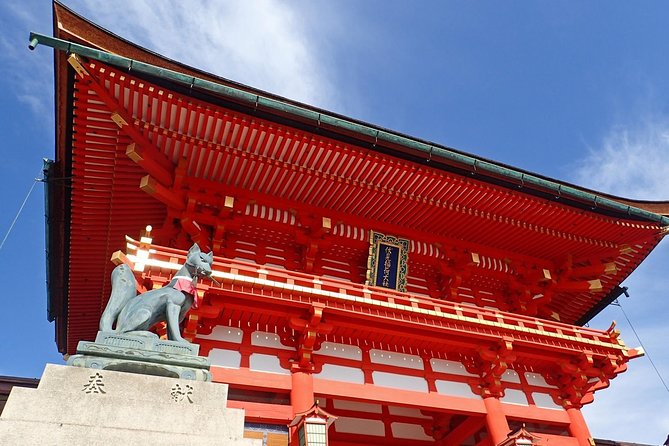
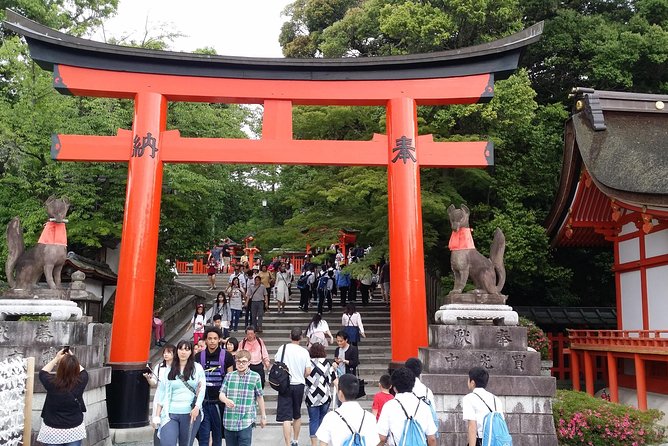
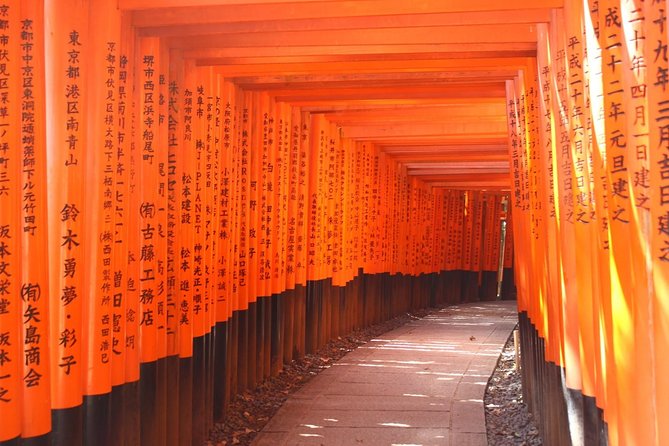
You meet at Inari Station (Fukakusa Inarionmaecho, Fushimi Ward), which is a smart start because it keeps logistics simple from the first minute. From there, you head to Fushimi Inari-taisha Shrine, the famous starting point where thousands upon thousands of bright red torii gates lead you uphill.
What I like about this stop is that it isn’t just a photo moment. The torii trail works like a layered story: you move from one space to the next, and you gradually feel the shrine complex expand as you climb. It’s the kind of place where a guide’s explanations can turn the whole walk into something you understand, not just something you walk through.
Practical tip: plan for stairs and sloped paths. Wear shoes that can handle uneven stone, and keep your hat low or your eyes shaded when the sun gets high.
Hanamikoji Street and Gion: how the entertainment district feels
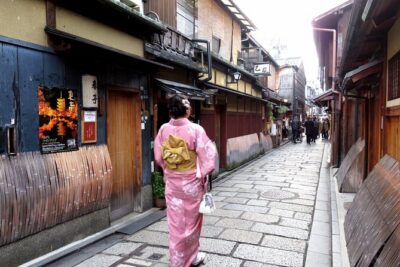
After Fushimi Inari, you take a short train ride to the Gion area. The focus here is Hanamikoji Street—often treated like a postcard, but in person it feels more like a working neighborhood.
You’ll pass major cultural landmarks along the way, including the kabuki theater, and stroll by the tea house string that defines the street’s look and sound. The tour’s angle matters: it’s not only about seeing geisha in the modern city, but about understanding how Gion earned its reputation and why it still holds strong social rules.
This is also where having a guide really helps. Gion can be confusing if you’re just wandering, because the streets twist and everyone tries to get the same angle for the same view. A good guide helps you keep momentum while still seeing the best parts without constantly backtracking.
Yasui-Konpiragu: a love shrine with revenge energy
Next up is Yasui-Konpiragu, one of Kyoto’s more memorable stops because it doesn’t treat romance like it’s all sunshine. People come for soulmate wishes, but the shrine is also known for revenge-related prayers—an unusual detail that makes it feel more human and less like a museum.
If you’re curious, this is one of those places where you’ll appreciate a guide’s cultural translation. The tour also points out the power stone said to strengthen bonds with the person you’re focusing on. That small detail turns a quick stop into a story you carry with you as you continue walking.
Consideration: this stop is short, so if you want extra time for photos or quiet prayer, ask your guide early. Since it’s private, small adjustments are usually easier than on a fixed-group schedule.
Yasaka Pagoda: the landmark you can always orient by
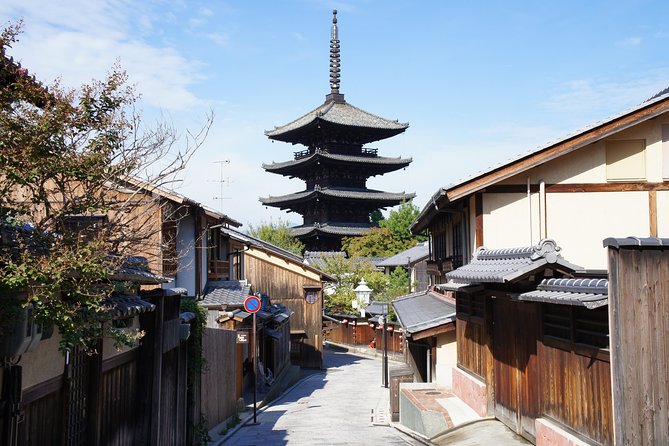
Then you get a pause for a big visual anchor: Yasaka Pagoda. It towers over the Eastern Mountain district and has been part of the neighborhood’s skyline since 1440 AD.
Even if you don’t think you care about architecture, this stop has value because it helps you orient yourself. When you can see the pagoda from different angles while moving through the area, the city stops feeling random and starts feeling organized. Your brain enjoys that. Your feet do too, because navigation becomes easier.
This is also a good moment for photos—try to time it so you’re not fighting the harshest light or the densest crowd flow.





Kodai-ji Temple: garden calm when you need it
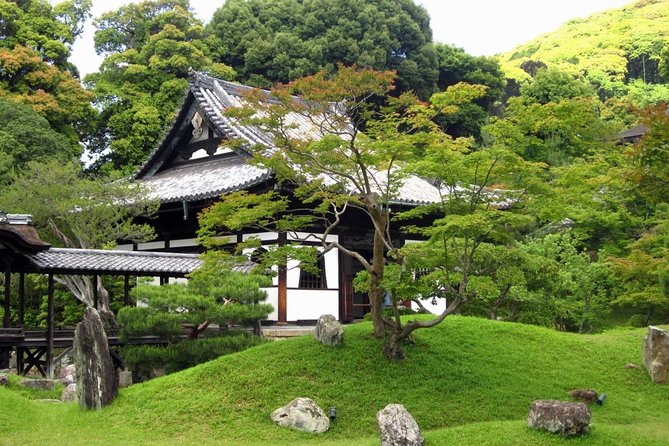
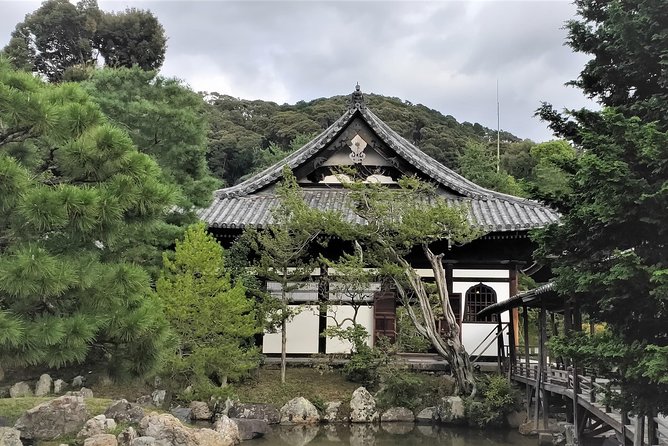
After a few active, image-heavy stops, Kodai-ji offers something different: gardens and serenity. The temple complex is known for its gardens, and it also hosts a mausoleum, which adds another layer beyond the typical walk-and-look routine.
What I like here is that the tour doesn’t just move from “one famous thing” to “another famous thing.” Kodai-ji gives you a breathing space. It’s the type of stop where you can slow down, look at details, and regain control of the day’s pace—especially if you’ve already climbed a fair amount.
If you’re traveling with anyone who gets tired in heat or on steps, this garden stop can be a lifesaver. It’s also a good time to drink water and let your eyes cool off.
Sannenzaka and Ninenzaka toward Kiyomizudera
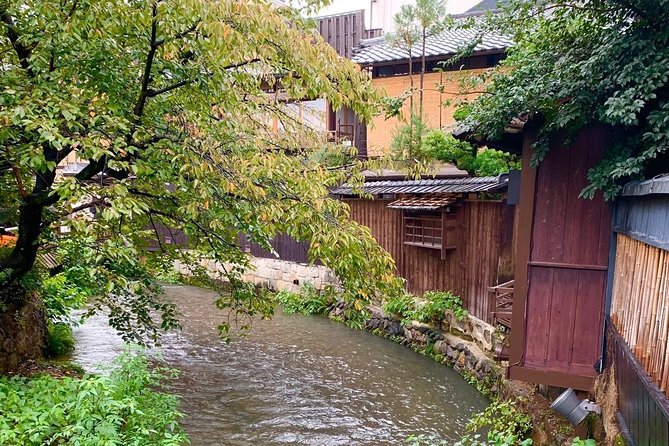
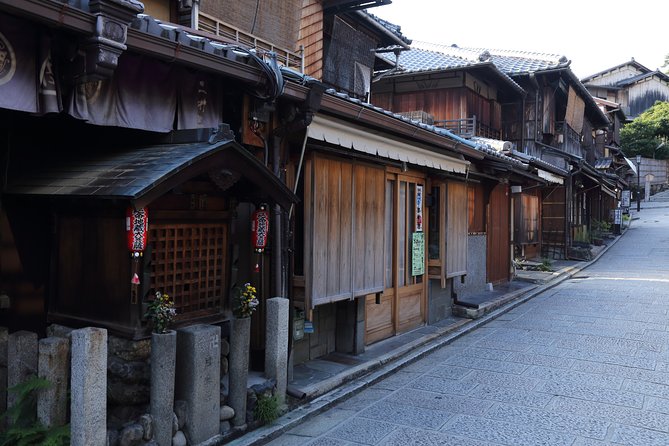
From Kodai-ji you move into the old-street style area around Sannenzaka and Ninenzaka. These are two preserved pilgrimage streets that lead toward the famous Kiyomizudera (pure water) Temple.
The streets are lined with townhouses in a medieval style and busy shops that help the area feel lived-in rather than staged. What makes this section especially enjoyable is the “walkable views” effect—clear lines of sight through the street layout so you can see more than just the storefront in front of you.
Even if you don’t spend a full chunk of time inside Kiyomizudera itself, this part of the tour still delivers value because it connects the temple area to the lived texture around it. You’re seeing how Kyoto’s “big sights” exist inside regular street life.
Practical tip: the cobbled, sloped streets can feel tougher than they look. Keep your pace steady, and don’t rush this last stretch—your knees will thank you later.
Guide style: English explanations that make the day click
The biggest difference between a generic walk and a good private tour is the guide. Here, you’re with a native or equivalent English-speaking guide, and the aim is clearly communication that feels useful—not lectures.
On this route, guides such as Oisin have been known for meeting people right at the station and then guiding them through shrines and temples with clear, practical introductions. Ferdinand has been associated with taking groups toward less busy spots so the quieter atmosphere can actually land. Duygu has been praised for friendliness, strong explanations at each stop, and for accommodating older folks when the hills and steps become challenging.
A small bonus: guides often share on-the-spot recommendations. That’s helpful when you’re trying to decide what to do after the tour ends back at the meeting point.
Price and value: what $129 gets you
At $129 per person for about four hours, this tour isn’t trying to compete with the cheapest group bus ride. It’s priced for the private guide format plus the time-saving logistics that would be annoying to do on your own.
Here’s the value math that matters:
- Admission fees are included for the temples and shrines on the plan.
- Transit is included for the key transfer from Fushimi Inari toward Gion.
- You get a private, English-speaking guide who helps you understand what you’re seeing while you walk.
What’s not included is also straightforward: food and drinks, and taxis (not required, but you can request one if you prefer). That simplicity is good. You can budget without guessing.
If you’re traveling as a duo or small group, a private tour can feel more reasonable per person because you’re splitting the guide’s attention across fewer people than a large group format. If you’re a solo traveler, it still makes sense when you want clarity fast and you don’t want to spend your limited Kyoto time sorting out routes.
Logistics that keep the day smooth
This tour is designed to be close to public transportation, and it starts at Inari Station (not a random street corner you need to hunt for). The tour also ends back at the meeting point, which reduces the stress of figuring out what to do next before you even finish.
You’ll also use a mobile ticket, which cuts down on the “where’s my paper ticket” scramble. And because it’s a private experience, you’re not stuck with a fixed pace that ignores your group.
One more benefit: the tour is flexible enough that you can request changes to the itinerary. That’s useful if you decide you want more time for gardens, or if you want to shift the order of a stop to match your energy level.
What to bring when Kyoto turns hot
This is a walking-heavy day in a hilly area. The tour is rated for moderate physical fitness, and that’s for good reason. Expect ups and downs, steps, and long stretches on foot.
Here’s what you should bring:
- Comfortable, grippy shoes for stone steps and sloped sidewalks
- Sun protection (hat, sunglasses, light layer)
- Water and a willingness to take short pauses
- Light snacks if you know you get hungry between temple stops (food isn’t included)
Heat is the big practical issue. Summers in Kyoto can feel steamier than you expect, and one past experience flagged the need for more water breaks. In this route, that’s smart advice. Drink early, not only when you’re thirsty.
If someone in your group uses a cane or needs a slower pace, this format can still work. Guides have been noted for accommodating older visitors and adjusting how they move through the hills.
Who should book this private Higashiyama route
This tour fits best if you want:
- A tight, efficient route through famous Higashiyama sights
- A guide to explain why places matter, not just where they are
- A calmer experience than self-guided wandering, especially around Gion
- A day plan that’s not overstuffed with extra transportation time
It’s also a solid choice for families with kids who want structure. There’s a child pricing policy where the first child age 12 and under is free, and additional children have reduced pricing, which can help families keep costs under control.
If you already know Kyoto deeply or you’re comfortable navigating narrow streets alone, you might feel tempted to DIY. But if you want a guided day with included entrances and transit, this route is built for that.
Should you book this Kyoto private exploration?
Book it if you want a guided hit of Higashiyama that covers Fushimi Inari, Gion streets, Kodai-ji gardens, and the Sannenzaka/Ninenzaka area without juggling tickets and getting turned around.
Skip it or consider a shorter, gentler plan if heat and hills are likely to overwhelm you, or if your group needs frequent rest stops. The walking is real, and the time is tight enough that you’ll want to manage expectations about pacing.
FAQ
How long is the tour?
It lasts about 4 hours.
What’s included in the price?
Entrance fees to the temples and shrines are included, plus transit from Fushimi Inari to Gion. You also get a native or equivalent English-speaking guide, and the tour uses a mobile ticket.
What is not included?
Food and drinks are not included. Taxis are not included, and they are not required, though you may request one if you like.
Where do we meet, and where does the tour end?
You meet at Inari Station in Fushimi Ward, and the tour ends back at the meeting point.
Is this tour private?
Yes. It’s private, and only your group participates.
How much walking is involved?
The tour is for travelers with moderate physical fitness. It includes hills and stairs, and pacing may need to be adjusted for older visitors.
Can I cancel for a full refund?
Yes. You can cancel up to 24 hours in advance for a full refund. If you cancel less than 24 hours before the start time, the amount paid is not refunded.