REVIEW · KYOTO
Kyoto: Top Sights Guided Tour – Gion, Kinkaku, Fushimi, Nijo
Book on GetYourGuide →Operated by DeepExperience, Inc. · Bookable on GetYourGuide
Kyoto hits different when you string the sights together. This full-day guided tour links five must-sees into one smart, time-saving route. I love how you get a guided walk through the torii gates at Fushimi Inari, plus clear context at each stop.
The second thing I really like is the pacing. You mix temple highlights with real neighborhood atmosphere in Gion, then finish at the iconic Golden Pavilion. It feels like Kyoto without the guesswork.
The only real drawback is the “long day” factor. It’s 8 hours with multiple transfers and a fair amount of walking, so you’ll want comfortable shoes and a steady energy level.
In This Review
- Key highlights worth marking on your map
- Why this Kyoto “top sights” day works so well
- Meeting your guide at JR Inari Station (and finding the right person)
- Fushimi Inari Taisha: walking the vermilion torii path
- The train transfer: a built-in reset between temple zones
- Kiyomizu-dera: the wooden stage and the view you remember
- Sannenzaka and the approach to Gion: old streets on foot
- Gion lunch and historic streets: machiya charm, not just photos
- Nijo Castle: opulence and preserved interiors
- Kinkaku-ji (Golden Pavilion): the last-hour glow effect
- Price and value: what your $131 really covers
- Who should book this tour (and who might not love it)
- Practical tips for a smoother day
- Should you book the Kyoto Top Sights Guided Tour?
- FAQ
- How long is the Kyoto tour?
- Where do we meet the guide?
- Which languages are available for the live guide?
- What’s included in the price?
- Is lunch included?
- What is the cancellation policy?
Key highlights worth marking on your map
- Fushimi Inari’s torii-gate path with a guided focus, so you know what you’re looking at
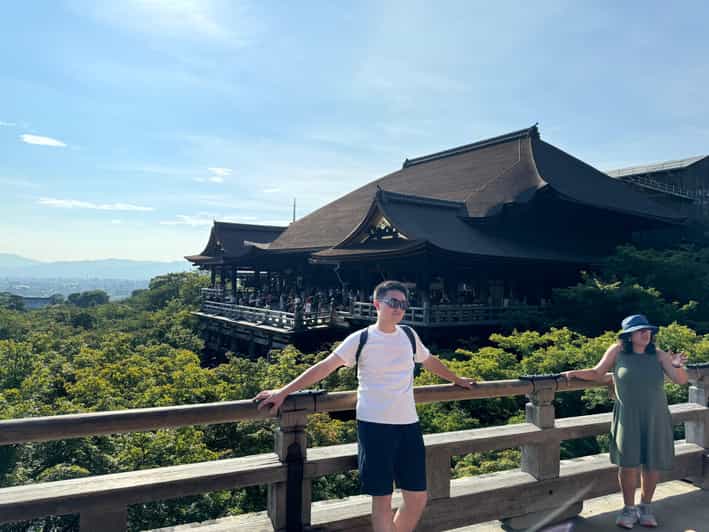
- Kiyomizu-dera’s wooden stage views, giving you a classic Kyoto panorama
- Sannenzaka-to-Gion walk, where old-street charm shows up on the ground
- Gion district time with lunch, so the day isn’t only temples and tickets
- Nijo Castle interiors and opulent architecture in a structured, guided visit
- Kinkaku-ji (Golden Pavilion) plus garden views with about an hour on site
Why this Kyoto “top sights” day works so well
Kyoto is huge. Even if you’re only here for a few days, you can still cover the core icons without spending your vacation time rerouting and re-reading maps. This tour is built for that exact problem: you get a guide, timed visits, and planned train/bus legs.
At $131 per person for an 8-hour day, it’s also priced in a way that makes sense if you value direction. You’re paying for guide time plus entry tickets, and you’re not stuck figuring out which temples are worth your limited energy. The one extra cost to remember is lunch, which is on you.
And yes, the famous places are famous for a reason. Still, what you’re really buying here is the flow: torii gates, temple views, historic streets, castle interiors, then the Golden Pavilion payoff. That arc helps the city click faster.
You can also read our reviews of more guided tours in Kyoto

Meeting your guide at JR Inari Station (and finding the right person)
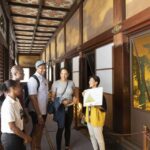
You’ll meet in front of the central ticket gate at JR Inari Station. The guide holds a yellow DeepExperience sign, which makes the meeting point easy to spot, even if you’re still getting used to station layouts.
This matters more than it sounds. Kyoto days often start with a little confusion. Here, you start with a clear location and a visible sign, so you lose less time and anxiety. You also get both English and Japanese guidance, depending on the guide and group arrangement.
Fushimi Inari Taisha: walking the vermilion torii path
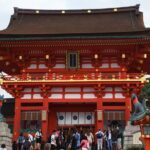
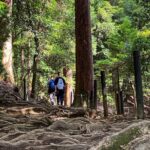
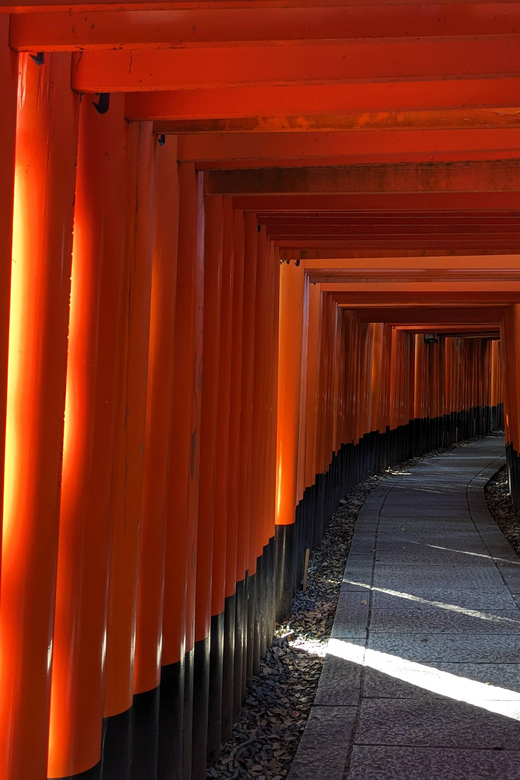
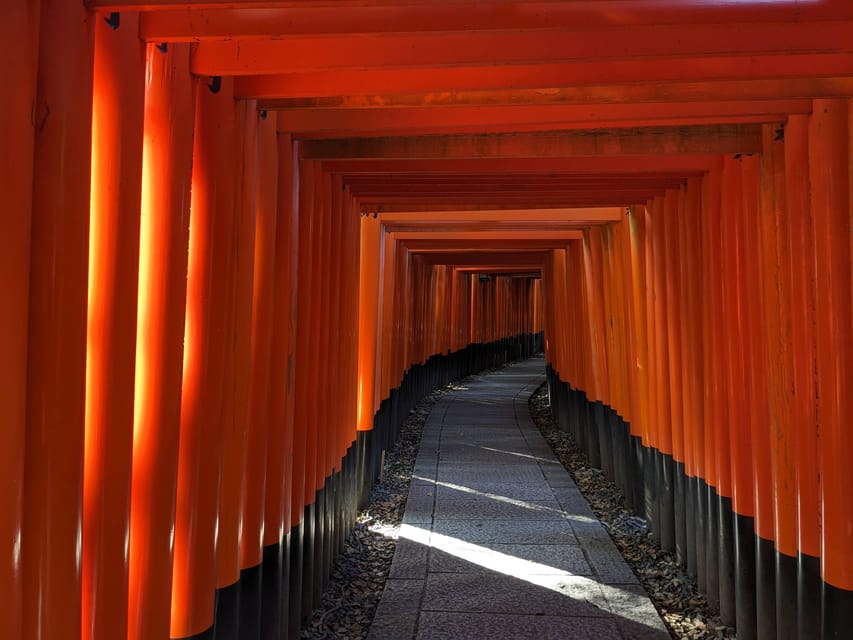
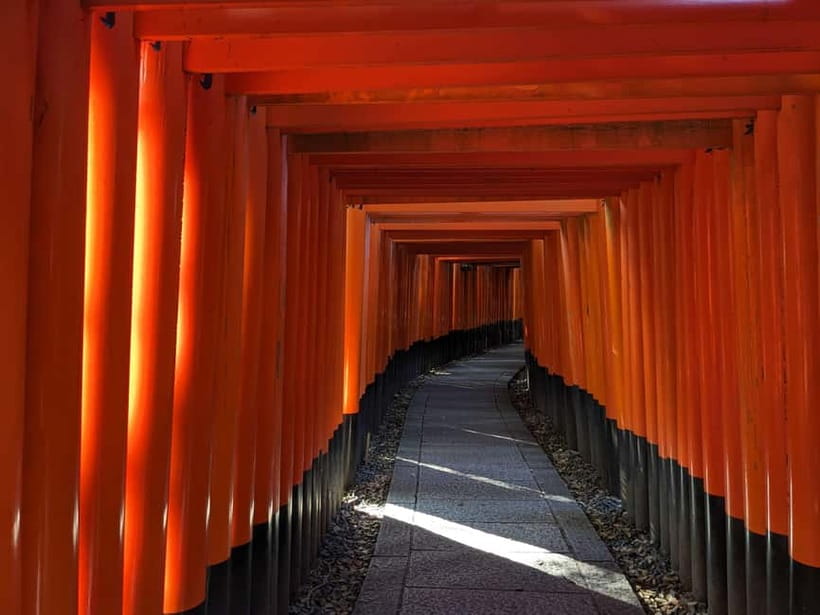
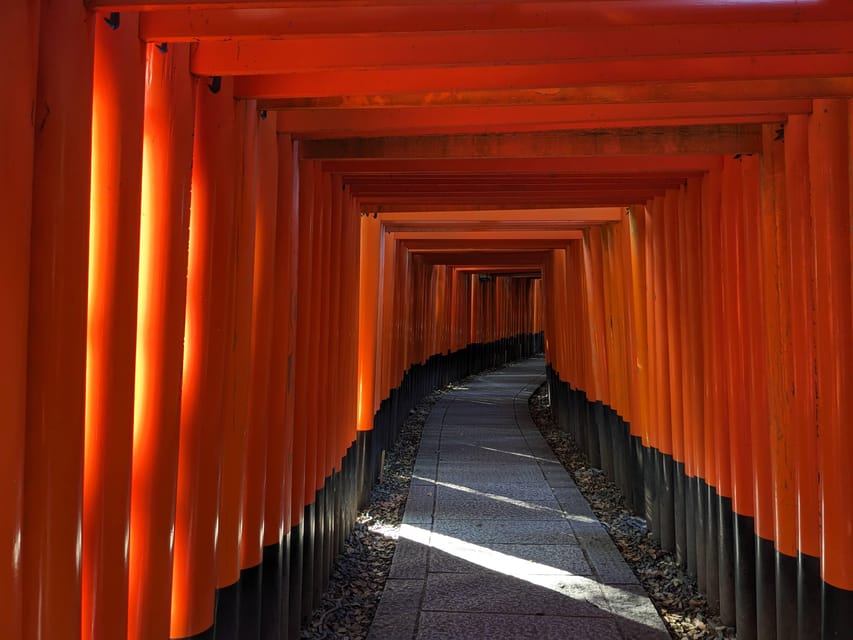
Your first big wow moment is Fushimi Inari Taisha. You’ll get about 40 minutes guided, which is plenty to experience the signature approach without it turning into an all-day hike.
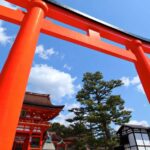
The torii gates are the headline. Thousands of vermilion gates create a tunnel effect that feels almost dreamlike, especially when you’re moving under them rather than viewing them from a single spot. With a guide, you’re not just taking photos; you’re learning what the shrine is and why it has that layered, spiritual feel.
Practical note: this portion involves walking on pathways where crowds can bunch up. Wear shoes you trust. If you’re the type who hates feeling rushed, you’ll still be fine here because the gate walk is naturally paced—there’s always something to notice.
The train transfer: a built-in reset between temple zones
After Inari, you’ll take a train for about 40 minutes. This is one of the smartest parts of the day. You get to shift from one Kyoto area to another without spending time figuring out routes, platforms, and connections.
Think of it as a breather. You’ll likely be walking earlier, so the train segment gives you a chance to sit, check your bearings, and recharge before the next temple-heavy block.
It also makes the day more realistic. Kyoto’s sights are close enough for a great day trip, but not close enough to walk nonstop. Having that transit planned is part of the value.
Kiyomizu-dera: the wooden stage and the view you remember
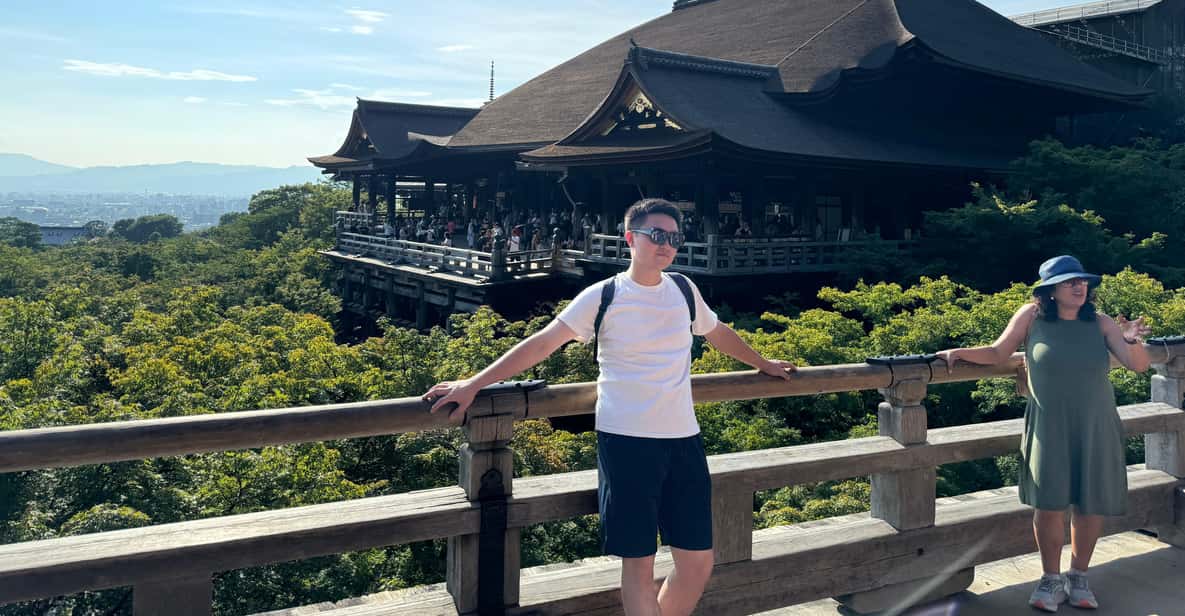
Next up is Kiyomizu-dera, with about 70 minutes guided time. The highlight is the famous wooden stage, plus the panoramic views over Kyoto.
This is one of those places where the architecture and the setting work together. Even if you’ve seen pictures, you’ll still feel the scale once you’re there. The stage is the kind of spot where you can’t help but look outward—Kyoto stretches into the distance, and the city suddenly makes more sense as a whole.
A tip: expect crowds, especially around major photo angles. The guide helps you move through the best viewing moments within the time you have, so you’re not standing around waiting for the “perfect” angle while the group moves on.


Sannenzaka and the approach to Gion: old streets on foot
After Kiyomizu-dera, you’ll spend time around Sannenzaka, then walk toward Gion. You’ll get about 15 minutes guided for Sannenzaka, then roughly 20 minutes on foot for the transition.
Sannenzaka is where Kyoto starts feeling like a lived-in old town instead of a list of monuments. Stone lanes, classic streetscapes, and the general “this place was built for walking” vibe make the city easier to picture. It’s also a good contrast to the big-ticket shrines—smaller scale, more human pace.
This walk-to-walk transition is useful. If you’re trying to see Kyoto quickly, you want at least one chunk of time that feels like strolling. This gives you that without sacrificing the tour’s structure.
Gion lunch and historic streets: machiya charm, not just photos
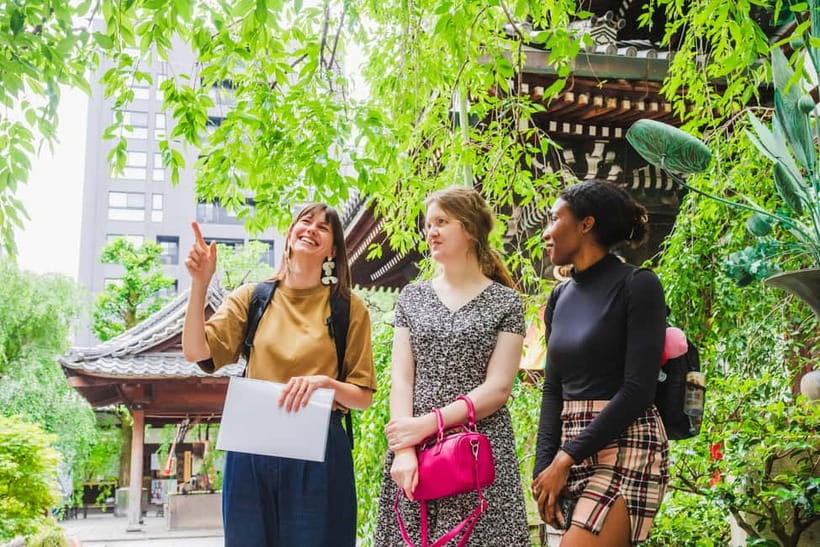
You’ll spend about 1.5 hours in Gion, including lunch and guided time. The tour focuses on Gion’s traditional wooden machiya houses and those classic, quaint streets that make the district feel unmistakably Kyoto.
This is a key part of the day because it adds “texture.” Temples and castles are impressive, but districts like Gion help you understand the everyday aesthetic—how the past shows up in building styles, street form, and neighborhood rhythm.
Lunch is included in the block of time, but the lunch cost is not included. That means you’ll want to be ready to pay for your meal on your own. If you have dietary restrictions, it’s smart to plan ahead with your own preferences before the day starts, since your exact options depend on what’s available that day.
One more consideration: Gion can be crowded around popular walking areas. The guide’s job here is to keep you moving at a pace that still lets you enjoy the atmosphere instead of treating it like a stamp-collecting checkpoint.
Nijo Castle: opulence and preserved interiors
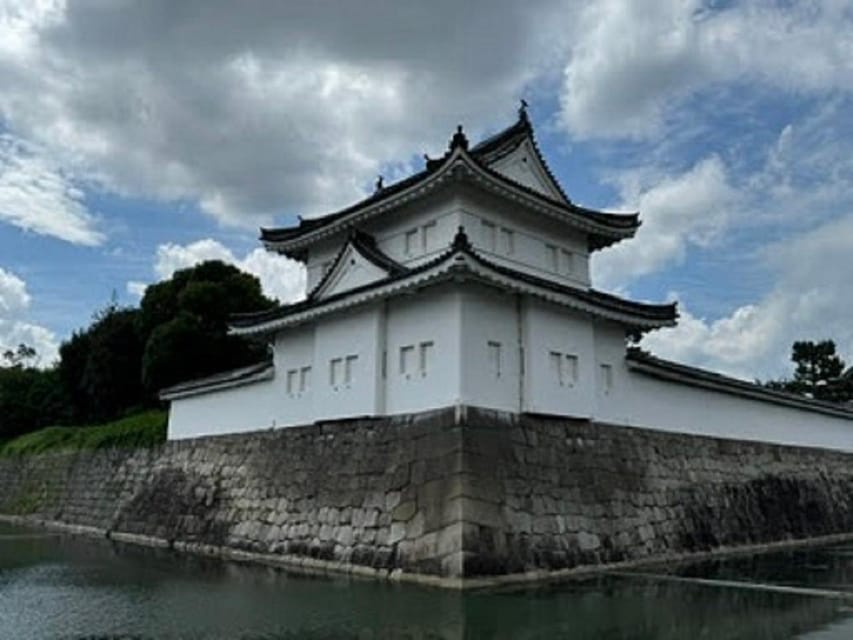
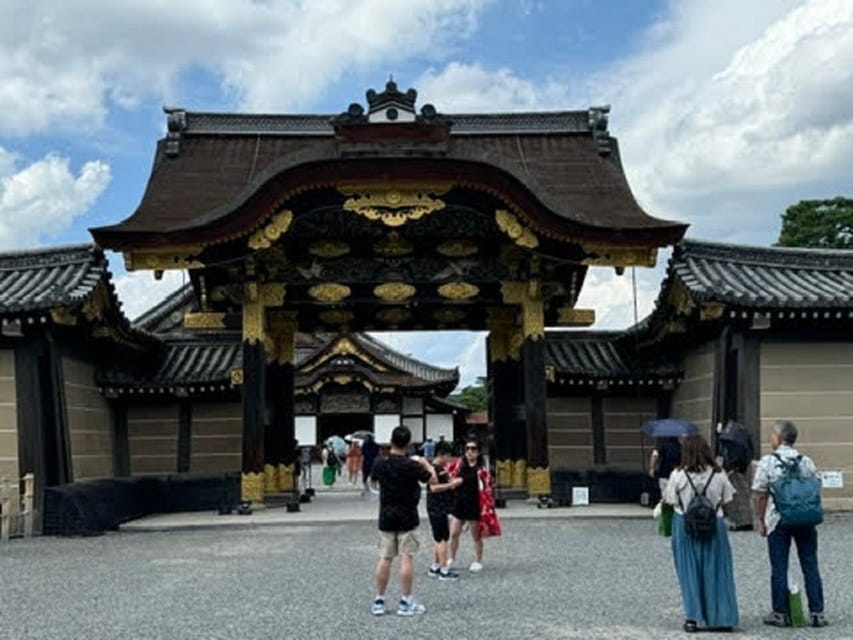
Then you ride to Nijo Castle, with about 1 hour guided time. The attraction here is the opulent architecture and beautifully preserved interiors—a look at how power and design were expressed in buildings.
Nijo is the “serious architecture” stop in the middle of the day. If you’ve been leaning more toward scenic views and street scenes, this is where you switch gears and pay attention to the built details and interior spaces. Having a guide matters, because castles can be easier to appreciate when someone points out what you should notice instead of you spending the time wondering what’s significant.
You’ll finish this stop ready for your final iconic payoff—without feeling like the day is only temples.
Kinkaku-ji (Golden Pavilion): the last-hour glow effect
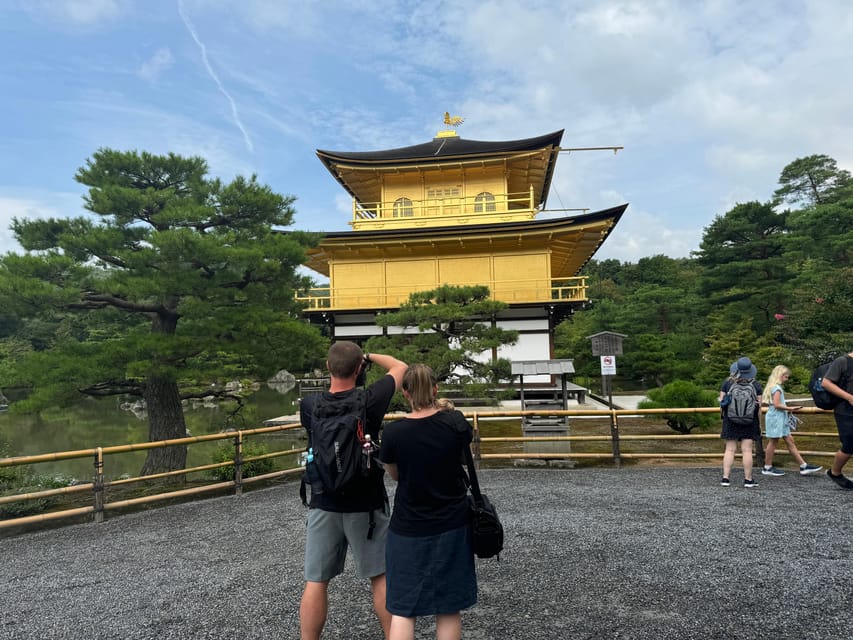
The day ends at Kinkaku-ji, the Golden Pavilion. You’ll have about 1 hour guided there, and the visual payoff is built in: the golden temple glistens over a serene Japanese garden.
This is the famous closer for a reason. Even if you’ve seen photos, being there in person usually hits harder because you experience the contrast—the bright gilded structure against softer garden elements. It’s a calming, beautiful end to a day that started with a lot of walking.
Because you have limited time, you’ll want to focus on angles that give you the temple-and-garden relationship. With a guide, you’re less likely to miss the best viewing flow within your hour.
Also, finishing at Kinkaku-ji is convenient. You’re not scrambling back to where you started with sore feet—you’re already where the destination energy is strongest.
Price and value: what your $131 really covers
Let’s be practical about the money. At $131 per person for an 8-hour guided day, you’re paying for three big things:
- A live English/Japanese guide for the whole run
- Entry tickets for the included sights
- Built-in train and bus transfers between zones
What’s not covered is lunch. That’s normal for tours like this, but you should budget for it so the day doesn’t get unexpectedly expensive when you’re hungry.
Is it worth it? For most first-time Kyoto visitors, yes—especially if you’re trying to hit major highlights without planning fatigue. If you already know your route and you’re comfortable navigating Kyoto’s transit system on your own, you could DIY part of this. But if you want a tight day that takes the stress out of logistics while still feeling like Kyoto, the structure here is the value.
Who should book this tour (and who might not love it)
I’d steer you toward this tour if you:
- have limited time in Kyoto and want the top landmarks in one day
- like walking with a plan, not wandering aimlessly
- enjoy having context—so you’re not just photographing and moving on
I’d suggest you reconsider if:
- you’re the type who needs long, slow breaks between sights
- you don’t handle busy, popular areas well
- you’d rather spend your day choosing fewer locations and lingering longer at each one
This tour is “big day” energy. It’s not designed for a laid-back pace. It is designed for efficient, guided Kyoto.
Practical tips for a smoother day
A few small choices can make this experience feel effortless instead of exhausting.
- Wear comfortable shoes: you’ll be on foot multiple times, plus standing in key areas.
- Bring a small day bag: water, a layer for temperature changes, and anything you need for photos.
- Plan for lunch cost: since lunch isn’t included, decide your budget ahead of time.
- Keep your camera ready: the torii-gate path and Kinkaku-ji are fast-moving photo moments.
- Don’t overpack your expectations: with an 8-hour schedule, you’ll get highlights—not unlimited time in every corner.
If you go in with the right mindset—see, learn, move on—you’ll get the best version of this day.
Should you book the Kyoto Top Sights Guided Tour?
If you’re deciding between chaos and clarity, this tour leans toward clarity. You’ll hit Fushimi Inari, Kiyomizu-dera, Gion, Nijo Castle, and Kinkaku-ji in one coordinated day, with a guide helping you make sense of what you’re seeing.
I’d book it if your goal is to get the big Kyoto experiences with minimal planning. The guide factor is a big reason; one standout detail from past bookings is that guides can make this run feel smooth and thoughtful, and the structure keeps you from wasting time.
Skip it—or choose a slower alternative—if you want a relaxed pace, lots of free time, or you dislike walking through crowd-heavy sights.
FAQ
How long is the Kyoto tour?
The tour duration is 8 hours.
Where do we meet the guide?
Meet the guide in front of the central ticket gate at JR Inari Station. The guide is holding a yellow DeepExperience sign.
Which languages are available for the live guide?
The live tour guide is available in English and Japanese.
What’s included in the price?
Included are the guide fee and entry tickets.
Is lunch included?
Lunch is not included in the cost (you’ll have lunch time in Gion, but you pay for your meal).
What is the cancellation policy?
The tour offers free cancellation up to 24 hours in advance for a full refund.