REVIEW · KYOTO
From Osaka/Kyoto: Private Kyoto and Nara Day Trip
Book on GetYourGuide →Operated by Naruhito Japan tours · Bookable on GetYourGuide
One day, two ancient capitals, lots of walking. If you like big-picture Japan with iconic sights that you can actually enjoy on foot, this Kyoto and Nara day trip hits the right beats. I love the chance to see Fushimi Inari Taisha from the inside of those torii tunnels, and I also like the way the day pairs Kyoto’s calm corners with Nara’s wide-open, deer-filled park energy. The only real drawback: it’s a fast-paced day, and the guide style can feel more like meet-and-enter than constant commentary at every site.
Because it’s priced per group (up to 6), you’re paying for a smooth pickup-and-route plan, not just a checklist. I like that you get an English or Hindi live guide and built-in transport between stops, with hotel pickup in Osaka or Kyoto and drop-off back to either city. Still, with just 10 hours on the clock, you’ll want realistic expectations about how long you’ll linger at each landmark.
Plan for outdoors time and crowds, especially around the torii and the deer park. I recommend you wear comfortable shoes, bring sunscreen and water, and keep your stuff secure—these areas can get busy. And in Nara, follow the rules around wildlife: don’t feed the deer, and be ready for them to get close.
In This Review
- Key things to know before you go
- How the Osaka or Kyoto pickup shapes your day
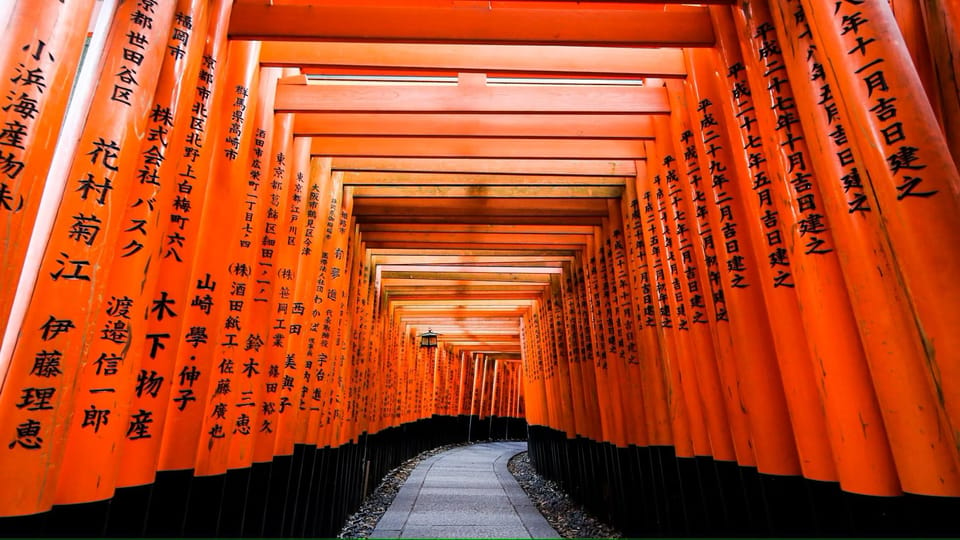
- Fushimi Inari Taisha: walking through vermilion torii gates
- Arashiyama Bamboo Forest: a 30-minute reset
- Nara Park: sacred deer, real-world manners
- Todai-ji and the Great Buddha Hall: the wow factor
- Kasuga Taisha at dusk: lanterns and atmosphere
- Kyoto break time and shopping without losing momentum
- Price and value: is $483 per group worth it?
- What you’ll carry: walking, weather, and real comfort
- Guide style: how to get the most out of Ali and the team
- Who should book this Kyoto and Nara private day trip
- Should you book this Kyoto and Nara private day trip?
- FAQ
- How long is the Kyoto and Nara day trip?
- Where do you get picked up?
- What are the drop-off locations?
- Is there a live guide, and what languages do they speak?
- How large is the group?
- Which sites are included?
- Is admission included?
- What’s the price?
- What should I bring and wear?
- Are there rules about animals and behavior?
Key things to know before you go
- Private-group flow: Small group size (up to 6) keeps the day feeling personal rather than cattle-herded.
- Fushimi Inari’s torii tunnel: You’re not just viewing it from afar; you walk through the vermilion gates.
- Arashiyama’s bamboo paths: A short visit with time to actually enjoy the atmosphere, not just snap photos.
- Nara Park deer etiquette: You can enjoy the interaction, but you must not feed them.
- Todai-ji’s Great Buddha Hall: Admission is included, and it’s a real anchor stop in Nara.
- Lantern glow at Kasuga Taisha: The shrine’s night-leaning mood is part of the appeal if timing lines up.
How the Osaka or Kyoto pickup shapes your day
This tour is built around one simple idea: don’t waste hours figuring out trains, transfers, and which order makes sense. You start with pickup from your hotel or another location in Osaka or Kyoto, and you end with drop-off in either city. That matters because Kyoto and Nara are both popular, and getting to the next area efficiently is half the battle.
The day runs about 10 hours, which is enough to hit the big names—Kyoto’s bamboo and torii, Nara’s deer and Great Buddha—but not enough to treat everything like a slow museum visit. You’ll move from indoor-ish viewing to outdoor walking in quick succession. If your travel style is more about lingering, you’ll still have fun, but you’ll need to choose a few moments to slow down rather than trying to do everything at full pace.
Your guide is live and speaks English and Hindi. In one guest experience, the guide named Ali was described as kind and helpful with strong on-the-day service—exactly what you want when you’re bouncing between religious sites, photo stops, and park crossings. The other thing to know is that a tour can range from highly interpretive to more logistical. If you care about deeper explanation, keep an eye out for opportunities to ask questions as you go.
You can also read our reviews of more private tours in Kyoto


Fushimi Inari Taisha: walking through vermilion torii gates
Fushimi Inari Taisha is the kind of place that looks good on a postcard—but it’s better in person, because you’re physically moving through the gates. The route you take is basically a staircase through the hillside, with thousands of vermilion torii creating that tunnel feeling as you wind along the path.
One of the best parts of this stop is that it’s structured but not rushed. You get a photo moment and time for a visit with a guided tour component. If you’re aiming for less chaos, consider your own rhythm: go a little slower through the first stretch, then keep walking once you’re inside the torii corridor. You’ll get better photos and you’ll feel less like you’re constantly stopping for other people’s cameras.
A practical note: this stop can mean more steps than you expect, depending on how far you continue on the path. The good news is you can control it. Use the time to enjoy the atmosphere where the gates feel closest together, rather than treating it like a straight line to the far end.
Arashiyama Bamboo Forest: a 30-minute reset
After Fushimi’s tunnel energy, the Arashiyama Bamboo Forest feels like a reset button. It’s not about big monuments; it’s about the sensation. Towering bamboo stalks create shade and a quieter mood, and even a short visit can feel restorative if you walk thoughtfully.
This stop is built for a quick on-foot experience—there’s a photo stop and a guided visit for around 30 minutes. In other words, you’re likely to get just enough time to enjoy the sight and grab a few photos without spending your whole morning trapped in a crowd.
Here’s the trick for getting value from a short bamboo visit: don’t only look at the bamboo. Look at the path and how people move through it. When you’re in a photo-heavy area, it helps to step aside when you’re not actively photographing. You’ll get calmer moments and your pictures will look less crowded.
Nara Park: sacred deer, real-world manners
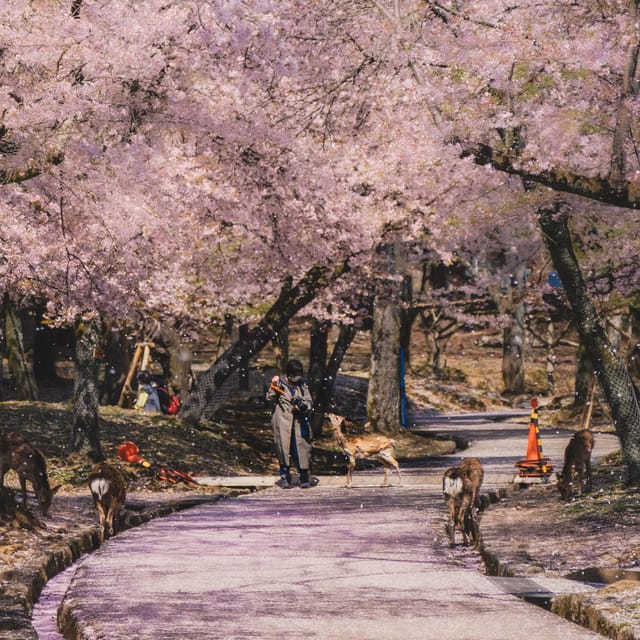
Nara Park is where the tour turns playful. The deer aren’t just cute props; they’re part of the area’s spiritual symbolism, considered sacred messengers. That’s why the rules matter. You’ll see deer roaming around freely, and you can experience that closeness—but you must not feed them.
The guiding here is useful because deer behavior can be unpredictable if you act like they’re pets. Keep your snacks secured, don’t wave food around, and stay aware of your surroundings when you stop for a photo. If you’re holding your phone or camera, keep the movement slow; quick gestures can invite attention.
This stop is timed at roughly 40 minutes with a mix of photo stop, guided tour, and some walking/free time feel. That pacing is about right. You get a first look, you can do your deer moment, and you still have time to make it to the next major attraction without the day dragging.
Todai-ji and the Great Buddha Hall: the wow factor
If Nara Park is the energy, Tōdai-ji is the weight. You’re heading to one of Japan’s most significant temple complexes, and the highlight here is the Great Buddha Hall, which houses the world’s largest bronze statue of Buddha.
This is your long anchor stop in Nara—about 1 hour for photo, visit, guided tour, and some shopping time. That hour helps because the Great Buddha Hall isn’t something you instantly process. You’ll likely spend time just looking up, then walking to get different angles. The hall can feel overwhelming in size, and it’s not the kind of place where rushing makes it better.
What I like about including this stop in a guided day trip is that it gives context without turning it into a lecture. Even if you don’t know much before you arrive, you’ll have a way to interpret what you’re seeing while you’re there. If you’re the kind of visitor who likes to read signs slowly, you can still do that in your own time, but having someone guide the overall flow means you don’t miss key areas.
You can also read our reviews of more tours and experiences in Kyoto



Kasuga Taisha at dusk: lanterns and atmosphere
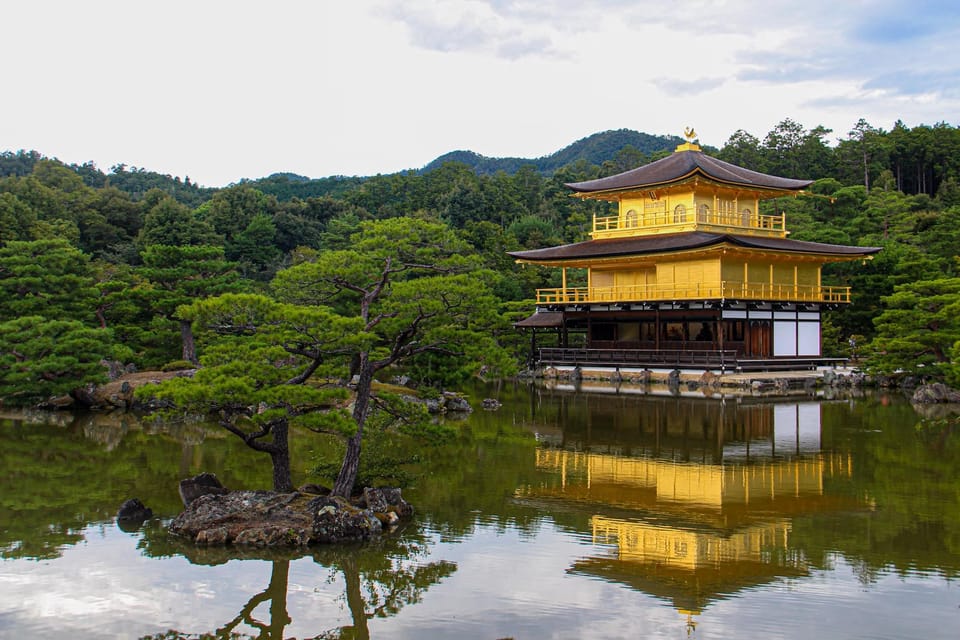
The day also includes Kasuga Taisha Shrine, known for its lanterns and the magical glow at dusk. This is one of those stops that doesn’t work as well if you arrive in daylight-only mode. Lantern light changes the mood—everything feels softer, less harsh, and more devotional.
Timing here is important. If the day’s schedule hits the right window, you’ll get that dusk effect where the lanterns start to feel like the main event. If clouds or light conditions run against you, it may still be worth it, but the special impact depends on when you’re there.
Keep your camera ready, but don’t treat this like only a photo stop. The shrine atmosphere is part of the value. Move slowly through viewpoints, and take in the feeling of the place instead of just collecting images.
Kyoto break time and shopping without losing momentum
After Nara, you come back toward Kyoto with a break time plus photo stop, visit, guided tour, some free time, and shopping time. The point of this section is not to cram in more “major targets.” It’s to let you recover a bit, then finish the day with some Kyoto flavor that isn’t strictly about temples.
I like these built-in gaps because they reduce the tired-traveler mistakes: ordering the wrong thing because you’re hungry, skipping a snack because you think you’ll eat later, or rushing through shops just to get it over with. With a little free time built in, you can do real-life travel decisions—what you want, what you can carry, and what you’re actually in the mood for.
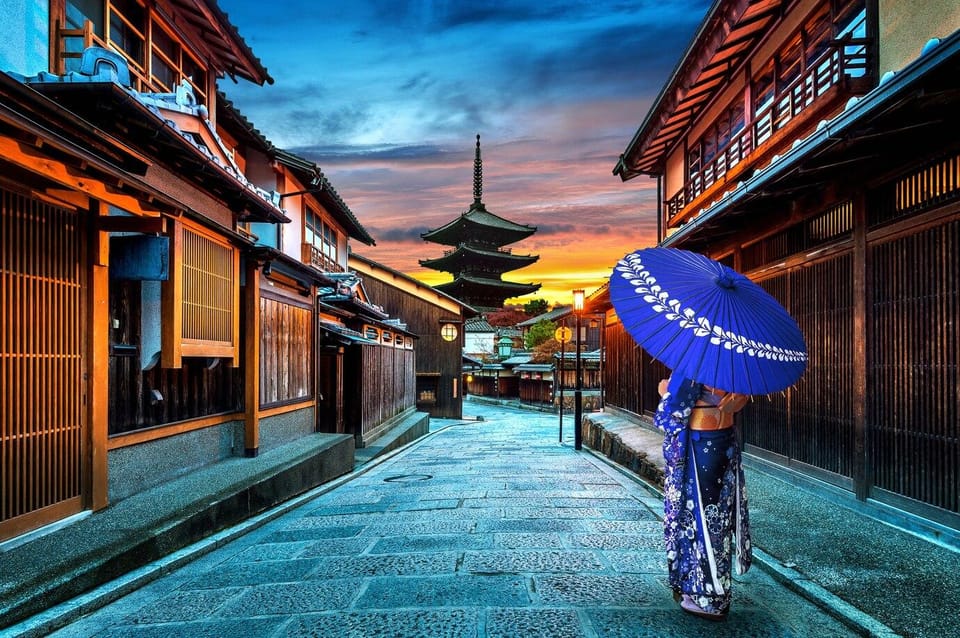
If you love souvenir hunting, you’ll likely do fine in the shopping windows. If you prefer photos and quiet streets, use your free time to take a slow walk and look for small details. Kyoto rewards patience even when your schedule doesn’t.
Price and value: is $483 per group worth it?
At $483 per group up to 6, the value depends on how many people you bring. If you fill the group, that’s roughly $80 per person. If it’s just you and one other person, it becomes closer to $240 per person. Big difference.
So what are you paying for? You’re paying for:
- Pickup and drop-off in Osaka or Kyoto
- Transportation between multiple districts
- Admission to the listed sites
- A live guide (English and Hindi) for the day
For many visitors, the biggest savings is mental energy. Without a guided route, you’d spend time figuring out order, dealing with crowded stations, and juggling tickets. Here, you show up, and the route is handled.
Is it a bargain? It can be—especially for couples or small friend groups that want a private feel without paying individual private tour pricing. But if you’re traveling solo and you don’t care about guided pacing, this kind of fixed group price can feel steep. In that case, you’d want to be sure you’ll use the guide time and won’t just treat it like a taxi to landmarks.
What you’ll carry: walking, weather, and real comfort
This is a walking day. The tour is outdoors for most of it, and you’ll be on your feet at multiple stops. Bring comfortable shoes, a hat, sunscreen, and water. If it’s warm, you’ll be grateful you didn’t skip the basics.
Also, don’t plan to keep your hands full. Keep your belongings secure because these areas can get crowded. In places like Fushimi Inari and Nara Park, shoulder-to-shoulder movement happens. The calmer you keep your bags, the less stressful your photos and sightseeing become.
And one more important behavior note: no feeding the deer, and follow local rules around animals and shrine etiquette. It’s not just respect—it helps keep the situation safe and pleasant for everyone.
Guide style: how to get the most out of Ali and the team
The best version of this day trip is when you use the guide as a translator for the experience. You don’t need to become a scholar of temple architecture—but you do benefit from someone helping you understand what you’re seeing while you’re actually there.
In one experience connected to a guide named Ali, guests highlighted that he was kind and provided helpful service, which is the right tone for a day that includes both spiritual sites and practical navigation. In the less ideal version, the guide can feel more like a handoff at entrances than a continuous walkthrough. If you want interpretation while you’re inside, be proactive early in the day—ask what the top things are for photos, and ask what to look for beyond the obvious.
Since your guide speaks English and Hindi, it’s also worth checking whether you can switch questions easily if you speak either language. Good communication helps you get value out of every stop, especially when time is short.
Who should book this Kyoto and Nara private day trip
This tour is a good fit if you:
- Want a single day that covers Kyoto’s signature sights and Nara’s major landmarks
- Prefer a small group up to 6 over large bus tours
- Like photo opportunities with structured time, but still want guided context
- Travel as a couple, family unit, or a few friends who can split the group cost
It may not be your best choice if you:
- Want slow, detailed temple study with lots of free time
- Have mobility limitations or need wheelchair-friendly routing (the tour isn’t suitable for wheelchair users)
- Are traveling with children under 5, since it isn’t recommended for kids under that age
Should you book this Kyoto and Nara private day trip?
If your goal is one well-organized day connecting Kyoto’s most famous sights to Nara’s deer and Great Buddha, I think it’s an easy yes. The combo works: torii tunnels, bamboo calm, deer park moments, then Todai-ji’s serious scale—plus a lantern shrine finish if timing hits dusk.
Book it especially if you can fill a couple spots in the group to make the $483 per group price feel fair. Skip it or downshift expectations if you want constant, minute-by-minute guiding inside every structure. And if you’re the type who asks questions, this is the kind of day where that pays off fast.
FAQ
How long is the Kyoto and Nara day trip?
It runs about 10 hours.
Where do you get picked up?
You can be picked up from Osaka or Kyoto (hotel or another location). Port and airport pickup isn’t available.
What are the drop-off locations?
You’ll be dropped off in either Kyoto or Osaka.
Is there a live guide, and what languages do they speak?
Yes. The tour includes a live guide who speaks English and Hindi.
How large is the group?
The group is limited to 6 participants.
Which sites are included?
You’ll visit Fushimi Inari Taisha, Arashiyama Bamboo Forest, Nara Park, Todai-ji, and Kasuga Taisha Shrine.
Is admission included?
Yes, admission to the mentioned sites is included.
What’s the price?
It’s listed at $483 per group (up to 6).
What should I bring and wear?
Wear comfortable shoes. Bring a hat, sunscreen, camera, and water.
Are there rules about animals and behavior?
Don’t feed the animals. Smoking and littering aren’t allowed.