REVIEW · KYOTO
Kyoto: The Path Less Traveled (Private)
Book on Viator →Operated by An Design · Bookable on Viator
Kyoto without the crowds feels almost unfair. What I like most is how this private route leads you straight into quiet Zen gardens and shrine spaces that most people skip. I also love the slow, detail-focused feel, helped by your guide Andrew, who connects what you see to why it matters.
One thing to consider: the day runs on 8 hours of real-world pacing, and not every stop may be possible. If timing gets tight, you’ll decide what gets dropped, depending on the group pace and the situation that day.
In This Review
- Key highlights at a glance
- Price and value for a private Kyoto day (up to 4)
- Start at Keage Station area, end near Umamchi Bus Stop
- The itinerary, stop by stop: gardens, Buddhas, and pottery wabi-sabi
- Konchi-in: architecture and garden calm away from the crowd
- Tenjuan Garden: the forest-fairy-tale feeling
- Heian Shrine garden behind the shrine
- Chishaku-in: a rarely visited garden with sliding door paintings
- Sanjusangendo: the 1,001 golden Buddhas moment
- Toyokuni Shrine: a short stop, big statement (largest bell in Japan)
- Kawai Kanjiro Memorial Museum: wabi-sabi in a converted home
- Why the less-famous gardens feel more meaningful
- Money and must-bring cash: admissions, lunch, and transit
- Who this private tour suits best
- Should you book this Path Less Traveled Kyoto private tour?
- FAQ
- What’s the group size for this private Kyoto tour?
- How long is the experience?
- Where do we meet, and when does it start?
- What are the admission costs?
- Do we need cash for lunch and transportation?
- Is lunch included?
- What happens if the weather is bad?
Key highlights at a glance
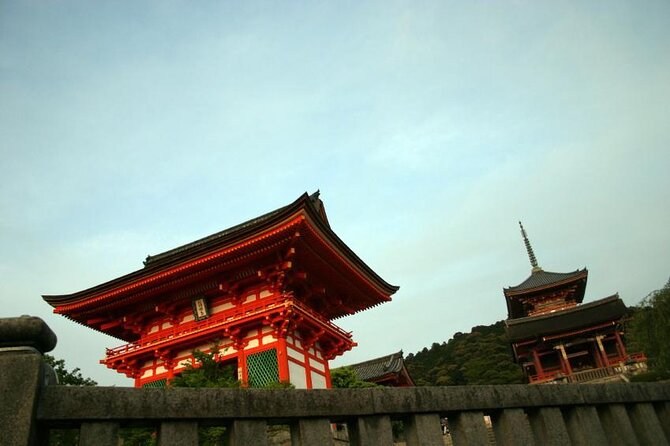
- Less-touristed garden temples instead of the usual photo stops
- 1,001 golden Buddhas at Sanjusangendo Temple
- Gardens with a story, including one that feels like a forest fairy tale
- Wabi-sabi in real life at the Kawai Kanjiro Memorial Museum
- Cash planning that keeps things smooth for lunch, transport, and admissions
Price and value for a private Kyoto day (up to 4)
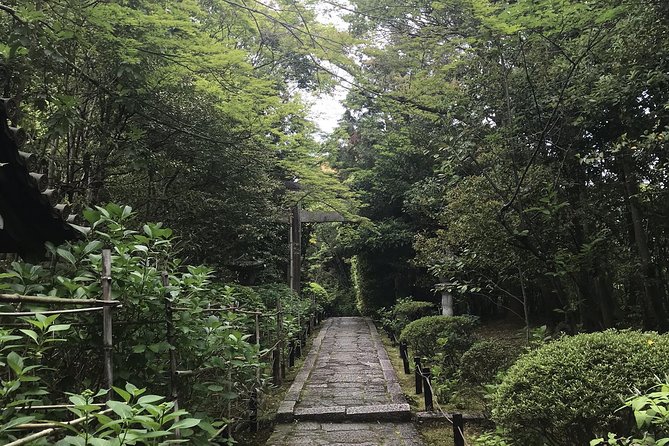
At $690 per group (up to 4) for about 8 hours, this isn’t a bargain tour, but it’s not priced like a luxury fantasy either. The value comes from two things: you’re paying for a guide and a route designed around smaller, calmer sites—not just a checklist of famous landmarks.
Think of it like this: you’re buying time and attention. Instead of sprinting from one big-ticket site to the next, you get guided stops that are often quieter and easier to enjoy. That’s especially useful in Kyoto, where some places are crowd magnets and others are crowd magnets in name only.
The other part of the value equation is the add-on costs. You’ll pay for admissions (total ¥3,500 cash per person for five sites) plus ¥1,500 cash for lunch and ¥1,000 cash for transportation. Still, those are straightforward, and they keep the main price focused on the private guiding and the route.
You can also read our reviews of more private tours in Kyoto

Start at Keage Station area, end near Umamchi Bus Stop
You’ll meet around Keage Sta. in Higashiyama Ward (Keage Sta. / Higashikomonozacho area) and start at 9:00 am. Ending point is outside Kawai Kanjiro’s house, a short walk (about 5 minutes) to Umamchi Bus Stop—handy if you want to ride public transit afterward.
This is a private tour, so only your group goes. That matters because garden-temple spaces reward a slower pace; you’re less likely to feel squeezed by strangers moving like a herd.
Also note the practical “Kyoto reality” factor: the experience works best with good weather. If weather turns ugly, you’ll be offered a different date or a full refund, so it’s not a sunk-cost gamble.
The itinerary, stop by stop: gardens, Buddhas, and pottery wabi-sabi
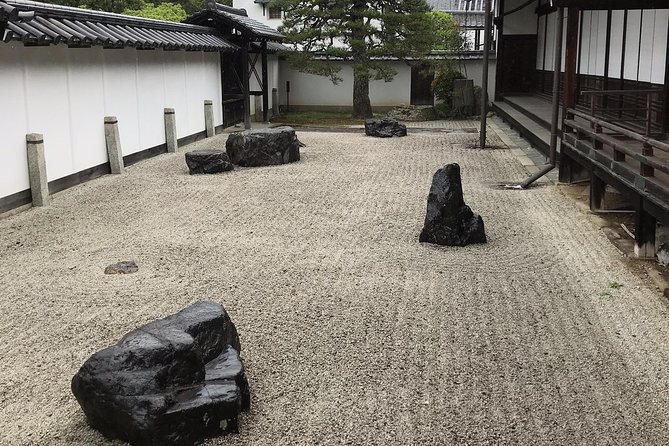
This route is built around three themes: quiet garden design, major sacred sites, and Kyoto craft culture. The pacing gives you enough time to look closely, but it’s still realistic: if timing gets tight, one or more stops may be removed, and you’ll choose.
Konchi-in: architecture and garden calm away from the crowd
Your first stop, Konchi-in, sets the tone. This place is known for high-level architecture, garden views, statuary, and paintings in a tranquil setting. The best way to enjoy it is to slow down and treat it like a room you move through—look, pause, then look again from a different angle.
What to watch for: how the garden and buildings work together as one composition. Even if you’re not a “garden person,” this is the kind of space that makes you understand why Kyoto people take aesthetics seriously.
Tenjuan Garden: the forest-fairy-tale feeling
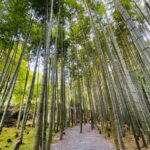
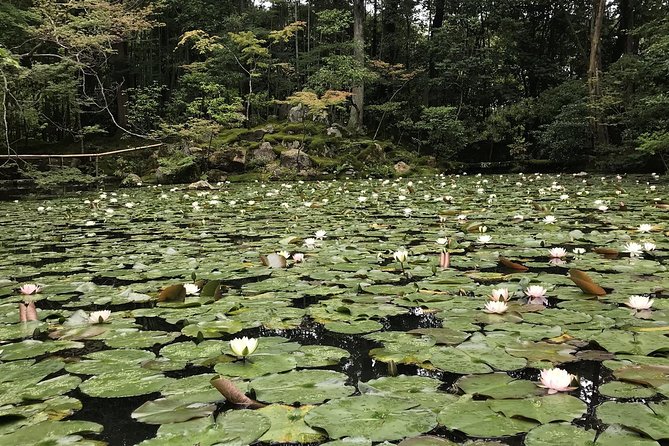
Next is Tenjuan Garden, where you spend time in two gardens. One of them, when you step in, can feel like you’ve suddenly entered a forest—like you stumbled into a storybook world.
A practical tip: give yourself time to notice the change in atmosphere as you move deeper. Gardens like this aren’t just decoration; they’re designed to create a shift in perception.
Heian Shrine garden behind the shrine
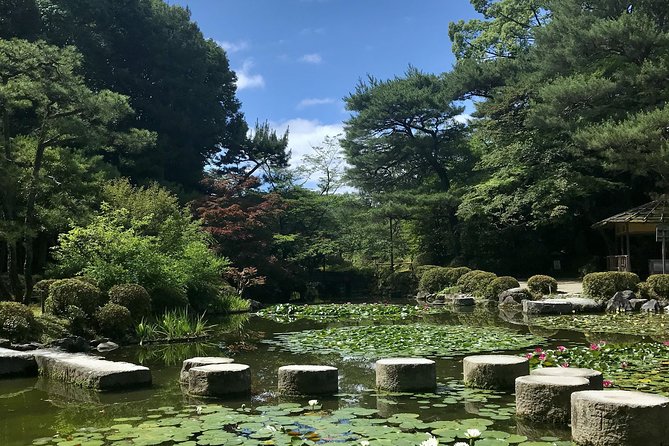
Heian Shrine is well-known, but the garden behind it gets fewer visitors. You’ll spend time there walking through one of Kyoto’s picturesque garden spaces.
This stop is a good “reset.” After Tenjuan’s dreamlike feel, Heian’s garden gives you a different rhythm—more balanced, more contemplative. It’s also a reminder that in Kyoto, the “main attraction” isn’t always where the quiet magic is.
Chishaku-in: a rarely visited garden with sliding door paintings
Chishaku-in is a hardly-visited garden stop, with sliding door paintings by one of Japan’s heralded painters. This is one of those places that’s easier to enjoy when you’re not chasing a crowd.
What you’ll likely appreciate: the connection between the space outside (the garden) and the art inside. Even if you can’t identify every style instantly, your guide can help you read what’s happening.
Sanjusangendo: the 1,001 golden Buddhas moment
Then comes Sanjusangendo Temple, home to 1,001 golden Buddhas. This is a major highlight because it’s specific—there’s nothing else like it in Japan in the way it’s presented here.
How to enjoy it: don’t rush to the first view. Stand, look longer than you think you need, then re-orient yourself. The effect gets stronger the longer you let it land.
Toyokuni Shrine: a short stop, big statement (largest bell in Japan)
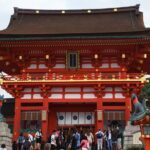
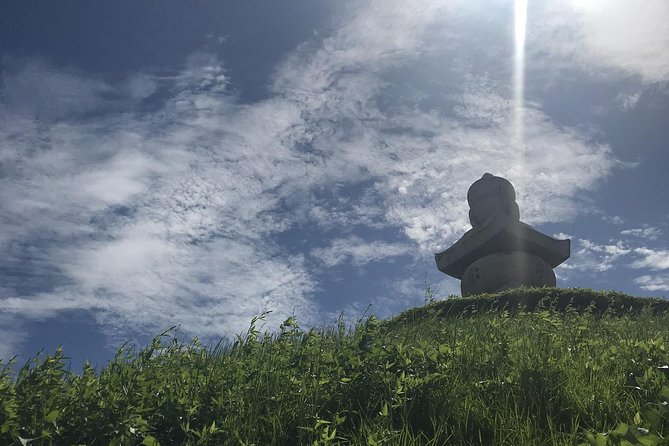
At Toyokuni Shrine, you’ll have about 20 minutes. This shrine is dedicated to a pivotal samurai, and on the grounds you’ll see the largest bell in Japan.
This is the part of the day that works as a breather. You get the “wow factor,” but you’re not stuck for hours in a tight schedule.
Kawai Kanjiro Memorial Museum: wabi-sabi in a converted home
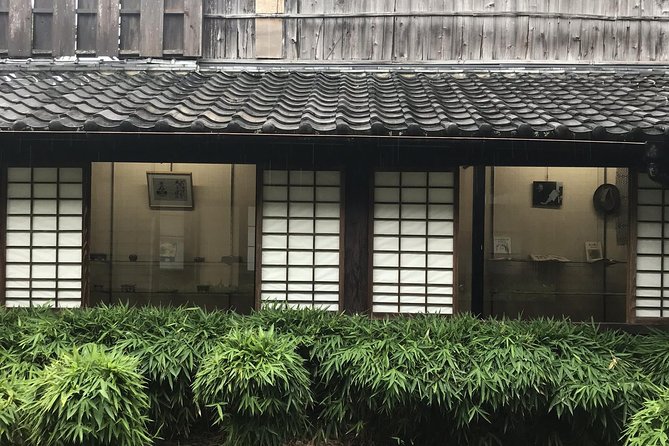
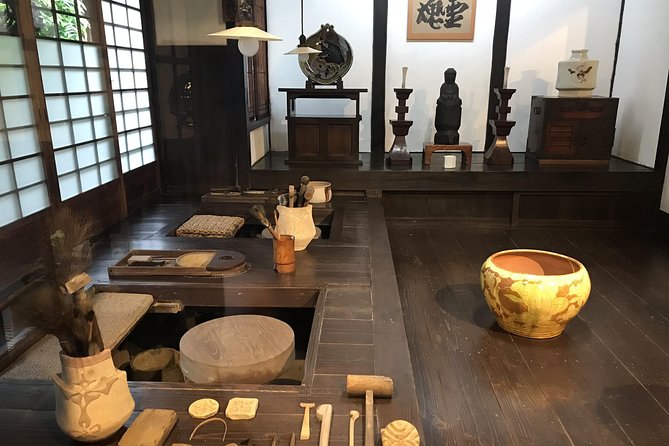
The day ends at the Kawai Kanjiro Memorial Museum, the converted home of a noted 20th century master potter. This stop leans hard into wabi-sabi—design and everyday living that values imperfection and quiet character.
What makes this special in Kyoto is that it’s not just a temple-garden experience. It’s a craft and life-space experience, and it can change how you see everything else you’ve visited that day.
Why the less-famous gardens feel more meaningful
I love routes like this because they teach you how to see. You start with spaces that feel removed from the tourist scramble, then you add in a few major anchors (like Sanjusangendo), and you finish with Kyoto craft life.
A guide like Andrew typically helps you notice details you’d otherwise gloss over. In these gardens and temple interiors, the “story” is in the layout—where your eye lands, where you slow down, what view appears next, and how art and architecture shape behavior.
This kind of tour is also a good fit even if you’ve been to Kyoto before. If you’ve done the famous sights already, you’ll likely feel a sense of discovery without repeating the same photos. And if you haven’t fallen for Zen gardens yet, this itinerary has a strong chance to convert you, because it balances calm spaces with moments that feel genuinely unforgettable.
Money and must-bring cash: admissions, lunch, and transit
Plan cash early. You’ll need:
- ¥3,500 cash per person for admission to five sites
- ¥1,500 cash per person for lunch
- ¥1,000 cash per person for transportation
Admission is not included for each stop, but the total ticket fee is grouped for five sites. Bring the right amount in cash so you don’t have to sprint around Kyoto searching for an ATM during your own peaceful day.
Also, you’ll use a mobile ticket, so have your phone ready and your confirmation accessible. Near public transportation, so you can reach the meeting point without stress, but the tour itself is structured around guide-led movement.
Who this private tour suits best
This is best for you if you want Kyoto’s quieter side without sacrificing the big spiritual wow moments. It’s also ideal if you’re traveling as a couple or small family and you want flexibility within a private group.
It’s a good match for people who:
- like gardens, temple architecture, and art details
- value thoughtful pacing over checking boxes
- want a more personal guide connection (private is the key word here)
Most travelers can participate, and it’s near public transportation. Still, if you have tight mobility constraints, the walking within garden-temple areas could be a factor, since the route is designed for you to move through multiple outdoor and indoor spaces.
Should you book this Path Less Traveled Kyoto private tour?
If you’re the type who wants Kyoto to feel calm and personal—rather than crowded and rushed—this tour makes sense. The price works out best when you book as a full group of four, but even as fewer people, the benefit is the route design and guide focus.
The one reason to hesitate is the possibility that you won’t see every stop. That’s not a dealbreaker in a garden-temple day (many visitors would still leave happy), but if you have one absolute must-see, talk with your guide on the day and be ready to make that call.
If you’re booking soon, plan ahead. This experience is often booked about 80 days in advance, so waiting until the last minute can narrow your options.
FAQ
What’s the group size for this private Kyoto tour?
It’s a private tour for your group only, up to 4 people per booking.
How long is the experience?
The tour runs for about 8 hours.
Where do we meet, and when does it start?
You meet near Keage Station in Higashiyama Ward and start at 9:00 am.
What are the admission costs?
You’ll pay ¥3,500 cash per person for admission covering five sites.
Do we need cash for lunch and transportation?
Yes. You’ll need ¥1,500 cash for lunch and ¥1,000 cash for transportation.
Is lunch included?
Lunch isn’t listed as included, but you are required to bring cash for lunch, so plan to eat during the tour using that budget.
What happens if the weather is bad?
The tour requires good weather. If it’s canceled due to poor weather, you’ll be offered a different date or a full refund.