REVIEW · KYOTO
Kyoto Lazy Bird Walking Tour
Book on Viator →Operated by KAMNAVI Tours · Bookable on Viator
Kyoto runs on early mornings, but this tour fights back. The Kyoto Lazy Bird Walking Tour is a private afternoon plan that takes you to three of the city’s top sights without the stress of figuring out routes. You get a fixed route, a guide to handle navigation, and a schedule designed for visitors who would rather avoid jet-lag mornings.
What I like most is the “three big wins” structure: Arashiyama Bamboo Grove, Kinkaku-ji Temple (Golden Pavilion), and Fushimi Inari-taisha Shrine in one stretch. I also appreciate the time-saving angle—each stop is planned for about an hour, so you see the icons without spending your day hopping between random spots.
A possible drawback: it’s a set itinerary, so if you’re the type who wants lots of free roaming in neighborhoods, you may feel a bit boxed in by the three-stop focus.
In This Review
- Key things to know before you go
- A lazy-bird afternoon route through Kyoto’s biggest names
- Price and what’s included in this private half-day
- Kyoto Station meetup at 12:45 pm: making the day feel easy
- Arashiyama Bamboo Grove: the hour that smells like shade
- Kinkaku-ji Golden Pavilion: UNESCO in one very photogenic hour
- Fushimi Inari-taisha: pacing the torii-gate tunnel
- How private guiding keeps the day calm (and worth the money)
- Weather, timing, and what to pack for 5 hours 45 minutes
- Should you book the Kyoto Lazy Bird Walking Tour?
- FAQ
- FAQ
- What is the meeting point and where does the tour end?
- What time does the tour start?
- How long is the Kyoto Lazy Bird Walking Tour?
- What is included in the price?
- What costs are not included?
- Which attractions does the tour visit?
- Is it really a private tour?
- What happens if the weather is bad?
Key things to know before you go
- Afternoon start at 12:45 pm keeps the day gentler if mornings are rough
- Three major Kyoto sights in one guided loop saves research time
- Private guiding means less navigating and fewer “wait, where are we?” moments
- Mobile ticket helps you keep things simple
- Kinkaku-ji admission not included but Arashiyama and Fushimi Inari are listed as free
- Tour runs only in good weather, so pack for changing conditions
A lazy-bird afternoon route through Kyoto’s biggest names
This is the kind of Kyoto day that makes sense after you’ve already been on a train all morning, fought jet lag, or just realized you don’t want to start at sunrise. The start time is 12:45 pm at Kyoto Station, and the tour loops back there at the end. That round-trip setup is useful. You’re not left scrambling to find your next bus, or guessing how to reconnect with your evening plans.
The schedule targets three “headline” places that most people end up adding anyway. Arashiyama Bamboo Grove gives you the iconic bamboo forest mood. Kinkaku-ji brings the Golden Pavilion, Kyoto’s famous UNESCO-listed temple scene. Fushimi Inari-taisha delivers the torii gate tunnel that looks like Kyoto got a little magical with its building materials.
And the private guide part matters more than it sounds. Even when you can read a map, Kyoto is easier when someone is already thinking in walking segments, transit timing, and where crowds tend to bunch up.
You can also read our reviews of more walking tours in Kyoto


Price and what’s included in this private half-day
The tour price is $111.05 per person and the tour is about 5 hours 45 minutes. Included is the guide fare. That’s the core value: you’re paying for one organized route and a human navigation brain.
A couple costs are explicitly not included:
- Public transportation fare: ¥1,220 per person
- Kinkaku-ji Temple admission: ¥500 per person
Food and drinks are also not included.
So what does this add up to in real terms? You’re paying a guide to cover three major stops, plus you’ll still need to budget for the temple entry (only one of the three is ticketed here) and local transit. If you would otherwise pay for tickets and spend your own time planning trains and transfers, the price starts to feel more reasonable. You’re basically buying calm, time efficiency, and a smoother day.
You’ll also see two practical extras in the tour description: group discounts and a mobile ticket. The mobile ticket is especially helpful in Kyoto, where your day can hinge on whether you’re holding the right QR code at the right time.
Kyoto Station meetup at 12:45 pm: making the day feel easy
The meetup is at Kyoto Station, and the tour starts at 12:45 pm. From a traveler’s point of view, this is a big deal. Kyoto Station is the central nervous system for buses and trains. Meeting there reduces the chances you’ll be late because you got lost crossing the station maze.
You’ll want to plan your arrival with a cushion. One of the practical lessons from past experiences is that even people who travel well can get thrown off at station meetups. Being early turns that into a non-issue.
Comfort matters here. The tour recommends comfortable clothes and shoes for walking, and that’s exactly what you should do. Even though each stop is around an hour, you’re still moving through temple grounds and popular pedestrian routes.
Arashiyama Bamboo Grove: the hour that smells like shade
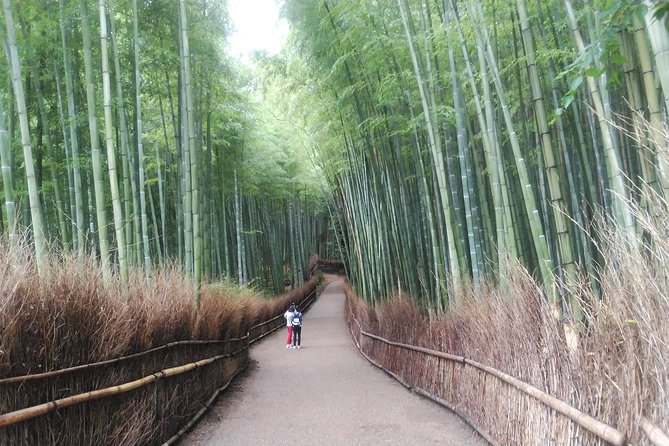
Stop one is Arashiyama, and the highlight is the bamboo grove—reported as a beauty of green tones with sunlight slipping through the stalks. This is one of those places where the atmosphere is the attraction. You’re not just looking. You’re soaking in the soundscape: the rustle of leaves and the breeze moving through the grove.
The tour allocates about 1 hour, and the listing says admission ticket is free for this stop. That’s a nice balance of value and payoff: you’re not paying an extra entry fee to get the main experience.
What can be tricky? Arashiyama is popular, and bamboo groves draw photographers and walkers who want the same angles. If you’re the sort who likes to linger, use your guide’s pacing. One-hour slots can feel short, but they’re also enough to get a few great views and not feel like you spent the entire day in line.
If you’re coming on a cold day or intermittent rain, bamboo can actually be a nice scene. Just wear grippy shoes and bring a light layer. Kyoto weather can change quickly, and this tour notes it needs good weather to run.
Kinkaku-ji Golden Pavilion: UNESCO in one very photogenic hour
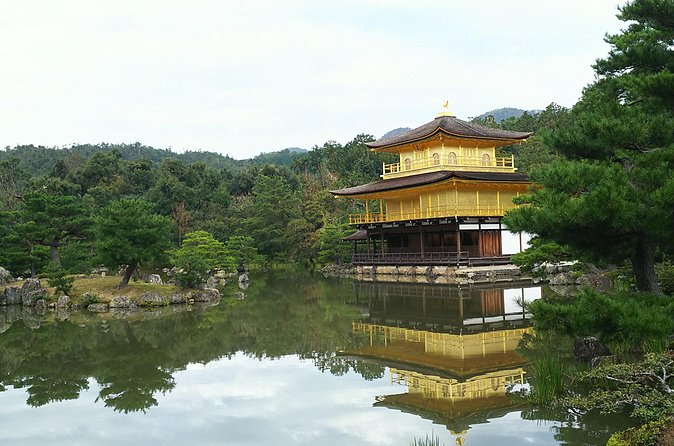
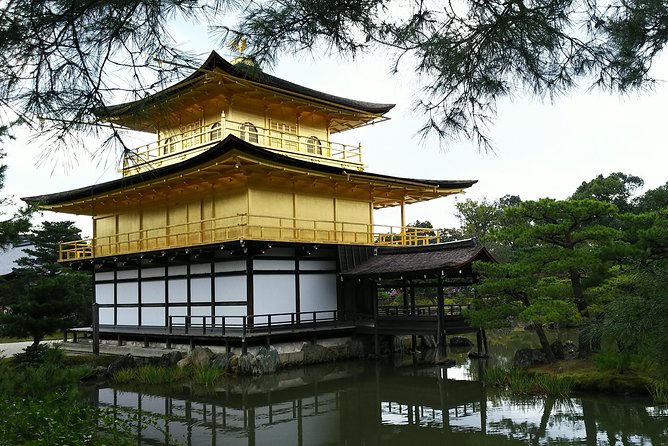
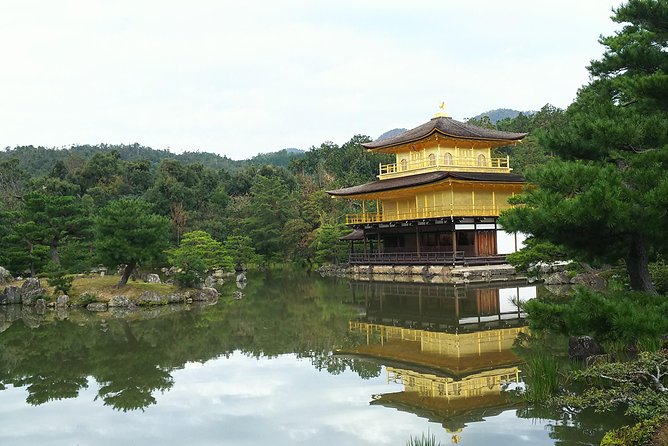
Stop two is Kinkakuji Temple, the iconic Zen temple known for the Golden Pavilion. It’s a major Kyoto “see it once” site, and the reason is simple: the gilded look is hard to fake in photos. Up close, it has that shiny, showpiece effect that makes people stop mid-sentence.
The schedule gives you about 1 hour, and the listing states admission is not included. The temple admission fee listed is ¥500 per person. This matters for planning. You’ll want that extra cash or payment plan lined up so you’re not stuck at the entry point while the rest of the group moves.
It’s easy to think Kinkaku-ji is just a postcard building. But a good guide turns it into more than that by pointing out what you’re seeing and why it matters in Kyoto’s story. In past experiences with guides like Mitsue and Saori, the common thread has been friendly, on-the-spot help—plus attention to photo spots, not just basic facts.
Possible drawback: Kinkaku-ji is a busy destination. Even with an hour, you’ll likely deal with crowds. That’s where the private guide advantage shows. They can help you manage your time and keep your viewing from feeling like you’re stuck in a slow-moving queue.






Fushimi Inari-taisha: pacing the torii-gate tunnel
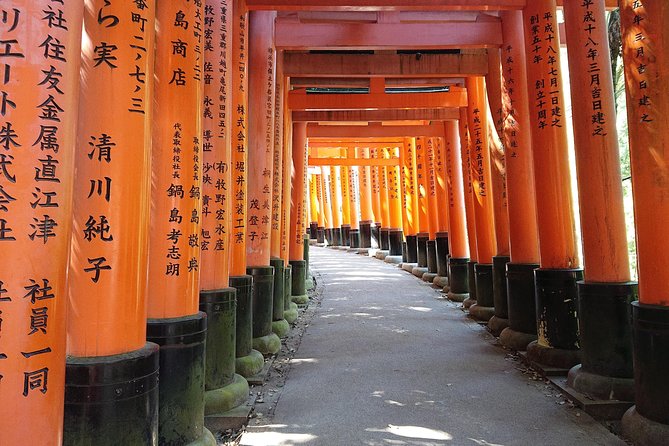
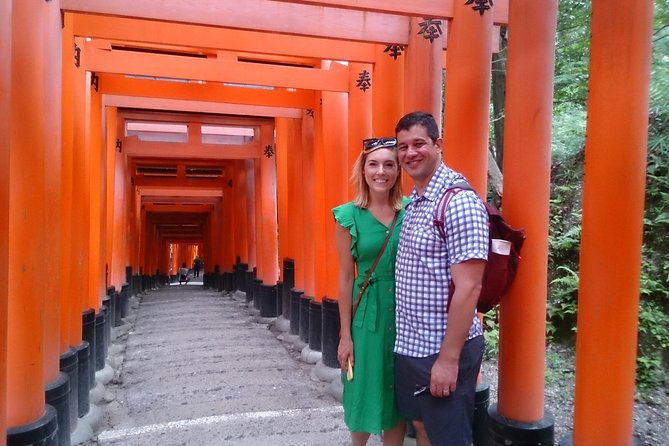
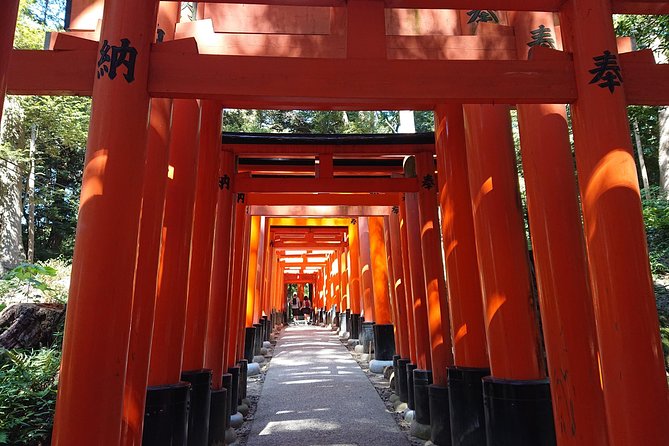
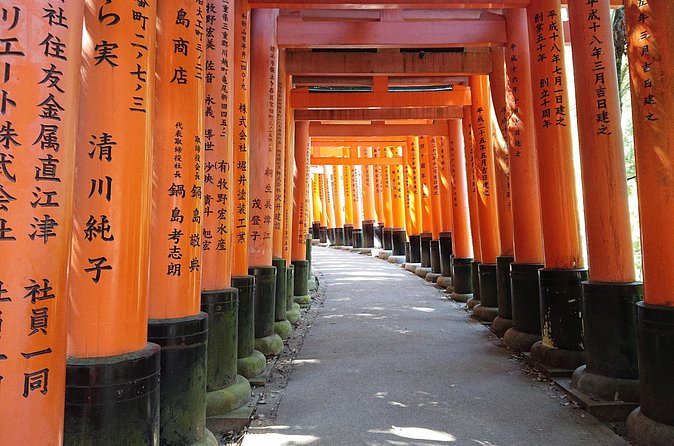
Stop three is Fushimi Inari-taisha Shrine, famous for its tunnel of thousands of vermillion torii gates. This place is visually dramatic, and it’s one of those scenes that looks even better as you walk forward and let the gates repeat behind you.
The listing says admission ticket is free here, and the tour gives you about 1 hour. Free entry plus a high-impact visual environment is exactly why this stop earns its spot on most Kyoto highlight lists.
What I’d watch for is pacing. A one-hour block works best if you aim for “good experience” instead of trying to see every single gate detail from start to finish. In practice, you get the most out of Fushimi Inari when you treat it like a walk through a corridor rather than a checklist.
If it’s rainy, torii gates look great with wet reflections, but the ground can be slippery. Keep an eye on your step. Your mission is to enjoy the tunnel, not to make the day into an accidental balancing act.
How private guiding keeps the day calm (and worth the money)
This tour is explicitly private—only your group participates. That changes the vibe. Instead of blending into a big crowd with a headset, you can move at a pace that fits your questions and comfort level. And because your guide handles navigation, you avoid a lot of time loss that happens when you’re translating directions on the fly.
You’ll likely notice it most during transit between stops. Kyoto can feel like a puzzle. A guide is effectively removing the “figuring it out” layer.
Past guide experiences show the best-case version of that: for example, Nick (alias Satoshi Nonake) has been described as sending advance updates and staying organized with the timetable and train connections via WhatsApp. Keiko has been credited with helping after meetup confusion, which is a very real scenario at Kyoto Station. Michiko has been noted for flexibility when traveling with a young child. Those are exactly the moments where a private guide earns their fee.
And yes, you still walk. A guide can’t turn Kyoto into an elevator. But they can make sure your walking is purposeful, not wandering.
Weather, timing, and what to pack for 5 hours 45 minutes

This experience requires good weather. If poor weather cancels it, you’ll be offered a different date or a full refund. That’s reassuring, because Kyoto days can swing from fine to wet fast.
For your packing list, keep it simple:
- Comfortable shoes (non-negotiable for temples and shrine grounds)
- A light layer if the air is cool
- Rain protection if forecasts look uncertain
- A plan to handle the ¥1,220 transit fare and the ¥500 Kinkaku-ji admission
Also, because the tour ends back at Kyoto Station, you can plan an easy dinner nearby without panic-running through neighborhoods trying to catch your last train.
Should you book the Kyoto Lazy Bird Walking Tour?
Book it if you want a Kyoto afternoon that feels organized from start to finish. It’s especially a smart choice if:
- mornings are tough for you (jet lag, kid schedules, or just plain tired)
- you want the big names—bamboo, Golden Pavilion, torii tunnels—without spending hours comparing routes
- you like the idea of a private guide handling navigation and timing
Skip it if you’re chasing lots of off-route wandering or you hate set itineraries. This is a three-sight plan, built for efficiency. You won’t come away having explored random alley detours unless you add time on your own before or after the tour.
FAQ
FAQ
What is the meeting point and where does the tour end?
The tour meets at Kyoto Station in Kyoto, Japan. It ends back at the meeting point.
What time does the tour start?
The start time is 12:45 pm.
How long is the Kyoto Lazy Bird Walking Tour?
The duration is approximately 5 hours 45 minutes.
What is included in the price?
The guide fare is included. The tour uses a mobile ticket.
What costs are not included?
Public transportation fare (¥1,220 per person) and Kinkaku-ji Temple admission (¥500 per person) are not included. Food and drink are also not included.
Which attractions does the tour visit?
The tour visits Arashiyama, Kinkakuji Temple (Golden Pavilion), and Fushimi Inari-taisha Shrine.
Is it really a private tour?
Yes. It is a private tour/activity, and only your group will participate.
What happens if the weather is bad?
This experience requires good weather. If it’s canceled due to poor weather, you’ll be offered a different date or a full refund.