REVIEW · KYOTO
Start from Kyoto Station: Early Morning E-Bike Tour with Kyotoite
Book on Viator →Operated by 京都 ecoトリップ 本店 · Bookable on Viator
Morning Kyoto feels peaceful on an e-bike. This early ride trades the usual subway-and-sidewalk grind for calmer streets and quick access to big sights like Fushimi Inari-taisha, Nanzen-ji, and Heian-Jingu without wasting your morning bouncing around.
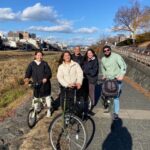
I especially like the small-group feel. With a maximum of 6 people, you stay together, you’re not stuck watching from far back, and the guide can actually help with questions (and even photo moments).
One thing to plan for: even with pedal-assist, expect some hills. It’s not an all-out workout, but comfy shoes and a relaxed attitude make it much more enjoyable—especially if the weather turns wet.
In This Review
- Key highlights you’ll feel right away
- Why an early-morning e-bike route works in Kyoto
- Getting started at Kyoto Eco Trip Flagship shop (and why it matters)
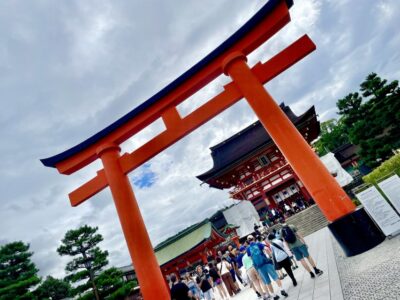
- Fushimi Inari-taisha before the crowds: torii gates at human speed
- Sanjusangendo Temple and the 1,001 Kannon statues
- Shirakawa River backstreets to Miyagawa-cho and Tatsumi Bridge
- Nanzen-ji Temple: Zen calm with a real change of pace
- Heian-Jingu Shrine as the finale, then Kamogawa River back
- Price and what $84.92 actually buys you
- How hard is it, really? Hills, weather, and e-bike limits
- Who should book this tour (and who might skip it)
- Should you book this early Kyoto e-bike tour?
- FAQ
- What is the duration of the Kyoto early morning e-bike tour?
- How much does the tour cost?
- How many people are in the group?
- Where does the tour start and end?
- Do I need to bring an e-bike or helmet?
- Is bottled water included?
- Is a raincoat included?
- Are admission tickets required for the listed sites?
- What is included besides the bike and gear?
- Do I get a mobile ticket?
- Is free cancellation available?
- Are snacks included?
Key highlights you’ll feel right away
- Early timing that helps you experience Fushimi Inari with more breathing room
- Small group capped at 6 riders so the route and pace stay manageable
- E-bike + helmet + raincoat + bottled water included, so you travel light
- Major temple stops with free admission, letting you spend on experiences instead of tickets
- A route that strings together Fushimi, Gion area, Nanzen-ji, and Heian-Jingu with short rides between each
- Guides who add Shinto/Buddhism context and practical sightseeing pointers while you cruise
Why an early-morning e-bike route works in Kyoto
Kyoto rewards patience. But most people have limited time, and the normal plan—trains, transfers, and long waits—can turn your day into logistics instead of memories. This tour solves that by starting early and using e-bikes to move you fast between neighborhoods.
You’re not just getting transportation. You’re getting a rhythm. You glide along the calmer streets, then you stop for focused time at each landmark. The guide keeps the pacing steady, and because the group is small, you don’t lose track of where you’re supposed to be next.
And yes, the big names on the route are still there—Fushimi Inari-taisha and Nanzen-ji—but you’re reaching them before the city’s full wave of visitors. That changes the mood a lot. The torii gates at the start feel like a walk through a story, not a queue you’re trying to escape.
You can also read our reviews of more cycling tours in Kyoto
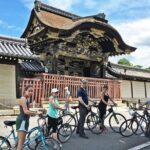
Getting started at Kyoto Eco Trip Flagship shop (and why it matters)
Your meeting point is Kyoto Eco Trip Flagship shop, 58 Higashikujo Muromachi, Minami Ward, Kyoto. The practical win here is that you don’t need to line up, negotiate a rental, or worry about finding a bike that fits your height.
The tour uses a mobile ticket, and once you’re checked in, you’re basically ready to roll. You also get the safety and comfort basics up front: helmet, raincoat, and bottled water. That sounds simple, but in Kyoto weather (especially if you’re traveling in the shoulder seasons), it’s a big quality-of-life upgrade.
Shop hours vary by season, and for the period shown:
- In Jan–Feb, the shop lists Monday: 8:30 AM–12:00 PM
- In Mar–Jun, it lists Mon–Sun: 7:30 AM–11:00 AM
So when you book, pick a slot that matches how early you like to start. Early is the whole point of this experience.
Fushimi Inari-taisha before the crowds: torii gates at human speed
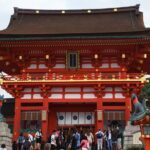
The first stop is Fushimi Inari-taisha, reached after about a 20-minute ride from the shop. It’s one of Kyoto’s most famous sights for a reason: the shrine’s thousands of torii gates form corridors you can walk through for as long (or as short) as you want.
What makes this stop work on an e-bike tour is timing and flow. You’re not spending your morning fighting transit. You arrive, park yourself mentally, and then soak in the atmosphere for a focused stretch. This stop includes about 50 minutes, which is enough to see the gates, pause for photos, and still feel like you’re sightseeing instead of sprinting.
Quick practical note: torii-gate areas can be uneven and crowded at busier times. Here, the early start helps, but you’ll still want sturdy footwear and a little patience for the sections that require slower walking.
Sanjusangendo Temple and the 1,001 Kannon statues
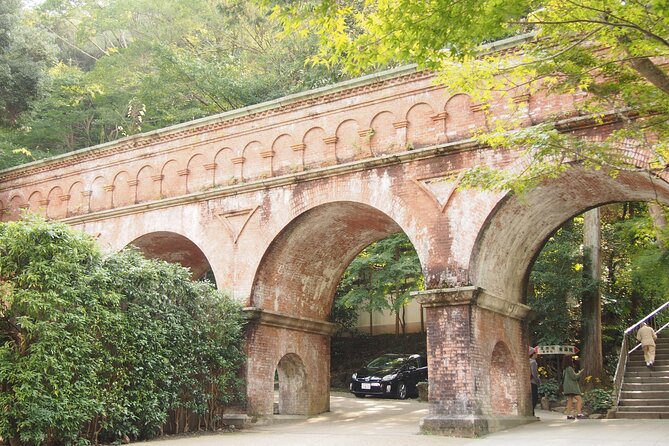
After a short ride, you’ll head to Sanjusangendo Temple. The itinerary places this next leg at roughly 15 minutes from the previous shrine stop.
Sanjusangendo is known for its 1001 statues of Kannon, the goddess of mercy. Even if you’re not a religion deep-dive person, this kind of concentrated visual spectacle is hard to forget. The space matters too: you’re stepping into a setting designed to make the scale feel immediate.
What the guide adds here is the context—why Kannon matters in Buddhism, and how this temple fits into Kyoto’s spiritual landscape. It also helps that your time is structured: you’re not just wandering until you’re tired. You arrive, you see, you move on to the next mood.
Admission here is listed as free, so you can spend your money on later meals or small purchases instead of ticket anxiety.
Shirakawa River backstreets to Miyagawa-cho and Tatsumi Bridge
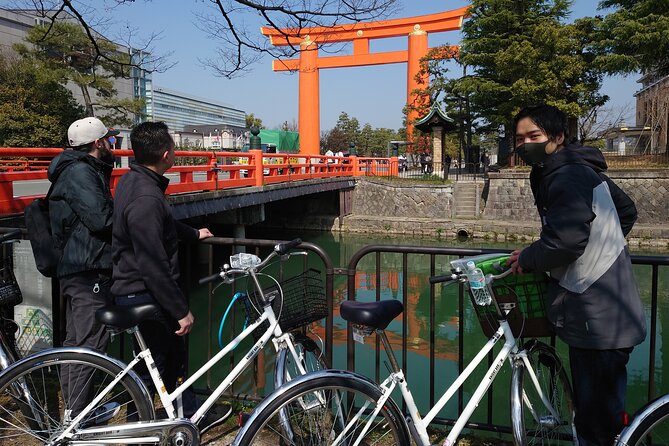
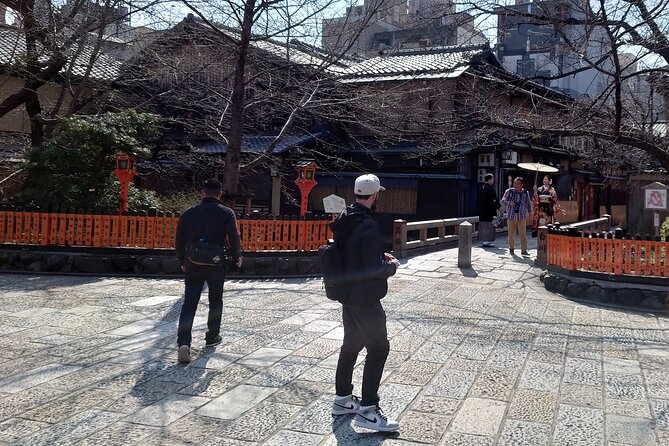
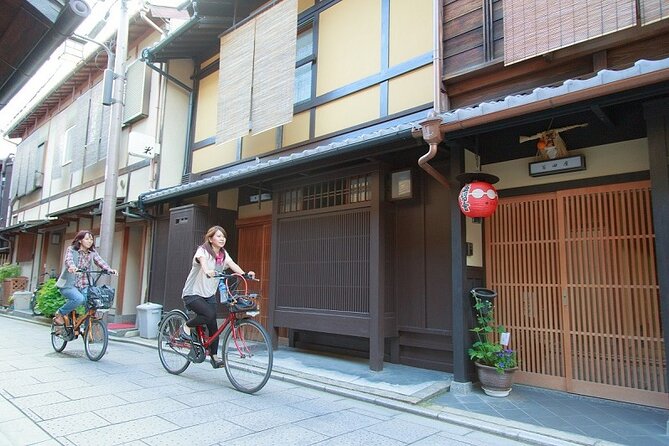
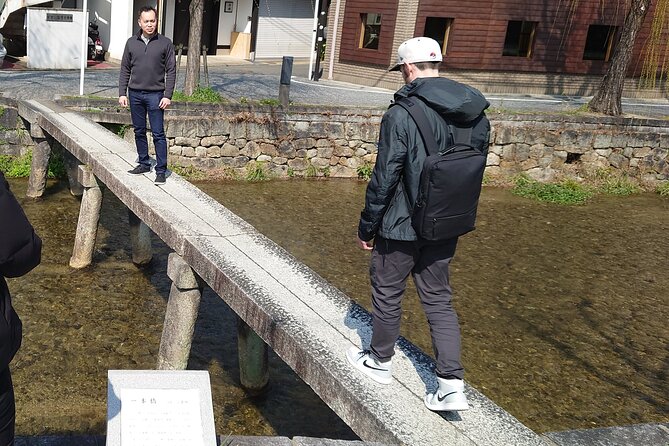
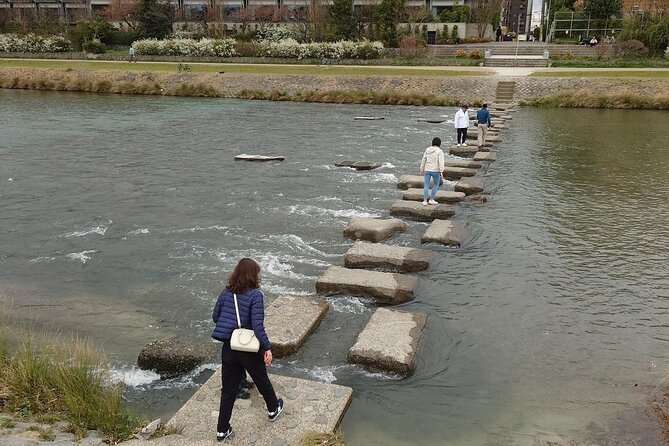
This is where the tour shifts from landmark sightseeing to neighborhood Kyoto. You’ll follow the Shirakawa River and bike through older backstreets that lead toward Miyagawa-cho and Tatsumi Bridge in the Gion area.
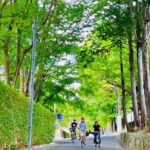
The drive time between these segments is short—think in the 10–20 minute range depending on the exact flow—but the payoff is big. Kyoto’s signature charm often lives in the side streets: narrower lanes, quieter corners, and the way neighborhoods feel when you’re not just stepping out of a bus.
This section is great for photos too. Many riders have highlighted how guides help with picture-taking at stops, and the Gion-area approach is the kind of scenery where good angles matter.
One drawback to know in advance: geisha districts are active cultural areas. Even when the street looks calm, you should ride and walk respectfully, keep moving with the group, and avoid blocking anyone’s path.
You can also read our reviews of more tours and experiences in Kyoto
Nanzen-ji Temple: Zen calm with a real change of pace
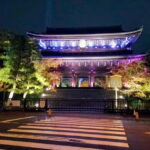
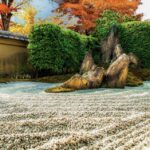
Next up is Nanzen-ji Temple, one of Japan’s important Zen temples. You reach it after about a 15-minute ride from the Gion area.
This stop includes around 20 minutes on site, and admission is free. That time window is well-chosen. Nanzen-ji isn’t a place you rush through in two minutes, but it also doesn’t demand an all-afternoon commitment. On this tour, it feels like a breather after the busier energy near Fushimi and the atmospheric streets around Gion.
Zen temples have a different kind of quiet. Instead of only looking up at signs and structures, you start noticing spacing, pathways, and how the area encourages slow walking. If you enjoy that kind of calm, this stop is one of the best examples on the route.
Heian-Jingu Shrine as the finale, then Kamogawa River back
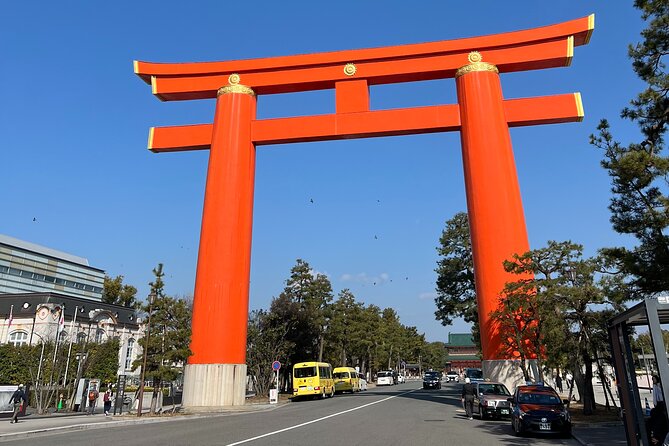
Your last major stop is Heian-Jingu Shrine (often called Heian-Jingu). It’s about a 10-minute ride from Nanzen-ji, and you’ll have around 20 minutes there. Admission is listed as free.
Heian-Jingu is known as a symbol of Japan’s capital status about 800 years ago. On the tour, it lands as a satisfying wrap-up: you get a major shrine setting and a sense of Kyoto’s historical identity without turning the day into backtracking.
After that, you ride back following the Kamogawa River for roughly 20 minutes back to the meeting point. This return segment matters more than people think. It turns the day into a gentle landing—your brain isn’t constantly switching from one ticket line to another. You’ve got time to look around, relax your legs, and enjoy the final stretch.
Price and what $84.92 actually buys you
The price is $84.92 per person for about 3 hours 30 minutes total (including travel time between stops). For a Kyoto tour that visits multiple major sites, that’s usually a fair deal—especially because the tour handles the “stuff” that can quietly cost you money and time.
Here’s what’s included:
- Use of bicycle
- Helmet
- Bottled water
- Raincoat
- Liability insurance
And it’s not just the e-bike. It’s the whole setup. If you’ve ever tried to figure out rentals in a busy neighborhood, you know the hidden time cost. This is the opposite: you show up, you get geared, and you’re moving.
What’s not included:
- Snacks
That doesn’t ruin the value, but it does mean you should plan your day so you’re not starving afterward. If you tend to get hungry between meals, grab something small before the tour.
How hard is it, really? Hills, weather, and e-bike limits
E-bikes reduce effort, but they don’t erase physics. You’ll still feel the effort on changes in elevation, and at least one rider specifically noted that there are hills, even if the overall ride wasn’t too strenuous.
So do this:
- Wear comfortable, closed-toe shoes
- Bring a light layer, since early mornings can feel cooler
- Trust the raincoat, but also accept that you might still get damp if weather hits hard
The good news is the ride segments between stops are short, and the guide sets the pace. If you can stand and walk for temple visits, you’re likely fine for the cycling portion.
Also, helmets are included for a reason. Use the helmet. It’s the kind of safety detail that makes the whole experience feel smoother.
Who should book this tour (and who might skip it)
This e-bike tour is a strong match if:
- You want major Kyoto highlights without spending your morning on transit
- You like guided context for Shinto and Buddhism without needing to read a textbook first
- You prefer a small group so you can ask questions and stay together
- You’re traveling with teens or mixed ages and want a plan that doesn’t require everyone to walk the whole day
It may be less ideal if:
- You hate biking entirely, even at an easy pace
- You’re extremely sensitive to weather, since you’re outdoors for the ride portions
- You need frequent long stops beyond the scheduled times
The sweet spot is time-crunched visitors who still want something authentic-feeling: quieter streets, real neighborhoods, and temple visits that don’t turn into a checklist.
Should you book this early Kyoto e-bike tour?
I’d book it if your goal is to see Fushimi Inari, Sanjusangendo, the Gion area (Miyagawa-cho and Tatsumi Bridge), Nanzen-ji, and Heian-Jingu in one smart morning—without juggling rental hassles. The included bike, helmet, raincoat, and water remove common headaches, and the max 6 riders setup helps the experience feel personal rather than chaotic.
Skip it only if biking and hills are deal-breakers for you. Otherwise, this is one of those Kyoto experiences that lets you get out early, see a lot, and still feel like you had time to actually enjoy it.
FAQ
What is the duration of the Kyoto early morning e-bike tour?
The tour is approximately 3 hours 30 minutes, and the total duration includes travel time between stops.
How much does the tour cost?
It costs $84.92 per person.
How many people are in the group?
The tour has a maximum group size of 6 travelers.
Where does the tour start and end?
It starts at Kyoto Eco Trip Flagship shop, 58 Higashikujo Muromachi, Minami Ward, Kyoto, and ends back at the same meeting point.
Do I need to bring an e-bike or helmet?
No. Bicycle use and helmets are included.
Is bottled water included?
Yes, bottled water is included.
Is a raincoat included?
Yes, a raincoat is included.
Are admission tickets required for the listed sites?
The tour lists free admission for the stops included in the route.
What is included besides the bike and gear?
The tour includes liability insurance as well.
Do I get a mobile ticket?
Yes. You’ll receive a mobile ticket.
Is free cancellation available?
Yes. Free cancellation is available up to 24 hours before the experience’s start time.
Are snacks included?
No. Snacks are not included, so plan for food on your own before or after.