REVIEW · KYOTO
Kyoto: Gion & Pontocho Food Tour with 13 Dishes
Book on Viator →Operated by Travel Japan Together · Bookable on Viator
Kyoto’s night food trail starts with a shrine. You get Gion and Pontocho with a guide who helps you cut through language friction, so the evening feels easy and fun. It also starts with a real-world Kyoto landmark, Yasaka Shrine, before you head into the eating part of town.
Two things I really like: first, the tour is built for people who don’t speak Japanese. You’re walking with a local guide who translates and helps you order and understand what you’re eating, which is a big deal when most menus are not in English. Second, you’re not doing one or two bites. You’re set up for a tasting-style evening with up to 13 dishes, plus two drinks, so you actually sample the neighborhood instead of just grabbing one snack.
One consideration: the tour pace is set, and extra drinks cost extra. If you’re the type who wants to turn the izakaya into a long session, you’ll either slow down less than you might like or spend more than the listed price.
In This Review
- Quick hits before you go
- Entering Kyoto’s Gion and Pontocho after dark
- The 7:00 pm rhythm: Yasaka Shrine in 30 minutes
- Gion walking: Hanami-koji and the geisha-district layout
- Pontocho at night: between the river and the alleys
- The food plan: 13 dishes, two drinks, and no guesswork
- Izakaya culture, explained at the table
- Guide quality makes the difference
- Price and value: $105.71 for a full 3-hour evening
- Where this tour fits best in your Kyoto plan
- A practical note on pacing and expectations
- Should you book this Gion and Pontocho food tour?
- FAQ
- What is the duration of the Kyoto: Gion & Pontocho Food Tour?
- What time does the tour start and where does it end?
- Where does the tour start?
- How many dishes are included?
- What kind of drinks are included?
- Are there language supports on the tour?
- Is Yasaka Shrine included, and do you pay admission?
- How big is the group?
- Is a mobile ticket used?
- What is the cancellation policy?
Quick hits before you go
- Small group (max 10 travelers) makes it feel personal as you move through Gion and Pontocho.
- Up to 13 dishes spread across a restaurant stop and an izakaya stop.
- Two drinks included (alcoholic or non-alcoholic), with extra drinks not included.
- Starts at 7:00 pm and ends at Kyoto-Kawaramachi Station, so it’s easy to plug into an evening plan.
- Yasaka Shrine (free) comes early, giving you culture context before the food.
- Guides often go beyond the menu, including pointers like where to shop for matcha and when some sights feel quieter.
Entering Kyoto’s Gion and Pontocho after dark
This is a nighttime Kyoto plan that makes practical sense. Gion and Pontocho are most enjoyable after the late-afternoon crowd thins out, and you’ll be moving on foot with a guide who knows where to go next.
The tour runs about 3 hours, starting at 7:00 pm. That timing matters: you get the “evening glow” feeling in the streets while still having a clear endpoint back near Kyoto-Kawaramachi Station. It’s also a good length if you’re saving your full-day energy for temples earlier in the day.
You’ll use a mobile ticket, which is simple. And because the group is capped at 10, you won’t feel lost in a crowd as you duck down narrow lanes and get seated for tastings.
You can also read our reviews of more food & drink experiences in Kyoto

The 7:00 pm rhythm: Yasaka Shrine in 30 minutes
The tour kicks off at Yasaka Shrine for about 30 minutes, and admission is free. This matters because it gives you a proper Kyoto “why” before you chase the “what to eat.”
Yasaka Shrine is famous for a vivid red main gate and lantern-lit pathways, and that atmosphere sets the mood instantly. You don’t spend all night sightseeing here, though. It’s enough time to orient yourself and understand you’re walking through a district with deep cultural roots.
If you’ve only done temple photos by day, this stop is a nice contrast. Even with limited time, night lighting changes the feel of the area, and you get a calmer start before the meal portion.
Gion walking: Hanami-koji and the geisha-district layout
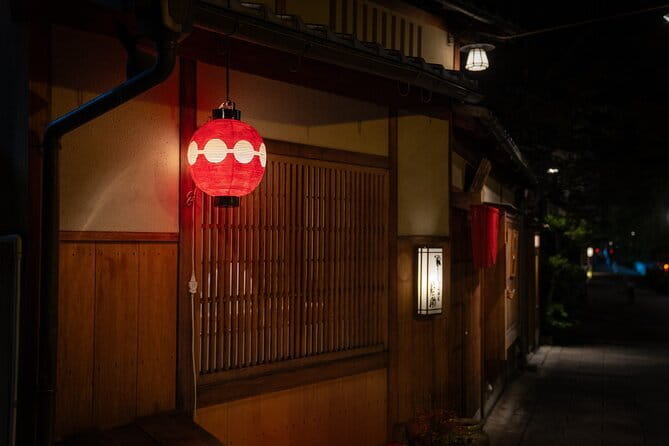
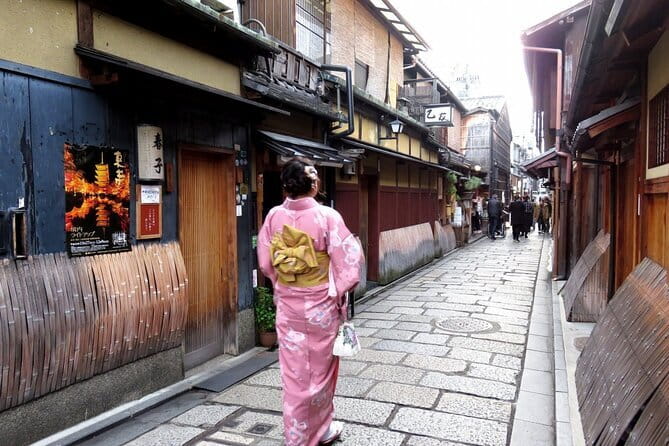
After Yasaka Shrine, the route goes into Gion for about 1 hour. This is where you see the neighborhood structure—traditional machiya houses, teahouses, and the street patterns that make Gion feel like a place with its own rules.
A highlight is passing through areas like Hanami-koji. It’s one of those streets where you’ll notice details fast: older wooden buildings, the way side streets branch off, and how people move through the district at night.
Here’s the practical expectation to set: geisha spotting is not guaranteed on a food tour at night. If your main goal is to catch a specific sighting, be realistic. But even without a “caught in the moment” geisha photo, you’ll still get a much better understanding of the district than wandering alone.
Pontocho at night: between the river and the alleys
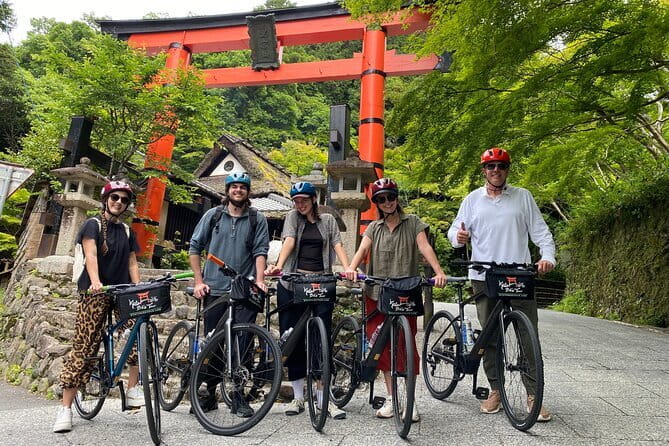
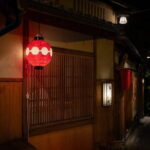
Next comes Pontocho, around 1 hour. This district is famous for narrow alleyways and classic machiya homes, with the Kamogawa River nearby. Pontocho feels different from Gion: more compact, more lane-like, and very evening-focused.
The guide helps you keep moving through the right streets at the right pace. That’s important here because Pontocho’s charm is partly in the layout—turns, narrow passages, and the way the street scenes open up near food stops.
If you like atmosphere, Pontocho is where you’ll feel Kyoto’s night texture. It’s also where the food makes the most sense—your eyes are doing sightseeing while your stomach stays in sync.
The food plan: 13 dishes, two drinks, and no guesswork
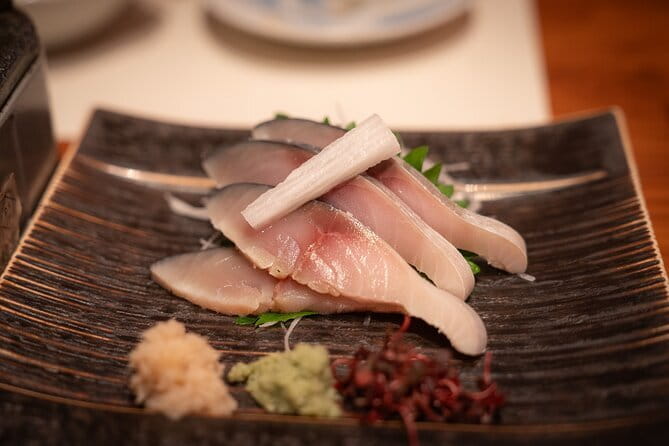
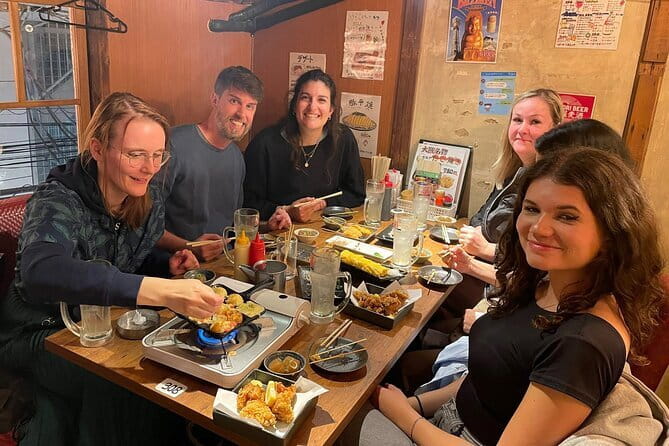
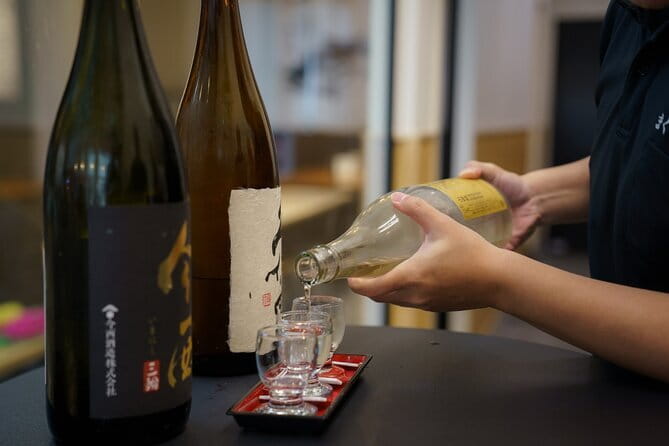
The big win is the tasting structure. Your food is taken care of at one restaurant and one izakaya, with tastings totaling up to 13 dishes. You also get two drinks, either alcoholic or non-alcoholic.
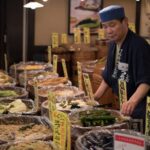
From the variety described, you can expect classic Kyoto-style hits like crispy tempura and fresh sashimi, plus a Japanese fried chicken dish. There are also mentions of tofu among the tastings, which is a nice reminder that Japanese food isn’t only about raw fish and noodles.
Think of this as a “greatest hits” method. Instead of trying to figure out which single place serves the best version of each category, you sample a spread, and you’re guided through what you’re eating. It’s easier to enjoy if you’re visiting for the first time or you’re not confident ordering in Japanese.
And because you’re drinking something included, you get a more complete izakaya feel. Still, remember the tradeoff: if you’re a heavy drinker, extra drinks aren’t included, so plan for add-ons.
You can also read our reviews of more tours and experiences in Kyoto

Izakaya culture, explained at the table
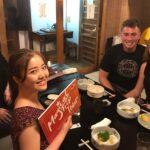
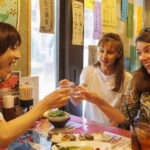
I like food tours that treat the meal as part of the experience, not just a pit stop. An izakaya stop works well because it’s social and flexible—small plates, repeated courses, and a vibe that suits casual conversation.
Your guide plays an important role here. They can help you understand what’s on the table and translate key points so you’re not eating blind. That’s especially useful in an izakaya where the pace can feel quick.
Also, a small group helps. When you’re not competing for attention, you can ask questions while you eat. In the feedback tied to this tour, guides like Kohtaro, Yuna, Meiko, Moto, and Takuma are singled out for engaging explanations and friendly hosting. Even if your guide isn’t one of those names, the consistency you’re looking for is the same: clear guidance and a relaxed flow.
Guide quality makes the difference
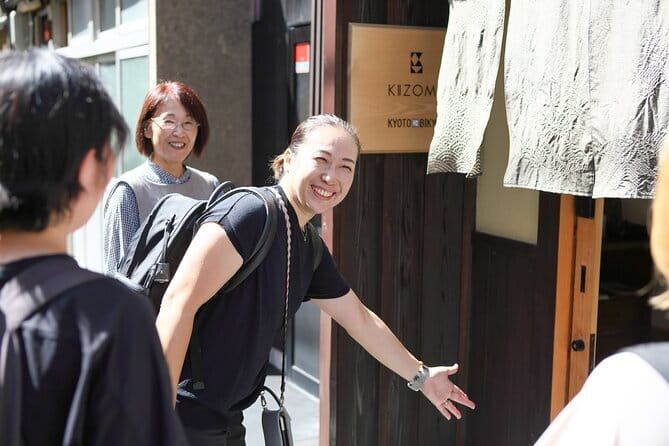
The tour’s strength isn’t just the food—it’s the people skills behind it. The info here points to guides who are actively helpful, not quiet performers. And the small-group size makes that easier to deliver.
One detail I’d pay attention to: some guides go beyond food and give practical Kyoto advice. For example, Kohtaro is noted for suggesting where to buy matcha and when certain tourist spots feel quieter. That kind of extra help turns a tasting evening into a mini planning session for the rest of your trip.
Another theme is language help. The whole point is that you shouldn’t feel stuck translating in your head all night. If Japanese is a struggle for you, this kind of guide support is the difference between eating confidently and second-guessing every bite.
Price and value: $105.71 for a full 3-hour evening
At $105.71 per person, this isn’t a bargain-basement snack tour. But it also isn’t just paying for a walking guide with two bites.
You’re paying for:
- a small-group guided walk
- a shrine stop (with free admission)
- food at two places (restaurant + izakaya)
- up to 13 dishes
- two drinks included
- translation support so you can actually enjoy what you’re ordering
If you think in “cost per taste,” the math gets friendlier when you reach the upper end of the dish count. And even at the lower end, you’re still getting a curated set menu rather than expensive trial-and-error.
The only built-in “watch this” item is drinks. If you plan to add cocktails or extra pours, your final spend will rise. But if you’re fine with what’s included, the price feels like it’s doing what it promises.
Where this tour fits best in your Kyoto plan
This tour is ideal if you want an evening that mixes food with neighborhood context. If you’ve already done a temple-heavy day, this gives you a different angle—Kyoto in the spaces where people actually eat and hang out.
It’s also a strong match for:
- first-time visitors who want structure
- people who don’t want to manage ordering alone
- travelers who like walking but want the route handled for them
- anyone who wants Gion and Pontocho without guessing where to go next
It’s less perfect if you:
- hate walking at night
- want complete freedom to linger in one place for an hour
- plan on heavy drinking at the izakaya (because extra drinks cost extra)
The good news is the tour ends at Kyoto-Kawaramachi Station, which is convenient for continuing your night with minimal stress.
A practical note on pacing and expectations
This is a 3-hour guided format. That means stops are timed and moving. You won’t have the kind of deep, slow museum pacing you might want on a day tour.
But that’s also why it works. You get a lot of area covered—Gion, Pontocho, and the shrine start—without burning your entire night. For many visitors, it becomes the smoothest way to see two districts in one go.
Also, keep in mind that the food stops are part of the schedule. That’s usually a relief. You don’t need to search, compare menus, or worry about whether you picked a place that’s open.
Should you book this Gion and Pontocho food tour?
I’d book it if you want Kyoto by night with less decision fatigue. The combo of guided translation, up to 13 dishes, and a route that ties together Yasaka Shrine, Gion, and Pontocho is exactly the kind of structured local experience that pays off on a first trip.
I’d think twice if you’re aiming for a drink-heavy izakaya night or you prefer choosing every restaurant yourself. In those cases, you might spend more than you expect, or you might feel rushed.
If you’re the sweet spot—curious about Japanese food, happy to walk, and you want Gion and Pontocho without guessing—this tour is a smart way to spend your evening.
FAQ
What is the duration of the Kyoto: Gion & Pontocho Food Tour?
The tour lasts about 3 hours.
What time does the tour start and where does it end?
It starts at 7:00 pm. It ends at Kyoto-Kawaramachi Station.
Where does the tour start?
The meeting point is at FamilyMart, 300 Gionmachi Kitagawa, Higashiyama Ward, Kyoto, 605-0073, Japan.
How many dishes are included?
The tour includes food tastings totaling up to 13 dishes.
What kind of drinks are included?
Two drinks are included, and they can be alcoholic or non-alcoholic. Extra drinks are not included.
Are there language supports on the tour?
Yes. The guide helps you avoid language barriers and supports communication while you eat and walk.
Is Yasaka Shrine included, and do you pay admission?
Yasaka Shrine is included for about 30 minutes, and admission is free.
How big is the group?
The tour has a maximum of 10 travelers.
Is a mobile ticket used?
Yes, the tour uses a mobile ticket.
What is the cancellation policy?
You can cancel for a full refund up to 24 hours before the start time. If you cancel less than 24 hours before, the amount paid is not refunded.