REVIEW · KYOTO
Osaka/Kyoto:Kinkakuji,Arashiyama,FushimiInariShrine,NaraPark
Book on GetYourGuide →Operated by VIP Japan Tour · Bookable on GetYourGuide
One day can feel like a highlights reel, and this route delivers. I like the way it pairs Nara Park deer time with two UNESCO-grade temple moments, so you get history plus personality. The main drawback is that it’s a full, long day packed with big sights, so you’ll want to keep your expectations realistic about pacing.
What I love next is the contrast: Kinkaku-ji Golden Pavilion in the afternoon glow, then the orange tunnel of torii at Fushimi Inari later. And if you choose the Osaka departure, the optional Kobe beef lunch can turn the day into something extra memorable. Expect a bus ride, clear stop-and-go timing, and a lot of walking across uneven temple paths.
In This Review
- Key Takeaways Before You Go
- Price and Logistics: What Your $66 Really Buys
- Getting Started in Osaka or Kyoto (VIP Lounge + Prompt Departures)
- Nara Park and Todai-ji: Deer Encounters and a 15-Meter Great Buddha
- Arashiyama Bamboo Grove: The Time Trade-Off That Changes the Whole Day
- Kinkaku-ji Golden Pavilion: UNESCO Beauty With a Built-In Ticket
- Fushimi Inari Shrine: The Torii Tunnel Up Mount Inari
- Kobe Beef Lunch Option: Shabu-Shabu on the Osaka Departure
- A Realistic Day on the Bus: Group Pace, Meeting Points, and Timing
- Should You Book This Tour? My Take
- FAQ
- Where does the tour start?
- How long is the tour?
- What’s included in the tour price?
- Is Todai-ji entrance included?
- If I choose the lunch option, what happens to my Arashiyama time?
- Can I get the Kobe beef lunch if I start from Kyoto?
- How does the tour handle languages?
- What should I know about the deer in Nara Park?
Key Takeaways Before You Go
- UNESCO coverage that fits one day: Kinkaku-ji is included, and Todai-ji is visited (with an entrance fee not included).
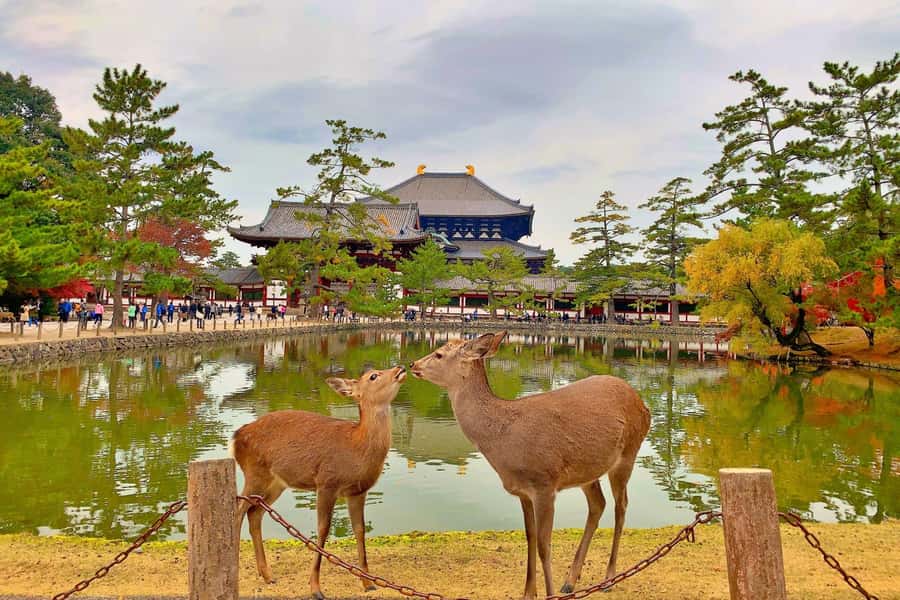
- Nara’s deer moment: you can interact with the park’s free-roaming deer, with clear instructions not to disturb them.
- Arashiyama bamboo timing depends on lunch: 60 minutes in Arashiyama with lunch, or 120 minutes without.
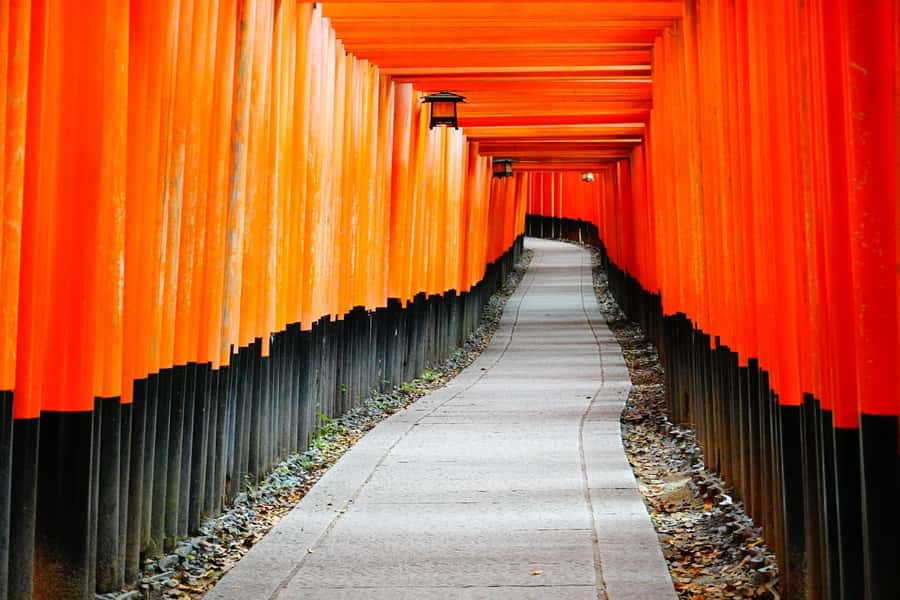
- Fushimi Inari’s torii tunnel: walk through the iconic vermilion gates winding up Mount Inari.
- Optional Kobe beef shabu-shabu: offered only on the Osaka departure, with extra Kobe beef aburi sushi order-ons available.
- Guides who drive the day: people mention guides like Harry, Gary, Ben, Nick, Tracy, and Panda for upbeat explanations and tight meeting reminders.
Price and Logistics: What Your $66 Really Buys
At $66 per person, this tour is built for value: you’re paying for transport, a guide, and at least one key ticket already handled. The included cost items are clear-cut: the entrance fee to Kinkakuji, an English or Chinese-speaking guide, an air-conditioned vehicle, and all taxes/fees/handling.
What’s not included matters for budgeting. Todai-ji’s entrance fee is not included, and there’s no hotel pickup/drop-off. Also, the start is from a specific meeting location (often described as a VIP Lounge in Osaka or Kyoto), and the bus departs promptly based on that assigned meeting point. If you show up late—or at the wrong spot—you can miss the tour and refunds won’t be issued.
In other words, it’s good value if you want an easy day plan and you’re comfortable paying any extra temple entrance fees on-site. It’s less of a bargain if you hate schedules and want total freedom.
You can also read our reviews of more tours and experiences in Kyoto.



Getting Started in Osaka or Kyoto (VIP Lounge + Prompt Departures)
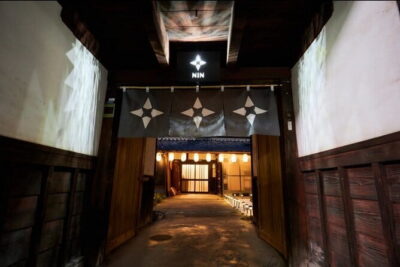
The day kicks off from a VIP Lounge in Osaka or Kyoto, depending on the option you book. Meeting points can vary by option, so don’t assume the address will match what you’re picturing. The key detail is that your assigned bus and guide are matched to your selected meeting location.
The bus departs promptly. That’s great for staying on track—but it also means you should arrive early. One person noted a very long day starting around 7 am and returning around 7:30 pm. Even if your timing is different, plan for a packed schedule and not a casual stroll kind of day.
Language is another logistical piece: the guide is English or Chinese, and depending on group size, commentary may be in both languages. This matters for how smoothly you can follow the meeting instructions between stops.
Also, there’s a practical “small note” worth respecting: one guest mentioned the bus didn’t have USB ports. If you rely on charging for photos or maps, bring a portable battery.
Nara Park and Todai-ji: Deer Encounters and a 15-Meter Great Buddha
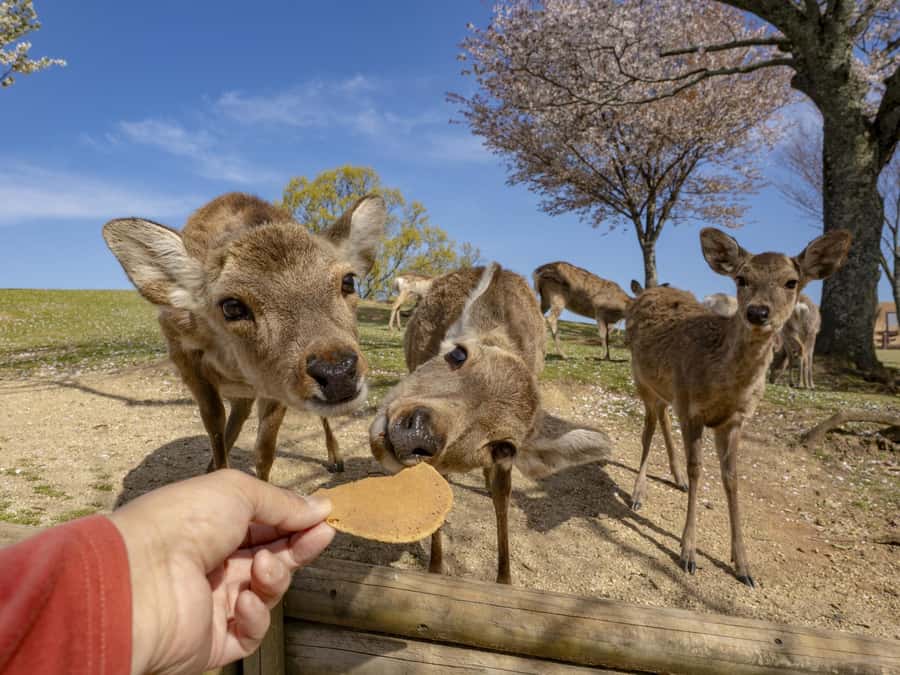
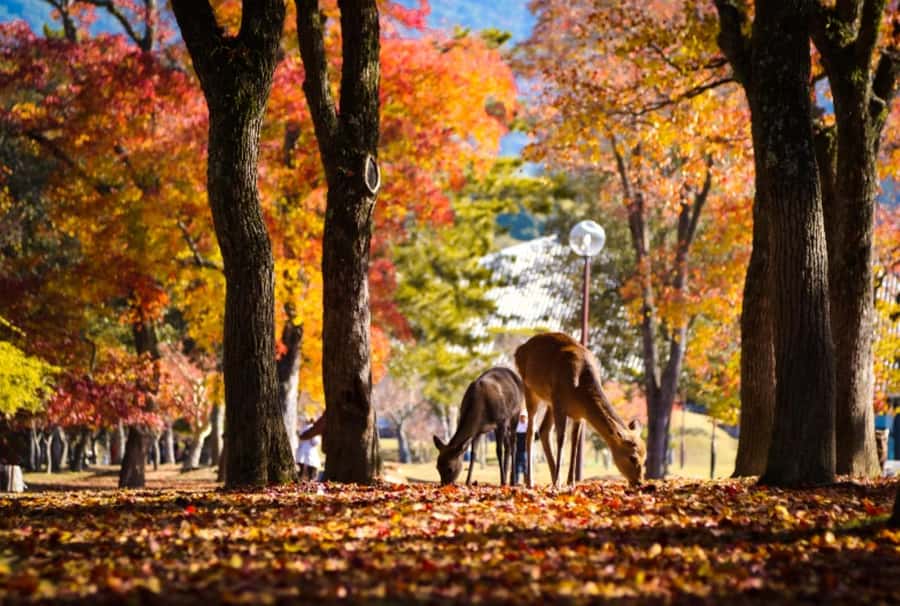
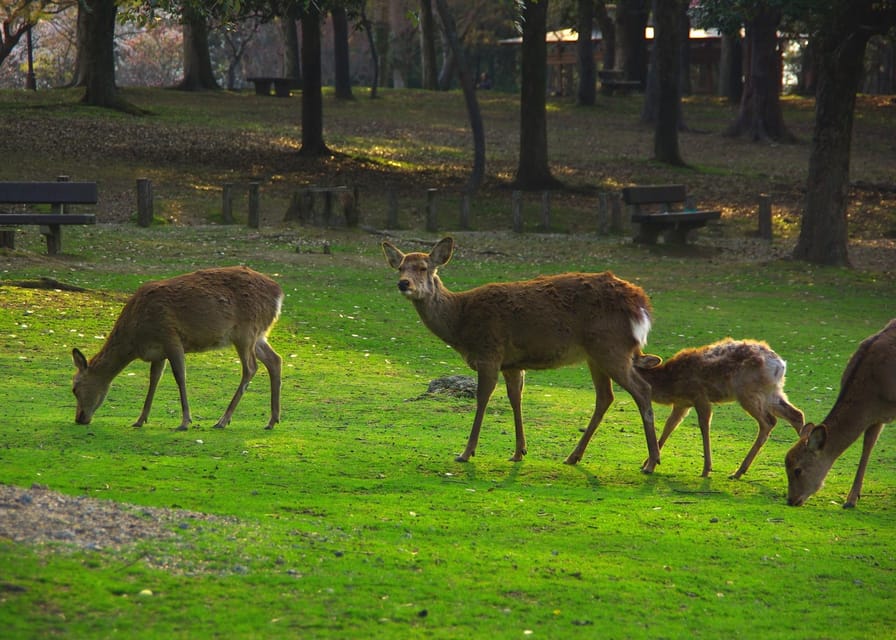
Nara Park is where the day turns fun and a little surreal. You arrive at a historic park atmosphere where you can interact with the free-roaming deer. The tour guidance is explicit: the deer are wild animals, so don’t disturb them. That’s not just etiquette—it’s also the difference between a good memory and an awkward moment.
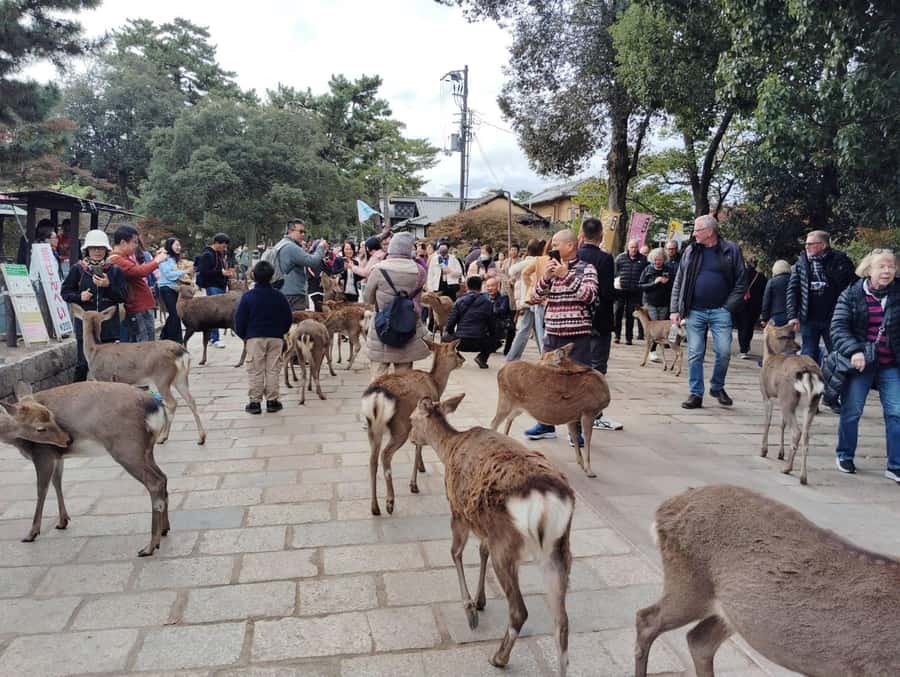
Nara works especially well early in the day. People mention arriving before heavy crowd conditions, which helps you get calmer deer encounters and less stress when you’re trying to move through the park.
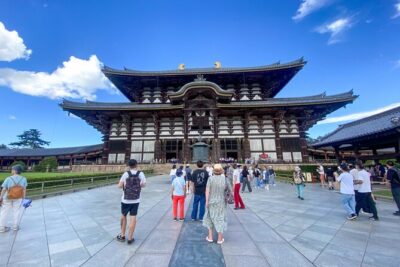
Then you move on to Todai-ji, a UNESCO World Heritage site. This temple is famous for being the largest wooden structure in the world and for the Great Buddha statue, which is about 15 meters tall. Even if you’re not a “temple person,” this stop hits because the scale does the talking. It’s the kind of landmark that makes your brain pause for a second.
One important planning note: Todai-ji entrance isn’t included. If you’re trying to keep the day simple, just know you’ll need to pay that extra fee on-site.
Arashiyama Bamboo Grove: The Time Trade-Off That Changes the Whole Day
Arashiyama is the calm contrast to the morning’s big energy. The star is the Bamboo Grove: tall green stalks form a tunnel-like walking path where sunlight filters down. It’s peaceful and different from the temple interiors—more like a nature “moment” you can feel in your legs after all the other sights.
Here’s where the tour becomes a personal choice. Your time in Arashiyama depends on whether you add lunch:
- If you choose the Kobe beef shabu-shabu lunch, you get 50 minutes for lunch and then 60 minutes in Arashiyama.
- If you skip lunch, you get 120 minutes in Arashiyama.
That difference is big. Bamboo grove viewing is one thing, but there’s also time for walking slower, taking photos, and browsing the shops and small stalls that appear along the area. If you know you love wandering, go with the no-lunch option. If you want food included and don’t mind a shorter bamboo window, lunch can be the better match.
One realistic caution: Arashiyama can get crowded. When it is, you may feel like you’re moving through a popular corridor. Still, even in busier periods, the bamboo grove experience is worth it because it’s so distinctive and photo-friendly without needing special skills.
Kinkaku-ji Golden Pavilion: UNESCO Beauty With a Built-In Ticket
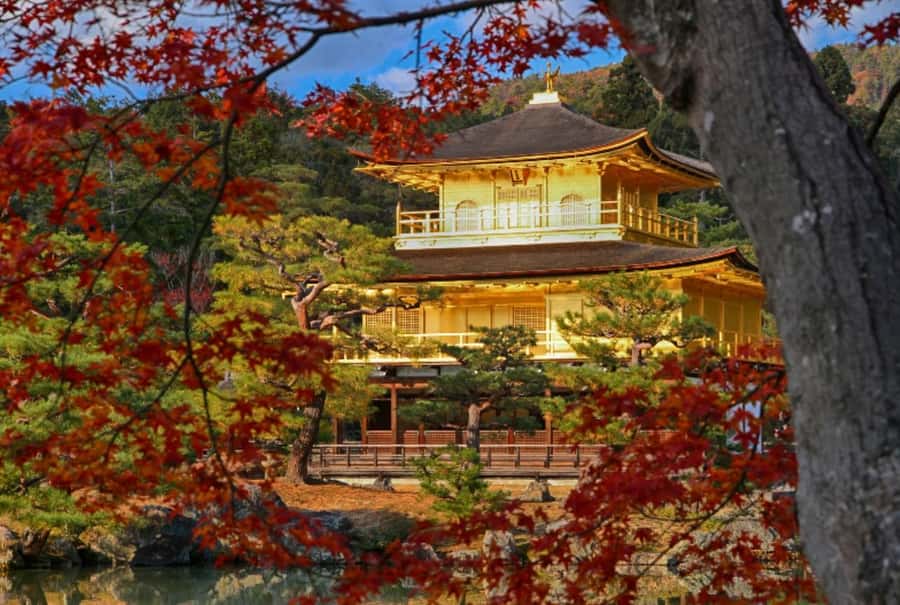
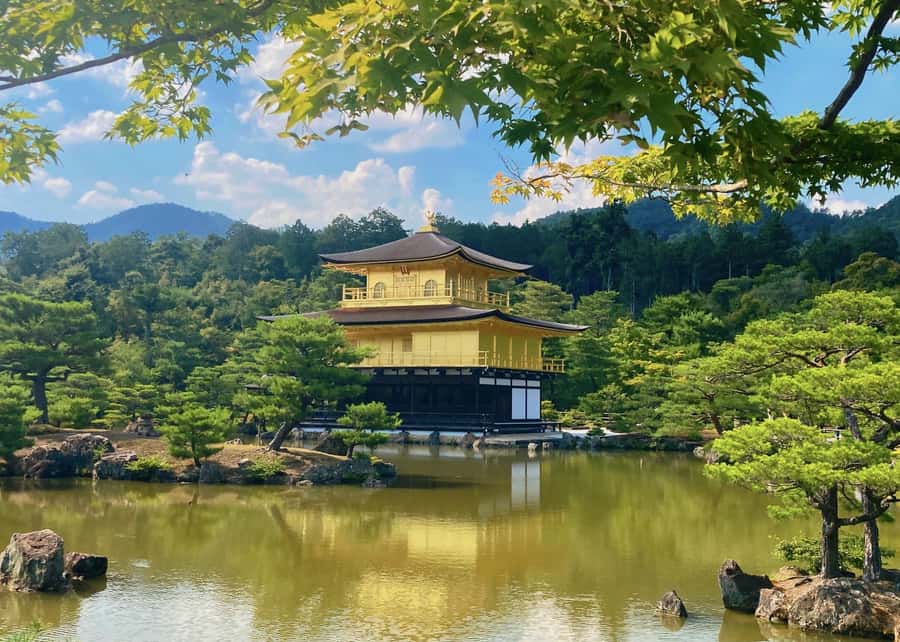
Next comes Kinkaku-ji, the Golden Pavilion. This UNESCO site is known for its gold-leaf exterior and its gardens, plus the pond that creates reflections worth waiting for. The tour includes the entrance fee to Kinkakuji, which is great because you don’t have to solve ticket logistics in the middle of the day.
People talk about timing, and this schedule often lands Kinkaku-ji in the afternoon window. That’s when the gold can look extra dramatic and the reflections on the water feel sharper. You’ll still see plenty even if the light is flat, but if you’re the type who notices shadows and shine, this stop is a good bet.
What’s also useful: a guide keeps you moving without rushing your eyes. You get enough context to understand why the pavilion matters, then you get time to look and take it in at your own pace.

Fushimi Inari Shrine: The Torii Tunnel Up Mount Inari
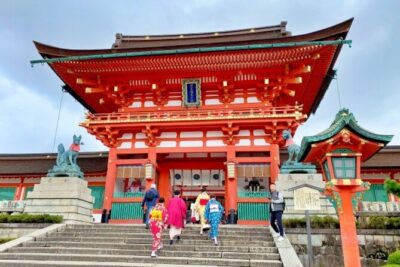
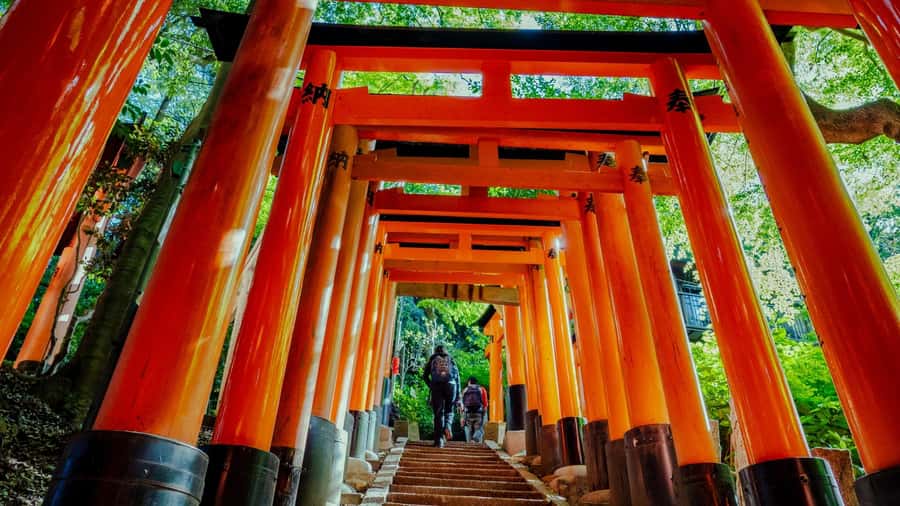
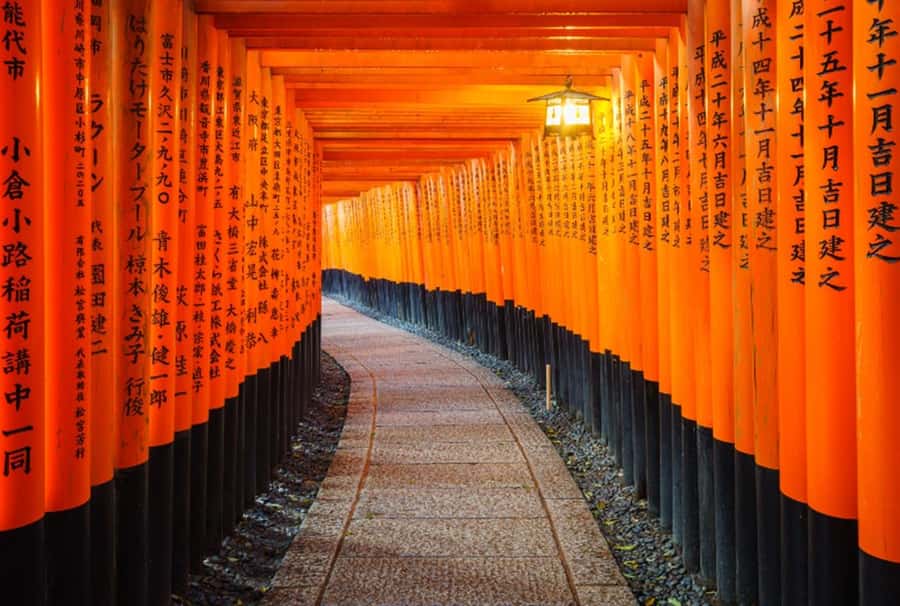
Then it’s off to Fushimi Inari Shrine, one of the most iconic Shinto sights in Japan. The hallmark here is the 1,000 vermilion torii gates that form a tunnel up Mount Inari.
The tour frames the walk in a way that adds meaning fast: each gate represents prayers or offerings to Inari Okami, the deity associated with prosperity, household safety, and success. That’s not just trivia. It changes how you walk the stairs and paths because you’re not just counting gates—you’re seeing the structure as a living system of devotion.
This stop is also where good pacing helps. If you rush, you miss the rhythm of the tunnel. If you linger too long, you risk tiring out before the bus return. The best plan is to walk far enough to feel the “tunnel” effect, then stop where you can still enjoy the view.
Kobe Beef Lunch Option: Shabu-Shabu on the Osaka Departure
If you book the Osaka departure with lunch, you’ll get Japanese Wagyu Kobe Beef shabu-shabu. It’s paired with an explanation of Kobe beef and why it’s held to strict standards among Japan’s three major Wagyu breeds. The described appeal is the marbling: the finely textured meat cooks so that the fat melts, creating a soft, velvety texture.
Lunch timing is part of the bargain. You get 50 minutes for lunch, which reduces your time in Arashiyama to 60 minutes. If the food matters most to you—or you just want a sit-down break that feels like a treat—this is a strong upgrade.
There’s also an add-on option. Kobe beef aburi sushi is available for additional on-site orders on the day. So even if you go for the set meal, you might still be able to add something extra if the mood strikes.
And because lunch is only offered on the Osaka-only departure, don’t assume you can add it no matter which start city you pick.
A Realistic Day on the Bus: Group Pace, Meeting Points, and Timing
This tour is built for people who want structure. You sit on an air-conditioned bus between stops, and the guide handles the commentary and the stop-and-return rhythm. Many people like that it’s an organized way to hit multiple major sights without figuring out train transfers.
The practical side: you need to stay alert at meeting points. The tour emphasizes that the guide has a list of participants per bus, and they can’t accommodate people who show up at different meeting locations. The bus departs promptly and won’t wait for late arrivals, so build in buffer time.
One common note from people is that the day can feel long and you may be walking a lot—one guest logged about 21,000 steps. That’s not unusual for a day hitting temples, a bamboo grove, and a torii mountain trail. If you’re sensitive to long walking days, take that seriously.
Group size can also affect the experience. Some people noted it can get busy in crowded areas and that the group may split in parts of the route. The good part is that guides typically help with clear directions and re-grouping instructions so you don’t lose the plan.
Should You Book This Tour? My Take
Book it if you want a high-impact day with minimal transportation stress and you don’t mind an itinerary that moves. The mix of Nara deer + Todai-ji scale + Arashiyama bamboo + Kinkaku-ji gold + Fushimi Inari torii is a powerful set of contrasts, and the included Kinkaku-ji ticket helps reduce friction.
Skip it (or choose the no-lunch option) if you hate feeling time-boxed. The schedule is packed, and Arashiyama time shrinks when you add lunch. Also, Todai-ji entrance fees aren’t included, so your total day cost will be a little higher than the headline number.
For most people, the sweet spot is: you’re short on time, you want to see the big icons, and you’re happy to let a guide handle the logistics while you focus on photos, wandering, and that deer-to-torii-to-golden-temple rhythm.
FAQ
Where does the tour start?
The day begins at a VIP Lounge in Osaka or Kyoto, depending on the option you book. Meeting points can vary, so check your specific start location.
How long is the tour?
It’s about 9 hours, though it can vary because of traffic or unforeseen conditions. The exact timing may shift to keep all sights on the schedule.
What’s included in the tour price?
You get the entrance fee to Kinkakuji Temple, an English or Chinese-speaking guide, an air-conditioned vehicle, and all taxes, fees, and handling charges.
Is Todai-ji entrance included?
No. Todai-ji’s entrance fee is not included, so you should expect to pay that on-site.
If I choose the lunch option, what happens to my Arashiyama time?
With lunch, you get 50 minutes for lunch, then 60 minutes in Arashiyama.
Can I get the Kobe beef lunch if I start from Kyoto?
The Kobe beef shabu-shabu lunch option is available only for the Osaka-only departure.
How does the tour handle languages?
The guide speaks English or Chinese. Depending on group size, commentary may be in both languages.
What should I know about the deer in Nara Park?
The deer are wild animals. You can interact with them in Nara Park, but you should not disturb them.
If you want, tell me whether you’re starting from Osaka or Kyoto and whether you want lunch, and I’ll help you pick the option that best matches your pace.