REVIEW · KYOTO
Authentic Knife Making Experience at a Blacksmith in Kyoto
Book on Viator →Operated by Atelier NIN · Bookable on Viator
Kyoto has a way of making craft feel personal. This 3-hour knife-making workshop is hands-on from hot steel to a finished blade, with uniforms and tools provided and a small group of up to 6 people. I especially like that you learn the real workflow, not just the story: forging, then sharpening, then polishing. One thing to consider: hammering hot metal is genuinely physical work, so bring a moderate fitness level.
You also don’t need to hunt down safety gear or materials. You show up, dress up in the traditional goldsmith look, and follow an English guide who helps you stay on track—one instructor named Diaki stands out in the reviews for stepping in when you need help. The small space and active sanding work can be a little messy and tiring, but that’s also part of what makes the finished knife feel earned.
In This Review
- Key points before you go
- Why a Kyoto knife workshop beats a store souvenir
- Studio NIN to Rurikoin: where this starts and how it feels on the ground
- Dressing up in the goldsmith outfit and getting set for safety
- The forging session: where the real effort teaches you the most
- Sharpening and polishing: turning a shaped blade into something usable
- Your finished knife: size, handle style, and what to plan for
- Value check: is $158.52 really worth it?
- Who this workshop is best for (and who might not love it)
- The little details that make it feel authentic
- Should you book Atelier NIN’s knife-making in Kyoto?
- FAQ
- How long is the knife-making experience?
- How big is the knife you make?
- What does the price include?
- Do I need to bring protective clothing?
- Is this class for beginners?
- How many people are in a group?
- Where do I meet for the workshop?
- What is not included in the tour?
- Is there free cancellation?
Key points before you go
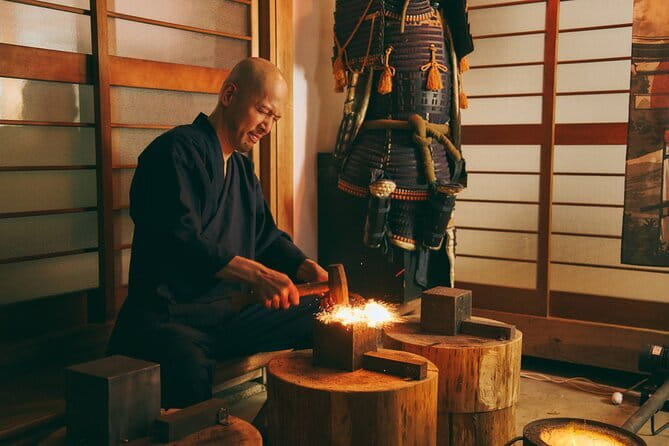
- Small group (max 6) means you get more hands-on guidance
- Uniform provided so you can skip protective clothing shopping
- You actually forge the knife blade, not just watch
- Tool-supported learning: you forge, sharpen, and polish with step-by-step help
- Take-home souvenir: a handmade Japanese knife around 13–15 cm, handmade so it varies
- Built-in fitness factor: hammering hot steel and later grinding/polishing take real effort
Why a Kyoto knife workshop beats a store souvenir
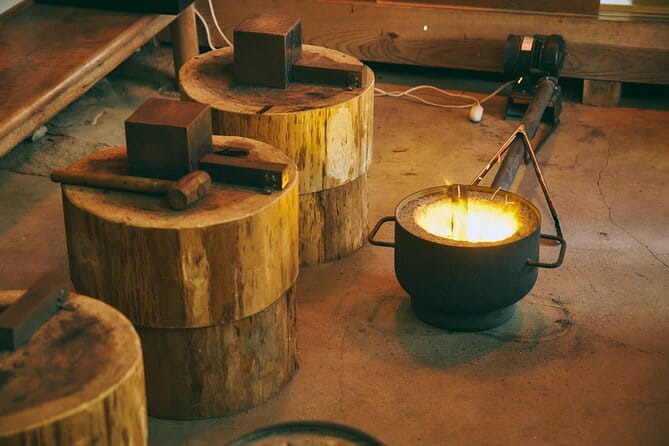
A shop knife is nice. A knife you make is different. In Kyoto, where you can easily spend a day admiring kitchen tools, this experience turns that admiration into muscle memory.
You’re not just learning a single trick. You’re getting the whole arc: use the tools, forge the blade shape, then sharpen and polish until it’s something you can be proud to use. That’s why this feels like more than a class. It’s a working craft session.
I also like the practical side. The workshop provides what you need: a uniform, an English guide, and a set of tools used for making the knives. That means you can spend your Kyoto time on the making, not on logistics.
You can also read our reviews of more tours and experiences in Kyoto.



Studio NIN to Rurikoin: where this starts and how it feels on the ground
You meet at studio NIN 八瀬168-1 Yasenosechō, Sakyo Ward, Kyoto, 601-1254, Japan. The activity ends back at the meeting point, so you don’t have to plan a long, confusing transfer out to the countryside and then solve your way home.
There’s also a listed stop: Rurikoin. In practice, think of it as part of the local workshop area where the class takes place or is coordinated from. If you’re coming by public transportation, plan for the last stretch. One review notes the location can be hard to find in a residential area and phone signal can be weak near transit, so download directions ahead of time and keep an offline map ready.
The setting matters here. Knife making in a real studio feels more grounded than a city museum demo. You’ll be in a working environment, with tools laid out and a pace that matches the pace of metal, heat, and safety.
Dressing up in the goldsmith outfit and getting set for safety
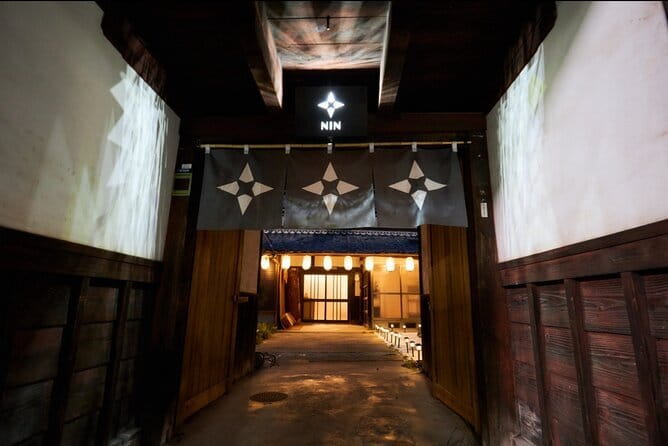
One of the best “first 10 minutes” moments is the dressing up. You’ll change into a traditional goldsmith-style outfit, which instantly helps this feel like an authentic craft day instead of a tourist skit.
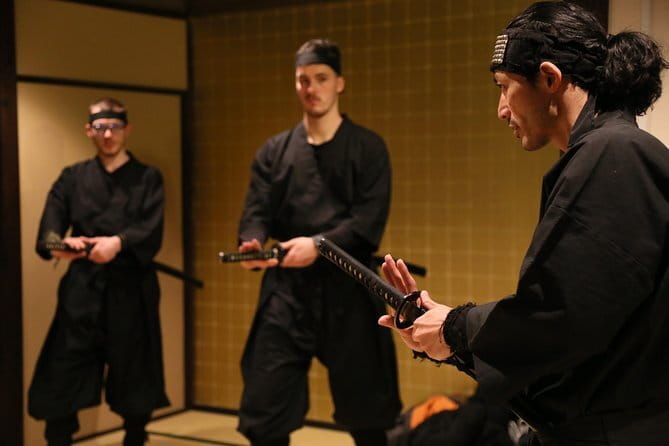
Then comes the practical setup: learning how to use the tools. The experience is designed so you don’t need prior knife or blacksmithing experience. The forging part is the center of the class, and the instruction is built around beginners learning by doing.
You should still treat it like real work. One review mentions safety guidance and staff showing how to handle things safely. Another participant wished for more protective footwear (they experienced dropping their knife during sanding). So my advice is simple: wear comfortable clothes you don’t mind getting a bit “studio dusty,” and ask what footwear is recommended for your comfort and safety.
The forging session: where the real effort teaches you the most
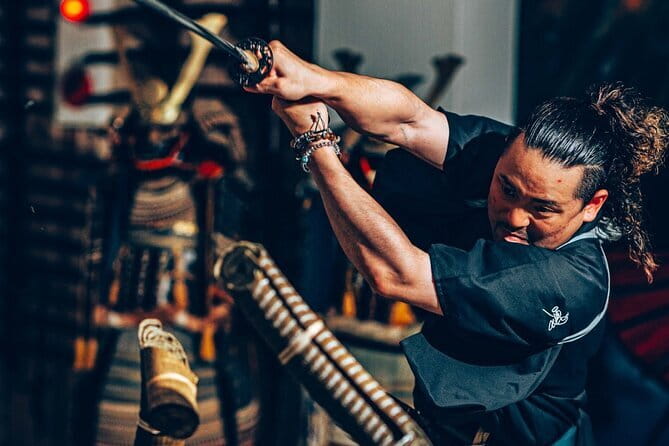
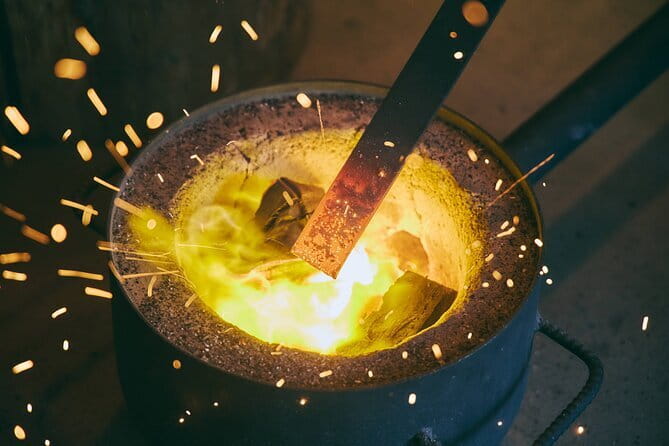
Forging is the headline, and for good reason. It’s the part where you see how a billet becomes a knife blade through repeated shaping. You’ll be hammering the hot steel to harden and shape it, and then you’ll do the grinding and finishing steps that get the blade closer to its final form.
This isn’t a sit-back-and-smile activity. Reviews consistently point out that you’re doing substantial hammering work and later sanding/grinding, which can feel like a workout. The workshop itself lists a moderate physical fitness level for a reason: you’ll be using your arms and stance for extended periods.
If you’re expecting a light craft class, adjust your expectations early. If you like hands-on work, you’ll love it. You’ll also learn why Japanese kitchen knives are so prized: the blade shape and edge geometry are built through attention, not shortcuts.
Sharpening and polishing: turning a shaped blade into something usable
After forging and initial grinding, the class moves into the “make it knife-ready” steps: sharpening and polishing. This is where many people get surprised. The blade isn’t just about shape. It’s about surface finish and how the edge is treated.
You’ll learn how to sharpen the knife, and you’ll polish it so it looks and feels right. The staff help correct amateur attempts, which matters because grinding angle and finishing technique can make a difference in your final result. One participant noted they wanted more guidance with grinding/finishing and the grinding angle. That’s a reminder that you should slow down, ask questions early, and watch the instructor’s hand position.
The good news: the class format is small. With a max group size of 6, you’re not stuck waiting for attention when you hit a snag.


Your finished knife: size, handle style, and what to plan for
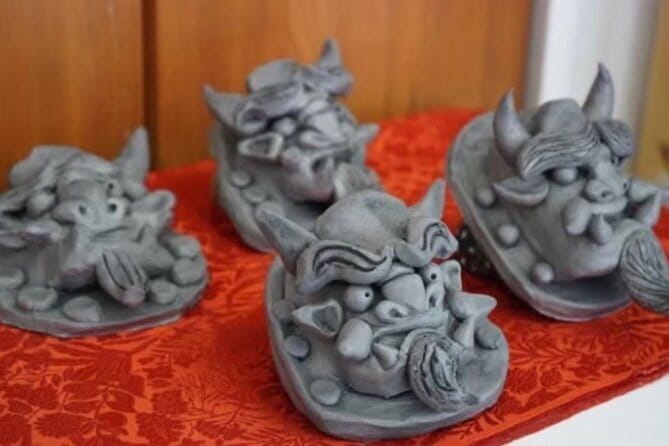
Your knife will be about 13 to 15 centimeters. Since it’s handmade, it may vary depending on the person. The shorter length is also part of why this experience can fit into a roughly 3-hour window. Bigger knives usually take more time and cost more money in traditional setups.
Handle details are worth paying attention to. The experience description states that there are no wooden handles and that the handle is made of iron. Still, one review describes an option to add a wooden handle for an extra fee (¥5000), with the handle attached by the participant once back home. So here’s what you should do: when you arrive, confirm what handle style is included for your specific session, and whether any handle add-ons are available.
Also think about travel logistics. At least one review warns about air travel because the blade length may exceed carry-on restrictions. If you’re flying, plan to check a bag. If you’re traveling by rail or walking around Kyoto all day, keep the knife in whatever wrapping or bag the workshop provides and avoid jamming it loose in your daypack.
Value check: is $158.52 really worth it?
At $158.52 per person for about 3 hours, this looks like a splurge until you compare it to what a fully traditional process costs.
The workshop info gives a useful comparison: a regular cooking knife can take more than 5 hours and cost more than $400 in a traditional context. This class is designed to capture the core skills—especially forging—without asking you to spend half a day in a shop or pay premium-level commissioning prices.
So the value here comes from three things:
- You make the knife yourself with guidance at each step (forging, sharpening, polishing).
- Materials and tools are included, so the cost is not diluted by extra shopping.
- Small-group attention helps you get a better result than a large class where you’re mostly waiting your turn.
You’re also buying a story you can use. If you cook, you’ll understand why edge geometry and finishing matter. If you don’t cook much, it’s still an unforgettable craft keepsake.
Who this workshop is best for (and who might not love it)
This fits best if you:
- want a hands-on Kyoto experience rather than another photo stop
- like making things with your hands, even if you’re a beginner
- enjoy the idea of learning practical craft skills you can talk about for years
- are okay with a bit of physical strain from hammering and grinding
It might be less ideal if you:
- want something light and easygoing, with minimal effort
- dislike getting your hands and clothing involved in real workshop work
- have strong sensitivities to sanding/grinding mess or noise
It’s also a good couple activity. Multiple reviews describe the experience as well-suited for individuals and pairs, and one mentions a 13-year-old participant having a great time with guidance. Still, the workshop notes moderate physical fitness as a requirement, so use that as your baseline.
The little details that make it feel authentic
A few touches help this feel grounded and not overly touristy.
First, the process is presented as traditional knife making, with forging as the key skill. That’s not a generic theme. You genuinely work through the steps that turn metal into a blade.
Second, you get help when you need it. Several reviews emphasize staff patience and quiet correction. One instructor named Diaki is specifically praised for being engaging and stepping in when needed.
Third, you leave with a functional result. Reviews describe the take-home knife as sharp and legitimately usable. That matters because the goal isn’t just a novelty prop; it’s a real handmade kitchen tool.
Some sessions also seem to include small extras like a photo in a momentum/keepsake format, wrapped and presented in a bag. Even when those extras vary, the main souvenir is consistent: your own knife.
Should you book Atelier NIN’s knife-making in Kyoto?
If you want a Kyoto memory that’s hands-on, skill-based, and genuinely different from temples and markets, I think this is an easy yes. The combination of small group size, included tools and uniform, and a structured workflow (forge, sharpen, polish) makes the price feel fair for what you create.
Book it if you’re comfortable with physical work and you like learning by doing. Plan ahead for travel with a blade (especially for flights) and double-check your handle style and any add-ons when you arrive.
Skip it if you want a mostly passive experience, or if the idea of hammering hot metal sounds like your personal nightmare. For everyone else, this is the kind of workshop where you end the day with something real in your hands, and a new respect for how kitchenware actually gets made.
FAQ
How long is the knife-making experience?
It runs for about 3 hours (approximately).
How big is the knife you make?
The knife is approximately 13 to 15 centimeters, and because it’s handmade, size may vary.
What does the price include?
The experience includes a uniform, an English guide, and a set of tools used to make the knives.
Do I need to bring protective clothing?
No. A uniform is provided, and you don’t need to source protective clothes.
Is this class for beginners?
Yes. The experience is structured so you don’t worry if you have never tried making knives before.
How many people are in a group?
The class has a maximum of 6 travelers.
Where do I meet for the workshop?
Meet at studio NIN 八瀬168-1 Yasenosechō, Sakyo Ward, Kyoto, 601-1254, Japan.
What is not included in the tour?
Snacks and private transportation are not included.
Is there free cancellation?
Yes. You can cancel up to 24 hours in advance for a full refund.