REVIEW · KYOTO
Samurai Training with Modern day Musashi in Kyoto
Book on Viator →Operated by Yushinkan Co., Ltd. (株式会社勇進舘) SETO Yushin · Bookable on Viator
Kyoto does samurai better than most places. This hands-on dojo training gives you a structured lesson on sword basics plus a performance by the master that’s hard to find anywhere else. I especially like the small-class feel and the focus on safe, correct form instead of a quick show for tourists. One thing to consider: mat cutting with a real katana isn’t currently offered, so if your dream is chopping targets, plan for kata and demonstrations instead.
You’ll start with traditional gear, learn how to handle the sword correctly, and work through a kata/form under instruction. Expect a session around 1.5 to 2 hours, near public transportation, with guidance from Sensei Seto Yushin (often called Yushin Sensei / Yushen) and assistants including Jordan and staff member/interpreter John.
In This Review
- Key highlights worth knowing before you go
- Kyoto’s real dojo feel: where the class starts
- Dressing like a samurai: the kit you’ll wear (and why it helps)
- Sword basics in plain language: draw, sheath, and wield
- What you should expect your body to do
- The kata portion: learning an actual form, not random tricks
- Watching Musashi’s modern display: two-katana performance
- You may also get photo/video time
- Real swords, real safety: what you can and can’t do
- A good expectation to set
- Group size and who this fits best
- Who will enjoy it most
- Who should think twice
- Price and value: is $132.65 worth it?
- Quick practical tips so you get the best session
- Should you book Samurai Training with Modern day Musashi in Kyoto?
- FAQ
- What is the duration of the Samurai Training experience?
- Where does the tour start and end?
- How many people are in a class?
- What happens during the training?
- Is mat cutting included?
- What should I bring or wear?
- What age is required to participate?
- Is the experience near public transportation?
- Do I need a certain fitness level?
- How does cancellation work?
Key highlights worth knowing before you go
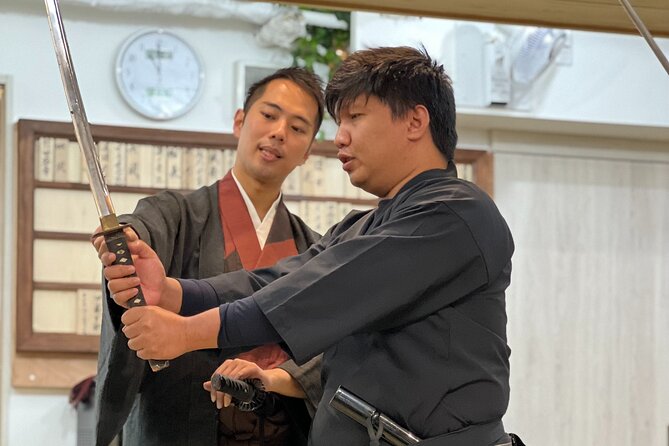
- Actual dojo training: You’re in a real martial arts space, not a staged set.
- Small group size: Max is 9 travelers, with an ideal of 6 participants per class.
- Traditional gear included: Dōgi, obi, and hakama help you learn the culture, not just the moves.
- Katana basics + kata: Drawing, sheathing, wielding, and an actual form practice.
- Two-katana master performance: You’ll see a display that goes beyond the usual one-sword demo.
- Safety-forward practice tools: The session uses training swords (often iaito) rather than turning the class into a cutting contest.
Kyoto’s real dojo feel: where the class starts
Your experience meets at 452-4 Matsugaechō, Nakagyo Ward, Kyoto (it ends back at the same spot). The location is described as near public transportation, which matters in Kyoto. You don’t want your “samurai time” to turn into a scavenger hunt after you’ve already walked a temple circuit.
The setting is part of the payoff. This is described as a dojo within an actual martial arts training centre, with notes mentioning a basement-level space and even a Shinto shrine included in the training environment. You can also catch a dojo “community” vibe—like seeing students’ names posted on wooden plaques—so it feels connected to ongoing practice, not just a one-off performance.
Tip: Give yourself a little buffer to arrive early. Kyoto streets can be straightforward, but the exact building details can slow you down if you’re sprinting.
You can also read our reviews of more tours and experiences in Kyoto.



Dressing like a samurai: the kit you’ll wear (and why it helps)
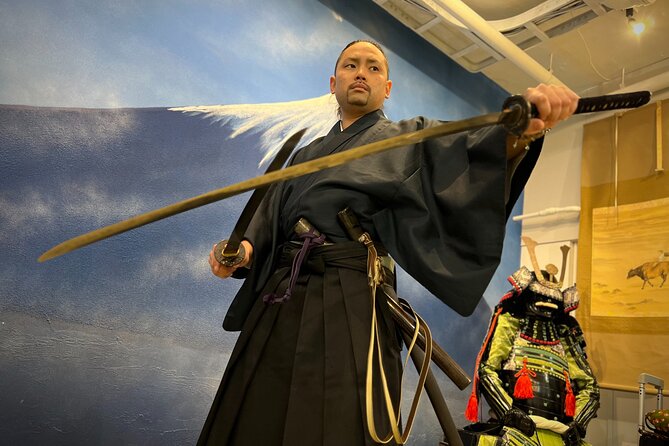
Step one is getting dressed in samurai training gear: dōgi, obi, and hakama. This isn’t just costuming. When you wear proper martial clothing, your body learns what the stance and movement feel like. It also helps you understand why etiquette matters in training.
You’ll likely get help from the instructors and assistants so you don’t waste time wrestling fabric while everyone else is waiting. Many classes like this try to rush the gear. This one is described as warm, welcoming, and attentive, with staff focused on creating a comfortable training rhythm.
One small consideration: training gear can feel warm and restrictive at first. If you’re visiting during hot months, plan to hydrate and take it slow while you adjust.
Sword basics in plain language: draw, sheath, and wield
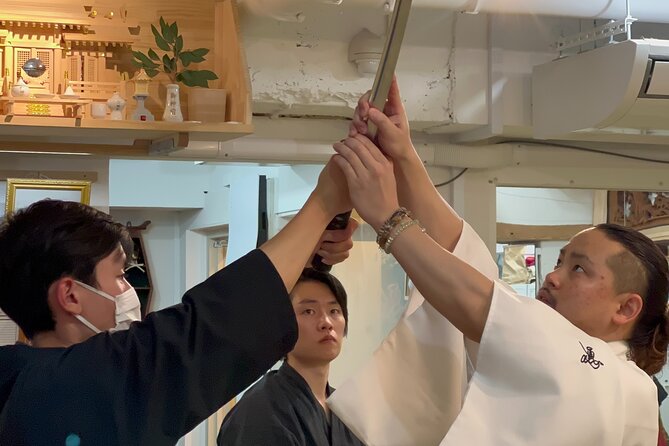
The class isn’t built around showmanship. It’s built around mechanics you can actually practice: learning how to draw, sheath, and wield a katana. You start with technique foundations—body position, grip, and safe handling—so you can move through the kata without turning it into a flailing contest.
A big value here is that the instructors correct form. Multiple guests mention attention to detail, and that correction matters because sword work is unforgiving. Even small errors can lead to sloppy handling, which is why this style of training emphasizes control over speed.
What you should expect your body to do
- Keep stable stance and posture while manipulating the sword
- Practice smooth transitions (draw → ready position → controlled movement)
- Learn how to handle the sword safely around other participants
They note the tour is for people with moderate physical fitness, and you’ll be standing and moving for close to two hours. So if you’re dealing with mobility issues, consider whether you can comfortably maintain a martial stance and do controlled practice movements.
The kata portion: learning an actual form, not random tricks
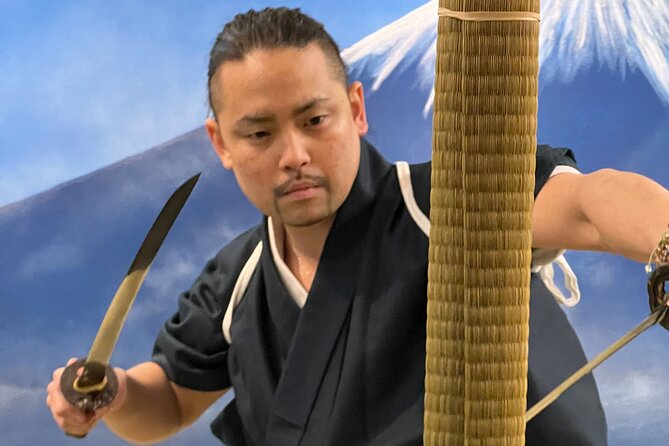
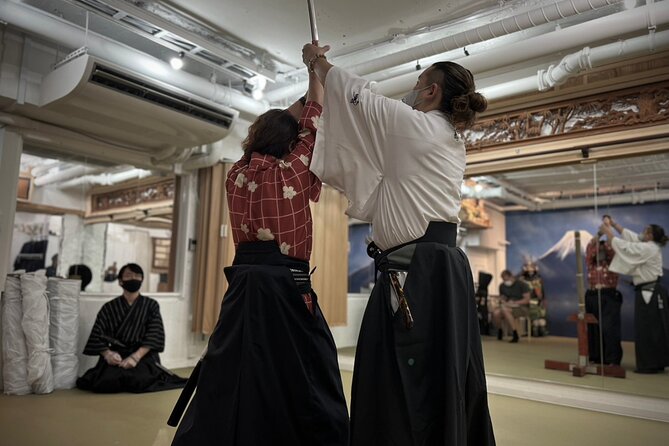
After the basics, you’ll learn an actual katana kata (form). That word matters. A kata isn’t just a “cool move.” It’s a sequence that captures timing, spacing, and technique choices—often built to train muscle memory and discipline.
Guests repeatedly mention that instruction isn’t rushed. You’re guided through the kata, and staff help you refine what you’re doing so it looks right and feels right. That’s especially important if you’re a total beginner. The training format is designed to be approachable even if you’ve never held a sword before.
Also, there’s a cultural layer. The lesson includes guidance about samurai culture and swordsmanship, and you’re not just copying hand positions. You’ll get the meaning behind the routine—what the practice is trying to teach and why etiquette shows up in a dojo.


Watching Musashi’s modern display: two-katana performance
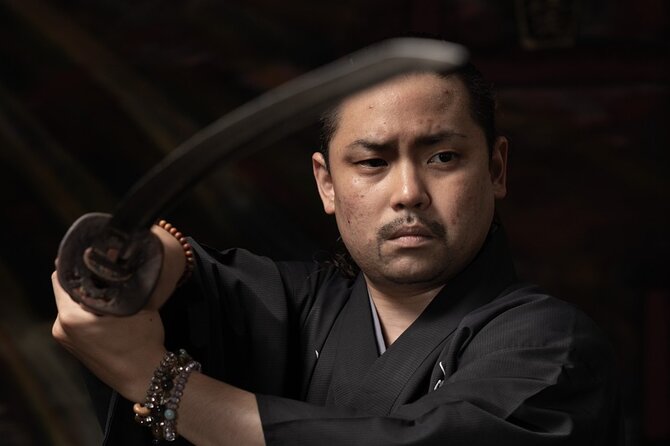
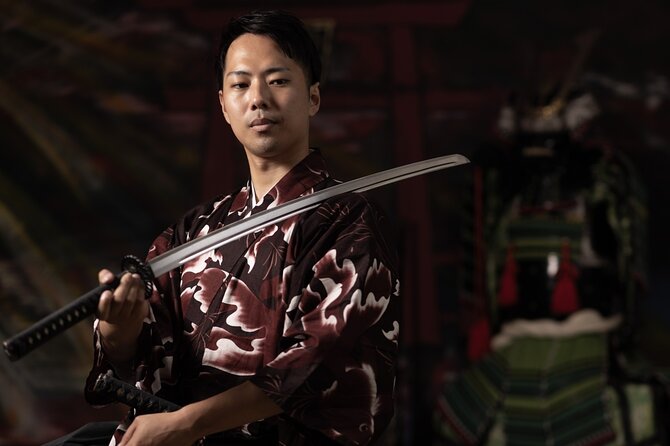
One of the biggest “why this one” moments is the master performance: a powerful two-katana display. This is specifically called out as something you generally won’t see with the typical Kyoto tourist samurai show.
This part is where the session broadens from personal practice to observation. You watch the master demonstrate techniques with control and timing—exactly the kind of thing that helps you understand what the kata training is aiming for.
If you’re thinking, I want the lesson, but I also want that wow-factor. This is where you get it.
You may also get photo/video time
Guests mention that you have the chance to video and take photos as you learn the kata. If that’s important for you, bring a phone with enough battery and space, and be mindful of instructor instructions about where to stand.
Real swords, real safety: what you can and can’t do
Here’s the practical part: mat cutting with a real katana is not currently offered. That means the experience focuses on form practice and demonstrations, not target destruction.
So what are you using for your own movements? Reviews indicate practice uses iaito (training swords) for safety and authenticity in training. Some guests also mention less-sharpened real katana for children/adults depending on rules, but the tour’s current guidance keeps cutting out of the classroom activity.
Why this is a good sign, not a letdown: sword training shouldn’t feel like a risk game. When an experience clearly prioritizes safety and correct handling, it usually means better instruction and fewer compromises.
A good expectation to set
You’re coming to learn how a katana is handled—grip, draw, sheath, controlled wielding—then you learn a kata sequence and watch a high-level performance. If your personal goal is strictly cutting mats, double-check expectations before booking.
Group size and who this fits best
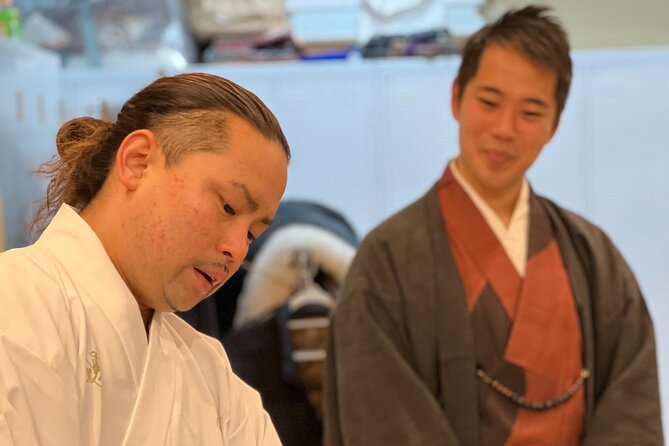
The class keeps numbers limited: maximum 9 travelers, and an ideal of 6 participants per class (with a note that there may be more if there are only a few parties). That smaller size is a big part of why people rate this so highly.
With fewer people, instructors can correct your form instead of giving one-size-fits-all advice. It also makes it easier for kids and first-timers to feel comfortable.
Who will enjoy it most
- Families traveling with teenagers and kids (guests mention all ages can enjoy it)
- Beginner adults who want structure and safety
- Anyone who wants a real dojo feel in Kyoto, not a scripted street performance
- Visitors who care about tradition and etiquette, not just photos
Who should think twice
If you can’t stand and move comfortably for about 1.5–2 hours, or if you’re specifically seeking cutting demonstrations, this may not match your expectations.
Price and value: is $132.65 worth it?
At $132.65 per person, this isn’t the cheapest “samurai experience” in Kyoto. But it doesn’t position itself as a cheap photo stop either.
You’re paying for three things that typically cost more than a standard tour:
- Small-group instruction with form correction
- Traditional gear and a structured practice flow (not just watching)
- Master-level demonstration, including the two-katana performance
For value-focused travelers, the “cost per minute” argument makes more sense than the headline price. A 1.5–2 hour real training session is longer than most quick attractions, and dojo instruction tends to feel more meaningful because you’re doing something, not just observing.
My practical take: if you want hands-on learning in Kyoto’s authentic martial space, this price can feel fair. If you only want a short novelty experience, you might feel it’s pricey.
Quick practical tips so you get the best session
A few things will help your experience go smoothly:
- Wear comfortable clothes you can handle dressing over (you’ll put on dōgi/obi/hakama).
- Bring a phone charger or power bank if you plan to record.
- If you’re traveling with kids, understand the focus is on safe training and correct basics.
- Ask questions during the kata practice. Staff including Jordan and John are described as engaging and helpful, and they also explain history and sword parts in a way that’s easy to follow.
Also, this is Kyoto. You’re probably walking a lot anyway. Treat the dojo session as a focused block of time, then return to the city with lighter expectations for the rest of the day.
Should you book Samurai Training with Modern day Musashi in Kyoto?
Yes, if you want a real-dojo samurai training experience with instruction, traditional garb, and a master performance you can’t easily replace with a standard show. It’s a strong fit for families and beginners who want structure, safety, and cultural context—not just a few minutes of sword waving.
Think twice if you’re mainly chasing mat cutting with a real katana, because the current format says that’s not currently offered. And if you have low tolerance for standing and controlled physical activity, the moderate fitness requirement is worth respecting.
If you want Kyoto in a way that feels like practice, not theater, this is one of the better bets.
FAQ
What is the duration of the Samurai Training experience?
It runs about 1 hour 45 minutes (approximately 1.5 to 2 hours depending on the number of participants).
Where does the tour start and end?
It starts at 452-4 Matsugaechō, Nakagyo Ward, Kyoto, 604-8034, Japan and ends back at the same meeting point.
How many people are in a class?
The experience has a maximum of 9 travelers. There’s also mention of small groups with 6 participants per class, though it may be more if there are only a small number of parties.
What happens during the training?
You dress in samurai training gear (dōgi, obi, and hakama), learn about samurai culture and swordsmanship, practice drawing and sheathing a katana, learn a katana kata (form), and watch the master’s katana performances.
Is mat cutting included?
Mat cutting with a real katana is noted as not currently offered.
What should I bring or wear?
The class includes traditional training gear, but you should plan to dress for a dojo session comfortably and be ready to practice. Comfortable clothing is helpful since you’ll put on the training outfit.
What age is required to participate?
You must be 12 years or older.
Is the experience near public transportation?
Yes, it’s described as near public transportation.
Do I need a certain fitness level?
Travelers should have a moderate physical fitness level.
How does cancellation work?
Free cancellation is available up to 24 hours before the experience start time for a full refund. Canceling within 24 hours does not receive a refund.