REVIEW · KYOTO
Simple Plan with Maiko
Book on GetYourGuide →Operated by B.B.Advisors Inc. AN KYOTO · Bookable on GetYourGuide
Kyoto gives you a rare close-up chance.
This 90-minute Simple Plan with Maiko lets you ask questions directly, watch an elegant tea ceremony demonstration, and get a photo right beside her. I especially loved the Q&A and the up-close photo moment with the lucky Senjyafuda. One thing to plan for: the room setup can make sightlines tougher if you land toward the back.
If you want maiko culture without turning the day into a production, this fits. The program stays relaxed even though it is in a standard building, not a classic ochaya house. My other big like is that the schedule is packed but not fussy: greeting, tea ceremony, chat, dance, and then a fun interactive game.
Just know what you are choosing. This Simple Plan focuses on observing and interacting, and it does not include making matcha yourself (you’d need the Tea Ceremony with Maiko Premium option). If you are expecting to fully participate in a tea ceremony, you’ll want to be sure your expectations match.
In This Review
- Key things to notice before you go
- Finding the meeting point near Gojo Station
- What the 90-minute schedule feels like in real life
- Meeting Maiko: the Q&A that makes it personal
- Tea ceremony etiquette: watching close, not making matcha
- Dance performances: two dances, seasonal stories through movement
- The photo with Senjyafuda: a small gift with big meaning
- Games with Maiko: fun, simple, and not about perfection
- Pricing and value: what $38 gets you (and what extra options change)
- Room setup reality check: why your view can change
- Who should book this and who should consider Premium instead
- Should you book Simple Plan with Maiko?
- FAQ
- Is matcha-making included in the Simple Plan with Maiko?
- How long is the experience?
- Where is the meeting point?
- Are snacks and drinks included in the price?
- Does the venue have an elevator?
- What if Maiko isn’t available and Geiko is invited instead?
Key things to notice before you go
- Direct Q&A with Maiko: you can ask questions and hear her world in plain, human terms
- Tea ceremony demonstration (not matcha-making): you’ll learn the etiquette by watching
- Photo right beside Maiko + Senjyafuda charm: a real souvenir moment, not just a distant pose
- Two traditional dances: seasonal themes and everyday life translated through movement
- Interactive game portion: you can cheer and join in, depending on how comfortable you feel
- Possible Geiko substitution: if the situation calls for it, you might meet Geiko instead of Maiko
Finding the meeting point near Gojo Station
You’re meeting in central Kyoto with an easy metro hop. The start point is about a one-minute walk from Exit 1 of the Subway Karasuma Line’s Gojo Station. The store entrance faces Gojo-dori, so you’re not searching alleys like it’s a spy movie.
The practical win here is timing. A 90-minute experience can slot neatly between other Kyoto stops. And since you’re so close to a station, you can keep your day moving without building in a lot of extra buffer.
One small logistics note: there’s no elevator in the building, so you’ll use stairs to reach the venues. That’s fine for most people, but it matters if you’re traveling with heavy bags or have mobility limits. The good news is the experience is listed as wheelchair accessible, but you should expect stairs on site.
You can also read our reviews of more tours and experiences in Kyoto.


What the 90-minute schedule feels like in real life
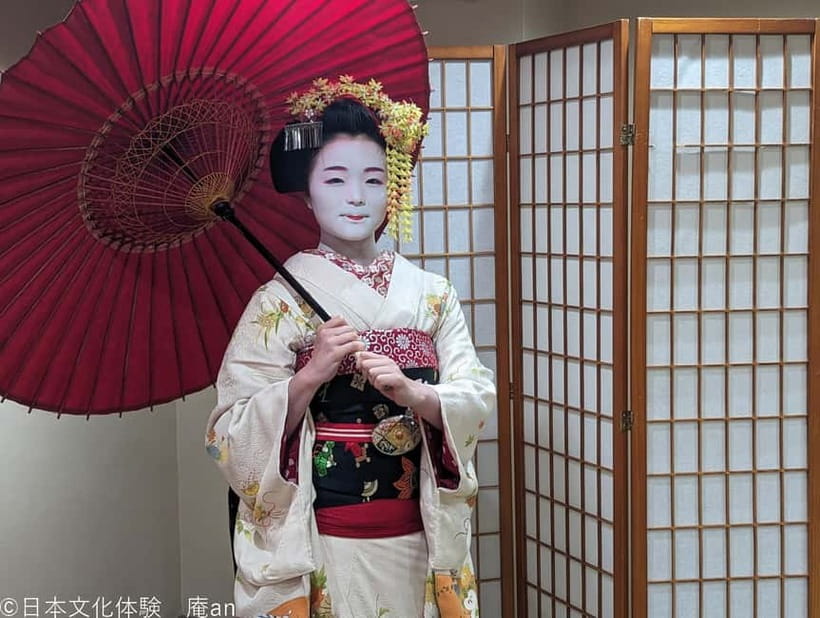
This program is designed to move. Expect about 90 minutes total, with a short “chatting time” at the end after the main event.
A typical flow looks like this:
1) Greeting from Maiko
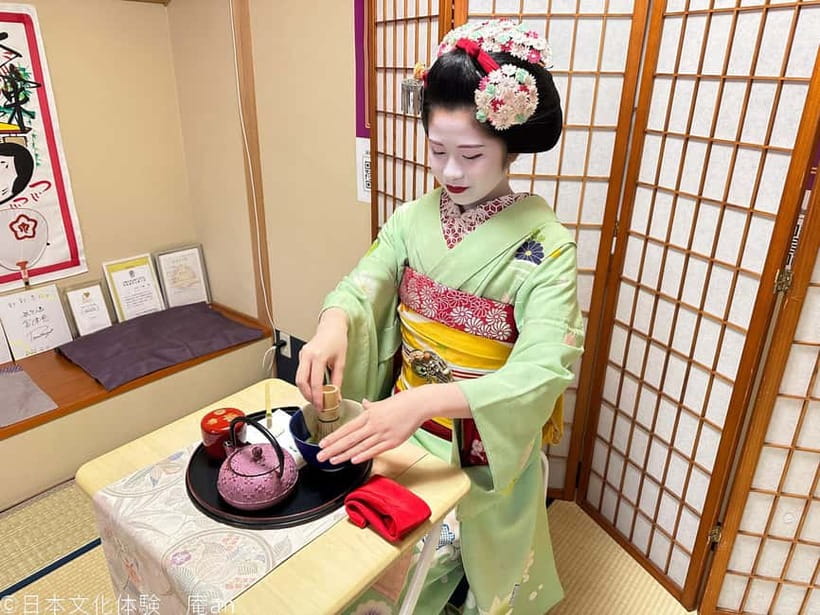
2) Tea ceremony demonstration by Maiko
3) Question-and-answer session
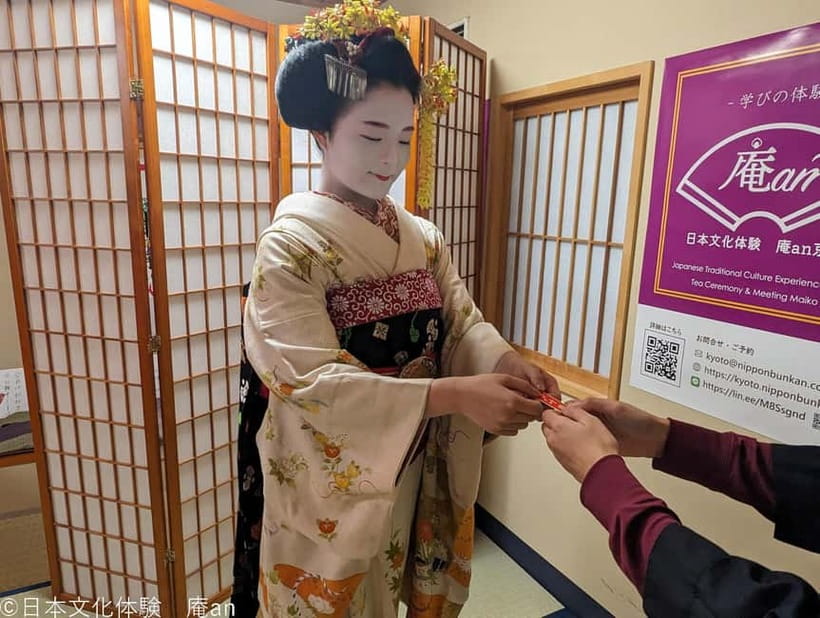
4) Photo with Maiko, plus a Senjyafuda lucky charm gift
5) Two-dance performance
6) Interactive game with Maiko (participation is optional; cheering is encouraged)
Then Maiko leaves the room, and you get a bit of informal chatting time before you head out.
The pacing works because you’re never waiting too long for the next highlight. It also keeps the experience from drifting into long speeches. For first-time Kyoto visitors, that’s a big deal. You get the main cultural beats in a compact block.
Meeting Maiko: the Q&A that makes it personal
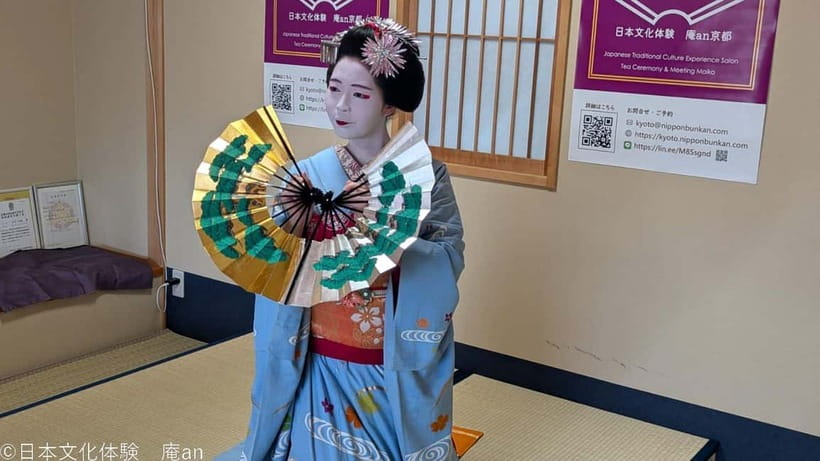
The heart of this Simple Plan is the Q&A session. This is not a museum-style talk where you sit quietly and hope you hear everything. You can ask questions directly, and the vibe is more “conversation” than “performance.”
This matters because maiko culture can feel like a puzzle if you only see the costuming. Yes, the kimono and careful styling are stunning. But what you really want is the human side: how the role fits daily life and what the person thinks matters.
The program also provides English translation as much as possible. If you want extra English support, you can contact them ahead of time. That can help you get more out of the Q&A without missing key answers.
One more detail to keep in mind: depending on the situation, they may invite Geiko instead of Maiko. Don’t panic if you hear this before you arrive. You’ll still be there for the same kind of cultural interaction—just with a different performer.
Tea ceremony etiquette: watching close, not making matcha
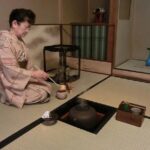
This option gives you a tea ceremony demonstration—graceful movements, etiquette, and the feel of the tradition. It’s the right format if you already know basic tea ceremony structure or if you want to learn by observation.
What it does not include: making matcha yourself. If you want to whisk, measure, and do it hands-on, you’ll need the Tea Ceremony with Maiko Premium program instead.
Even if you’ve done tea before, the value here is in the focus. You’re not just watching a general ceremony. You’re watching a maiko perform with the specific poise and rhythm that’s part of the role. And you’ll get the context from the Q&A right after, which helps the demonstration click.
If you’re someone who loves the ceremonial details—the timing, the respectful gestures, the way everything is done with calm precision—this part alone justifies showing up.
Dance performances: two dances, seasonal stories through movement
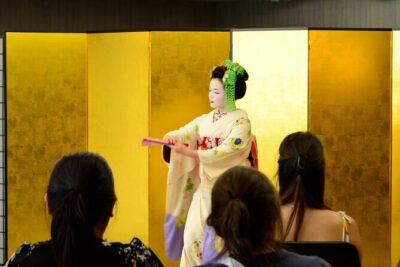
After the photo moment, you’ll shift into traditional dance. The program includes two dances that express themes tied to seasons, love stories, and everyday life.
This is where the elegance you’ve seen in the tea ceremony gets translated into body language. Kimono movement isn’t just about costume; it changes how a dancer holds space, turns, and pauses. Watching that close is part of the payoff.
This is also the section where your seating really matters. The room layout can make it harder for people farther back to see clearly, especially if tables partially block views. If you care about angles and close sightlines, consider paying for better seating options.
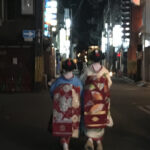
The photo with Senjyafuda: a small gift with big meaning
One of the best reasons to choose this program is the photo opportunity right beside Maiko. It’s not a distant “wave from afar” moment. You’ll get a commemorative photo with her up close.
Then comes the extra touch: Maiko gives you a lucky charm called a Senjyafuda. It’s a memorable souvenir because it feels personal—like you were included in her hospitality, not just watching a show.
If you’re used to standard tourist snapshots, this part feels more like a ceremony of welcome. The charm is also a nice way to bring the experience home, especially if you’ve already bought the usual Kyoto magnets and snacks.
Games with Maiko: fun, simple, and not about perfection
After the dances, you’ll have an interactive game portion. The format is simple, designed for fun and social energy, and it often includes guests as part of the hospitality.
You don’t have to be a fearless performer. If you’re shy, it’s totally acceptable to cheer and watch. But if you’re game, joining in adds a big layer of warmth to the evening.
From what I’ve found in similar cultural interactions, this part works best when you treat it like participation, not assessment. You’re there to share the moment. Even a few claps and a smile help the atmosphere.
Pricing and value: what $38 gets you (and what extra options change)
At about $38 per person for 90 minutes, this is one of the more budget-friendly ways to get real face time with maiko culture. The value isn’t just the entertainment. It’s the access: Q&A, a close photo, and the chance to learn from etiquette and performance in one block.
That said, your experience depends on what you pack into your expectations.
- Simple Plan doesn’t include matcha-making
- Snacks and drinks are extra (500 JPY option)
- Better seats cost more: SS seat (first row) 3,300 JPY, S2 (second row) 2,200 JPY, S3 (third row) 1,100 JPY
So here’s the practical way to decide:
If you want the best view for photos and dancing, pay for a closer seat. If you’re happy with an “in the room” experience and you’re mainly there for the Q&A and interaction, the base price makes sense.
Also watch the back-row sightline issue. If your priority is crisp visibility of dance movements, seating upgrades can turn a so-so view into a satisfying one.
Room setup reality check: why your view can change
This program happens in a building with multiple zones. It’s not described as an ochaya-style house. That keeps it casual and accessible, but it also affects viewing.
Tables covering parts of the viewing area can interfere with sightlines—especially from the back. I’d treat this as your main planning risk, not a dealbreaker. If you’re sensitive to visibility, choose a closer seat early, and arrive with enough time to settle.
The host and translation support help keep the group feeling included, but body position still matters for performances.
Who should book this and who should consider Premium instead
This Simple Plan is a great match if you:
- Want maiko culture in a short time without a long, complicated day plan
- Care most about the human exchange: asking questions, learning etiquette, and getting a close photo
- Prefer an experience that feels welcoming and informal rather than rigid and scripted
- Are traveling on a reasonable budget
I’d consider the Tea Ceremony with Maiko Premium option if you:
- Want to actively participate in the tea process (matcha-making)
- Are hoping for full tea ceremony involvement rather than observation
- Want more “hands-on” experience beyond watching
If you’ve already done a tea ceremony somewhere else and you mainly want to meet a maiko and learn through conversation, this Simple Plan is especially sensible.
Should you book Simple Plan with Maiko?
Yes, if your goal is access and interaction. For the price, you get a rare combination: close Q&A, tea etiquette viewing, a dance program, a playful game moment, and that special Senjyafuda charm plus an up-close photo. That’s a lot of cultural contact for 90 minutes.
Book with a small caution flag if you’re very picky about seating and visual clarity. In that case, invest in a better seat option so you’re not watching through obstructions.
If you’re ready for a relaxed, cultural meeting rather than a high-form, hands-on tea workshop, this Kyoto maiko experience is a smart pick.
FAQ
Is matcha-making included in the Simple Plan with Maiko?
No. The Simple Plan focuses on a tea ceremony demonstration and cultural interaction. If you want to make matcha yourself, you need the Tea Ceremony with Maiko Premium program.
How long is the experience?
The program runs for about 90 minutes.
Where is the meeting point?
It’s about a one-minute walk from Exit 1 of the Subway Karasuma Line Gojo Station. The store entrance faces Gojo-dori.
Are snacks and drinks included in the price?
No. A snack and drink option is available for 500 JPY if you choose it.
Does the venue have an elevator?
No. There is no elevator in the building, and you will need to take stairs to reach each venue.
What if Maiko isn’t available and Geiko is invited instead?
The experience notes that, depending on the situation, they may invite Geiko instead of Maiko. The program may still follow the same general structure of demonstrations and interaction.