REVIEW · KYOTO
Train Katana with Real Dojo Students in Kyoto
Book on Viator →Operated by Yushinkan Co., Ltd. (株式会社勇進舘) SETO Yushin · Bookable on Viator
Real katana training beats tourist theater. This session at Yushinkan Kyoto is led by a headmaster with 20+ years of experience and taught alongside local students, not a staged “samurai show.”
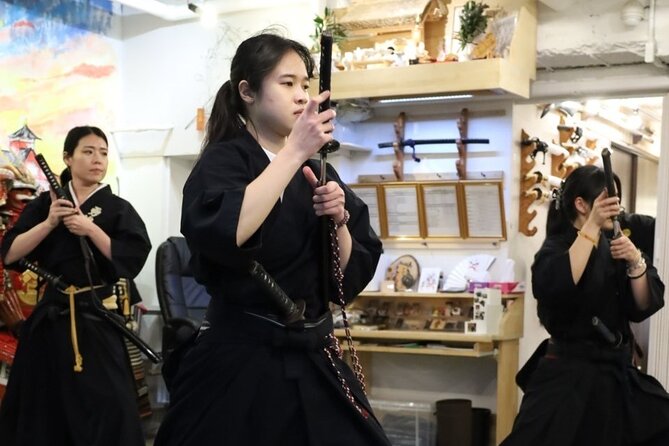
I like that you start in proper training wear—dōgi, obi, and hakama—so you’re moving and bowing the way the dojo expects. I also like the sequence: you’ll practice core iai (drawing) skills and then you get to watch real cutting on rolled tatami plus the master’s two-katana performance.
One caution: there’s no test cutting with a real katana, and video recording is not allowed—so plan for learning and watching, not filming yourself.
In This Review
- Key things that make this katana dojo training worth your time
- Yushinkan Kyoto: a real dojo experience in central Kyoto
- 3 hours of katana training: dress up, learn iai, then practice kenjutsu
- 1) Dress in training gear (dōgi, obi, hakama)
- 2) Learn iai (katana drawing technique)
- 3) Practice kenjutsu (katana fighting techniques)
- How the cutting show works: rolled tatami, then the master’s two-katana performance
- Dojo rules you should know before you book
- Price and value: is $195.09 worth it for Kyoto katana training?
- Who will enjoy this most (and who should reconsider)
- Practical logistics that make the day easier
- Quick decision: should you book this Kyoto katana dojo session?
- FAQ
- How long is the katana training session?
- What will I learn during the experience?
- Is test cutting with a real katana included?
- What demonstrations will I watch?
- Can I record video during the training?
- What is the minimum age?
- How many people are in the group?
- Where is the meeting point?
- Will I get confirmation after booking?
- Is it possible to cancel for a full refund?
Key things that make this katana dojo training worth your time
- Small group (max 3 people) keeps it focused and controlled
- Local students, real dojo rhythm instead of a beginner-only script
- Dōgi/obi/hakama dressing helps you understand etiquette from minute one
- Structured iai + kenjutsu practice teaches you how the skills are built
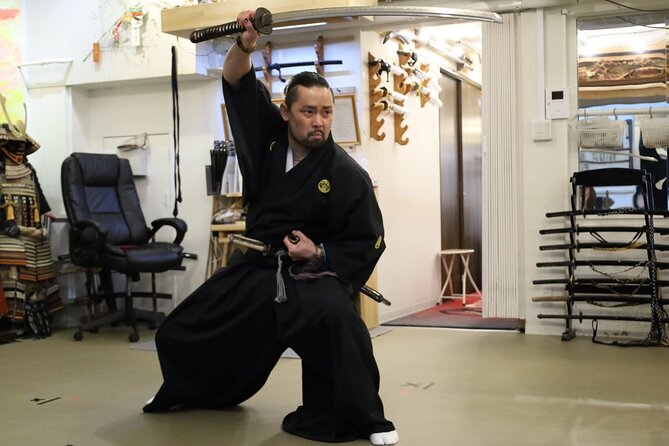
- Rolled tatami cutting + two-katana master performance gives a rare, high-skill finale
Yushinkan Kyoto: a real dojo experience in central Kyoto
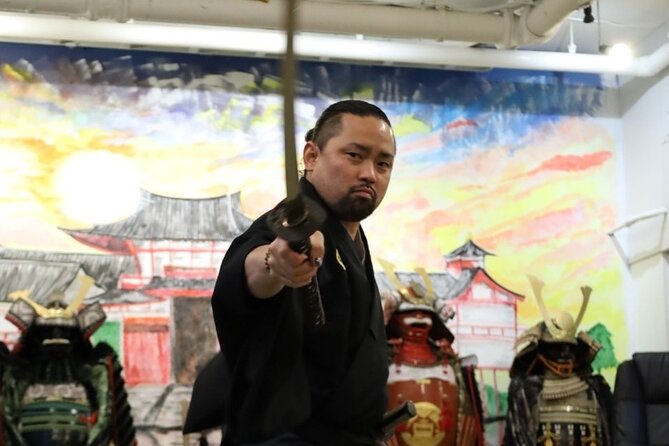
This is set up like a working training session, not a ticketed tourist activity. The dojo is called Yushinkan Kyoto, and it’s run by the headmaster with 20+ years of experience. The big difference for you is that you’re not just watching from the outside—you’re part of the flow of the class, alongside students who are genuinely training.
The class size is tiny: up to 3 people. That matters more than you might think. When the group is small, you’re less likely to feel like you’re being waved through a checklist. The experience can stay disciplined, and the staff can keep you on track with what you’re supposed to do.
Location-wise, you meet at 452-4 Matsugaechō, Nakagyo Ward, Kyoto, 604-8034. It’s near public transportation, and the session ends back at the same meeting point. That simple “start and finish there” setup makes it easier to fold into a busy Kyoto day.
One more practical point: the experience lists a moderate physical fitness level. You’re not expected to do extreme athletic feats, but you should be comfortable following movement and posture instructions for a few hours—especially with traditional clothing in the mix.
You can also read our reviews of more tours and experiences in Kyoto.



3 hours of katana training: dress up, learn iai, then practice kenjutsu
The session runs about 3 hours. During that time, you’ll go through a clear, traditional progression. Here’s how it typically unfolds:
1) Dress in training gear (dōgi, obi, hakama)
You start by getting dressed in dōgi, obi, and hakama. This isn’t just costume. In a dojo, the clothing helps set your posture and movement rules, and it signals that you’re following training etiquette. Even if you’ve only seen this in photos, being in the gear is a real “oh, this is how it’s done” moment.
2) Learn iai (katana drawing technique)
Next comes iai, the skill of drawing the katana and using that motion as part of a controlled technique. For most people, iai is where you first learn how much discipline matters: timing, posture, and keeping everything controlled rather than swinging wildly.
If you come in with prior martial arts experience, you’ll probably enjoy this more. The format is built for structured practice, and the dojo environment expects you to pay attention and match the rhythm.
3) Practice kenjutsu (katana fighting techniques)
After iai, you practice kenjutsu techniques. Kenjutsu is typically about applying the katana skills in a more interactive way—still controlled, but more “technique to technique” than pure drawing practice.
This is also where the moderate fitness piece starts to matter. You’ll be doing repeated motions and staying engaged, not just standing around.


How the cutting show works: rolled tatami, then the master’s two-katana performance
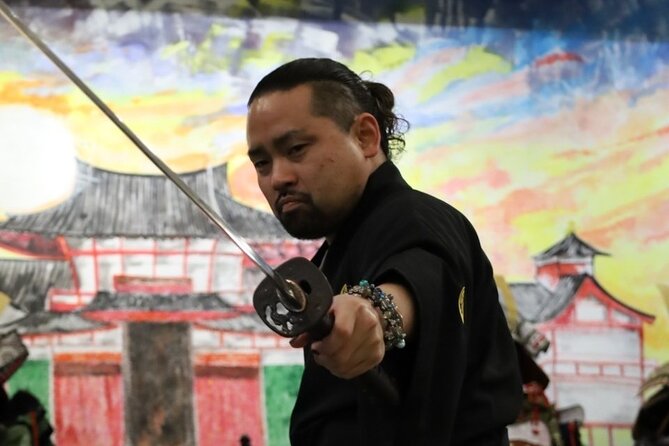
A major part of the experience is watching real students and the headmaster perform practical technique.
You’ll see:
- Students and the master cut rolled tatami mats using a real katana
- The headmaster perform with the katana, including a two-katana performance element
This is one of the rare parts you usually can’t replicate in a casual “samurai activity.” Rolled tatami cutting is a clear demonstration that the technique is more than stage choreography. You get to see what serious training looks like when it translates into action.
Now, about test cutting: the experience notes that test cutting with a real katana is not offered. That’s actually a good expectation to set up front. It means your participation stays focused on learning and safer practice in the dojo context, while the cutting demonstration stays in the hands of the trained students and master.
So you’ll get the payoff—watching real cutting—without the pressure or risk of doing it yourself.
Dojo rules you should know before you book
This experience comes with rules designed to keep training respectful and safe.
Here’s what you need to be aware of:
- No video recording is allowed.
- Participants must be 12+ years old.
- Observing without paying is not allowed. In other words, this is not open spectator territory.
These aren’t just legal footnotes. They shape the whole tone of the session. Since phones and cameras are out, you’ll pay more attention to what’s happening in front of you. And since it’s limited to paying participants of eligible age, the dojo stays calm and controlled instead of turning into a crowd scene.
Also, your confirmation comes through within 48 hours of booking, based on availability. If you’re planning tightly, don’t assume it’s automatic.
Price and value: is $195.09 worth it for Kyoto katana training?
At $195.09 per person for about 3 hours, this is not cheap in the way a quick photo stop is cheap. But it’s also not trying to be a mass-market show.
The value logic here is pretty straightforward:
- You’re training in a real dojo setting, with local students, under a headmaster with 20+ years of experience.
- The group is limited (max 3 people), which usually means more controlled attention and less “tour group energy.”
- You get the full sequence: dress in traditional training wear, learn iai, practice kenjutsu, and then watch real technique demonstrations including tatami cutting and the master’s two-katana performance.
- You receive a mobile ticket, which makes arrival easier.
One more clue: this gets booked ahead. On average, it’s booked about 29 days in advance. That suggests the schedule is limited and the dojo likely prefers to keep class conditions controlled.
If what you want is genuine training context—structured practice, etiquette, and real technique—this price can feel fair. If what you want is guaranteed souvenir photos and hands-on cutting, this is not that kind of experience.
Who will enjoy this most (and who should reconsider)
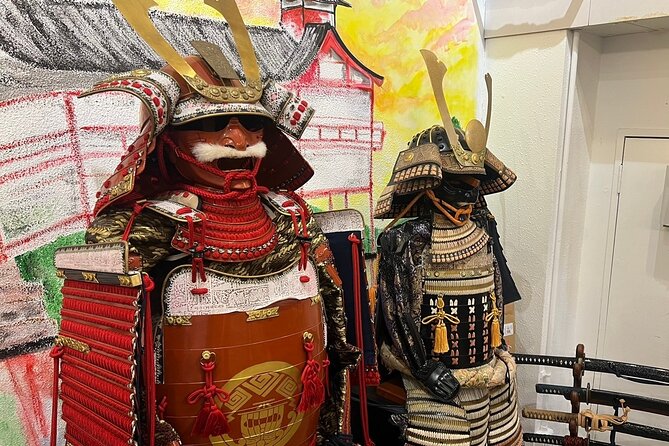
This session is best suited to people who can handle instruction and respect dojo pace.
You’ll likely enjoy it most if:
- You’ve done some martial arts before, even if it’s not katana-focused.
- You want to learn the basics of iai and kenjutsu, not just watch from the sidelines.
- You’re comfortable following rules like no video recording and staying attentive throughout.
If you’re hoping to:
- Cut tatami yourself with a real katana
- Treat it like a casual performance you can film
- Bring a group of younger kids
…then you’ll be disappointed. The experience is built around real dojo training and demonstrations, not tourist “try it and post it” content.
Also, since it requires moderate physical fitness and the session is about 3 hours, plan for that time on your feet and moving with instruction.
Practical logistics that make the day easier
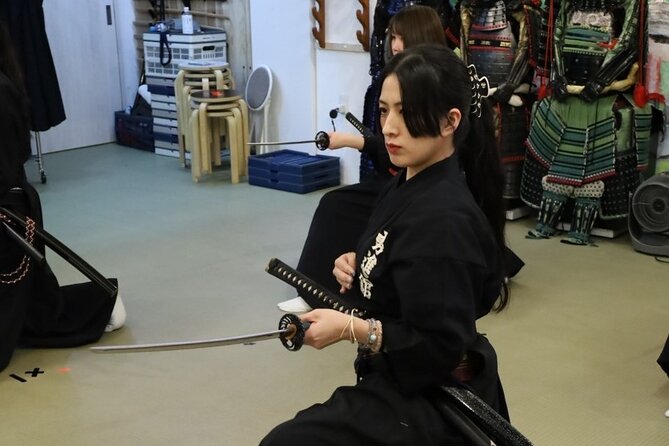
For planning, keep these details close:
- Meeting point: 452-4 Matsugaechō, Nakagyo Ward, Kyoto, 604-8034, Japan
- Duration: about 3 hours
- Ends back at the same meeting point
- Mobile ticket provided
- Near public transportation
- Small group: maximum 3 people
- Age: 12+
If you like smoother travel days, the fact that it starts and ends at the meeting point helps. You don’t have to build extra commuting time into your schedule.
Quick decision: should you book this Kyoto katana dojo session?
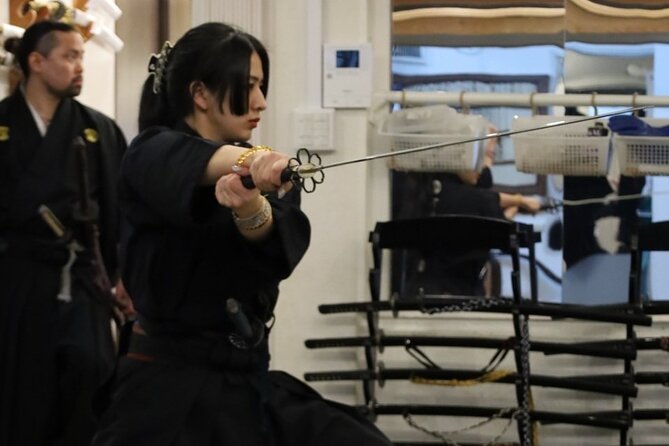
I’d book it if you want a real Kyoto dojo experience with structured instruction and a serious demonstration—tatami cutting and the headmaster’s two-katana performance—without turning it into a camera-and-cheer crowd scene.
I’d skip it if your dream activity is hands-on real katana test cutting or you want to record video throughout. This dojo session is about learning etiquette, practicing core skills like iai and kenjutsu, and watching the real technique done by trained students.
If that sounds like your kind of Kyoto day, it’s a strong choice.
FAQ
How long is the katana training session?
It’s about 3 hours.
What will I learn during the experience?
You’ll learn iai (katana drawing) techniques and practice kenjutsu (katana fighting) techniques.
Is test cutting with a real katana included?
No. Test cutting with a real katana is not offered.
What demonstrations will I watch?
You’ll watch students and the master cut rolled tatami mats with a real katana, and you’ll also watch the master perform with a katana.
Can I record video during the training?
No. Video recording is not allowed.
What is the minimum age?
Participants must be 12 years old or older.
How many people are in the group?
The maximum group size is 3 people.
Where is the meeting point?
The start location is 452-4 Matsugaechō, Nakagyo Ward, Kyoto, 604-8034, Japan. The activity ends back at the same meeting point.
Will I get confirmation after booking?
You’ll receive confirmation within 48 hours of booking, subject to availability.
Is it possible to cancel for a full refund?
Yes. You can cancel up to 24 hours in advance for a full refund.