REVIEW · KYOTO
Let’s make only one original onigawara in the world
Book on Viator →Operated by 瓦工房you家 kawarakoubouyouya · Bookable on Viator
This roof-guardian craft turns Kyoto mythology into clay. I love the small-group setup where you actually shape the face, and I love the home delivery part so you don’t have to lug fragile ceramics through crowded streets. One catch: you’ll be waiting weeks for drying/firing, and shipping isn’t included in the price.
In Kyoto, most souvenirs are mass-made. Here, you create a tile that carries meaning from Japanese roof architecture, with a guide who walks you through each step in plain, do-this-next language. If you want something hands-on instead of just photo stops, this is a strong pick.
Plan for messy hands and soil. You’ll want clothes you don’t mind getting stained, and the finished work is something you receive later, not immediately at the end of class.
In This Review
- Quick hits before you go
- Entering the World of Onigawara Roof Guardians
- The Workshop Flow: From Clay Lumps to Your Oni Face
- 1) Learn what you’re making
- 2) Build a small onigawara tile from scratch
- 3) Get hands-on help while you shape
- The “Wait and See” Part: Drying, Firing, and Shipping
- Kiln firing happens after your class
- Drying takes time
- Shipping costs are not included
- Price and Value: Why $89.17 Makes Sense Here
- Who This Onigawara Workshop Fits Best
- Best for
- Also a good fit if you’re picky about souvenirs
- Not ideal if you hate waiting
- Practical Tips: Wear Clothes You Don’t Mind, Then Plan for Cash
- What to wear
- What to bring
- Timing
- Language
- The Kyoto Context: How This Fits Into a Real Trip Day
- Should You Book This Onigawara Workshop?
- FAQ
- How long is the onigawara workshop in Kyoto?
- Where does the experience start?
- What is included in the price?
- Is an apron included?
- Is shipping included in the workshop fee?
- Can I choose the onigawara design?
- Is this class suitable for beginners?
- What should I wear?
- Can I cancel and get a refund?
Quick hits before you go
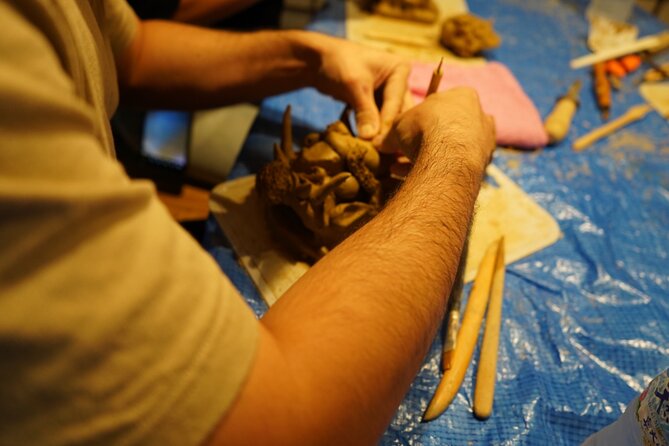
- Demon-face onigawara training: You learn the ogre-style design used on Japanese rooftops (kawara).
- Very small class size: Maximum five travelers for the workshop experience.
- Step-by-step making, even for beginners: The process is broken into manageable pieces.
- Kiln firing at the factory: Your tile gets fired after you form it.
- You get a true one-of-a-kind: Same general build, different faces every time.
- Shipping is extra: You pay shipping separately, and timing depends on drying/firing.
Entering the World of Onigawara Roof Guardians
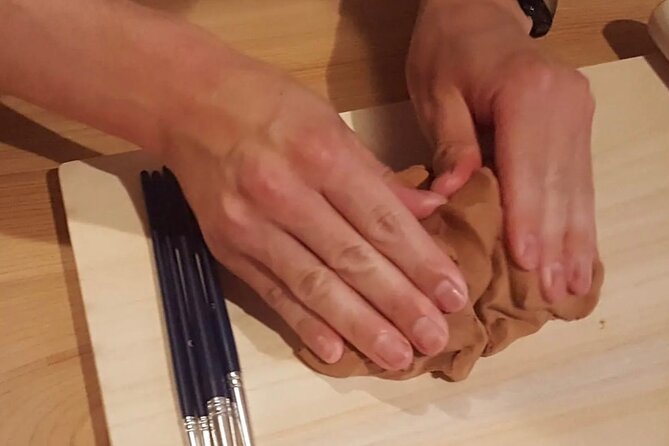
Onigawara are those dramatic, demon-faced roof tiles you see on the edges of Japanese building roofs—especially temples. They’re part decoration, part protection. The faces are traditionally meant to ward off evil and help with water flow, which is why they show up where roofs take the hardest weather.
What makes this workshop special is that you’re not just copying a pattern from a postcard. You learn what onigawara are for in Japanese architecture, then you build a small, simple version in the workshop style used by the studio. The goal is one original tile in your own shape, not a cookie-cutter souvenir.
The setting also matters. This is run out of 瓦工房you家 (kawarakoubouyouya) in Higashiyama, Kyoto. The workshop is described as intimate and focused—exactly what you want when you’re working with clay and heat. You’re not stuck in a big hall while someone talks at you.
And yes, the studio’s vibe is practical. You make the piece, you learn the story, and you leave knowing your tile will be fired properly, rather than trying to improvise ceramic techniques on your own later.
You can also read our reviews of more tours and experiences in Kyoto.



The Workshop Flow: From Clay Lumps to Your Oni Face
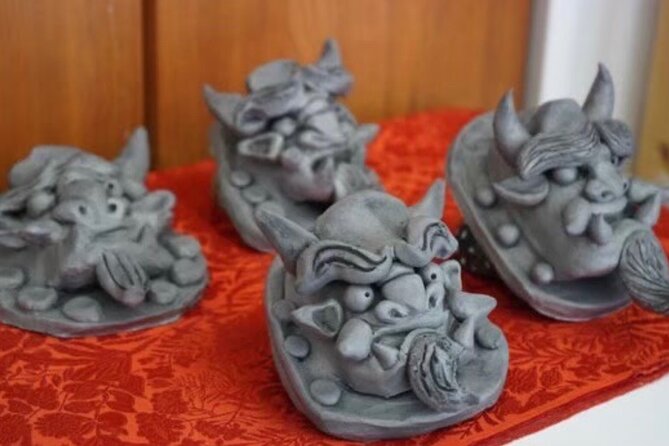
Your class starts at 瓦工房 You家 kawarakoubouyouya (373-2 Yamazakichō, Higashiyama Ward). The workshop experience runs about two hours, though it can run longer depending on pace and how much support you want while shaping details.
Here’s what typically happens in the session:
1) Learn what you’re making
You begin with an explanation of Kawara—traditional roof tiles—and why onigawara have those fearless ogre/gargoyle faces. This isn’t just trivia. Once you understand the purpose, the shaping makes more sense. You’re aiming for a protective guardian face, not a random cartoon.
2) Build a small onigawara tile from scratch
You’re taught to make a “simple onigawara tile with a demon face.” The process is set up as an easy sequence of parts you assemble into a finished piece. The studio uses a developed method, and the instructor guides even people who are clumsy with their hands.
So what you end up with is not identical to anyone else’s. In class, the same basic build can still produce very different outcomes—some faces go more playful, some more stern. That’s part of the fun: you follow the method, then add your own style.
3) Get hands-on help while you shape
A big theme in the experience is patience. Yuya-san (also referred to as You-san in some messages) is described as breaking complicated results into manageable steps. Instructions are clear, and his English is said to be good enough to keep beginners on track.
If you’ve never worked with clay, don’t overthink it. This workshop is set up so that even novices can finish something they feel proud to send home.


The “Wait and See” Part: Drying, Firing, and Shipping
This is where a lot of people quietly expect the opposite. You might think you’ll leave with a finished ceramic tile in hand. Instead, you leave with your shaped onigawara, and the studio handles the heat and the hardening.
Kiln firing happens after your class
Once your tile is made, the studio fires it in a kiln at the factory. That matters because proper firing is what turns soft clay into a stable keepsake you can actually keep long-term.
Drying takes time
Clay needs time to dry out before firing. The wait is real. One person noted about a month for drying. Another mentioned delivery in the range of weeks to about two months. Translation: you’re buying a delayed souvenir that takes its time.
Shipping costs are not included
Shipping is a separate cost not included in your fee. In practice, you’ll be expected to pay shipping later, with some guidance given at the end of class. A cash payment is mentioned by a few people, so if you want less stress, plan to have cash ready for the shipping step.
What you get in exchange for that wait is the benefit of not hauling your fragile work around Kyoto. Ceramic can chip. Shipping avoids that risk and is easier than squeezing your tile into a suitcase packed with everything else.
Price and Value: Why $89.17 Makes Sense Here
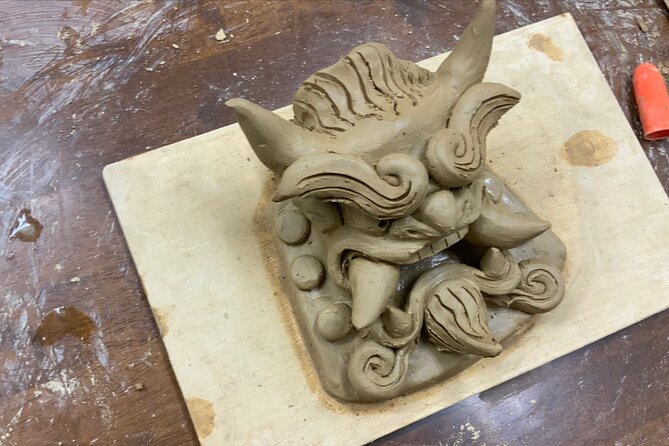
The price is listed at $89.17 per person and includes bottled water. It’s also mentioned there’s a special opening discount currently.
At first glance, it’s not a “cheap craft.” But when you break down the value, it’s more reasonable:
- You’re paying for a real, Japanese roof-tile style craft, not just a quick clay activity.
- The firing process is handled for you.
- You get a meaningful finished souvenir created from scratch.
- You’re working in a small group (maximum five travelers), which usually means more hands-on attention than you’d find in a larger class.
The main value trade-off is timing and cost clarity. Shipping isn’t included, and delivery happens later. If you’re the type who wants instant results, this may test your patience. If you’re okay with waiting, the keepsake is much more personal than a mass-produced shop item.
Who This Onigawara Workshop Fits Best
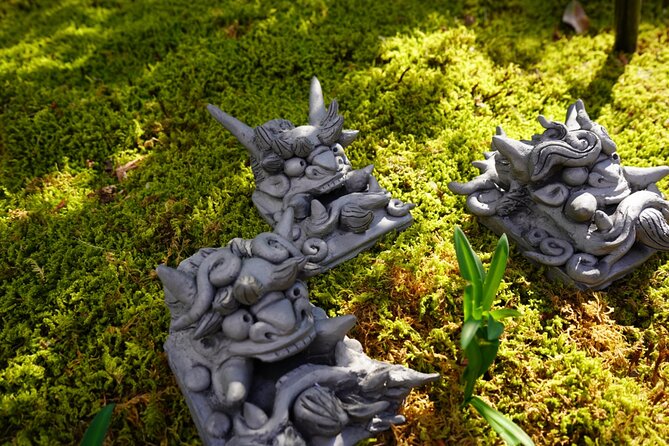
This workshop is a strong match for people who want to slow down in Kyoto and do something with their hands.
Best for
- Families who want a shared activity that’s creative but still structured.
- Beginners who want step-by-step guidance (not “good luck!”).
- Anyone who loves authentic craft skills, not only sightseeing.
- Teens too—one parent specifically called it a great artistic option for teenage children.
Also a good fit if you’re picky about souvenirs
If you’ve already bought the standard things, this is different. Your tile has a personal face and a story tied to Japanese architecture. It feels like a souvenir you made, not one you picked up.
Not ideal if you hate waiting
Because drying and firing take time, you won’t receive the finished work immediately. If you need your souvenir before leaving Japan, you’ll have to plan around that.
Practical Tips: Wear Clothes You Don’t Mind, Then Plan for Cash
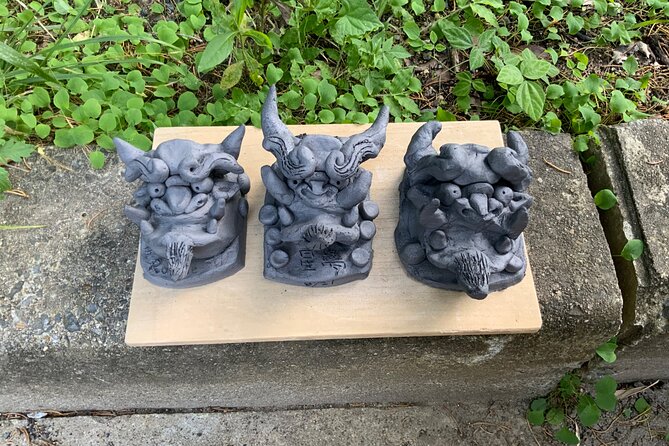
This is a clay workshop using soil. That’s your first clue to dress the part.
What to wear
- Wear clothes that may get dirty.
- Avoid anything you’d hate to stain permanently.
- Closed-toe shoes are smart for a studio setting.
What to bring
- A steady mindset. The early stages can look rough, and that’s normal.
- If you want to be safe, bring cash for the shipping payment later. Shipping is not included and is referenced as being paid separately.
Timing
Duration is listed as about two hours, but you should mentally allow extra time for comfort and detail work. People reported about three hours depending on circumstances.
Language
This experience is suitable for most travelers. English instruction is described as clear enough to follow instructions even if casual conversation is limited.
The Kyoto Context: How This Fits Into a Real Trip Day
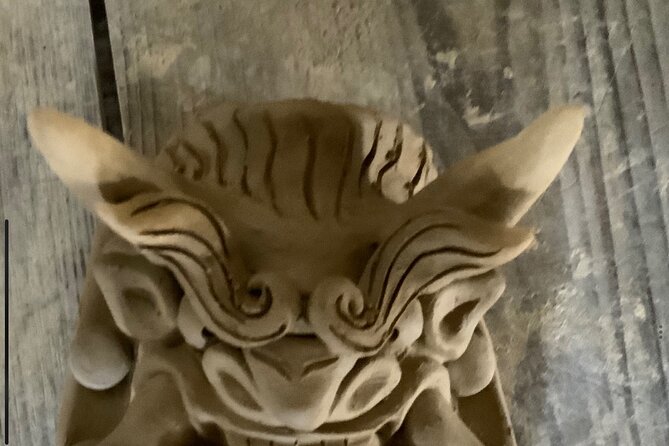
Kyoto days can get heavy: temples, lines, crowds, walking. A craft class like this works as a reset.
It’s also the right kind of break. You’re not just sitting somewhere touristy. You’re learning the meaning behind an architectural feature you’ll actually notice during your sightseeing. After making an onigawara, you’ll spot those roof guardian faces with new eyes—like you’ve unlocked a small piece of why Japanese buildings look the way they do.
Because the experience ends back at the meeting point, it’s easy to plug into your day without complicated transfers. You’ll leave with lighter luggage than a “buy pottery in a store” afternoon, because your finished item ships later.
Should You Book This Onigawara Workshop?
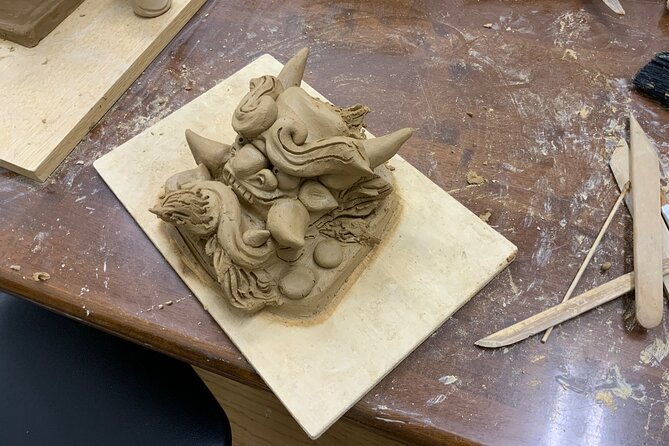
Book it if you want a Kyoto souvenir with real meaning and hands-on effort. I’d especially recommend it if:
- you like crafts and want to bring home something you made yourself
- you’re traveling with kids or teens who enjoy creative tasks
- you don’t want to carry fragile ceramics through the rest of your trip
Skip it if:
- you need a finished souvenir the same day
- you’re uncomfortable with paying an extra shipping cost later
- you hate any chance of getting dirty (this is clay, after all)
Overall, this is the kind of experience that feels genuinely Kyoto: traditional roof symbolism, a guided making process, and a one-of-a-kind result you can’t buy off a shelf.
FAQ
How long is the onigawara workshop in Kyoto?
The duration is listed as about 2 hours.
Where does the experience start?
The workshop starts at 瓦工房 You家 kawarakoubouyouya, 373-2 Yamazakichō, Higashiyama Ward, Kyoto, 605-0841, Japan.
What is included in the price?
Bottled water is included.
Is an apron included?
An apron (epron) is not included.
Is shipping included in the workshop fee?
No. Shipping costs are not included in the experience fee, and the finished onigawara is delivered after firing.
Can I choose the onigawara design?
You make a small demon-face onigawara using a step-by-step process, and your tile will be original. The pieces are shaped to your own design.
Is this class suitable for beginners?
Yes. Most travelers can participate, and the method is designed so even people with little experience can make an oni tile.
What should I wear?
The experience uses soil, so wear clothes that you don’t mind getting dirty.
Can I cancel and get a refund?
Yes. You can cancel up to 24 hours in advance of the experience for a full refund.
—
If you tell me your travel dates and whether you’ll be checking a suitcase, I can suggest how to plan for shipping timing and what to pack around it.