REVIEW · KYOTO
Kyoto Japanese Tea Ceremony Experience in Ankoan
Book on Viator →Operated by KYOTO Japanese tea ceremony experience in ANOAN, Chinese/English OK! · Bookable on Viator
A quiet ritual beats rushing through temples. In Kyoto at Ankoan, you get a welcome tea, a clear walk-through of tea-ceremony manners, and then the fun part: you make matcha yourself with a real guide in English (Chinese/English OK), not just a lecture.
What I like most is how interactive it is. You watch the tea master, then you do the motions step by step, with the teacher right there to correct your technique. I also appreciate the social side: you’re encouraged to talk, ask questions, and connect what you’re learning to everyday Japanese culture.
One key drawback to plan around: it’s not recommended if you have knee pain, because traditional tea-ceremony posture involves kneeling/sitting low. If that’s a concern, this is the one thing I’d think through before booking.
In This Review
- Key things worth knowing
- Ankoan in Kyoto: a calm break from the street pace
- Welcome tea, then the rules of manners that make it work
- Watching Yuka, then whisking your own matcha
- Matcha, wagashi, and the small details that make it feel real
- Ikebana at the studio: why flowers fit tea so well
- Price and logistics: what you’re really paying for
- Where to meet in Kyoto (and how to avoid the scramble)
- Timing: plan for about 90 minutes to around two hours
- What to bring (and what not to overthink)
- Who should book this Kyoto tea ceremony (and who might skip it)
- Should you book Kyoto Japanese Tea Ceremony in Ankoan?
- FAQ
- What is the approximate duration of the tea ceremony experience?
- How many people are in the group?
- Is a mobile ticket used?
- Is private transportation included?
- Where does the experience take place?
- Can I take photos during the session?
- Is the tour suitable if I have knee pain?
- Can I cancel for a full refund?
Key things worth knowing
- Welcome tea right away: settle in after travel and start with conversation.
- Small group size (max 8): you get more guidance instead of feeling swept along.
- Hands-on matcha making: you don’t just watch; you whisk and taste what you made.
- Wagashi and proper tasting: you experience the pairing, not just the tea.
- Photo-friendly indoors: you can take pictures freely during the session.
- You may blend tea with ikebana: the studio experience can include flower arranging.
Ankoan in Kyoto: a calm break from the street pace
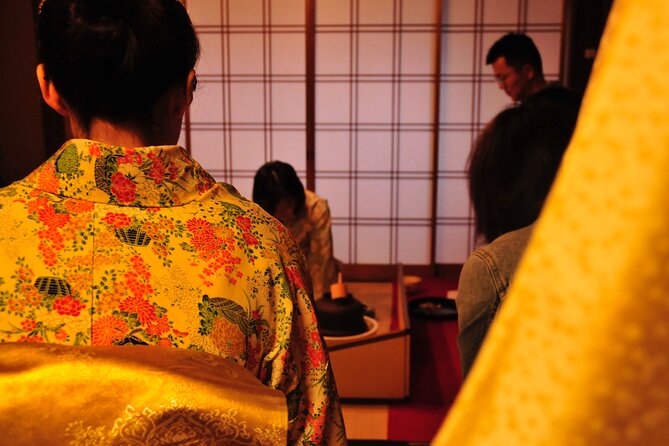
Kyoto can move fast in a way that surprises people. Even when you’re not doing an aggressive itinerary, you can still feel “on duty” all day. This tea ceremony helps you stop. It’s designed as a studio-based experience where the pace drops, you sit, and you get a steady, guided reset.
The setting matters too. Ankoan is small enough that you won’t feel lost in a crowd. And since the group is limited to 8 travelers, the vibe stays personal: you can ask questions without talking over each other.
If you’re thinking about value, this is where it starts. At about $32.84 per person, you’re paying for more than tea. You’re paying for time with a teacher who guides you through a tradition that normally takes years to understand in depth.
You can also read our reviews of more tours and experiences in Kyoto.
Welcome tea, then the rules of manners that make it work
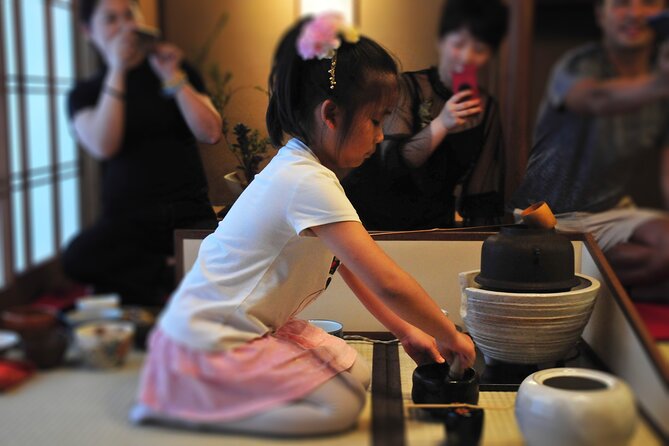
The session begins with something practical: welcome tea and a chance to talk. You don’t start with a long speech or a worksheet. Instead, you get a cup, relax, and settle your head before the ceremony itself starts.
Then you get the “how and why,” not only the “do this next.” You’ll get an explanation of the specific parts of the tea ceremony and the expected manners. That matters because tea ceremony isn’t just about drinking something green. It’s about attention: how you handle utensils, how you sit, how you move, and how you greet the moment.
One neat detail is the emphasis on communication. The experience makes room for conversation about how Japanese people live and how Japanese culture formed. It turns what could be a quiet activity into something more human and memorable, especially if you’re traveling solo or want something beyond checklists.
Watching Yuka, then whisking your own matcha
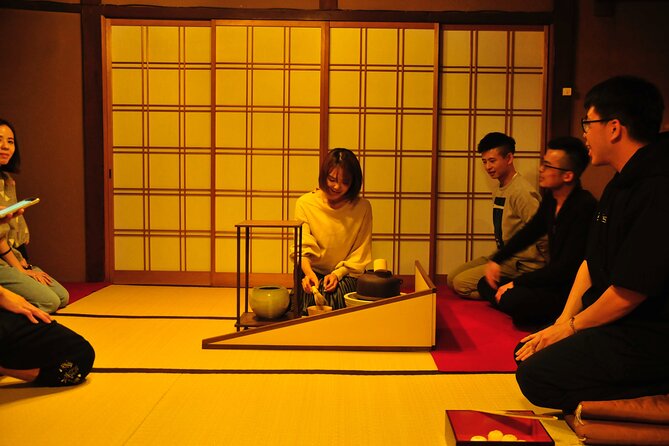
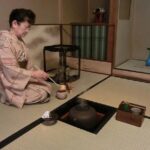
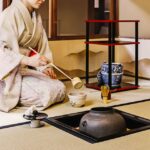
After the basics, you watch the tea master demonstrate. In this studio, the welcome tea is associated with Yuka, and that sets the tone: you’re being cared for by someone who knows how to make a ritual feel approachable, even if you’re brand-new to tea ceremony.
Once the demonstration is done, the teaching shifts to doing. You’ll experience the key procedure of preparing matcha, and the teacher stays nearby to instruct and explain. Several people describe the guidance as interactive and step by step, including a watch-one, teach-one style approach. That’s exactly what you want in a workshop: you’re not left to figure out technique by guessing.
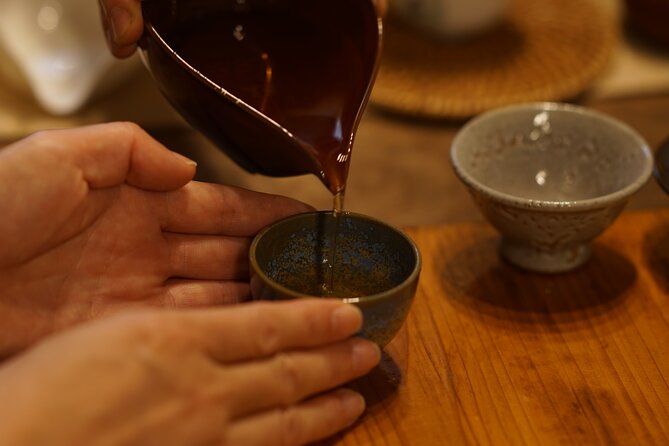
Then you taste what you made. This is a big deal. A lot of classes stop at “now you know the motions.” Here, tasting is part of learning, because matcha isn’t one-size-fits-all. You learn how it feels in your mouth and how the ceremony’s pacing changes the flavor experience.
Matcha, wagashi, and the small details that make it feel real
Tea ceremony comes with small details that people either skip (and miss the point) or learn (and suddenly everything clicks). In Ankoan, you get both the formal flow and the plain-language explanations behind it.
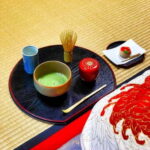
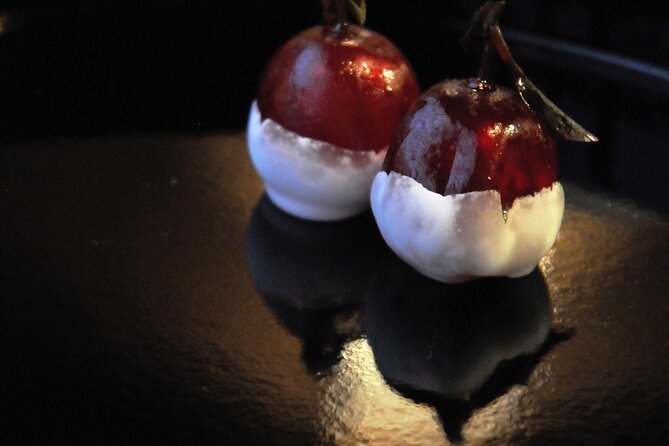
You’ll also taste wagashi, the traditional Japanese sweets that pair with tea. That pairing supports the lesson: tea is not “just a drink.” It’s part of a designed moment, where flavors, texture, and even the timing of servings matter.
From the way the instruction is described, you’ll likely pick up more than just steps. You may learn a few Japanese words tied to what you’re doing, plus gestures and phrases used during the ceremony. If you like collecting “I can use this later” knowledge, this kind of language tie-in makes the experience stick.
Also, the culture-sharing angle isn’t tacked on. You can talk while you’re waiting, tasting, and resetting between parts of the ceremony. That turns the session into something you can reflect on later, instead of a single event that fades when you’re back on the street.
Ikebana at the studio: why flowers fit tea so well
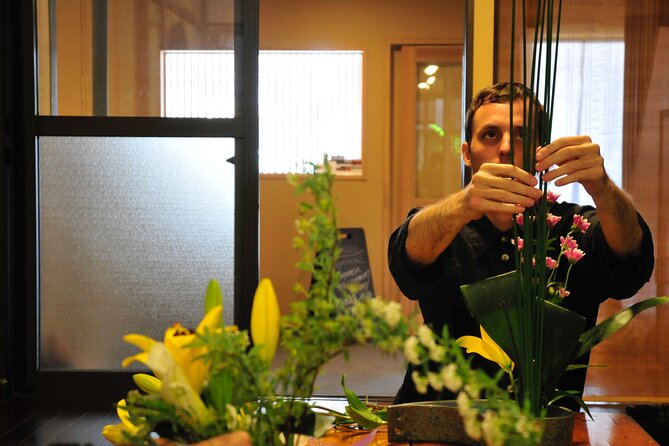
This experience can include ikebana alongside the tea ceremony. The booking description points you toward both in the same studio setting, which makes sense when you think about it: both practices train your eye and your patience.
Ikebana (flower arranging) also supports the tea ceremony lesson. In both cases, you’re learning how to treat objects with intention. Instead of rushing to “make something pretty,” you pay attention to placement, balance, and what feels right in the space.
If you’ve been wanting a Kyoto activity that isn’t only watching, ikebana is one of the best complements to tea. Tea ceremony gives you hands-on technique and tasting. Ikebana adds a visual, creative component that still stays respectful and grounded.
Price and logistics: what you’re really paying for
Let’s talk value, because $32.84 can sound either cheap or pricey depending on what you expect.
Here’s what you actually get based on the session description and what’s been emphasized by participants: a welcome tea, tea-ceremony explanation, a demonstration, hands-on matcha preparation, matcha tasting, and wagashi. If your reservation includes ikebana in the studio, you also get the chance to do that component as part of the overall experience.
You also get something that’s hard to price: a small group setting. With a maximum of 8 travelers, you’re less likely to feel like a spectator. In a city full of big tours, that’s a real quality-of-life upgrade.
Logistics are fairly simple. You’ll use a mobile ticket, and the meeting point is listed at Ankoan in Kita Ward (Murasakino Monzenchō). Public transportation is nearby, which helps if you don’t want to burn time figuring out taxis or transfers.
The main “watch-outs” are the non-negotiables: no private transportation is included, and you should be mindful about knee comfort.
Where to meet in Kyoto (and how to avoid the scramble)
Your meeting point is at 暗香庵 (Ankoan), Tea ceremony Japan, Kyoto 603-8216, Kita Ward, Murasakino Monzenchō, 63. The session ends back at the meeting point.
Because transportation isn’t included, plan for the simplest route from where you’re staying. If you’re using Kyoto buses or trains, give yourself a buffer. Studio classes can’t wait for late arrivals, and this is the kind of experience where arriving calmer makes the whole thing better.
Also consider your schedule. This isn’t a “walk, see, take a photo, move on” activity. It’s meant to be a pause, so I’d place it where you’ll be able to enjoy it, not where you’re racing to a next reservation.
Timing: plan for about 90 minutes to around two hours
The experience is described as about 90 minutes, but duration is listed as roughly 1 hour and some sessions are described as lasting around two hours. So in practice, treat it as a block of time you’ll stay within, not a quick stop.
The rhythm matters. You start with welcome tea and conversation, then you learn ceremony basics, watch the master, practice matcha, and finish with tasting (plus wagashi, and possibly ikebana). That pacing is what keeps the experience from feeling rushed.
If you’re comparing this to other Kyoto activities, the time investment is moderate. You won’t lose half a day. But it’s long enough to feel like you learned something real, not just sampled something once.
What to bring (and what not to overthink)
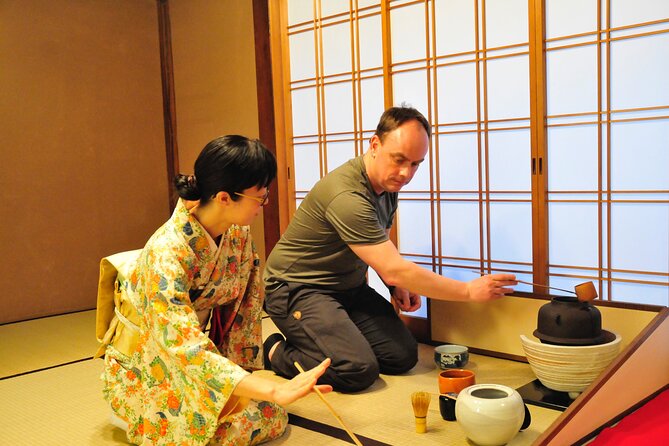
You don’t need to show up dressed formally, but you should be ready to sit low. If knee comfort is an issue, this is the moment to decide whether tea ceremony posture will work for you.
Otherwise, bring a curious mindset and a willingness to slow down. You’ll be guided through manners and movements, and the teacher will explain as you go. The goal isn’t to perform perfectly. The goal is to understand the ritual, then taste the results.
Since you can take pictures indoors freely, you don’t need to choose between “be present” and “capture the moment.” If a moment looks good, you’ll likely be able to photograph it without stress.
Who should book this Kyoto tea ceremony (and who might skip it)
This experience is best for you if you want a cultural activity with real participation. I’d especially recommend it if:
- You want hands-on practice rather than just watching
- You like learning etiquette and the meaning behind rituals
- You want a calmer activity after temples and crowds
- You enjoy matcha, or at least want to learn what makes good matcha tasting different
It may be less suitable if:
- Knee pain makes low-seating posture difficult
- You only want high-energy sightseeing and hate sitting through instruction
If you’re traveling with kids, the studio format can work well because the teacher-guided structure helps everyone follow along. Just remember: traditional posture still may be challenging, depending on how your group handles it.
Should you book Kyoto Japanese Tea Ceremony in Ankoan?
Book it if you want an authentic Kyoto experience that’s not just scenic—it’s participatory. For the money, you get welcome tea, ceremony instruction, demonstration, hands-on matcha making, and tasting with wagashi. Add the small group size and the English support, and you end up with something that feels personal instead of packaged.
I’d especially book it if your Kyoto plan includes busy stops and you need a reset. This is one of those activities where you leave with a calmer mood and a better understanding of what the ritual is actually doing for people.
If you do have knee concerns, take that seriously. That’s the only warning I’d treat as a dealbreaker rather than a minor note.
FAQ
What is the approximate duration of the tea ceremony experience?
It’s listed as about 1 hour (approx.). The service is also described as a 90-minute experience, so plan for roughly that time block.
How many people are in the group?
The experience has a maximum group size of 8 travelers.
Is a mobile ticket used?
Yes. The experience offers a mobile ticket.
Is private transportation included?
No. Private transportation is not included.
Where does the experience take place?
The meeting point is 暗香庵 (Ankoan) in Kyoto: Kita Ward, Murasakino Monzenchō, 63. The activity ends back at the meeting point.
Can I take photos during the session?
Yes. You can take pictures indoor freely.
Is the tour suitable if I have knee pain?
It is not recommended for those with knee pain.
Can I cancel for a full refund?
Yes. You can cancel up to 24 hours in advance for a full refund. Cancellation within 24 hours isn’t refunded, and weather cancellations due to poor conditions can result in a different date or a full refund.