REVIEW · KYOTO
Authentic Kyoto Gion Geisha/Maiko Cultural Experience
Book on Viator →Operated by JTB Global Marketing & Travel Inc. · Bookable on Viator
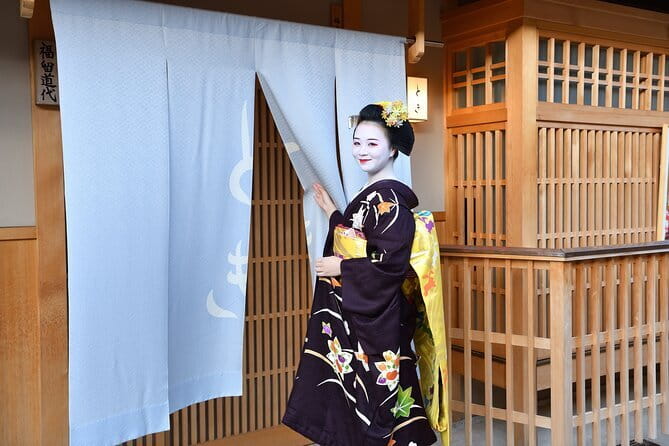
Gion changes fast after you taste matcha and watch dance. This 90-minute Kyoto experience brings you into an authentic Gion teahouse where you learn geisha culture with an English-speaking guide translating in real time, and you get photo time while a maiko or geiko performs. I also like that the group stays small, so the conversation doesn’t feel rushed. One heads-up: you can’t choose whether you meet a maiko or a geiko, and teahouse manners matter—clean socks help.
The walk through Gion’s famous lanes is part of the payoff. You start at Gion-Shijo Station, follow your guide along Hanamikoji Street, and then settle into a tatami room for a tea ceremony and traditional dancing and music. It’s a great fit if you want more than spotting performers from the sidewalk, but it’s not ideal if you’re expecting a big, flexible show with lots of roaming around.
In This Review
- Key things that make this Gion teahouse experience worth it
- Gion’s teahouse experience: why it feels different from the street-side version
- The 90-minute flow: Hanamikoji Street walk, then tatami tea and dance
- Meeting a maiko or geiko: what you can and can’t control
- Tea ceremony + matcha time: more than a drink
- Your English-speaking guide: how translation turns the experience into understanding
- Photos, socks, and tatami etiquette: the small details that keep it smooth
- Price and value: is $155.22 per person fair for what you get?
- Who this Kyoto Gion experience suits best (and who should skip it)
- Should you book this Gion maiko/geiko teahouse experience?
- FAQ
- How long is the Authentic Kyoto Gion Geisha/Maiko Cultural Experience?
- Where do I meet, and where does the tour end?
- What happens on Hanamikoji Street?
- What does the teahouse portion include?
- Can I choose whether I meet a maiko or a geiko?
- How big is the group?
- What should I wear or bring for the teahouse?
- Are there age limits for this activity?
Key things that make this Gion teahouse experience worth it
- Small group size (max 10) so Q&A feels natural
- English-speaking guide who explains what you’re seeing, not just the basics
- Maiko or geiko dance + music inside an authentic teahouse setting
- Matcha tea ceremony with a tea master as part of the program
- Photo opportunities during the experience (ask your guide about the best moments)
- Tatami-room etiquette means you’ll want dry feet, socks, and a light touch in the room
Gion’s teahouse experience: why it feels different from the street-side version
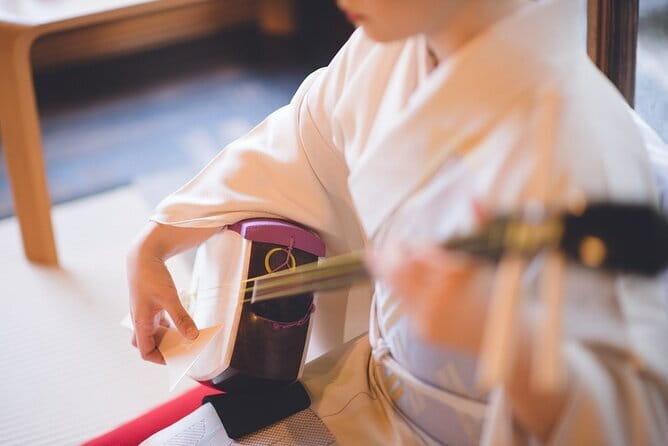
If you’ve been to Kyoto before, you already know the city can be packed. This experience solves a big problem: you’re not trying to “catch a glimpse” between crowds. Instead, you’re guided into a traditional teahouse environment where the focus is on culture, not quick sightseeing.
I like the way it balances two things. First, you get context walking through Gion—especially around Hanamikoji Street, which sets the stage for what you’ll see next. Then you shift indoors, into a tatami room where the performance and tea ritual happen in a calm, structured way. That rhythm matters because geisha culture is about craft, timing, and restraint, not just costumes.
The most important thing to understand going in: this is respectful, rules-based, and quiet by design. If you treat it like a loud museum tour, you’ll feel it immediately. If you go in ready to slow down, it turns into one of your Kyoto “memory anchors.”
You can also read our reviews of more tours and experiences in Kyoto.



The 90-minute flow: Hanamikoji Street walk, then tatami tea and dance
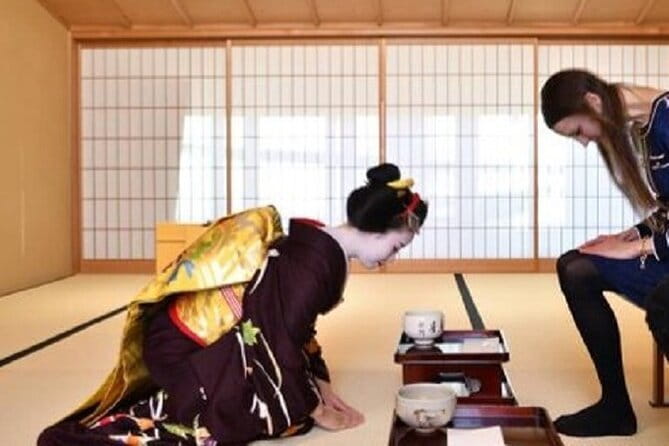
This is a tight schedule—about 1 hour 30 minutes total—so every segment has a purpose.
Stop 1: Hanamikoji Street (about 15 minutes)
You meet at Gion-Shijo Station and your English-speaking guide leads you from there toward the teahouse. This short walk is timed to get you grounded before the performance starts. You’re not just moving from A to B; you’re being given context about Gion’s history and culture while you see the streets in daylight and close-range.
Practical note: since you’re walking in Gion, keep your pace steady and your questions ready. The guide is walking with you, translating and pointing out details you may not notice on your own.
Stop 2: The teahouse experience (about 1 hour)
Once you arrive, the program centers on a small-group visit with a maiko or geiko plus the owner and/or a tea master depending on the day. In this room, you’ll get:
- a traditional dance and music viewing
- time for intimate conversation (with translation support)
- a ceremonial matcha tea experience
- photo opportunities (designed around the flow of the event)
- a chance to ask questions and learn meanings behind what you’re seeing
One practical consideration: you’ll be in a tatami room, which means you’ll want to follow etiquette closely. The experience runs smoothly when everyone keeps the space clean and respectful—your socks and your care with wet items make a real difference.
Meeting a maiko or geiko: what you can and can’t control
Here’s the deal that shapes the whole experience: you cannot select whether you meet a maiko or a geiko. During the teahouse part, you’ll be accompanied by either a maiko or a geiko along with a tea master depending on the day. That’s not a weakness; it’s part of how these cultural programs operate.
What you can expect is the core package: traditional dance viewing, matcha, and real conversation with translation support. And in a small group of up to 10, the Q&A tends to feel more direct. In past guidance styles shared with me by name—like Yuko, Yoshi, and Youko—the common thread was clear context and helpful interpretation, which is exactly what you want when you’re trying to understand etiquette and meaning, not just memorizing facts.
If you’re hoping for a specific personality or role (apprentice versus established performer), go in flexible. You’ll still get the same cultural framework; the “who” changes, but the craft and hospitality are the point.
Tea ceremony + matcha time: more than a drink

The matcha tea experience is the emotional center of this tour. It’s not just “try matcha.” It’s a ceremonial moment—handled by the tea master—and it fits the performance that comes before and the conversation that follows.
I love how the tea segment slows the whole event down. After the dance and music viewing, you sit in a tatami room and shift from watching to understanding. With a guide translating, you can ask questions that connect the ritual to what you just saw. That’s where the value really lands: you start linking movement, hospitality, and symbolism.
A useful practical expectation: you should plan to be given sweets alongside matcha. Some programs include matcha-based treats like matcha ice cream and a flour sweet in addition to the tea. Since you’re in a teahouse setting, think of it as a small hospitality sequence, not just one beverage.
Your English-speaking guide: how translation turns the experience into understanding
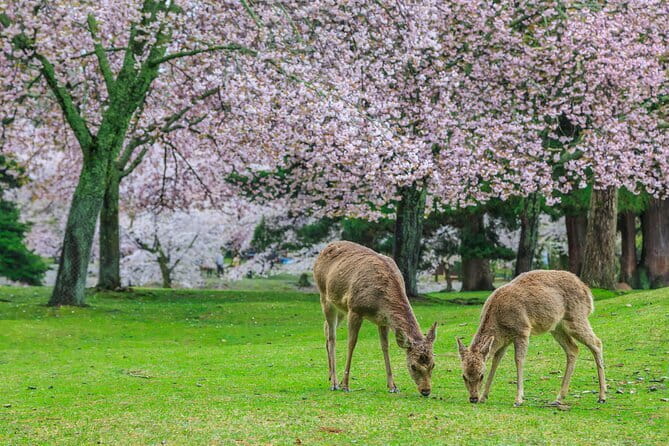
This is one of those tours where the guide isn’t a bonus; the guide is part of the product. You’re told you’ll have an English-speaking guide, and the whole point is that they translate for you and provide context as you move through Gion and then in the teahouse.
From what’s been shared with me under guide names like Tomonika, Tokodo, Tomato-Sun, and Youko, the strongest praise isn’t about talking a lot. It’s about being helpful: pointing out details on the street before meeting the performer, and then making sure you can ask thoughtful questions once you’re seated.
That matters because geisha culture is easy to misunderstand if you only rely on stereotypes. The guide helps you frame what you’re seeing—especially around manners, roles, and the meaning behind formal actions.
Practical tip: before you go, write down 3–5 questions you’d genuinely like answered. When the conversation opens, you’ll get more out of it than if you rely on whatever pops into your head.


Photos, socks, and tatami etiquette: the small details that keep it smooth
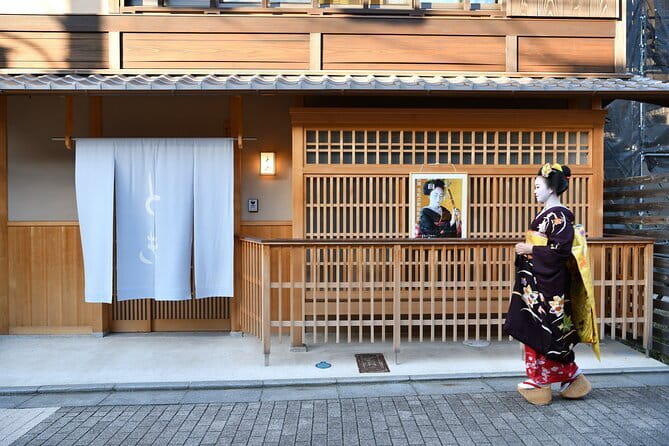
This experience explicitly includes photo taking during the event, so don’t treat cameras like an afterthought. Since the teahouse setting is structured, follow your guide’s cues on when and where photos are appropriate. The best results come when you’re calm and ready for the moment the program allows.
Tatami etiquette is also spelled out, and it’s worth taking seriously:
- wear socks
- if your feet or clothes (or bag) get wet in rain, wipe off the water before entering
- help keep the tatami spaces clean
This doesn’t feel picky once you’re inside. Tatami rooms are part of the visual and sensory experience. If you show up prepared—dry socks, dry shoes-to-be, small tidy habits—the whole visit feels more respectful and easier for everyone.
Price and value: is $155.22 per person fair for what you get?
At $155.22 per person, this isn’t a budget activity. But it also isn’t just a generic walking tour with a tea break. You’re paying for a full package:
- guided walk through Gion including Hanamikoji Street
- a one-hour teahouse experience with maiko/geiko dance viewing
- a matcha tea ceremony with a tea master
- English translation and context throughout
- small group size (maximum 10 travelers)
- included photo opportunities
That combination is the value equation. In Kyoto, you can find cheaper cultural stops. What you likely won’t find at this price is a structured indoor teahouse time with dance, tea, and conversation, all guided in English, all with the group kept small.
Also note the planning reality: this tour is typically booked about 17 days in advance on average. If you’re traveling in peak season, don’t wait until the last minute unless your schedule is flexible.
Who this Kyoto Gion experience suits best (and who should skip it)
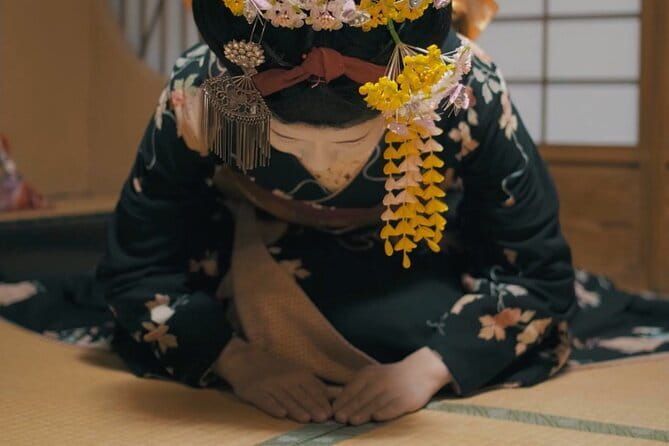
This tour is a strong match if you:
- want a real cultural exchange, not just street spotting
- like structured experiences with clear timing and etiquette
- care about understanding what you’re seeing (and not just snapping photos)
- appreciate the comfort of a small group
It may not be your best choice if you:
- hate quiet, formal spaces and rules
- want lots of free roaming once you arrive
- need a guaranteed maiko vs geiko outcome (since you can’t choose)
If you’re a first-time Kyoto visitor, it also works well as an “anchor day” that gives you a deeper layer beyond temples and markets.
Should you book this Gion maiko/geiko teahouse experience?
I’d book it if your priority is respectful access—small-group, English guidance, and a tea-and-performance setting you can actually learn from. The combination of Gion walking context, indoor tatami hospitality, and a matcha tea ceremony makes this feel like more than a souvenir moment.
I would pause if you’re coming in expecting something casual, spontaneous, or fully self-directed. This experience works best when you follow etiquette, stay attentive, and let the guide translate what matters.
If you do book, come ready with socks, a few questions, and the mindset that this is art and hospitality—not a theme park show.
FAQ
How long is the Authentic Kyoto Gion Geisha/Maiko Cultural Experience?
It lasts about 1 hour 30 minutes.
Where do I meet, and where does the tour end?
You start at Gion-Shijo Station (1 Chome Miyagawasuji, Higashiyama Ward, Kyoto). The tour ends at the teahouse in Gion, at Gionmachi Minamigawa, Higashiyama Ward, Kyoto.
What happens on Hanamikoji Street?
You walk with an English-speaking guide through Gion, including Hanamikoji Street, with insights into Gion’s history and culture (about 15 minutes).
What does the teahouse portion include?
Inside the teahouse, you’ll have an experience with a maiko or geiko (depending on the day) and a tea master, including traditional dance/music viewing, a ceremonial matcha tea experience, conversation time, and photo taking.
Can I choose whether I meet a maiko or a geiko?
No. The day determines whether you’re accompanied by a maiko or geiko, and you cannot select which one you get.
How big is the group?
The tour has a maximum of 10 travelers.
What should I wear or bring for the teahouse?
Wear socks. If you arrive with wet feet, clothes, or a wet bag (especially in rain), wipe off the water before entering. Help keep tatami spaces clean.
Are there age limits for this activity?
Children ages 0–5 cannot join. For participants under 18, parental permission in writing is required. If you’re under 15 or not yet enrolled in middle school, you must be joined by a parent or guardian on the tour.