REVIEW · KYOTO
Kioto: Gion Tour, recorrido a pie (Español/Castellano)
Book on GetYourGuide →Operated by LAMBDA CUBE LLC · Bookable on GetYourGuide
Gion feels different when someone explains it to you. On this 2-hour Spanish walking tour, I like how the route moves through real hanamachi corners—Pontocho, Gion-Kobu, and Gion-Higashi—instead of sticking to the most obvious photo streets, and I also like that the guide leans hard into questions about what you’re seeing and how daily life works in Kyoto. One drawback to plan for: Maiko or Geiko sightings aren’t guaranteed, and Hanamikoji-dori isn’t part of the walking stops.
This is the kind of walk that rewards curiosity. The guides (including José and Juan, based on past guest experiences) are praised for being close, flexible, and detail-focused, and for pointing out small things most people miss in Gion’s lanes and crossings.
You’ll cover about 3.3 km (roughly 2 miles) on foot, so good shoes matter. And if you’re coming during cherry blossom season, the route can shift slightly to show seasonal views around Gion.
In This Review
- Key highlights worth planning for
- A two-hour Gion walk that teaches what you’re really looking at
- Where to meet: the Disney Kyoto Shijo-Kawaramachi landmark
- The pace and route size: 3.3 km, comfortable shoes recommended
- Pontocho alley: Kaburenjo, river views, and street-level storytelling
- Crossing Sanjo Ohashi and Yamato-dori: getting your bearings fast
- Gion-Kobu: Shinbashi-dori, Shiragawa, and the Tatsumi Shrine detour
- Gion-Higashi and Yasaka Shrine: where the Gion name begins
- What the route includes—and what it intentionally leaves out
- Cherry blossoms: how the route changes when the season demands it
- Small group energy: private-feel learning without the big-tour chaos
- Spanish guide value: why language matters more than you think
- Who this tour suits best
- Price and value: why $35 can make sense here
- Should you book this Gion walking tour?
- FAQ
- How long is the Kioto Gion walking tour?
- What is the walking distance?
- What language is the tour in?
- How many people are in the group?
- Where do we meet the guide?
- Which areas of Gion are visited during the tour?
- Is Hanamikoji-dori included?
- Can I guarantee seeing a Maiko or Geiko?
- Does the route change during cherry blossom season?
- What should I bring with me?
Key highlights worth planning for
- Three hanamachi areas in two hours: Pontocho, Gion-Kobu, and Gion-Higashi.
- A question-friendly guide: expect lots of stop-and-ask moments in Spanish.
- More than Geisha tourism: you’ll learn how Gion connects to Kyoto’s long timeline and festivals.
- Historic neighborhood walking: the tour includes preserved areas that are easy to overlook on your own.
- Shrine and festival origin context: Yasaka Shrine is tied to how the Gion name began.
A two-hour Gion walk that teaches what you’re really looking at
Gion is famous for Geisha culture, but most first-time visitors only see the surface: postcards, quiet streets, and that one “main” lane everyone knows. What makes this tour valuable is that it slows you down just enough to connect details to context.
In two hours, you’ll get a guided framework for understanding the district. That matters because Kyoto’s traditions can feel like a set of museum pieces until someone explains how the pieces fit together. Here, you’ll hear how Gion isn’t just performance culture—it’s a mapped part of the city’s identity, including the hanamachi system and the rhythm of daily life.
Price-wise, at $35 per person for a small group (up to 6), you’re paying for an informed, human guide rather than “just” access to the scenery. If you like asking questions—about etiquette, roles, festivals, architecture, or what specific signs and structures mean—this is the kind of tour that turns a short walk into an education.
You can also read our reviews of more tours and experiences in Kyoto.

Where to meet: the Disney Kyoto Shijo-Kawaramachi landmark
Meeting in Kyoto can be chaos if you don’t have a clear anchor point, so I like that this one uses a very specific location. You’ll meet outside the shop Disney – Kyoto Shijo-Kawaramachi, which is noted as the only Disney store in Kyoto.
Look for the guide seated out front, holding an iPad showing the image for Kioto Gion Recorrido Guiado ESPAÑOL/CASTELLANO. It’s a small detail, but it reduces that early stress of figuring out where everyone gathers.
The pace and route size: 3.3 km, comfortable shoes recommended
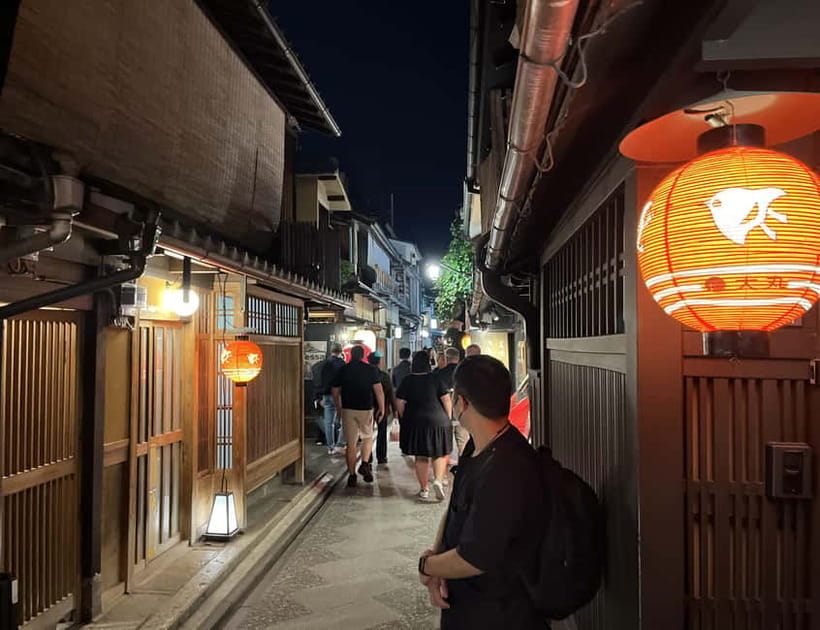
You’re walking around 3.3 km / about 2 miles total. That’s not a long trek, but Gion’s streets aren’t wide, and you’ll be stopping often to look and listen. The practical takeaway: plan for “slow walking” time, not marathon miles.
Bring comfortable shoes first. Then bring the obvious weather helpers: umbrella, sunscreen, and a sun hat. The route is outdoors for most of it, and Kyoto weather can change quickly. Also bring water. Even when the distance seems manageable, you’ll be moving and thinking, and hydration helps keep your questions energetic.
Pontocho alley: Kaburenjo, river views, and street-level storytelling
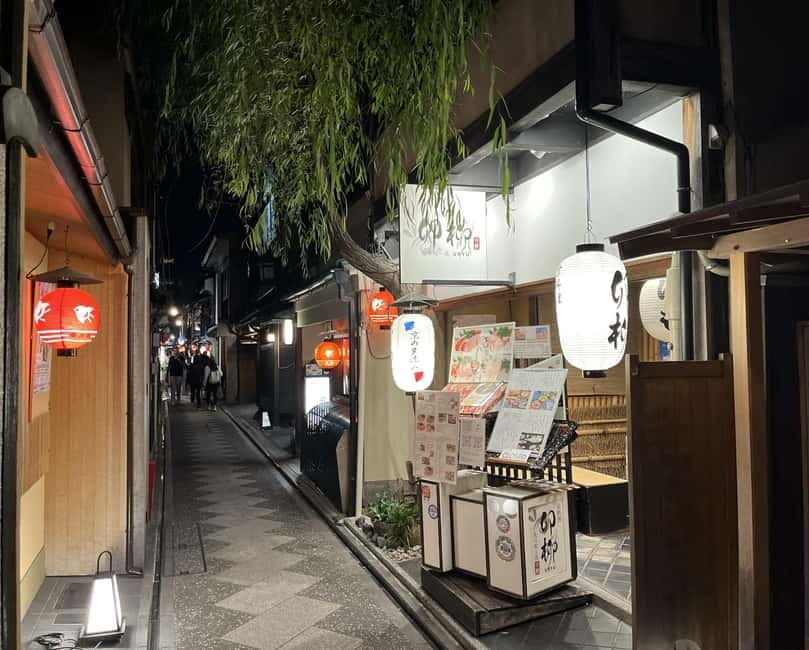
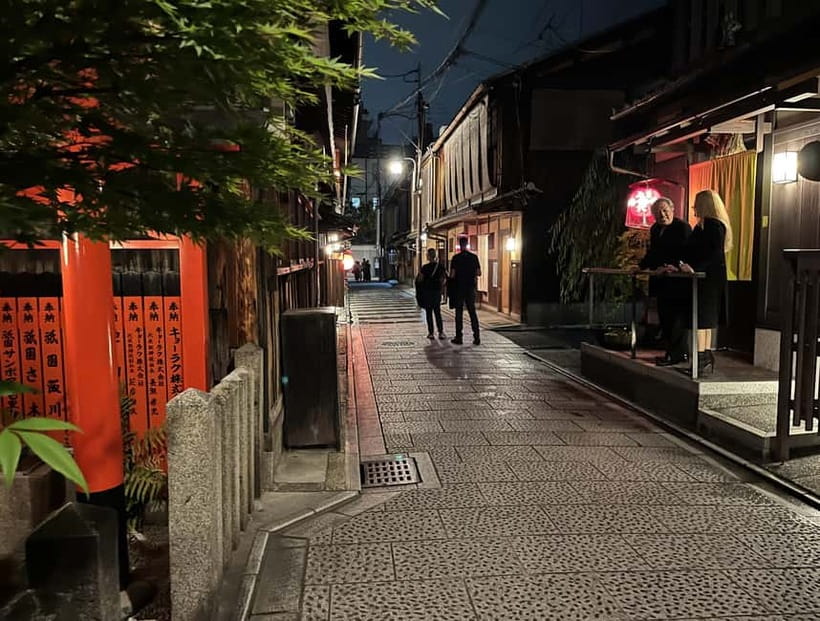
Your walk starts in the Pontocho area, where Kyoto’s charm is often strongest at street level. Expect narrow lanes, traditional-looking storefronts and houses, and that “Kyoto at walking pace” feeling.
One of the specific stops is Pontocho Kaburenjo—a named spot that helps you orient the experience. You won’t just pass by; you’ll get explanation for what you’re seeing and why this corner matters in Gion’s larger story.
Then you’ll move through key sights tied to the river-and-street layout, including Okamogawa and the Yagi-san & Kita-san statues. These kinds of small landmarks are exactly what a self-guided stroll can miss. With a guide, you can connect them to how Gion’s spaces developed and how people historically navigated the area.
Crossing Sanjo Ohashi and Yamato-dori: getting your bearings fast

After Pontocho, you’ll reach Sanjo Ohashi (the bridge stop) and Yamato-dori. Bridges sound simple, but in Kyoto they often act like “chapter breaks.” You see a change in the feel of the district and you get a new angle on how the city pieces link together.
Yamato-dori is also useful as a mental spine: it helps you map what you’ve already walked and what’s coming next. If you’re the type who likes to understand where you are in relation to everything else, bridge-to-boulevard transitions are a smart way to build that map quickly.
Gion-Kobu: Shinbashi-dori, Shiragawa, and the Tatsumi Shrine detour
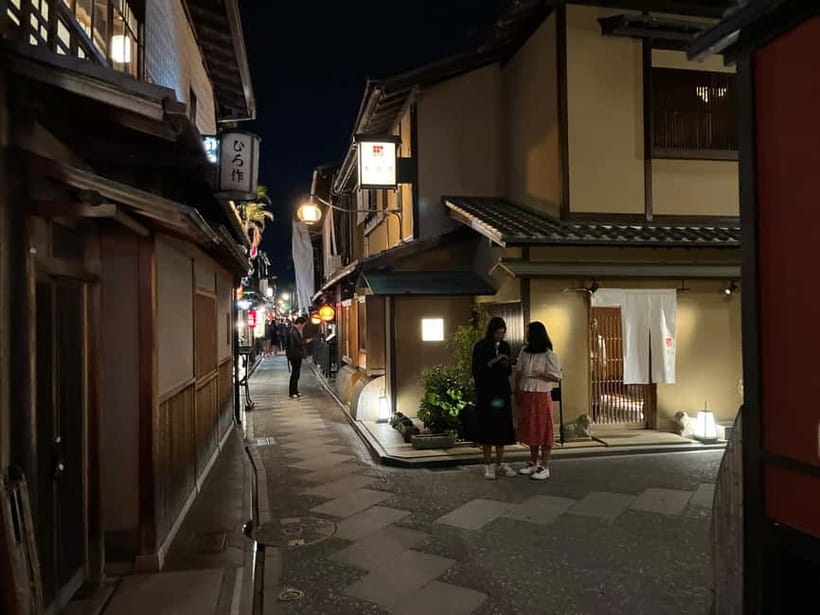
Gion-Kobu is one of the hanamachi areas covered, and the tour handles it with a set of deliberate stops rather than random wandering.
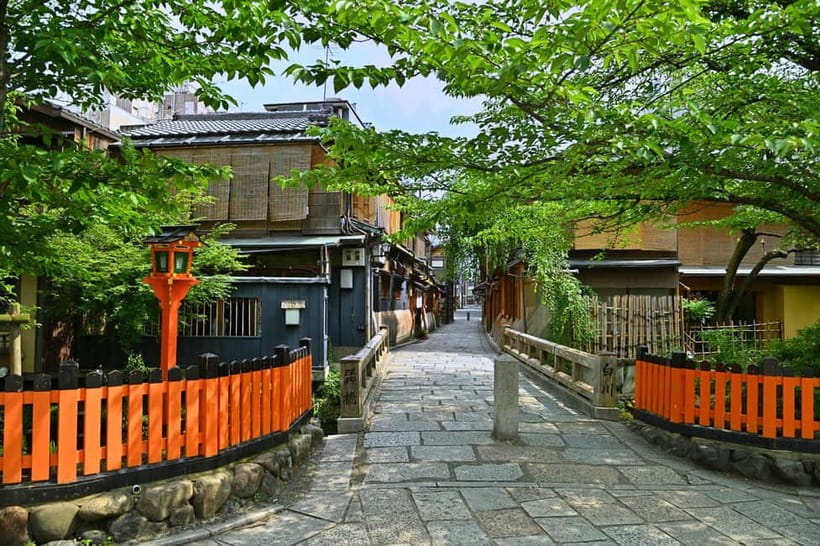
You’ll walk along Gion-Shinbashi-dori, then later hit Gion Shiragawa—both stops help show how the hanamachi isn’t just one “pretty lane.” It’s made of linked micro-areas with their own character.
A standout religious pause is Tatsumi Jinja. Even if shrines are “just shrines” to you at first, this stop can change that mindset because the guide connects it to local routines, tradition, and the way neighborhoods have long organized community life around spiritual landmarks.
Then you’ll cross Tatsumi Hashi (another named bridge). Bridges again serve as pace markers. You get a short visual reset, and the story tends to shift with it—useful in a 2-hour format.
Gion-Higashi and Yasaka Shrine: where the Gion name begins
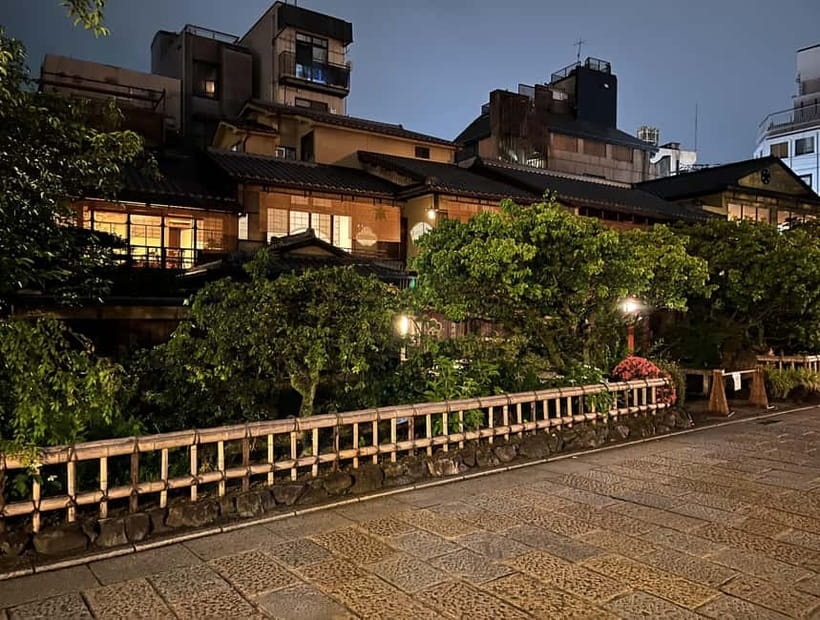
The tour continues into Gion-Higashi, giving you a broader sense of how the district differs from other hanamachi pockets. This is where you start seeing that “Gion” isn’t one single vibe. It’s a collection of places, each with its own feel.
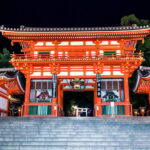
Then there’s the major origin connection: a visit to the formerly named Gion Shrine, which is now Yasaka Shrine. This is included as a stop, and the tour also explains how the district got its name from that historic association.
If time allows, you may also hear about the Gion Festival, described as one of Japan’s top three major festivals, with origins tied to Gion going back more than 1100 years. Even if you’ve never heard festival history before, this is a strong moment to understand why Gion carries such weight in Kyoto culture.
What the route includes—and what it intentionally leaves out
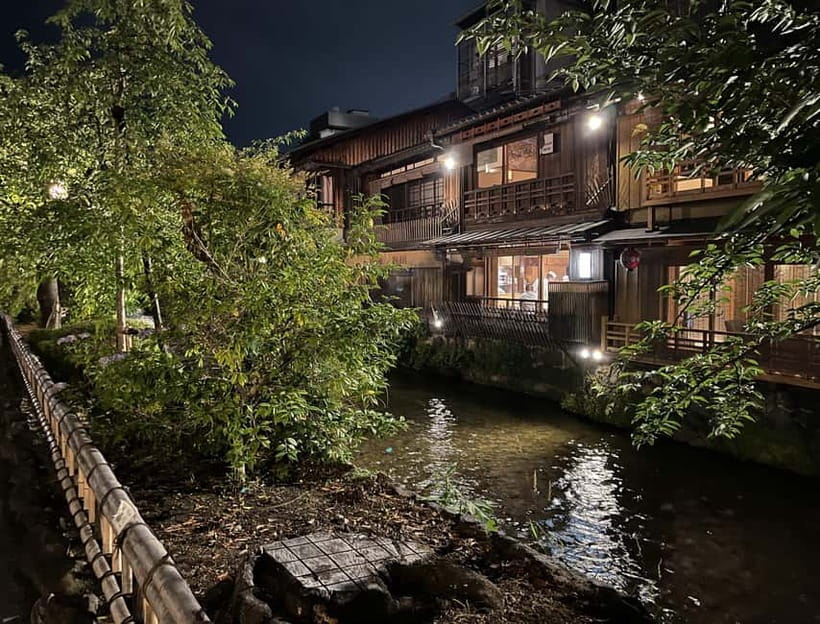
This tour is clearly designed to focus on specific preserved neighborhood areas and linked hanamachi stops. That choice is a good thing, but it comes with a couple expectations you should set correctly.
Hanamikoji-dori isn’t included, so if you were hoping to see that one “must-walk” street, you’ll need a separate plan for it.
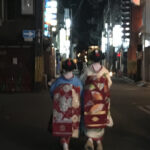
And while it’s a chance to see the world of Maiko/Geiko, a sighting is not guaranteed. Think of this as a history-and-neighborhood experience first. If you treat it like a “may see something special” walk, you’ll enjoy it more.
Cherry blossoms: how the route changes when the season demands it

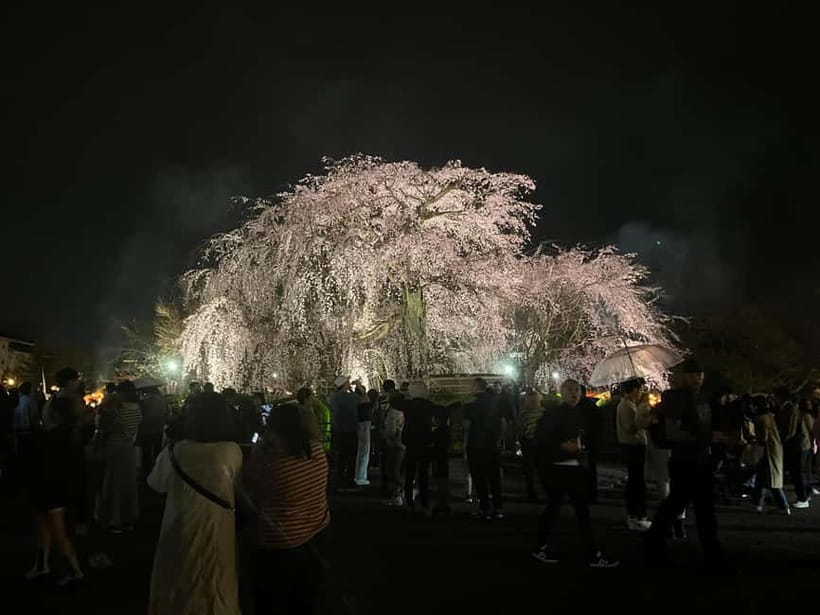
During cherry blossom season (roughly late March to early April), the route is slightly altered to showcase the blooms around Gion. If you’re traveling in that window, this is a practical advantage.
Instead of relying on luck for the best blossom views, you’ll get guided placement—timed around the district’s streets and sightlines—so the season actually lands in your photos and memories.
Small group energy: private-feel learning without the big-tour chaos
With a small group capped at 6 participants, the format supports real conversation. The best part for many people isn’t the “attractions list.” It’s the ability to stop, ask, and get a tailored answer tied directly to what you’re looking at in that moment.
That question-friendly style comes through strongly in the kinds of feedback this tour has received. Guides like José (and also Juan, in prior experiences) are described as friendly, close, and highly knowledgeable, with the flexibility to adjust timing if needed and to explain details clearly when questions come up.
If you’re traveling with Spanish beginner-level speakers, you’ll likely find this setup is still workable because the guide’s communication is adapted for understanding during the walk (based on past experiences shared by visitors).
Spanish guide value: why language matters more than you think
Being in Spanish isn’t just a comfort detail. It changes how much you can absorb in a short, stop-and-go format.
When explanations happen in your language, you don’t have to guess. You can ask follow-up questions immediately—about customs, roles, or why a particular structure matters. In a place like Gion, those “small questions” can lead to surprisingly big clarity.
If you’re not fluent, you might still get a lot out of the walk. But the biggest payoff is for people who want their history and culture guided in Spanish, without constant summarizing.
Who this tour suits best
This walk is a great match if you:
- Want Gion context, not just a self-guided stroll
- Enjoy asking questions while you walk
- Prefer a small group rather than a large crowd scene
- Care about how districts work—hanamachi life, neighborhood organization, and festival origins
It may be less perfect if you’re strictly chasing only one specific photo street (since Hanamikoji-dori isn’t included), or if you expect to reliably spot Maiko/Geiko on demand (since sightings can’t be promised).
Price and value: why $35 can make sense here
At $35 per person for 2 hours and up to 6 people, the value comes from three things:
- Focused coverage of three hanamachi areas (not just one)
- A guide who explains details tied to what you’re seeing
- Room for questions, which turns the walk into a learning session rather than sightseeing bingo
If you’ve ever done “watch-the-guide-walk” tours where you end up with a few photos and not much understanding, you’ll likely appreciate the way this one leans into explanation and interaction.
Should you book this Gion walking tour?
Book it if you want a short, high-impact walk through Gion with a Spanish guide who takes questions seriously and helps you connect the dots between hanamachi life, shrine/festival origins, and the streets you’d otherwise skim past.
Skip it (or add a separate plan) if you’re mainly hunting for one specific lane, or if you need guaranteed Maiko/Geiko sightings. Think of this as the “learn the district” option, not a “wait for someone to walk by” plan.
If you match the first group, this is one of those Kyoto experiences that makes the whole neighborhood feel easier to read—one bridge, lane, and shrine stop at a time.
FAQ
How long is the Kioto Gion walking tour?
The tour lasts 2 hours.
What is the walking distance?
You’ll walk about 3.3 km (around 2 miles).
What language is the tour in?
The live tour guide speaks Spanish.
How many people are in the group?
The group is small, limited to up to 6 participants.
Where do we meet the guide?
Meet the guide in front of the Disney – Kyoto Shijo-Kawaramachi store. The guide is seated and holds an iPad showing Kioto Gion Recorrido Guiado ESPAÑOL/CASTELLANO.
Which areas of Gion are visited during the tour?
You’ll visit three of the five hanamachi: Pontocho, Gion-Kobu, and Gion-Higashi.
Is Hanamikoji-dori included?
No. Hanamikoji-dori is not included in the walking stops.
Can I guarantee seeing a Maiko or Geiko?
No. Maiko/Geiko sightings are not guaranteed.
Does the route change during cherry blossom season?
Yes. During cherry blossoms season (late March to early April), the route is slightly altered to show cherry blossoms around Gion.
What should I bring with me?
Bring comfortable shoes, a sun hat, an umbrella, sunscreen, and water.