REVIEW · KYOTO
Kyoto Arashiyama Rickshaw Tour with Bamboo Forest
Book on Viator →Operated by Ebisuya · Bookable on Viator
Bamboo, but with wheels. This private Kyoto rickshaw tour gets you into Arashiyama’s famous bamboo forest early, then mixes in on-foot time for angles you can’t get from the rickshaw. Expect guide-led route planning and a plan built around crowd control.
What I really like here are the two practical pieces: you get a comfortable ride while your guide handles the tough parts, and you still get time to see the bamboo sections up close. Guides such as Ocean and Yoshi are praised for fun, clear English and for making photo time painless—sometimes even coaching angles or taking great shots for your group.
One thing to consider is that the experience is partly active. There’s an on-foot segment that includes going up and down a steep slope, and if your group is sensitive to heat, you may also feel uneasy watching the rickshaw pullers work hard on hot days.
In This Review
- Key Highlights You’ll Care About
- Why a Rickshaw Works So Well in Arashiyama
- The Early Morning Plan: Be There Before the Bamboo Swarm
- Ride the Bamboo Forest Streets in “Guided Flow”
- Stop One: The Walk to the Bamboo Part Rickshaws Can’t Reach
- Nonomiya Shrine and Bamboo-Quiet Photo Moments
- Bamboo Forest Street Photos: Ride, Then Snapshot Again
- Haiku Poet Cottage: Traditional Thatched-Roof Charm
- Private Group Comfort: Seating, Shade, and How the Tour Feels
- Price and Value: What $86.88 Buys You Here
- Practical Tips So Your Tour Goes Smoothly
- Who Should Book (and Who Might Skip)
- Should You Book the Kyoto Arashiyama Rickshaw Tour with Bamboo Forest?
- FAQ
- How long is the Kyoto Arashiyama Rickshaw Tour?
- What is included in the tour price?
- Are temple and shrine admission fees included?
- Where is the meeting point?
- Do tours run in bad weather?
- Can children ride, and do they pay the same price?
Key Highlights You’ll Care About
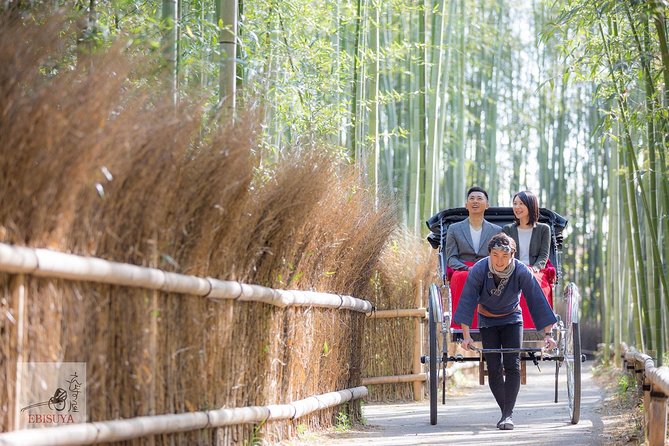
- Early start strategy to reduce crowd pressure before the bamboo lanes fill in.
- Private group (not a big cattle-car tour), with customization based on your chosen duration.
- Photo-first guidance, with some guides using iPhone coaching or direct photo help.
- Best-access on foot time, including a steep slope to reach parts rickshaws can’t enter.
- Cultural add-ons in the bamboo area like Nonomiya Shrine and a haiku poet cottage with a thatched roof.
- Value that includes gratuities and all fees and taxes, not just the ride.
Why a Rickshaw Works So Well in Arashiyama
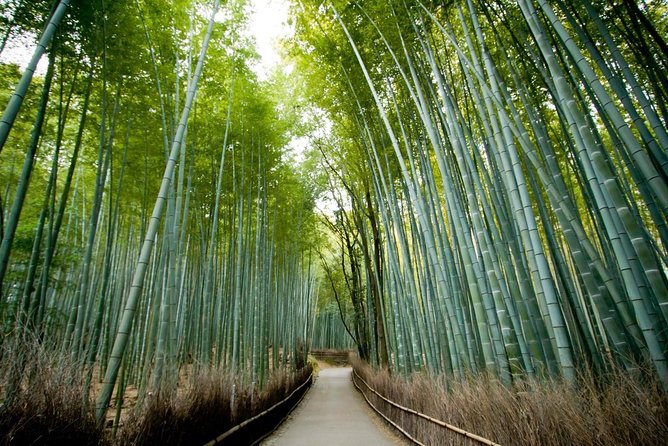
Arashiyama’s bamboo forest is one of those places where crowds can flatten the experience fast. This tour’s main trick is simple: you’re not starting when everyone else is. Going early gives you a better shot at softer light and calmer paths, so the bamboo feels like bamboo instead of a theme park line.
A rickshaw also changes the vibe. You’re not hiking the whole area with neck-craning, crowd-juking energy. Instead, you ride while your guide steers you through the rickshaw-access paths, then you step out when the route gets best on foot.
And yes, it’s still Kyoto. The bamboo is the headline, but the tour doesn’t stop at bamboo photos. You get bamboo + shrine + a traditional haiku poet cottage, which makes the time feel more layered than a straight ride-and-leave.
You can also read our reviews of more tours and experiences in Kyoto.



The Early Morning Plan: Be There Before the Bamboo Swarm
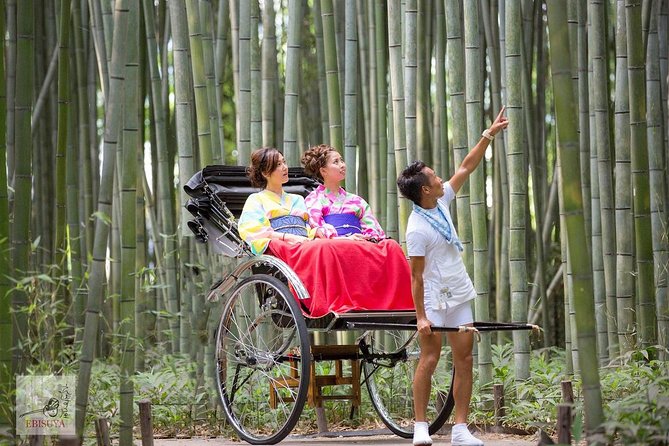
This tour explicitly works best when you start early. The forest gets busy, and your time at the most iconic sections is where the morning payoff matters most. Your guide will aim you toward good access points first, then you’ll get short stops for pictures along the way.
Even the timing of the on-foot portion matters. The tour includes a walk to the most famous bamboo area that can’t be reached by rickshaw, and that segment tends to be the most “you are now actually in it” moment. Starting earlier helps you feel less rushed and more able to take your time on photos.
One practical note: the tour runs rain or shine. If weather shifts, you’ll still be out there, so pack for wet conditions and bring shoes with solid grip for the uneven, sloped walk.
Ride the Bamboo Forest Streets in “Guided Flow”
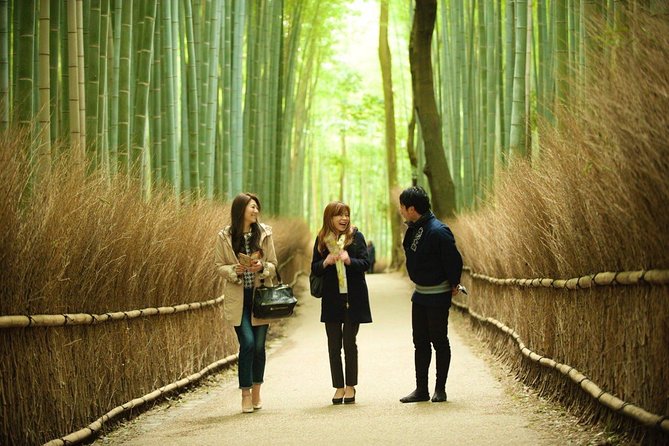
The rickshaw portion is not a long, one-note sprint. You’ll be pulled along paths reserved for rickshaws through the bamboo, then you’ll get off at key points for pictures and cultural stops.
What makes this feel good in practice is that your guide manages pacing. There’s a built-in rhythm: ride through bamboo lanes, stop for short photo breaks, then walk where walking gives you better access. That “mix” is why so many people call it a must-do rather than just a novelty ride.
Also, this isn’t a generic script. Multiple guides (including names like Utay, Hikaru, and Shota) are praised for being fun and for giving context while you’re moving. You’re not just staring up at bamboo; you’re getting enough explanation to understand what you’re seeing.
And because it’s private, you can shape it. The tour is described as customizable, and what you add or emphasize can depend on the duration you choose.
Stop One: The Walk to the Bamboo Part Rickshaws Can’t Reach
This is the segment that helps the tour feel worth it. You start at Bamboo Forest Street, then you get off the rickshaw to walk to the most famous bamboo section that can’t be accessed by rickshaw.
The walk is described as including going up and down a steep slope, and that’s real enough that it should affect your decision if your group has mobility concerns. Even if you’re generally fine walking, it’s not a flat stroll, so wear supportive shoes.
The reward is that you’re getting a different perspective than you do from inside the rickshaw lane network. Once you’re on foot, you’re closer to the bamboo, and it’s easier to step out of the flow for photos when the angle is right.
Admission here is listed as ticket free for the walk segment, which matters because it keeps your total out-of-pocket costs more predictable. Still, keep an eye on shrine/temple fees during other parts of the route, since those are not included.
Nonomiya Shrine and Bamboo-Quiet Photo Moments
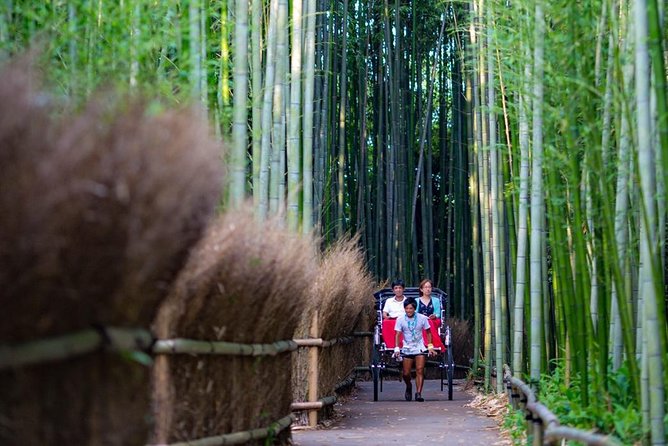
Inside the bamboo, you’ll pass a Shinto shrine area, with Nonomiya Shrine specifically called out as part of the experience. This is one of those good “pause” moments where the bamboo frames the scene without feeling like you’re stuck in a photo line.
In practice, shrine stops work well on this tour because you’re already in the right mood. You’re not rushing across town just to tick a box. You’ve just ridden through bamboo and now you’re taking a short break that ties the scenery to local life and tradition.
You’ll also have a small park stop for photos. It’s short, but these little pauses are valuable because they help your group reset without losing the bamboo rhythm.
If your priority is photos, this is also where you benefit from having a guide willing to help. People mention guides taking or coaching photos, including panorama-style tips, which can save time when you want the best angle without fiddling with settings for too long.

Bamboo Forest Street Photos: Ride, Then Snapshot Again
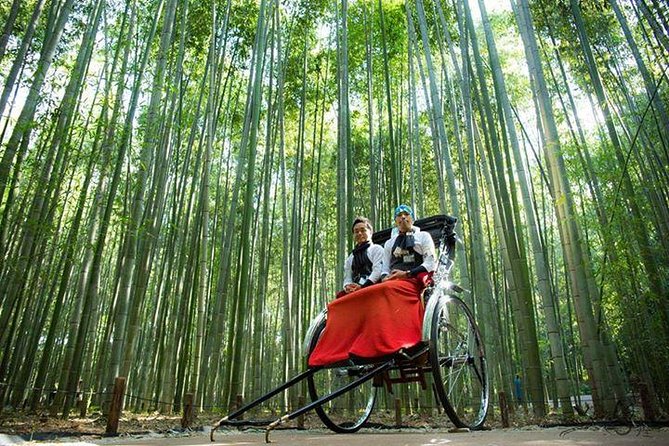
After the main on-foot segment, you return to Bamboo Forest Street for more bamboo time, including passing through the grove for pictures. This is the “see it again, but from a new vantage” part of the tour.
A subtle benefit: by the time you’re on this section, you’ve likely already done the steep walking moment. So this portion feels lighter and more like a photo stroll than an effort.
The tour is short—around 1 to 2 hours total—so these photo breaks tend to be efficient. You’re not wandering for ages with no structure, which is great if you’re only in Kyoto for a few days and want your time to count.
One expectation to set: bamboo can be crowded. The tour helps you beat the worst of it with an early start, but the forest is famous, and paths may still have other people. The goal is not total solitude; it’s a calmer, more photogenic experience.
Haiku Poet Cottage: Traditional Thatched-Roof Charm
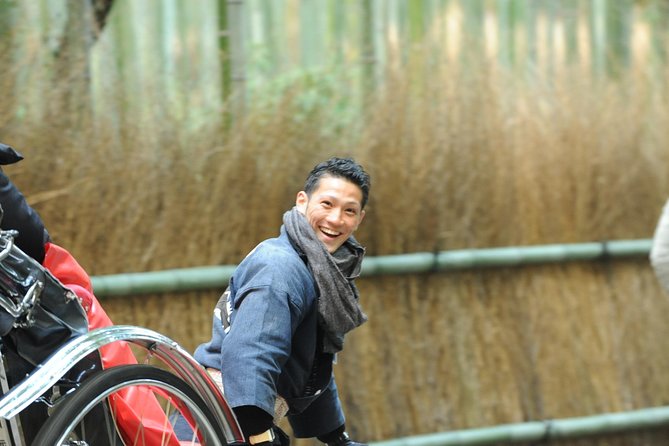
The bamboo forest tour doesn’t end at bamboo. You’ll also be shown the cottage of a famous haiku poet, built in a traditional pastoral style with a straw thatched roof.
This stop is valuable because it shifts the focus from scenery to culture and craft. The look is distinctly Japanese and adds variety to your photo set. Instead of only vertical bamboo shots, you get something with texture—wood, thatch, and a more human scale.
It’s also a reminder that Arashiyama isn’t only about one famous walking lane. It’s a layered area with literature, religion, and everyday village details tucked into the same neighborhood.
If you’re the type who likes to understand why places look the way they do, this kind of stop helps you connect the bamboo experience to the broader Kyoto atmosphere.
Private Group Comfort: Seating, Shade, and How the Tour Feels
Comfort matters in a bamboo forest tour. This rickshaw has specific seat dimensions: 74 cm (29.1 in) width, and it can accommodate up to two adults side by side. That matters if you’re booking with another couple, siblings, or friends and you’re trying to guess how snug it might feel.
The good news is that the rickshaw offers shade. One review notes that on hot days, the setup includes shade and even a cold towel, which is exactly what you want when Arashiyama heat shows up. You should still bring water, but it’s nice when the tour anticipates real weather needs.
As for children: if your child is 6 years or older, they need their own seat and pay the same as an adult. Children 5 and under can ride for free if they sit on an adult’s lap (up to one child per adult, max two children per rickshaw). If a child 5 years is using one of the two seats, they must book as an adult.
If you’re traveling as a small family, this setup can be a big win. You’re not stuck doing a long walking tour with a stroller problem, and you still get time off the rickshaw when it counts most.
Price and Value: What $86.88 Buys You Here
At $86.88 per person, this tour is priced like an activity, not like a simple museum ticket. The value comes from what’s included: the rickshaw, all fees and taxes, and gratuities.
That bundled approach matters. Kyoto can nickel-and-dime you if you’re stacking multiple paid entries and transport costs. Here, you’re paying for the main experience cleanly, and only needing to plan for any temple or shrine admission fees that apply.
The short duration is another value factor. If you have limited time in Kyoto, a 1 to 2 hour experience can be easier to plug into a day than a half-day walking tour. You also get guidance and photo help, which is often the part people struggle to do on their own.
The top-rated factor is the guide experience. Many high scores mention guides like Ocean and Kei taking great photos and keeping the pace just right. That kind of “you’re not lost, you’re not waiting” effect is hard to price until you try it.
Practical Tips So Your Tour Goes Smoothly
Here are the things that most help your day feel effortless:
- Plan on getting to the meeting point with a buffer. Being 10 minutes late or more results in automatic cancellation, and your late time is deducted from the tour duration.
- Wear shoes for slopes. That steep walking segment is short but not flat.
- If you care about photos, tell your guide what you want. Some guides will take photos directly, and some provide panorama coaching. You’ll get better results faster if you ask for what you mean.
- Bring a light layer. Bamboo forest mornings can feel cool, and later you may heat up fast.
- If you’re traveling during very hot weather, expect shade from the rickshaw and possibly cooling support like cold towels, based on guide practices mentioned in feedback.
Also, the tour uses a mobile ticket. If you hate scrambling for paper, this is a plus. It’s also described as near public transportation, so you’re not locked into a taxi-only day.
Who Should Book (and Who Might Skip)
This tour fits best if you want Arashiyama’s bamboo without turning it into an all-day grind. It’s great for couples, small groups, and families who want comfort but still want the iconic on-foot access.
It’s especially good if you value photos and want help from someone who knows where to stand and when. The repeated praise for guide-led photo work and English communication shows that this is built for people who want both scenery and usable pictures.
Skip it or think twice if any of these apply:
- You’re in the first 16 weeks of pregnancy. It’s noted as not recommended for that period.
- Your group struggles with steep slopes. The on-foot segment includes up-and-down steepness.
- You strongly dislike the idea of watching rickshaw pullers working hard in heat. One review mentions feeling conflicted on an extremely hot day, even while the guides were clearly professional.
If none of that applies, you’ll likely appreciate the mix of bamboo, shrine time, and that thatched-roof cultural stop in a short, guided package.
Should You Book the Kyoto Arashiyama Rickshaw Tour with Bamboo Forest?
I’d book this if your Kyoto plan includes Arashiyama and you want a smarter way to experience it fast. The early timing, the private setup, and the photo help are the big selling points. You’re also getting more than a ride: shrine time and the haiku poet cottage add real character beyond bamboo selfies.
I’d hesitate if your group is mainly looking for a fully flat stroll or if you want total crowd-free silence. Bamboo is famous, and even with the early strategy, you’re still in a well-known area.
If you want the best mix of comfort, access, and guided storytelling in roughly an hour or two, this tour is a strong bet.
FAQ
How long is the Kyoto Arashiyama Rickshaw Tour?
The tour is approximately 1 to 2 hours total, with parts of it done by rickshaw and parts on foot.
What is included in the tour price?
The price includes use of the rickshaw, all fees and taxes, and gratuities.
Are temple and shrine admission fees included?
No. Admission fees for temples and shrines are not included.
Where is the meeting point?
The meeting point is 1-1 Sagatenryūji Susukinobabachō, Ukyo Ward, Kyoto, 616-8385, Japan, and the ending location can be customized.
Do tours run in bad weather?
Yes. Tours take place rain or shine.
Can children ride, and do they pay the same price?
Children 6 years and older must have a seat and pay the same price as an adult. Children 5 years and under can ride for free if they sit on an adult’s lap (one child per adult, max two children per rickshaw). If a child 5 years uses a seat, they must book as an adult.