REVIEW · KYOTO
Kyoto: Authentic Tea Ceremony in a Small Group
Book on Viator →Operated by Tea ceremony The KYOTO · Bookable on Viator
Tea calms everything in Kyoto. This small-group chanoyu in Uzumasa trades street noise for a quiet tea room with a garden view.
You get top-quality matcha and traditional sweets, served in a setting that feels carefully designed for slow attention. There’s also a real cultural lesson built into the flow, not just a sip-and-smile.
Two things I really like: the pairing of Kyoto wagashi with Marukyu Koyamaen matcha, and the fact that you whisk your own bowl. In the reviews, people kept pointing out how delicious the matcha was and how the utensils looked beyond what they expected.
One possible drawback to know: the whole experience is about 1 hour. If you’re hoping for a long, leisurely tea day (or multiple rounds), this format may feel a bit fast, even though it’s designed to feel complete.
In This Review
- Key highlights you’ll care about
- Chanoyu The KYOTO Uzumasa: the setting that makes you slow down
- The small-group flow: from haori to Urasenke and your own whisking
- The matcha and wagashi pairing that people actually rave about
- Utensils, etiquette, and the meaning behind chado
- Price and value at $586.38 per group (up to 6)
- Who should book this tea ceremony, and who might want a different one
- Practical tips for a smoother experience
- Should you book Chanoyu The KYOTO Uzumasa?
- FAQ
- How long is the Kyoto tea ceremony?
- Is this a private experience?
- How many people can be in a group?
- What’s included in the experience?
- What should I expect to do during the ceremony?
- Where is the meeting point?
- Is transportation included?
- Will I receive confirmation and a ticket?
- What is the cancellation policy?
Key highlights you’ll care about
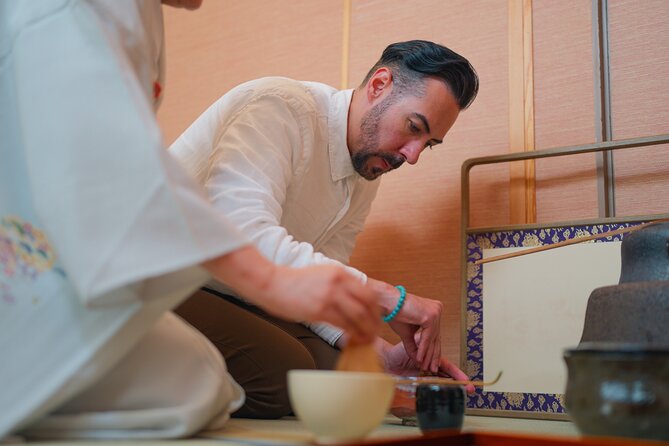
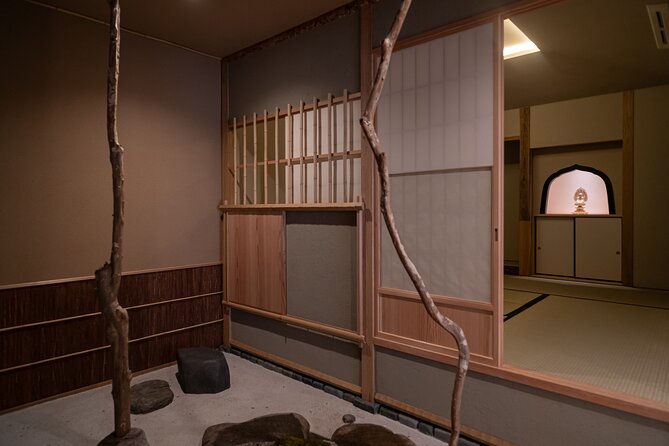
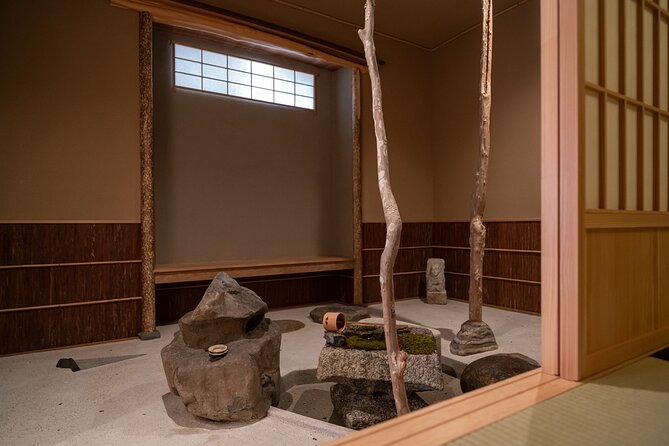
- Uzumasa tea room setting: Heian-period style atmosphere, plus a meticulously designed garden you’ll appreciate right from the tea room.
- You wear a haori: A traditional kimono-style jacket makes the experience feel immediate, not staged.
- Urasenke procedure, explained simply: You’ll observe the steps and also get context for what you’re seeing.
- You whisk your own matcha: Not just watching—using the utensils and making it part of the experience.
- High-quality pairing: Kyoto sweets from a long-established wagashi shop matched with Marukyu Koyamaen matcha.
- Private group experience (up to 6): Your group stays together, which helps you actually take your time.
Chanoyu The KYOTO Uzumasa: the setting that makes you slow down
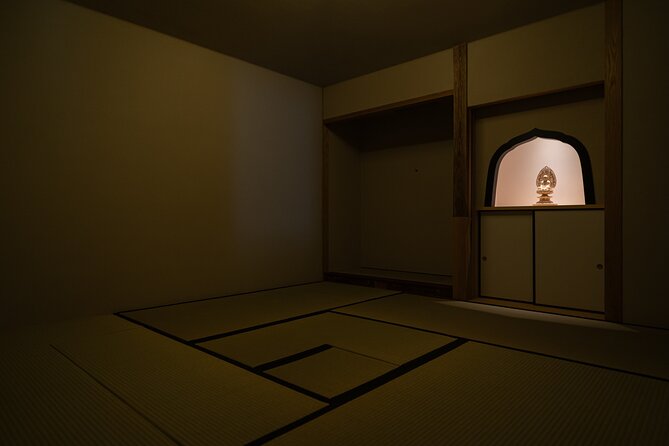
This isn’t a tea ceremony in a loud storefront. The experience happens in a tea room within Chanoyu The KYOTO Uzumasa, tucked into the historic district of Uzumasa. The whole point is to feel like you stepped out of modern Kyoto for a short while.
When you arrive, you’ll be guided into a stylish interior that leads you to a garden view. What impressed me in the description is that the garden isn’t just outside. It’s treated as part of the tea room experience, so you can enjoy the seasonal look in the same space where you’ll sit for the ceremony.
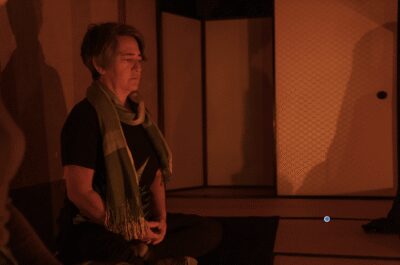
And yes, the vibe is deliberately calm. The reviews keep echoing that feeling—people mention the refined, elegant atmosphere and the sense of commitment to the space. That matters because tea ceremony etiquette is subtle. If the room is chaotic, it’s hard to pay attention to the gestures and utensils.
You can also read our reviews of more tours and experiences in Kyoto.



The small-group flow: from haori to Urasenke and your own whisking
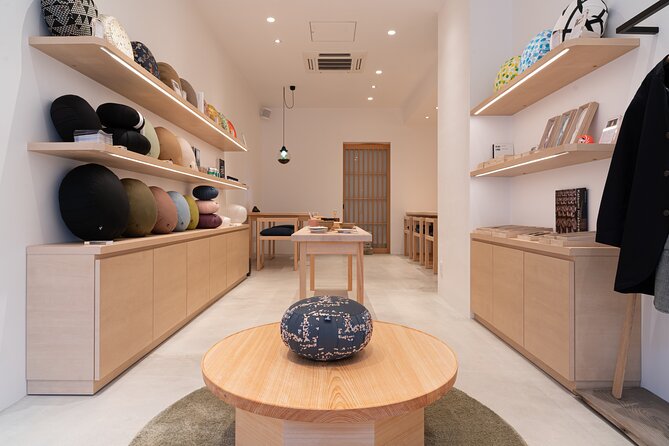
This experience is designed as a guided sequence, so even first-timers aren’t left guessing what to do. Your session runs about 1 hour, and it moves in clear steps.
First, you put on a haori, a traditional kimono-style jacket. It’s not just costume. It helps you settle into the right mindset, the way uniforms help you focus in other cultures and craft traditions.
Next comes the garden moment. You’ll be invited to appreciate the meticulously arranged traditional garden in connection with the tea room setting. This is a smart warm-up: you’re not rushed into the tools right away. You get a quiet minute to orient yourself.
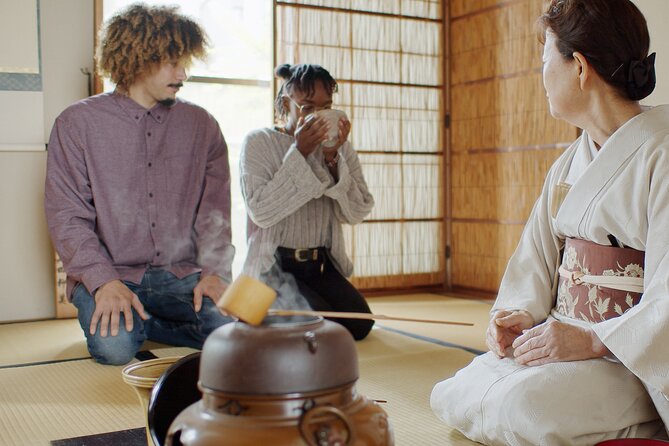
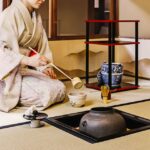
Then you’ll observe the Urasenke tea procedure. While you watch, you’ll also get explanations that connect the motion to the meaning. That’s one of the best parts for me. Instead of memorizing steps, you understand what each moment is meant to communicate.
After that, you’ll learn about the history and culture behind chanoyu and the utensils used in the ceremony. One reviewer mentioned being impressed by tea tools beyond their imagination. That’s believable, because tea ceremony utensils are often beautiful and oddly specific—there’s a reason for their shapes and functions.
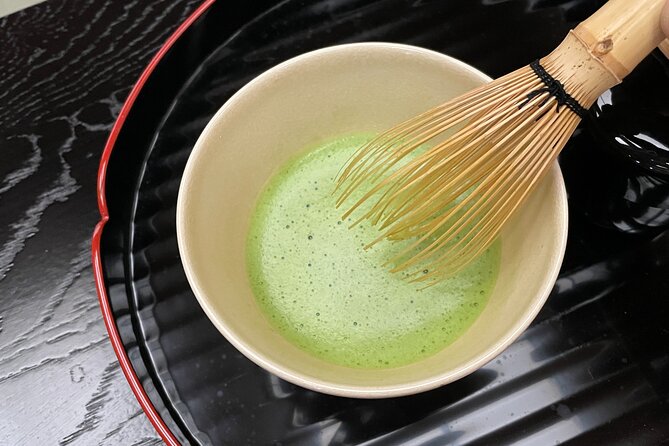
Finally, you whisk your own bowl of matcha, and you enjoy it together with a second traditional sweet. This is where the experience becomes yours. Watching is nice, but whisking is where you start remembering the process by muscle memory.
The matcha and wagashi pairing that people actually rave about
Tea ceremonies can become a blur if the food and drink are average. Here, the focus is explicitly on quality, and that shows up in what people call out.
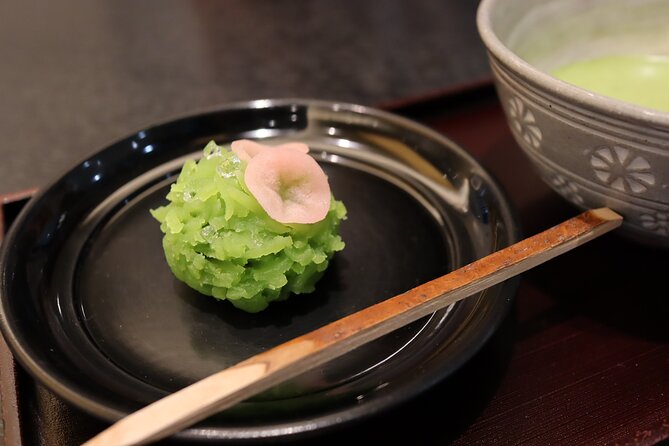
You’ll enjoy exquisite Japanese sweets (kyoto wagashi) and the finest matcha. The matcha is from Marukyu Koyamaen, a named brand rather than a vague “high-grade” claim. On the sweets side, you’ll be served confections from a long-established Kyoto wagashi shop, and those two elements are paired thoughtfully.
In the reviews, the matcha gets special attention. People describe it as the best they’ve had, including one comment about matcha being something they hadn’t tasted before. That tracks with how matcha experiences feel when you go from novelty to real quality: the taste and texture are different, not just “stronger.”
You also won’t just get one sweet. You’ll enjoy the first traditional sweet with the tea flow, then the second sweet alongside the matcha you whisk yourself. That structure helps you notice how the sweetness complements the matcha instead of treating food as an afterthought.
If you care about value, this matters. At a certain point, a tea ceremony is only as good as the tea. This one is built around named, quality ingredients.
Utensils, etiquette, and the meaning behind chado
A good tea ceremony isn’t only about making matcha. It’s about learning how to behave, how to notice, and how to treat hospitality like an art.
In this experience, you’ll get a brief explanation of the history and culture behind chanoyu and the utensils. You’ll also learn the meaning behind the utensils rather than being handed a list and told to follow it.
You’ll also be taught the general idea of chado, often described as the Way of Tea and linked directly to Japanese hospitality. The ceremony becomes a lesson in attention: the pace, the gestures, the way the room invites quiet.
One review described the host’s polite, kind explanation and said it helped them understand the depth of Japanese culture. That’s the practical payoff you want. If it makes sense while you’re there, you’ll remember it later when you see tea tools in shops or try matcha elsewhere.
Also, don’t underestimate how much the utensil explanations change first-timers’ comfort. When you know what you’re holding and why, you stop feeling like you’re doing it wrong. You just participate.
Price and value at $586.38 per group (up to 6)
The price is $586.38 per group for up to 6 people. That means your cost per person depends entirely on how many seats you fill.
- If you have 6 people, it’s about $97.73 per person.
- If you have 2 people, it’s about $293.19 per person.
So this is best when you’re traveling as a small group—family, friends, or a couple plus one other pair. It also makes sense if you want a private experience rather than joining a larger schedule with strangers.
What you get in return is unusually complete for an hour: haori dressing, garden viewing within the tea space, observation of the Urasenke procedure, utensil introductions, history and culture context, and the active part—whisking your own matcha. You also receive Kyoto sweets and matcha as part of the session, so you’re not hunting for snacks afterward.
Transportation isn’t included. You’ll meet at Chanoyu The KYOTO Uzumasa and head back there afterward. Because the location is near public transportation, it’s easier than some tucked-away experiences, but you should still plan how you’ll get there from your day’s activities.

Who should book this tea ceremony, and who might want a different one
This is a great match if:
- You want a high-quality matcha experience paired with Kyoto wagashi.
- You’re curious about chanoyu but don’t want to get lost in technical detail.
- You like structured cultural activities that still leave room to slow down.
- You’re traveling with a small group and value a private setting.
It may not be the best fit if:
- You’re looking for a longer class with repeated tastings or multiple rounds. This runs about 1 hour.
- You prefer an experience that is mostly sightseeing. This is about sitting, observing, and participating.
If it helps, the reviews repeatedly mention that the room feels refined and special, and that people left with a stronger understanding of Japanese culture. If you want that “I learned something real” feeling without a full afternoon commitment, this fits.
Practical tips for a smoother experience
Here’s how to set yourself up for a better tea ceremony hour:
- Arrive with a calm schedule. The experience is short, and the room runs on quiet pacing.
- Let the haori and gestures guide you. You’re not expected to know everything. Just follow the flow and focus on what you’re doing.
- Watch the utensil explanations closely. Matcha whisking is much easier when you understand the tool names and the purpose behind them.
- Treat the garden moment seriously. The experience uses that view as a settling step, not a background decoration.
- Plan for returning to the meeting point. The activity ends back where it starts, so you can build your next stop around that.
If you’re the type who likes tiny details—utensil shapes, the feel of the tools, the reason for each step—this is your hour.
Should you book Chanoyu The KYOTO Uzumasa?
I’d book it if you want a genuine-feeling tea ceremony experience with clear guidance, quality matcha, and Kyoto sweets—plus the chance to whisk your own bowl. The private group format (up to 6) also makes the hour feel personal, not rushed.
Skip it only if you know you’ll be impatient with a sitting, mindful activity, or if you want something longer and more expansive than a 1-hour session.
If you’re already doing the Kyoto classics—temples, gardens, neighborhoods—this gives you a different kind of culture: hospitality you can taste and a craft you can actually participate in.
FAQ
How long is the Kyoto tea ceremony?
The experience is about 1 hour.
Is this a private experience?
Yes. It’s a private tour/activity, and only your group participates.
How many people can be in a group?
The price is per group up to 6.
What’s included in the experience?
You’ll get Kyoto sweets and matcha, viewing of a miniature garden, wearing a traditional haori, an introduction to the tea utensils used in the ceremony, and a brief explanation of the history and cultural origins of chanoyu.
What should I expect to do during the ceremony?
You’ll appreciate the traditional garden, observe the Urasenke tea procedure, learn about chanoyu and utensils, wear a haori, then whisk your own bowl of matcha and enjoy it with a second traditional sweet.
Where is the meeting point?
Chanoyu The KYOTO Uzumasa (TEA CEREMONY), Kyoto, Ukyo Ward, Uzumasa Izumishikibuchō, 19 北1階, 616-8101 Kyoto, Japan.
Is transportation included?
No. Private transportation isn’t included.
Will I receive confirmation and a ticket?
You’ll receive confirmation at the time of booking, and the experience uses a mobile ticket.
What is the cancellation policy?
Free cancellation is available. You can cancel up to 24 hours in advance for a full refund. If you cancel less than 24 hours before the start time, the amount paid isn’t refunded.