REVIEW · KYOTO
Kyoto: Historic Higashiyama Walking Tour
Book on GetYourGuide →Operated by Pinpoint Traveler · Bookable on GetYourGuide
Four hours can feel like a week in Kyoto. This small-group walk strings together Fushimi Inari Taisha and Kiyomizu-dera with guide stories that make the sights easier to understand and more fun to photograph. I also like how the pace lets you spend real time in the key places instead of rushing through everything with a crowd stampede.
One thing to consider: there is some uphill walking, and it is not set up for people with mobility impairments. The good news is that guides can adapt in the moment, and I’ve seen examples like Hugo meeting the group despite delays, or Damian adjusting when heat and steps got tough.
In This Review
- Key highlights worth your attention
- Higashiyama in four hours: why this route makes sense
- Starting at Inari Station: the easiest meeting plan
- Fushimi Inari Taisha torii gates: more than a photo line
- The short jump to Gion: geisha-quarter stories in real streets
- Kōdaiji Temple: gardens, bamboo, and a calm reset (admission included)
- Sannenzaka backstreets: where shopping feels like part of the walk
- Kiyomizu-dera and the Otowa Waterfall: views plus a ritual
- Price and value: why $106 can be a smart deal
- Pacing, small groups, and comfort on the hills
- Who should book this Kyoto Higashiyama tour
- Should you book it? My honest take
- FAQ
- Where is the meeting point?
- How long is the tour?
- What’s included in the ticket price?
- What is not included?
- Is there an option for multiple languages?
- How big is the group?
- Is there any walking difficulty?
- Is the tour suitable for mobility impairments?
- Are there restrictions on luggage?
- Can I cancel for a refund?
Key highlights worth your attention
- Fushimi Inari Taisha with a guide: Walk the vermilion torii gates and get the culture behind what you’re seeing.
- Gion without the guesswork: A short transfer from Fushimi Inari, then guided time in the geisha entertainment quarter.
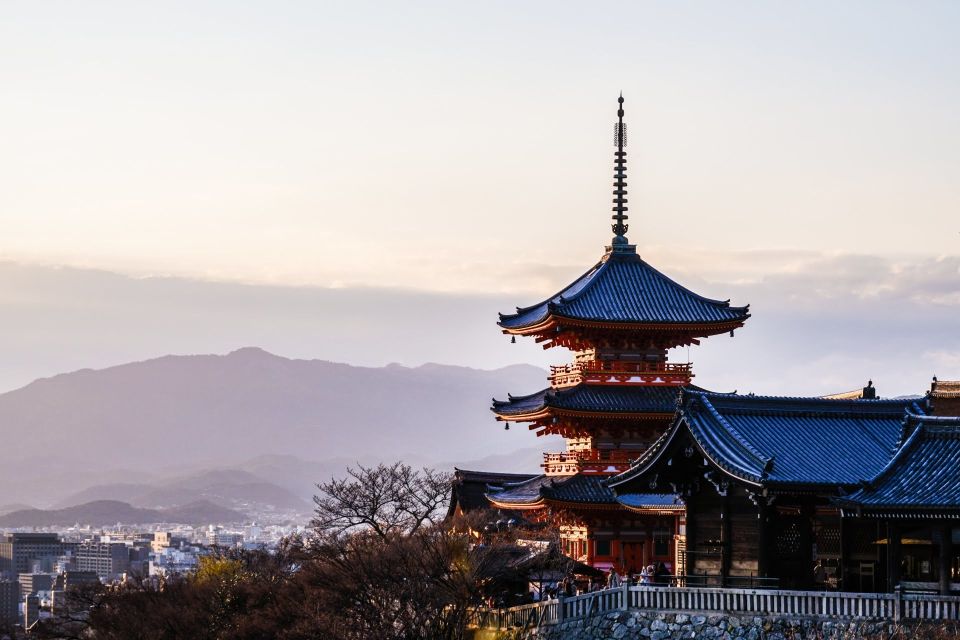
- Kōdaiji Temple serenity (admission included): Gardens and a bamboo grove moment that slows your feet down.
- Sannenzaka backstreets: Opportunity for snacks and souvenirs while you move toward the big viewpoint.
- Kiyomizu-dera with the Otowa Waterfall ritual (admission included): Learn the 3-stream idea and what it means for wishes.
Higashiyama in four hours: why this route makes sense
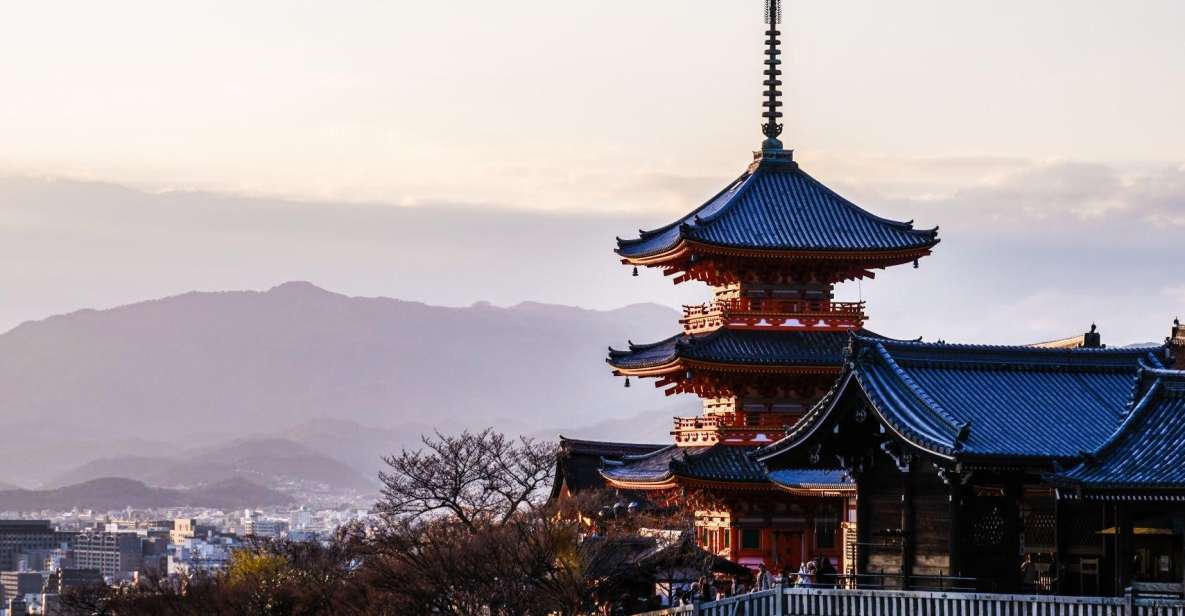
Higashiyama is Kyoto’s classic “walk it and feel it” district. The name literally points to the east mountain area, and that’s exactly the vibe you get: temples, old lanes, and those dramatic hillside views as you move toward Kiyomizu-dera.
This tour is built like a sampler, not a marathon. In about four hours, you get the big iconic anchors (Fushimi Inari, Kiyomizu-dera) plus the in-between textures (Gion streets, Sannenzaka slopes, side lanes). That mix matters. If you only do the famous places, you miss why Kyoto feels lived-in; if you only chase backstreets, you can end up without the skyline moments.
I like the flow here because it groups the day’s emotional beats. You start with a spiritual spectacle, shift into a neighborhood with stories of entertainment and custom, then land on temple gardens and finally the viewpoint that makes you pause and look around.
You can also read our reviews of more walking tours in Kyoto


Starting at Inari Station: the easiest meeting plan
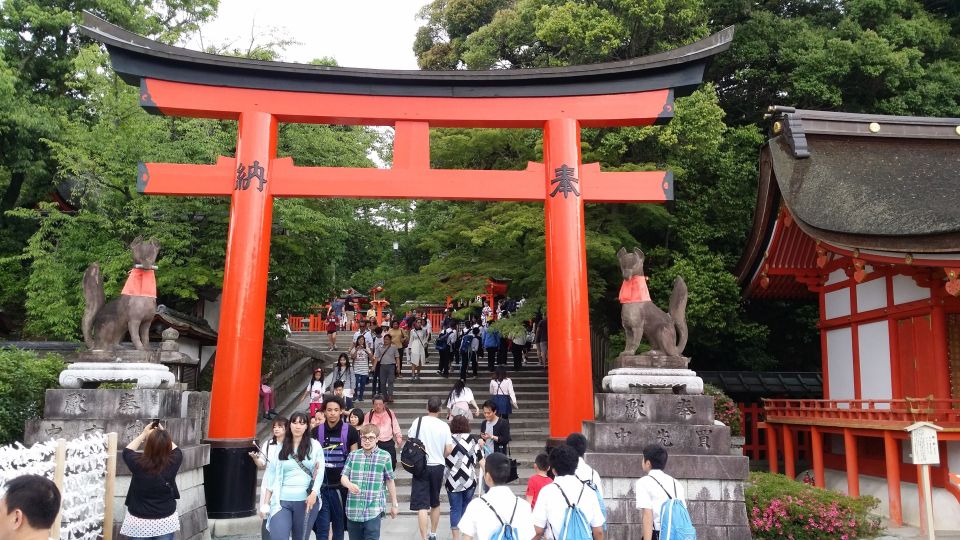
The meeting point is just outside the fare gates of JR Inari Station. If you’re coming from another part of Kyoto, using the Keihan line and walking a few minutes to JR Inari can be a simple way to connect.
This matters because “where do we meet” can ruin the start of a day. A clear meeting point near transit helps you stay calm, especially if you arrive hungry or slightly early (Kyoto rewards good timing). Also, the group size is limited to 10 people, so the meeting is usually manageable and the guide can keep tabs on everyone.
Plan to show up with comfortable shoes already on. You don’t want to spend your first ten minutes adjusting laces while everyone else heads toward torii gates.
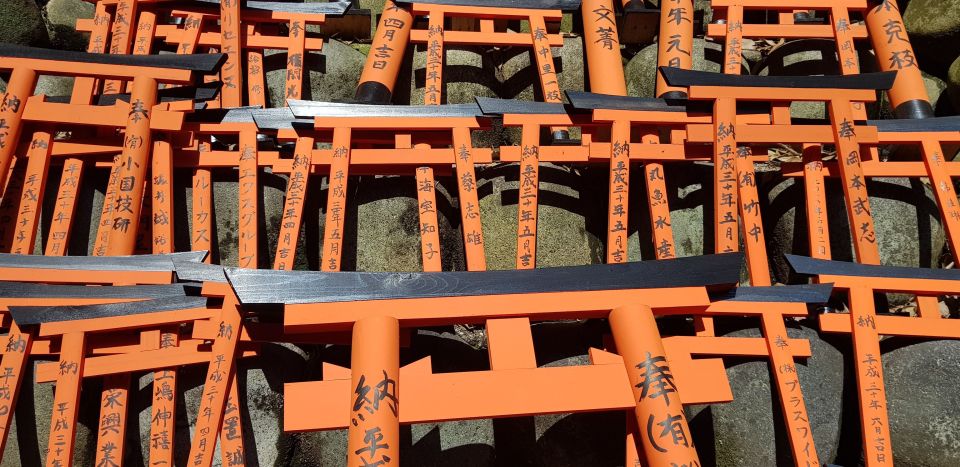
Fushimi Inari Taisha torii gates: more than a photo line
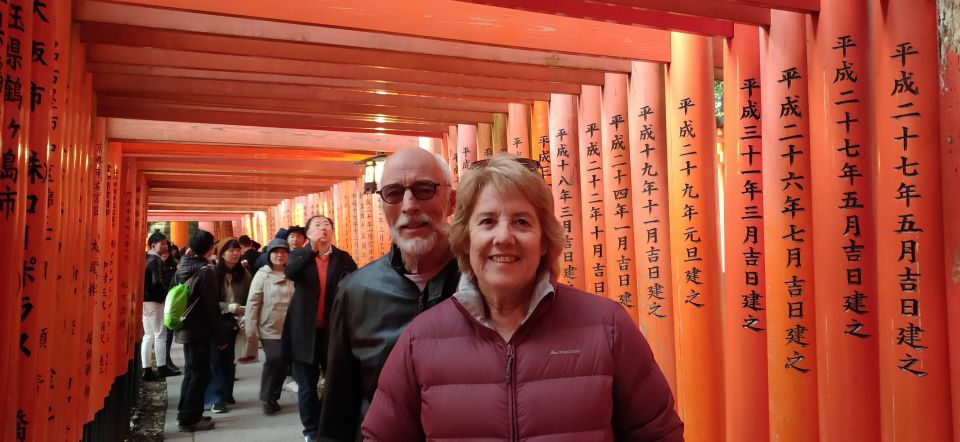
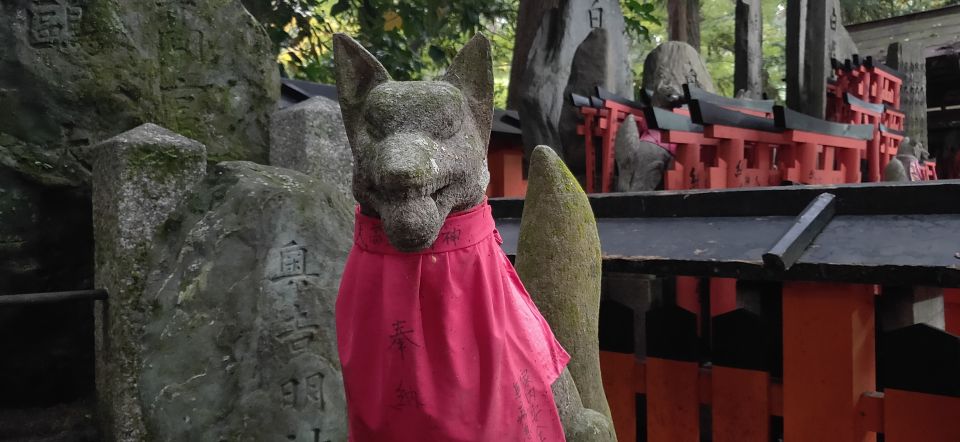
Fushimi Inari Taisha is famous for a reason: those vermilion torii gates march up the hillside like a ritual you can walk through. With a guide, the experience becomes clearer. Instead of treating every turn like a random picture opportunity, you learn what you’re looking at and why it matters in Shinto tradition and practice.
The tour gives you time for the shrine experience and the iconic Senbontorii section. Even if you don’t walk all the way up to the highest points, you still get the best feeling: the corridor effect of gates, the changing angles as the path climbs, and that slightly mystical atmosphere people chase when they visit.
A practical tip: this is where your legs start to warm up. The day includes some uphill walking, and Fushimi Inari is one of the spots that sets the tone for the rest of Higashiyama.
The short jump to Gion: geisha-quarter stories in real streets
After Fushimi Inari, you take a short train ride to Gion. That keeps your time efficient, and you avoid turning the day into a long transit shuffle. Once you arrive, you get a guided stroll in the entertainment quarter.
Gion is active. It’s not a museum lane where everything feels frozen in time. Even in a short guided segment, you can pick up why this district still functions in modern Kyoto, and why people connect it to geisha culture, old customs, and evening life.
I like that you’re not left to piece it together alone. When a guide like Damian brings in context about Japanese history and customs, the neighborhood streets feel less like scenery and more like a place with meaning. If you have kids or teens, guides can also keep things engaging; I’ve seen examples where Lito involved younger visitors with stories and traditional rituals.
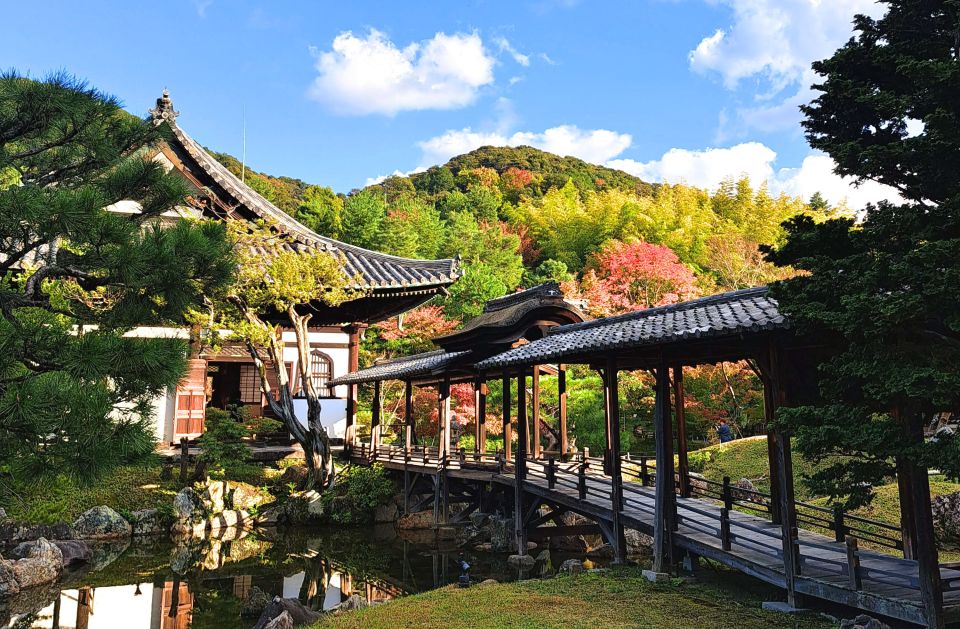
Kōdaiji Temple: gardens, bamboo, and a calm reset (admission included)
Then comes a welcome change of pace: Kōdaiji Temple. This is one of the “stop walking for a minute” stops. The tour includes admission, so you can step in without fuss and focus on the space.
The standout here is the serenity. Kōdaiji is known for its gardens and a bamboo grove, and that combination does something your feet will notice. Even with a small group, you tend to spread out a little, and the place invites slower observation instead of constant photo-taking.
From a value perspective, this stop is one of the reasons the tour feels worth the money. Admission for Kōdaiji is included, and you get guided time to interpret what you’re seeing. Instead of just looking at plants and structures, you learn how the space fits together.
If you’re visiting in hotter months, consider that the day includes hills earlier. Having a quieter garden stop later gives your energy a place to recover.
You can also read our reviews of more historical tours in Kyoto


Sannenzaka backstreets: where shopping feels like part of the walk
Between the big temples, you get to enjoy the in-between lanes. Sannenzaka and surrounding backstreets are where Higashiyama turns into that old-street Kyoto feeling people come for.
This is also where you can grab snacks or souvenirs. The tour encourages you to take your time here because it’s not only about buying things; it’s about walking the slope, watching everyday life, and getting the texture of the district as you move toward Kiyomizu-dera.
If you’ve been to Japan before, you know how easy it is to miss tiny details when you’re focused on the next attraction. Here, the backstreets help you slow down just enough to notice materials, architecture, and the simple rhythm of a neighborhood.
If you’re sensitive to crowds, small-group routing can help. In a few cases, guides have guided people through off-path spots and quieter angles, making it easier to get photos without feeling glued to other tourists.
Kiyomizu-dera and the Otowa Waterfall: views plus a ritual
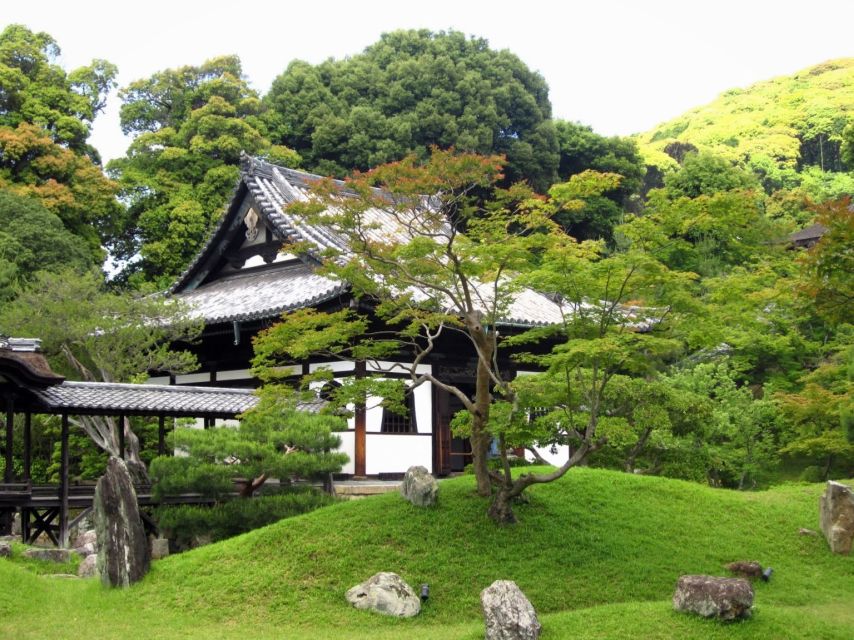
Kiyomizu-dera is the finale, and it’s a strong one. Admission is included, so once you arrive, it’s all about temple time and viewpoint time. The main pull is the panorama of Kyoto, and the fact that the temple is linked to a specific water ritual.
The famous clear, pure water flows from the mountains into the Otowa Waterfall. You can sample the water yourself if you want, and you’ll hear the traditional idea: the three divided streams are associated with health, wealth, or happiness. There’s also a warning for the greedy—if you go in thinking only about getting everything, the ritual says your wishes won’t come true.
That’s where the guide adds value. Instead of you reading a sign and moving on, you get the meaning and the story behind it. Then you can decide for yourself whether you want to take part in the ritual.
Once the guided portion at Kiyomizu-dera wraps up, you’re free to linger and explore the area at your own pace. This matters because Kiyomizu-dera rewards extra minutes. You’ll want time to look back over the city and catch different angles as the light shifts.
Price and value: why $106 can be a smart deal
At $106 per person for a 4-hour experience, the price isn’t low. But for Kyoto, it often lands in the fair-to-good value range because several major costs are bundled.
You get:
- Guided time at top-tier sights
- Admission for Kōdaiji Temple
- Admission for Kiyomizu-dera
- A train ticket from Fushimi Inari to Gion
That combination helps you compare apples to apples against doing it all alone. If you’re paying guide fees plus separate admissions plus transit tickets, the total can climb quickly—especially when you’re moving between districts.
What’s not included is food and drinks. This doesn’t hurt the value; it just means you should plan to eat or snack on the way, especially during the Sannenzaka portion where you’ll naturally find options.
Pacing, small groups, and comfort on the hills
This is a walking tour, so it’s not for everyone. It includes some uphill walking, but it’s described as nothing exceptionally steep or demanding. Still, “not exceptionally steep” is not the same as “flat,” so if you have knee issues or you know you’re sensitive to stairs, think carefully.
The group size is limited to 10 participants, which is a big practical advantage in Kyoto. It’s easier to keep up, easier for the guide to manage the pace, and easier to ask questions. In at least a few cases, guides have adjusted based on heat and tiredness, which is exactly how good guiding should work. Examples include Damian adapting when humidity and steps became a lot, and Hugo working with a delayed group start.
Languages are offered in French, Hebrew, Spanish, and English. If you’re traveling with friends who want different language support, this is a helpful option.
Also: luggage or large bags are not allowed. If you’re carrying a big suitcase or multiple day bags, you’ll want to plan storage ahead of time.
Who should book this Kyoto Higashiyama tour
I’d strongly consider booking if you want:
- A structured “greatest hits” day in Higashiyama
- Guided context at Fushimi Inari, Kōdaiji, and Kiyomizu-dera
- A small group size instead of a huge crowd funnel
- Help navigating between key districts, including the train hop to Gion
It may not be the right fit if you:
- Need mobility-accessible routes
- Don’t handle uphill walking well
- Prefer fully independent temple time with no scheduled guide segments
If you’re traveling with kids or teens, it can work well when the guide turns rituals and stories into something the group can follow. I’ve seen examples of Lito engaging younger visitors and getting them curious about wishes and traditional practices.
If you’re a first-time Kyoto visitor, this is a smart way to get oriented fast. If you’ve been before, you can still appreciate the guide’s explanations and the emphasis on backstreets and smaller shrine moments.
Should you book it? My honest take
If you want to experience the top Higashiyama highlights without spending your whole day figuring out routes, this tour makes sense. The inclusion of Kōdaiji and Kiyomizu-dera admission plus the Gion train ticket helps the price feel more reasonable, and the small group size keeps it human.
I’d book it if you’re comfortable with walking and you want context at the big sights. I wouldn’t book it if mobility is a concern or if you’re looking for zero-hill strolling. For the right traveler, it’s a solid four-hour snapshot of Kyoto’s spiritual and old-street atmosphere, with time to actually enjoy the views rather than just sprint to the next stop.
FAQ
Where is the meeting point?
You meet just outside the fare gates of JR Inari Station.
How long is the tour?
The tour lasts about 4 hours.
What’s included in the ticket price?
Entry fees for Kōdaiji Temple and Kiyomizu-dera are included, along with a train ticket from Fushimi Inari to Gion.
What is not included?
Food and drinks are not included.
Is there an option for multiple languages?
Yes. The live guide speaks French, Hebrew, Spanish, or English.
How big is the group?
The group is small, limited to 10 participants.
Is there any walking difficulty?
There is some uphill walking, but it is described as not exceptionally steep or demanding. Comfortable shoes are recommended.
Is the tour suitable for mobility impairments?
No. It is not suitable for people with mobility impairments.
Are there restrictions on luggage?
Yes. Luggage or large bags are not allowed.
Can I cancel for a refund?
Yes. Free cancellation is available up to 24 hours in advance for a full refund.