REVIEW · KYOTO
KYOTO: Golden Pagoda, Bamboo Forest, Arashiyama (Italian)
Book on GetYourGuide →Operated by Agenzia Turisti Italiani in Giappone · Bookable on GetYourGuide
Kyoto has a special kind of quiet on this route. You’ll go from Sagano Bamboo Forest to Kinkaku-ji (Golden Pagoda) with a native Kyoto guide in Italian, plus the practical context that helps the sites make sense fast. I like that the guide doesn’t just point things out; he answers questions about the historical capital and even daily life, and he clearly has serious preparation. A small thing to consider: the full experience is only about half a day, so if you want long, slow time at a single place, you may feel slightly rushed.
You meet at Kyoto Station and the tour runs on a tight transport rhythm, using train, bus/coach, and metro back to the station area. The big plus is flexibility: the tour ends at Kyoto Station, but you can choose to leave partway if your plans call for it.
In This Review
- Key things to know before you go
- Meeting at Kyoto Station: find your guide without stress
- Sagano Bamboo Forest: the walk, the atmosphere, and time to browse
- Kinkaku-ji (Golden Pagoda): what you can realistically enjoy in one hour
- The guide’s real job: turning monuments into daily-life understanding
- Getting around Kyoto in 5 hours: trains, bus, and metro without chaos
- Price and value: is $117 worth a guided half-day?
- Who this tour fits best (and who should skip it)
- Practical details that affect your experience
- Should you book KYOTO: Golden Pagoda, Bamboo Forest, Arashiyama (Italian)?
- FAQ
- How long is the tour?
- Where exactly do we meet at Kyoto Station?
- What sites are included?
- What language is the guide?
- Is transportation included?
- Can I leave before the end?
Key things to know before you go
- Kyoto Station meeting point is specific: look for the space between the four escalators near the cab terminal area, toward the east side of the north entrance.
- Italian live guide + native Kyoto context: history and day-to-day culture, not just sightseeing.
- Sagano block includes walking and shopping time inside the 1-hour visit.
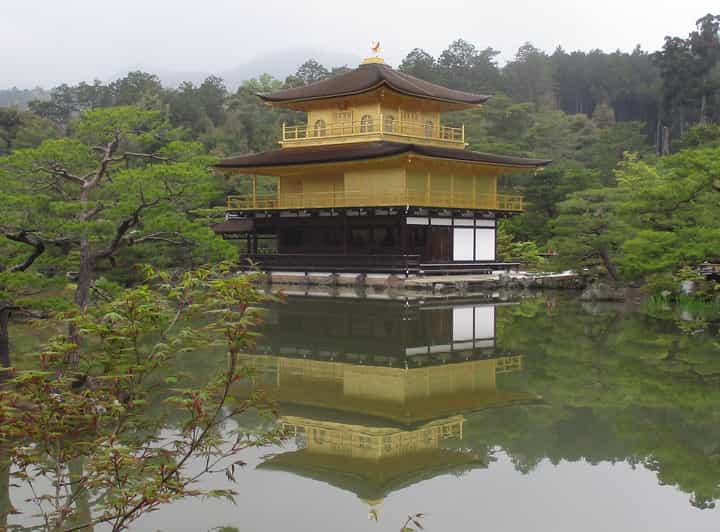
- Kinkaku-ji in 1 hour with guided focus, then you’re back on public transport.
- Transportation and entrance fees are covered for the scheduled monuments.
- Free to leave halfway after the group route reaches the point where it suits you.
Meeting at Kyoto Station: find your guide without stress
Kyoto starts at Kyoto Station, specifically the North entrance area (Karasuma-guchi). The meeting point is a clearly described spot: it’s on the space between the four escalators in front of the cab terminal, toward the east just outside the central north entrance. A handy visual cue helps you orient quickly: from that spot, you can see Kyoto Tower up ahead, at the top left (not right) of where you’re standing.
That matters more than it sounds. Kyoto Station is huge, and wasting even 15 minutes looking around eats into your half-day. The tour also sends you an email the day before, confirming the meeting point details—so do yourself a favor and open it before you head over.
The guide is Italian-speaking, and in practice that means you’ll get explanations at a pace that fits real conversations, not just a headset script. Reviews highlight how friendly and well-prepared the guide is, and that tends to make the whole morning (or afternoon) feel smoother.
You can also read our reviews of more tours and experiences in Kyoto.



Sagano Bamboo Forest: the walk, the atmosphere, and time to browse
Your first major stop is the Sagano Bamboo Forest area (Sagano). You’ll travel by train from Kyoto Station (about 20 minutes), then you get roughly an hour on-site: guided tour, sightseeing, and time for shopping.
What I like about this kind of short guided block is that you don’t have to figure out the route yourself. The guide can point out where to look, what to notice, and how the site connects to Kyoto’s past and present life. Even without extra details, the structure is practical: you get a clear start, a focused walk, and enough time to grab something small if you want it.
One more note: because shopping is explicitly included in that 1-hour window, don’t expect only bamboo photos and silence. You might see little storefronts and areas where people grab snacks or souvenirs. If your goal is purely photography, you’ll likely still enjoy the walk, but you’ll share it with the rhythms of a normal Kyoto visit.
A possible drawback of the pacing: you’re only there for about an hour. If you dream of lingering until the light is perfect, plan to come back on your own later. In exchange, you get to stack this experience with Kinkaku-ji in the same half day—without the transportation headache.
Kinkaku-ji (Golden Pagoda): what you can realistically enjoy in one hour
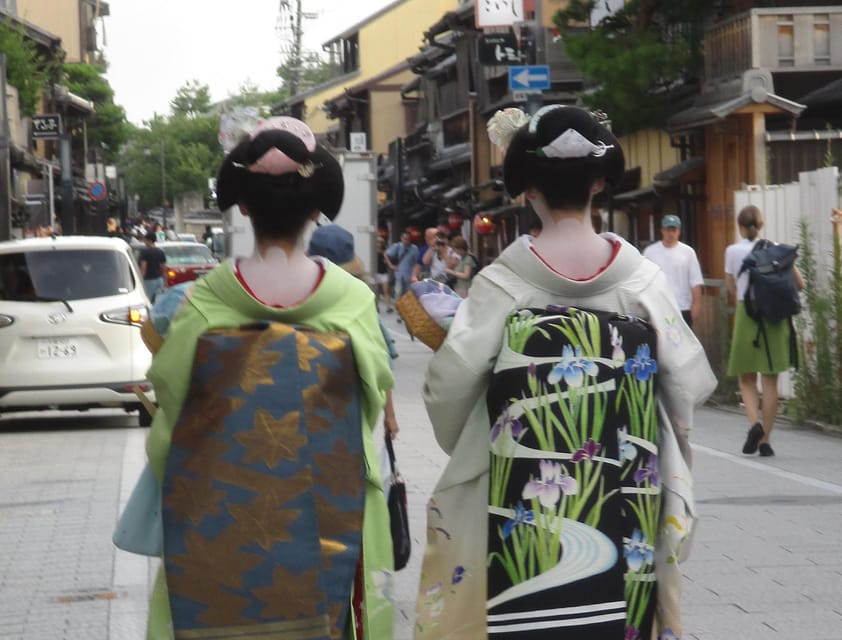
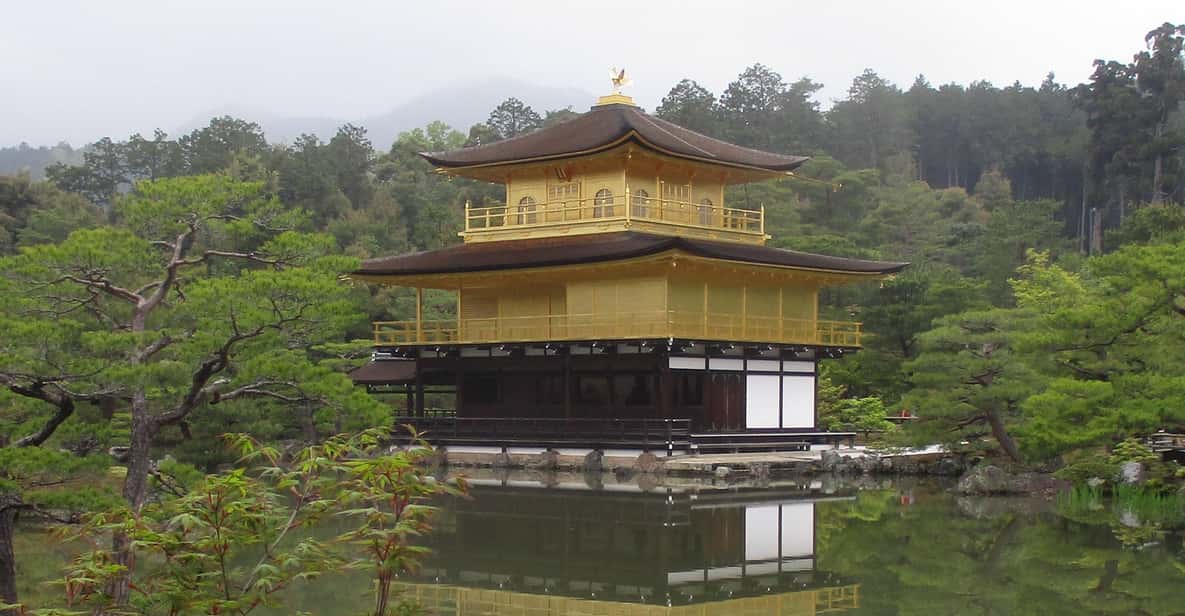
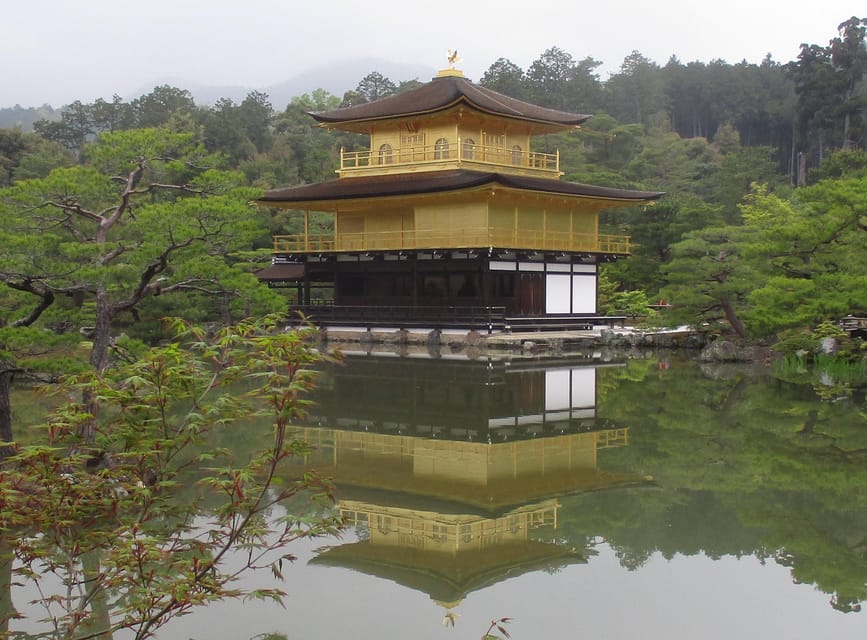
After Sagano, you’ll train again (about 20 minutes), then switch to a bus/coach segment (around 15 minutes). That gets you to Kinkaku-ji, where you’ll spend about an hour with a guided visit.
In one hour, you can do more than just take photos. A good guide makes a big difference here, because Kinkaku-ji isn’t only an object in space; it’s tied to the story of Kyoto’s older power circles and refined culture. Your native Kyoto guide is set up to connect what you see to broader themes: preserved environment, cultural monuments, and how the past lived.
Based on what the guide emphasizes in the tour description, you should expect conversations that go beyond the surface: how the city’s historical capital role shaped life, and how later Japanese life carried echoes of court, aristocrats, and the samurai class. In short: you’ll see the Golden Pagoda, and you’ll also understand why it mattered to the kinds of people who once shaped Kyoto.
The main “consideration” is also simple: one hour goes fast at Kinkaku-ji. If you want to do everything slowly—every angle, every path—this is still a great sampler, not a full day’s immersion. The trade-off is that the tour stays efficient and returns you to Kyoto Station with time to move on.
The guide’s real job: turning monuments into daily-life understanding
This is where the tour earns its high marks. The experiences you get aren’t only about the two headline sights. The guide is described as native Kyoto, and that matters: he’s there to answer questions about the historical capital and the culture around it, while also introducing history in a way that connects to daily life.
From the feedback, the guide is praised for being prepared and not “banal,” with a warm, cordial approach. One set of comments specifically names a guide called Omae, describing him as a top Kyoto expert with both culture and sympathy—and an Italian style that comes across as polished and engaging, including curiosities that feel worth your attention.
Here’s why you should care, even if you’re not the type who loves lectures. When someone can explain context while you walk, you start noticing details you’d otherwise miss. And Kyoto gets easier when you understand the basic social layers: who had power, who admired art and literature, how retired aristocrats and imperial relatives fit into the city’s rhythms, and where the samurai class enters the bigger picture.
The tour also frames part of this through themes tied to protected environments and the preserved character of the region. Even without deep technical specifics from your guide, that approach can help you interpret why certain spaces feel the way they do.
Getting around Kyoto in 5 hours: trains, bus, and metro without chaos
The itinerary is built like a mini transport plan, which is exactly what you want in Kyoto if you don’t want to spend your morning fighting routes. You’ll do:
- Kyoto Station to Sagano by train (about 20 minutes)
- Sagano to the next segment by train again (about 20 minutes)
- Then a bus/coach hop to Kinkaku-ji (about 15 minutes)
- Back to Kyoto Station by bus/coach (about 15 minutes) and then metro/subway (about 15 minutes)
That adds up to a half-day schedule that feels structured rather than chaotic. It’s also why this tour works well for people who are short on time. You’re not guessing. You’re not changing plans constantly. You’re riding the same public transport logic locals use, but guided in Italian.
The one timing reality to keep in mind: you have limited buffer time because the day is designed around these transport blocks. If you’re the type who needs extra time for photos, restrooms, or snack runs, you’ll want to handle that before the tour starts at Kyoto Station—or keep purchases light during the scheduled shopping window in Sagano.


Price and value: is $117 worth a guided half-day?
The tour price is listed at $117 per person for about 5 hours in Kyoto. Whether that’s worth it depends on what you compare it to.
For your money, you’re getting:
- An accompanied Italian-speaking guide (and the guide quality is a major theme in feedback)
- Transportation included across the scheduled legs (train, bus/coach, subway/metro)
- Entrance fees for the monuments visited during the itinerary
So you’re not just paying for someone to talk at you. You’re paying for convenience and time compression. Planning your own day to cover both Sagano and Kinkaku-ji can be totally doable, but doing it smoothly—especially across different transport modes—can eat up more energy than you expect. Here, the route does the work for you.
If you’d rather travel independently, this might not feel like the best deal. But if you value guided context and a clean half-day plan, the cost makes sense. You effectively buy back stress and time, and you get a native Kyoto perspective that turns two famous stops into a connected story.
Who this tour fits best (and who should skip it)
This half-day format is a good fit if you:
- Want to see two top Kyoto sites without spending your whole day hopping transport
- Prefer guided explanations in Italian over self-guided wandering
- Like having someone answer questions as you go
- Enjoy a mix of sightseeing and practical time (including shopping in Sagano)
It might be less ideal if you:
- Plan to spend most of your time taking deep, slow photos at a single stop
- Need long breaks that aren’t built into the schedule
- Want to build a very custom itinerary day-by-day
Also, the tour is listed as wheelchair accessible. If you need mobility considerations, the most useful next step is to check with the provider directly, but the accessibility note is explicitly stated.
Practical details that affect your experience
A few practical points can shape how smooth your day feels:
You’ll start at Kyoto Station at the north entrance area (Karasuma-guchi), not a random meeting spot across town. That makes it easier to arrive by train or to coordinate with the rest of your trip.
The tour ends at Kyoto Station, but you’re free to leave halfway. That’s great if you have another reservation later, or if you want to extend your time near one of the sites on your own. Just keep in mind the schedule is designed to cover both main locations, so leaving early usually means you give up the remaining guided time.
Finally, the tour is designed as a half-day, so pack your expectations accordingly: you’ll walk, you’ll learn, and you’ll see the highlights. If you want more, you’ll likely do it on a second visit or through another activity later.
Should you book KYOTO: Golden Pagoda, Bamboo Forest, Arashiyama (Italian)?
I’d book this if you want a smart, efficient Kyoto sampler with strong guidance. The biggest reason is the guide—feedback emphasizes preparation, culture, and a friendly tone, including the guide known as Omae. Pair that with a schedule that bundles Sagano Bamboo Forest and Kinkaku-ji with transport and entrance fees handled, and the value starts to make sense quickly.
Skip it if you crave a long, slow, self-paced day or you’re building a custom route from scratch. For most people doing Kyoto on a time budget, though, this tour offers a solid balance: two major sights, guided context in Italian, and a finish back at Kyoto Station where you can easily continue your day.
If you book, show up a little early at Kyoto Station and use the Kyoto Tower sightline to lock onto the exact meeting spot. That one small move helps the whole half-day feel organized from the first minute.
FAQ
How long is the tour?
The tour duration is listed as 5 hours (a half-day itinerary).
Where exactly do we meet at Kyoto Station?
Meet at Kyoto Station, North entrance (Karasuma-guchi), in the space between the four escalators in front of the cab terminal, toward the east just outside the central north entrance.
What sites are included?
The tour includes Sagano Bamboo Forest (Sagano area) and Kinkaku-ji (Golden Pagoda).
What language is the guide?
The live tour guide speaks Italian.
Is transportation included?
Yes. The tour includes all transportation for the scheduled legs during the itinerary (train, bus/coach, and subway/metro).
Can I leave before the end?
The tour ends at Kyoto Station, but you are free to leave it halfway if you want to end your day earlier.