REVIEW · KYOTO
Ancient Katana Training in Kyoto with Local Students
Book on Viator →Operated by Let's ask Shogo · Bookable on Viator
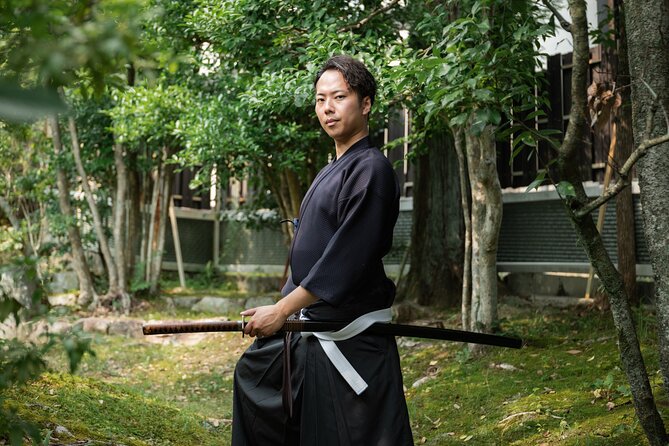
A samurai class without the tourist cosplay. Step into Kyoto’s Asayama Ichiden Ryu Hyōhō, a centuries-old kobudo line still taught to real students, not actors in costumes. You’ll practice the fundamentals of Iaijutsu (quick-draw katana technique) and Kenjutsu (swordsmanship) using wooden swords, with local instruction that keeps the focus on discipline and form.
What I like most is the authenticity: you train in a dojo setting and follow dojo rules like etiquette before you touch technique. Another big win is the teaching approach from Shogo sensei, who can communicate in both English and Japanese, and keeps things paced so you can actually follow along.
One consideration: this is not built for total beginners. As a general rule, the dojo doesn’t accept participants with no prior budo experience, and the session assumes you can handle the physical and mental basics of a traditional class.
In This Review
- Key things to know before you go
- What You’re Training: Reihō, Iaijutsu, and Kenjutsu (with bokutō)
- Meet the Instructor: Shogo sensei and a real dojo vibe
- The 3-hour Training Flow: how the evening usually moves
- Price and value: $45.61 for real instruction, not a show
- Equipment and what you should bring (and what you can skip)
- Who this is best for (and who should pause)
- Logistics in Kyoto: meeting point, timing, and group feel
- Should you book ancient katana training in Kyoto?
- FAQ
- How long is the ancient katana training class in Kyoto?
- What time does the class start, and where do I meet?
- How much does it cost per person?
- Is this a tourist show or real training?
- Do I need prior budo (martial arts) experience?
- What equipment is used during the class?
- Who teaches, and what languages are used?
- What’s the cancellation policy?
Key things to know before you go
- Small group size (up to 4 travelers) means more individual correction and less waiting around
- Reihō etiquette comes first, so the class feels like training, not a demo
- Iaijutsu + Kenjutsu with bokutō helps you learn safe basics without needing a real blade
- Shogo sensei teaches in English and Japanese, which makes a big difference in a koryu dojo
- Modern tourists are not the target audience—this is genuine kobudo practice with real students
- Broader system, focused session: the tradition includes multiple weapons, but this class centers on sword arts
What You’re Training: Reihō, Iaijutsu, and Kenjutsu (with bokutō)
This experience is built around classical sword training from the Kyoto Branch of Asayama Ichiden Ryu Hyōhō. The tradition traces back over 400 years, and it preserves techniques from when samurai fought while wearing armor. That matters because it changes the mindset. You’re not just doing flashy sword moves. You’re learning a system designed for real constraints: timing, distance, posture, and controlled motion.
The session focuses on:
- Reihō etiquette: how you enter, stand, and move with correct form and respect
- Iaijutsu: the quick-draw principles—how you draw and prepare for action without rushing
- Kenjutsu: swordsmanship fundamentals—how you handle lines, cuts, and body movement
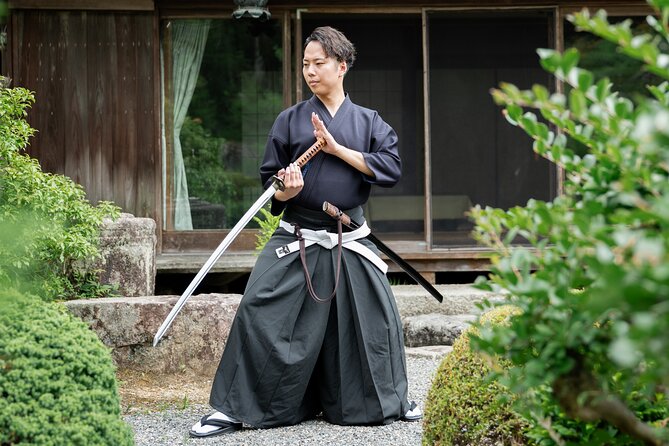
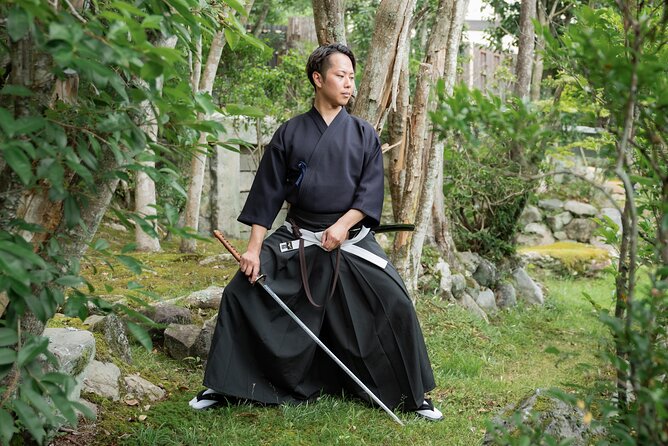
And you’ll use bokutō—wooden swords. That’s a big practical advantage for you. It keeps training approachable, and it lets the class drill fundamentals safely without the stress (or cost) of bringing a live blade. You still get technique. You just get it the safer way, which is the right way to start in a dojo environment.
One more nuance: the tradition is wider than “just katana.” It also includes weapon categories like kama-jutsu (sickle techniques), bōjutsu (staff), jōjutsu (short staff), tanbōjutsu (short stick), kusarifundōjutsu (chain and weight), and shurikenjutsu (throwing darts). In this specific 3-hour session, you should expect the main focus to stay on sword arts.
You can also read our reviews of more tours and experiences in Kyoto.



Meet the Instructor: Shogo sensei and a real dojo vibe
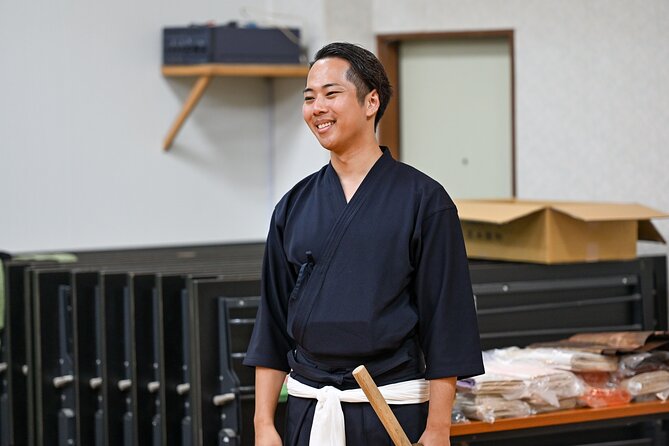
The heart of the class is Shogo sensei and the dojo’s regular members. What really helps you as a visitor is communication. The guidance includes support in both English and Japanese, so you’re less likely to get lost when a koryu term or cue gets specific.
The atmosphere is also clearly training-first. This doesn’t feel like a photo session. You’re in the kind of place where etiquette and accuracy matter, and where instructors pay attention to your level. One of the strongest signals from the class experience is that instruction can be personalized. If your understanding is growing slower than you hoped, the focus stays on helping you land the basics correctly rather than moving on like you’re a mannequin.
Also, from what’s been shared by students who have attended, the dojo environment can feel welcoming even if you’re new to Japanese martial culture as a foreign visitor. Still, you should expect some formality and cultural structure. Plan to bring patience and a willingness to follow directions carefully.
The 3-hour Training Flow: how the evening usually moves
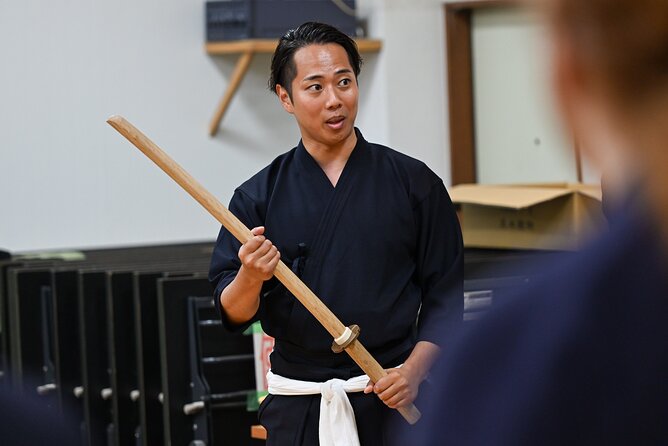
This class starts at 6:30 pm and runs about 3 hours. You meet at 7-chōme-27-1 Honmachi, Higashiyama Ward, Kyoto, 605-0981, Japan, and you finish back at the meeting point. It’s near public transportation, so you won’t need a private transfer or a complicated plan—just a good walk and you’re set.
A typical evening structure you can expect looks like this:
1) Reihō etiquette and orientation
You’ll likely start with how to enter, where to stand, and how to hold yourself before technique. In a dojo, this is not filler. It’s part of the training. You’ll feel the class shift from casual traveler mode into “student mode,” and that’s when learning clicks.
2) Iaijutsu quick-draw fundamentals
You’ll practice drawing and positioning with control and timing, using bokutō. If you’ve only seen swords in movies, this is where your expectations may adjust. Speed matters, but so does preparation. The goal is clean movement with the right body mechanics.
3) Kenjutsu swordsmanship basics
Next comes sword handling and cuts/strokes built from stance and body alignment. Again, with bokutō, you can focus on the shape of movement and precision rather than worrying about safety as the main priority.
4) Practice reps and feedback
The instructor’s job here is to correct what you’re doing—sometimes at the level of foot placement, sometimes at the level of rhythm and tension. With a maximum group size of 4, you’re more likely to get usable correction instead of general advice.
If you’re the type who likes a plan, this class will feel structured. If you’re the type who gets nervous by structure, that’s your cue to relax and let the etiquette lead the way.
Price and value: $45.61 for real instruction, not a show
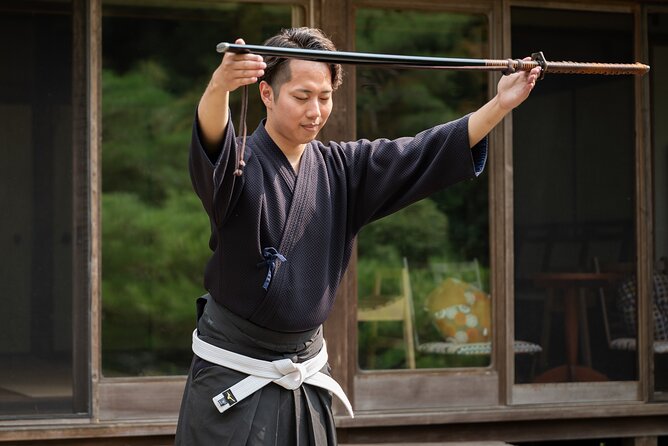
At $45.61 per person, this is priced like a serious local class access point, not like a staged “samurai experience.” The value comes from three things.
First, it’s taught alongside actual students under a classical system, so you’re paying for instruction quality, not entertainment. Second, the group size is capped at 4 travelers, so your time with the instructor isn’t diluted. Third, you’re practicing core techniques—Iaijutsu and Kenjutsu—in a traditional setting, which means you leave with at least a clearer mental map of how the basics are built.
Could you find a cheaper katana demo elsewhere in Kyoto? Sure. But cheap often means crowd pacing and “do the move, take the photo, done.” Here, you’re paying for repetition, correction, and discipline.
One more value point: the tradition is old, but your lesson is practical. Learning with bokutō reduces risk and lets you train the body patterns you’d need even if you later study further.
Equipment and what you should bring (and what you can skip)
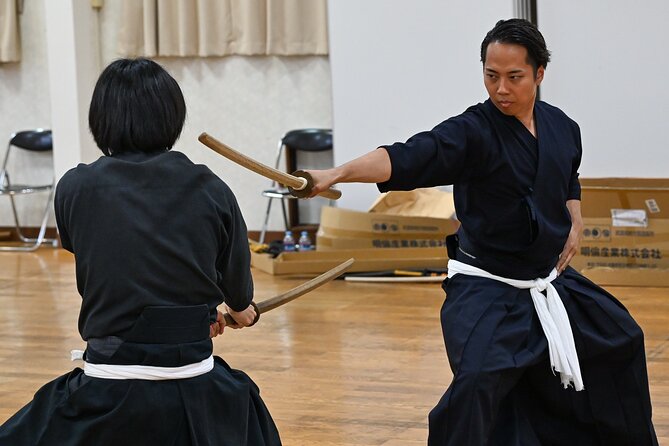
The session uses bokutō. You don’t need to show up with a real sword. In at least one attendee’s experience, Shogo provided a wooden sword if the participant didn’t bring one, and the class is clearly set up to work with bokutō during training.
So what should you bring?
- Comfortable clothing that lets you move your legs and hips
- Shoes you can easily adjust around dojo etiquette (the exact footwear rules aren’t specified here, so follow what you’re told on arrival)
- A clear head and a willingness to ask questions when something isn’t making sense
What you should skip is the idea that you can “wing it” like a tourist. Even with bokutō, technique and safety depend on listening, stopping when told, and respecting the training flow.

Who this is best for (and who should pause)
This class is aimed at people who actually want to learn. The activity description makes it clear: no prior budo experience is generally not accepted. That doesn’t mean you can’t participate. It means the dojo wants students who can follow instruction and understand that this is serious practice.
So who fits best?
- You’ve done at least some martial arts training before (even if it’s not sword)
- You want a structured introduction to classical Japanese sword arts
- You enjoy etiquette and you’re okay taking direction in a dojo setting
- You’re moderately fit and comfortable with standing, moving, and repeating drills for the full 3 hours
Who might want to contact for consultation instead?
- You’re brand new to budo and you’re hoping for a casual, beginner-friendly lesson
- You’re worried about language barriers: Shogo can work in both English and Japanese, but the class is still run like a dojo, not a classroom lecture
Also, cultural discomfort can be real. Some participants have noted that training a traditional art in Japan can feel daunting because of gender roles, cultural expectations, and language. If that’s on your mind, the best move is to ask questions before you go so you arrive prepared.
Logistics in Kyoto: meeting point, timing, and group feel
You’re meeting at 7-chōme-27-1 Honmachi, Higashiyama Ward at 6:30 pm, and the class ends back at the meeting point. Because the start time is in the evening, you’ll want to plan dinner early or slightly after. This is not a last-minute add-on that you can easily squeeze into a packed schedule without thinking.
The max group size of 4 travelers is more than a comfort detail. It usually changes the whole feel:
- You’ll stand where you can be seen
- You’ll get more correction time
- The instructor can adjust pacing to your level
- The class stays quieter and more focused
There’s also a mobile ticket. That’s usually painless. Just have it ready on your phone so you’re not fumbling while the session is about to begin.
Should you book ancient katana training in Kyoto?
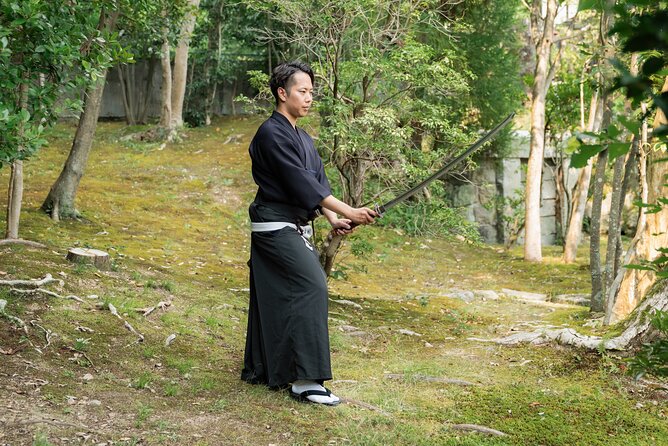
Book it if you want the closest thing to real dojo training you can access as a visitor, and you’re willing to treat Reihō, Iaijutsu, and Kenjutsu as skills to practice—not just experiences to watch. If you’ve already trained in anything martial, even briefly, you’ll likely feel more at home.
Consider holding off or contacting for consultation if you’re truly brand new to budo. The dojo is clear that this is not designed as a first-timer tourist activity. Also, if you’re expecting “easy mode,” you may feel frustrated because the class aims for discipline and correct basics.
If you want a lesson that respects the tradition, teaches you with attention, and uses bokutō so you can focus on technique, this is a strong value at $45.61—especially with instruction that can run in both English and Japanese.
FAQ
How long is the ancient katana training class in Kyoto?
It runs for about 3 hours.
What time does the class start, and where do I meet?
The start time is 6:30 pm. The meeting point is 7-chōme-27-1 Honmachi, Higashiyama Ward, Kyoto, 605-0981, Japan, and the activity ends back at the meeting point.
How much does it cost per person?
The price is $45.61 per person.
Is this a tourist show or real training?
This is described as genuine training with actual students. It is not a tourist activity.
Do I need prior budo (martial arts) experience?
As a general rule, participants with no prior budo experience are not accepted. If you are very eager to join, you can contact for a consultation.
What equipment is used during the class?
The class focuses on Iaijutsu and Kenjutsu using bokutō (wooden katana). One attendee noted Shogo provided a wooden sword when they didn’t bring one.
Who teaches, and what languages are used?
Shogo sensei teaches, and instruction is available in both English and Japanese.
What’s the cancellation policy?
Cancellation is free up to 24 hours before the experience’s start time, with a full refund if you cancel at least 24 hours in advance.