REVIEW · KYOTO
Kyoto: Maiko Happy Hour at a Historic Machiya
Book on GetYourGuide →Operated by Tondaya, Co., Ltd. · Bookable on GetYourGuide
A maiko in a real machiya is the point. In Kyoto, this 2-hour experience puts you in Tondaya, a 140-year-old wooden townhouse, then brings you face-to-face with a maiko for tea, dance, and a few playful surprises. I love that you’re not just watching from the outside—you’re in a preserved Kyoto space where the arts feel connected to everyday tradition.
I also like the structure: a guided tour of the machiya first, then a tea ceremony with Uji matcha and Japanese sweets, followed by buyō dance with classical music. One thing to consider is communication: some parts rely on a live translator, and if English isn’t crisp, you might miss some of the finer points of what the maiko and staff are saying.
In This Review
- Key things worth knowing before you go
- Inside Tondaya: a machiya you’ll actually feel
- The maiko tea ceremony: calm, formal, and surprisingly personal
- Buyō in the townhouse: refined dance, classical music, tight focus
- Party games and Q&A: where the experience becomes real
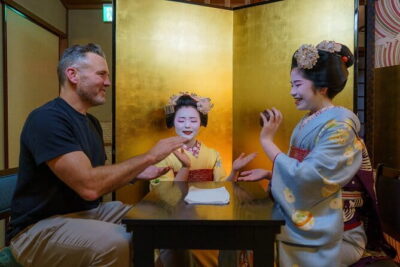
- Photos with a maiko: why this part is the big deal
- Price and value: what $709 buys you, and what can feel off
- Language, timing, and what to do with your 2 hours
- Who this Kyoto maiko happy hour suits best
- Should you book this maiko happy hour at Tondaya?
- FAQ
- How long is the Kyoto Maiko Happy Hour experience?
- Where do I meet for the experience?
- What’s included in the ticket?
- Are alcoholic drinks included?
- Do I need to bring anything?
- Is the experience wheelchair accessible?
- Can I choose a maiko for every date, and is it refundable?
Key things worth knowing before you go
- 140-year-old machiya tour at Tondaya: You’re in a nationally registered cultural landmark, not a staged set.
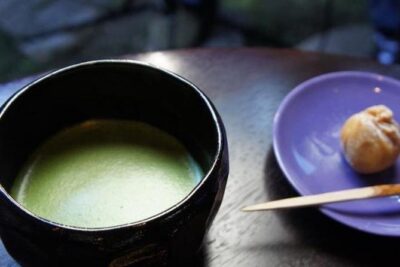
- Uji matcha tea ceremony: You’ll be served matcha and Japanese sweets as part of the program.
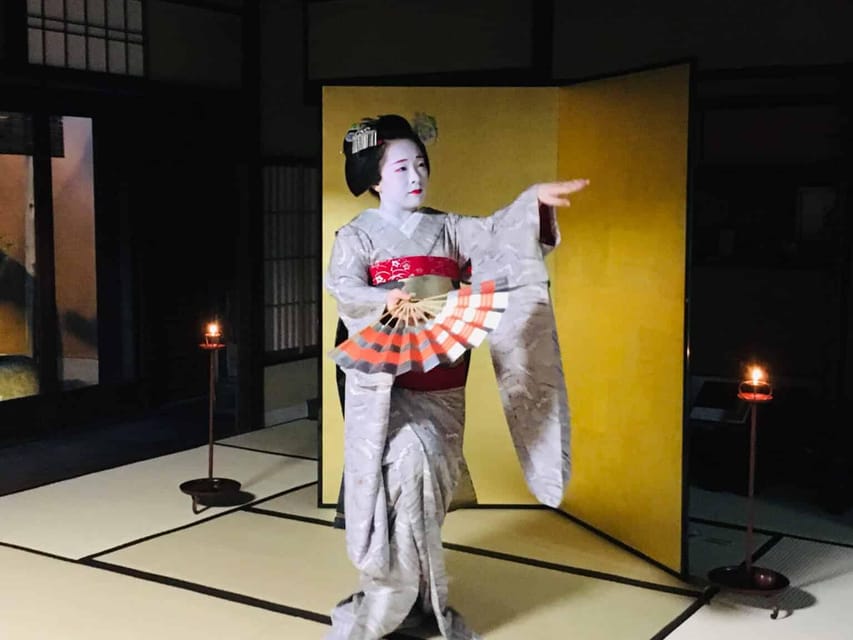
- Buyō performance in a wooden townhouse: Dance plus classical music in an intimate setting.
- Maiko party games and Q&A: You get time to ask about maiko culture and learn the rules of the games.
- Rare photo opportunity: You can take commemorative photos with the maiko during this special setting.
- No alcohol included: The “happy hour” is about the relaxed pace, not drinks.
Inside Tondaya: a machiya you’ll actually feel
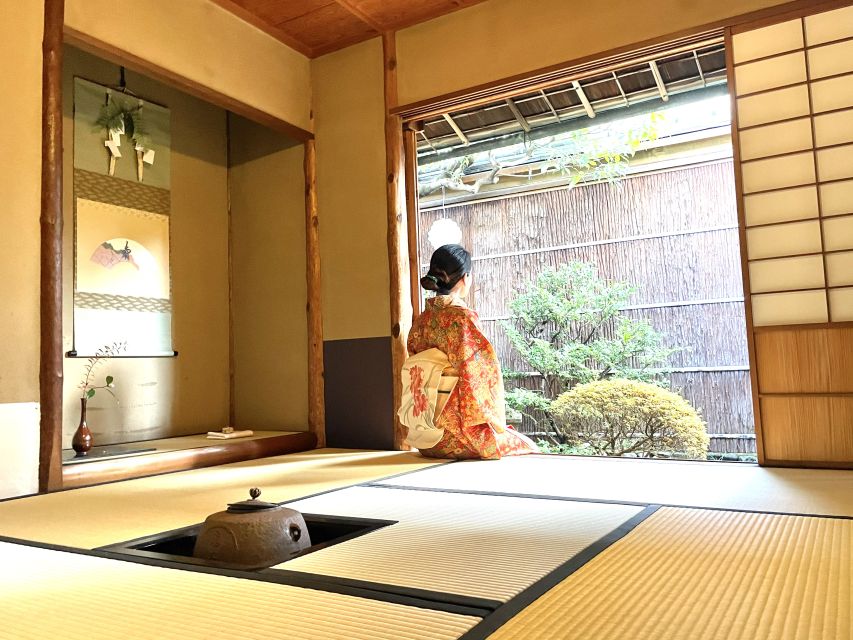
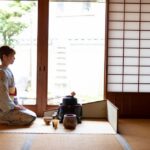
Kyoto’s machiya are more than pretty wooden buildings. The details are practical: the way rooms step back, the way light hits paper screens, and the way the space naturally guides you from one moment to the next. At Tondaya, this matters because the whole experience runs like a small, well-timed evening rather than a quick performance stop.
You start with a guided walk-through of the townhouse. Tondaya is a culturally significant landmark under Kyoto City Government designation, and it’s described as a treasure trove of historically valuable artifacts and stories. That means the guide’s job is not just to point at objects, but to explain why they exist and what they reveal about daily life in Kyoto.
Here’s what I think you’ll appreciate: the machiya tour gives you a frame for the rest of the program. When the maiko later performs and serves tea, it doesn’t feel like a separate “show.” It feels like Kyoto tradition happening in the same kind of environment it likely belonged to.
A quick practical note: you’ll want to wear socks (no stockings). That’s not just a rule. It’s the kind of detail that keeps the space comfortable and respectful, and it also saves you from arriving with the wrong footwear plan.
You can also read our reviews of more historical tours in Kyoto

The maiko tea ceremony: calm, formal, and surprisingly personal
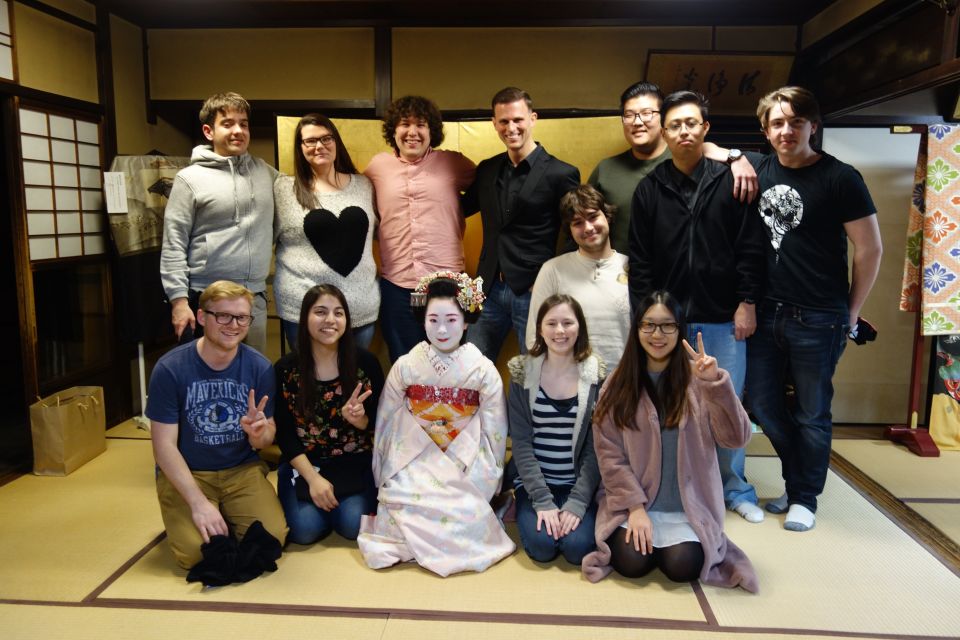
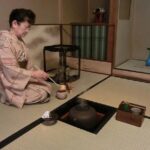
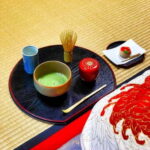
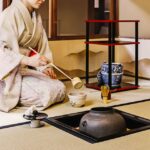
After the machiya tour, the focus turns to an authentic maiko who performs a tea ceremony. You’ll be served Uji matcha and Japanese sweets. Even if you’ve seen tea ceremonies elsewhere, this one is built into the flow of the evening, so it doesn’t feel like a separate ticketed activity.
What makes it interesting is the pairing: tea is one of the most controlled, precise parts of Japanese traditional arts, and yet the setting here is not a large stage. A machiya can make formality feel more human, because the room scale and sightlines stay close.
This is also where your attention pays off. Watch the pacing. Notice how the staff and the maiko handle the sequence—tea first, then sweets, then the transition into the performance. It’s a reminder that “tradition” isn’t only visual. It’s timing.
And yes, it’s a “happy hour” style event, so the mood is relaxed compared to a strict museum lecture. Still, tea is tea: it’s deliberate, and you’ll get more out of it if you slow down a bit instead of treating it like a photo opportunity first.
Buyō in the townhouse: refined dance, classical music, tight focus
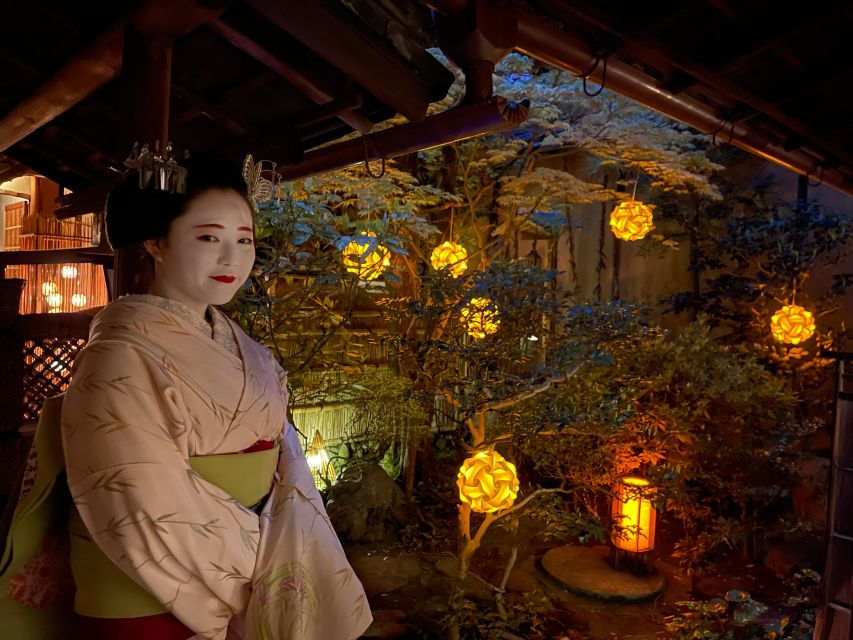
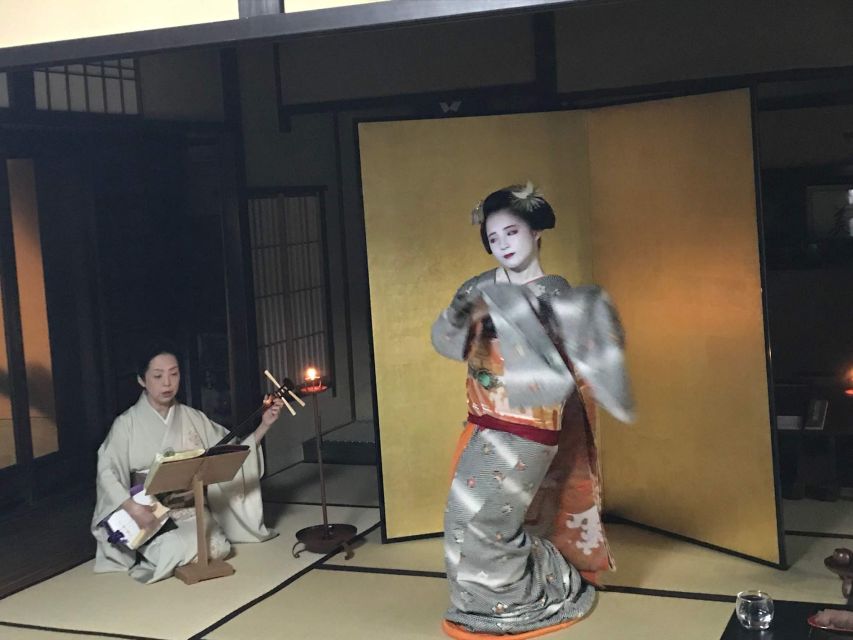
Next comes buyō, a refined Japanese dance performed with classical music. Buyō has a way of communicating through controlled movement, posture, and pauses—not just through speed or size. In a wooden townhouse, that kind of dance can feel especially readable, because you’re not watching from far away.
The program is designed to evoke the atmosphere of watching a performance in Kyoto from a much earlier period. Even if you don’t know buyō ahead of time, I think the experience is built for people who want context. You’ll be in a space where the dance’s “shape” makes sense: the room supports the mood, and the music has room to land.
If you’re the type who likes to understand what you’re seeing, use the moments around the performance to stay engaged. During later parts you’ll have time for questions, so you can also note what you’re curious about now—then ask when it’s your turn.
Party games and Q&A: where the experience becomes real
After the dance, you get a chance to try maiko party games. This is the most “interactive” part of the evening, and it’s also the part that can turn a cultural show into a memory you actually talk about later.
The maiko will explain how each game is played. Then you can play along together. It’s structured, but it doesn’t feel like a classroom. The games are meant to let you experience a different side of the maiko world—lighter moments inside a tradition that’s usually seen as distant.
This is also when questions matter. The maiko and the staff offer a chance to ask about maiko culture, and the best way to use that time is to come ready with one or two focused questions rather than a long list. For example, ask about etiquette, training life, or why specific customs are done. You’ll get much more value if your questions are specific.
One consideration: the experience depends on live translation support. Some staff members speak Japanese, English, and Chinese, but not all guides do every language perfectly. I’d treat the translator as part of your planning. If you’re the kind of person who wants full nuance, be patient and ask for clarification when something isn’t landing.
Photos with a maiko: why this part is the big deal
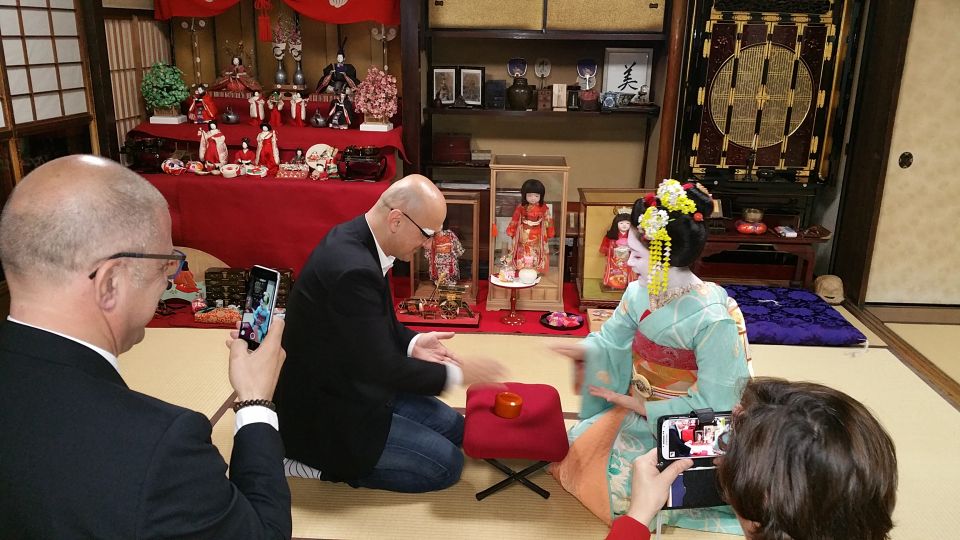
You’ll also have time for commemorative photos with the maiko. The event is explicit that maiko are not normally permitted to take photographs with the public, making this chance rare. That alone is a strong reason to do the experience if photography is important to you—not because it’s about selfies, but because it’s about being allowed to participate in a moment most visitors can’t access.
Plan your photo time like a pro: have your settings ready, take a few photos quickly, then let the rest of the time be about being present. In these situations, the energy is part of the “service,” and the staff will move you along at the right pace.
The best part? You’re not photographing in a random street setting. You’re in a preserved machiya with the arts already happening around you. The photos will look like they belong to Kyoto’s tradition, not like a generic souvenir moment.
Price and value: what $709 buys you, and what can feel off
This costs $709 per person for a 2-hour experience. That price will feel high if you think of it as a short performance package. But it’s easier to understand when you break down what’s included: a guided tour of a 140-year-old nationally registered cultural landmark, a tea ceremony with matcha and sweets, a buyō dance performance, maiko party games, a lesson on Kyoto/maiko culture, and the rare photo opportunity.
The value is strongest when you care about access. Most people in Kyoto will never get an opportunity to interact this closely with a maiko, and most people will never get to combine that access with a setting like Tondaya.
That said, one caution is worth keeping in your head: if you expect a long meal, a lot of food beyond tea sweets, or extended free time, the experience may feel brief for the money. Also, because the communication depends on translation support, the quality of understanding can affect your enjoyment. The format is structured; if the language piece doesn’t work smoothly, it can feel like the event moves faster than the meaning.
If you’re deciding, I’d treat this as a cultural access ticket rather than a casual entertainment deal.
Language, timing, and what to do with your 2 hours
The event runs about 2 hours, and schedules depend on availability. You’ll meet at Tondaya-Nishijin Japanese Cultural Experience Museum. Since the maiko-related parts need careful timing, being on time matters more than usual. I’d arrive a little early so you can settle in without stress.
Languages supported include Japanese, English, and Chinese, with live tour guide support. If you’re booking in English or another language, consider how you learn best. If you’re the type who needs explanations for every step, you’ll likely benefit from having questions ready.
Also, the experience does not include alcoholic drinks. If you’re hoping the “happy hour” means cocktails, you’ll want to adjust expectations. This is more like a refined evening—matcha and sweets, dance, games, and cultural explanation.
And yes, there are date restrictions: Tondaya is closed from December 31 to January 1, and there are windows when you can’t reserve an appointment with a maiko (from December 29 to January 10). If you’re traveling in late December, plan early.
Who this Kyoto maiko happy hour suits best
This experience is best for you if you want close-up cultural access and you appreciate Kyoto’s traditional arts. It fits well if you:
- love historic spaces and want the context behind what you see
- want a maiko encounter that’s more than a photo from afar
- enjoy tea ceremony culture and traditional dance
- like structured interaction (games and Q&A) rather than open-ended wandering
It may feel less satisfying if you:
- are mainly looking for nightlife or a party vibe
- want a long meal or lots of extra food beyond the tea ceremony sweets
- need full translation detail throughout every moment (because the event depends on live interpreting)
One more note: it’s not suitable for wheelchair users, so plan accordingly.
Should you book this maiko happy hour at Tondaya?
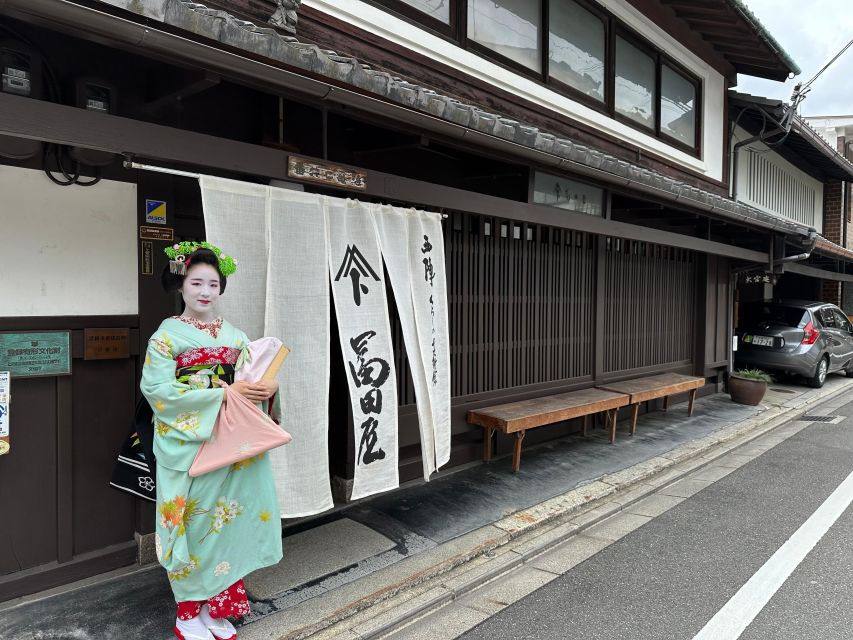
I’d book it if you can afford it comfortably and your goal is authentic cultural access in a real machiya. The biggest “yes” is the combination: a preserved 140-year-old townhouse + a tea ceremony + buyō performance + maiko party games + a rare photo opportunity. That mix is exactly the kind of experience that’s hard to recreate on your own.
I’d skip or rethink if you’re price-sensitive for a short evening or if you’re worried about understanding everything due to translation limits. In that case, you might still enjoy it, but the value could feel shaky.
If you do book, go in with the right mindset: watch closely, ask one or two good questions, and treat the tea, dance, and games as parts of one continuous Kyoto moment.
FAQ
How long is the Kyoto Maiko Happy Hour experience?
It lasts about 2 hours.
Where do I meet for the experience?
You meet at Tondaya-Nishijin Japanese Cultural Experience Museum.
What’s included in the ticket?
The ticket includes a guided tour of the machiya, a maiko dance performance, party games, a tea ceremony, photography opportunities, and a lesson on Kyoto/maiko culture.
Are alcoholic drinks included?
No. Alcoholic drinks are not included.
Do I need to bring anything?
You should bring socks. The note says to refrain from wearing stockings.
Is the experience wheelchair accessible?
No, it is not suitable for wheelchair users.
Can I choose a maiko for every date, and is it refundable?
A maiko is not guaranteed; depending on availability, a geiko may be arranged instead. The experience is non-refundable, with specific strict rules related to cancellations close to the appointment date due to maiko reservation timing.