REVIEW · KYOTO
Fushimi Inari Shrine: Explore the 1,000 Torii Gates on an audio walking tour
Book on Viator →Operated by VoiceMap Audio Tours · Bookable on Viator
Fushimi Inari is stunning, and it can also feel chaotic. This self-guided audio walking tour helps you see the 1,000 torii gates with context: fox statues, Shinto rituals, and the meaning behind the spots you’d usually just photograph. It’s a calm stroll through a shrine complex that’s crowded in real life, but paced by you.
I especially like that the tour mixes the big visuals with small, specific details—things like Hand Water and a stop tied to wabisabi—so the walking feels purposeful, not random. The one catch: you’ll need your own phone and headphones, and you should download the offline audio before you arrive so you don’t get stuck when signal is weak.
In This Review
- Key highlights before you go
- Why Fushimi Inari feels better with an audio walking tour
- Getting started: meet the fox statue by Inari Station
- Stop-by-stop: from shrine meaning to Hand Water and wabisabi
- The Senbon Torii walk: your pace through the 1,000 gates
- Okusha and the Root up Pine Tree: what you’ll learn off the main photo line
- Time it right: how the 45–60 minutes works in real life
- Price and value: $5.99 for lifetime access and offline audio
- Should you book this Fushimi Inari audio tour?
- FAQ
- Where does the tour start?
- How long is the audio tour?
- What does the tour include?
- What do I need to bring?
- Is the tour self-guided?
- Where does the tour end?
- Does it cover the Senbon Torii gates?
- What opening hours are listed?
- Is the audio available offline?
- Can I cancel for a refund?
Key highlights before you go

- Start opposite Inari Station at the fox statue, so you don’t waste time figuring out where to begin
- Offline maps and audio in the VoiceMap app, so the route stays usable even without great reception
- Stop-by-stop explanations for fox statues, Hand Water, wabisabi, and more
- Senbon Torii pacing, guiding you through the famous tunnel of gates at your own speed
- Wish-making and ritual cues, including the Heavy-Light Stone you’ll be guided to look for
- A natural ending point deep in the complex, at the pond near the Kumataka Shrine
Why Fushimi Inari feels better with an audio walking tour
Fushimi Inari Taisha is one of those places where your camera wants to do all the work. The audio tour shifts that. Instead of just lining up shots, you’ll understand why the shrine looks the way it does, and what people believe while they’re there.
The tour is built around key shrine ideas, not trivia. You’ll get cues tied to Shinto practice and symbolism as you move through the grounds, starting with the shrine basics and working toward the famous torii corridor. That matters because the gates are the headline, but the shrine’s meaning is the story. When you know what you’re looking for, even the photo feels better.
I also like the pace. At major sites, you’re often rushed by a schedule or stuck behind a slow-moving crowd. This is self-guided, so you can pause, backtrack a little, or just stand still for a moment under the gates when the light hits right. And because it’s in English, you can take in the meaning without doing extra reading.
You can also read our reviews of more walking tours in Kyoto


Getting started: meet the fox statue by Inari Station
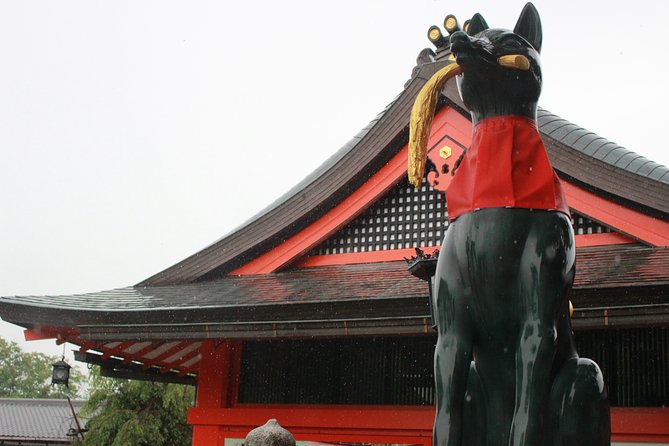
The tour start is right where you want it: opposite Inari Station, in front of a fox statue at the entrance to Fushimi Inari Taisha. That “across from the station” setup is a big deal in Kyoto. You don’t want to arrive, wander, and then realize you started in the wrong spot.
From there, your audio guide walks you stop by stop. Early on, it sets the tone with shrine significance and helps you orient yourself so the complex doesn’t blur together. If you’ve ever been at a shrine while everyone else seems to know where they’re going, you’ll appreciate how this one keeps you moving with clear landmarks.
One practical note: the tour ends later, deeper inside the complex near the Kumataka Shrine by a pond. That means you’re doing a one-way-style walk. You can absolutely keep going after, but plan for the fact that the official route finishes away from the initial entrance.
Stop-by-stop: from shrine meaning to Hand Water and wabisabi
This route doesn’t treat the first section like a warm-up. It actively teaches you how to read the place.
You’ll start with the second stop focusing on the significance of the shrines—basically giving you a framework before you enter the busiest visual area. Then you’ll get a stop tied to Hand Water, which connects everyday body-care actions to shrine etiquette and ritual. Even if you’ve seen people rinse before at other sacred places, the audio explanation helps you understand it as part of the larger practice, not just a random habit.
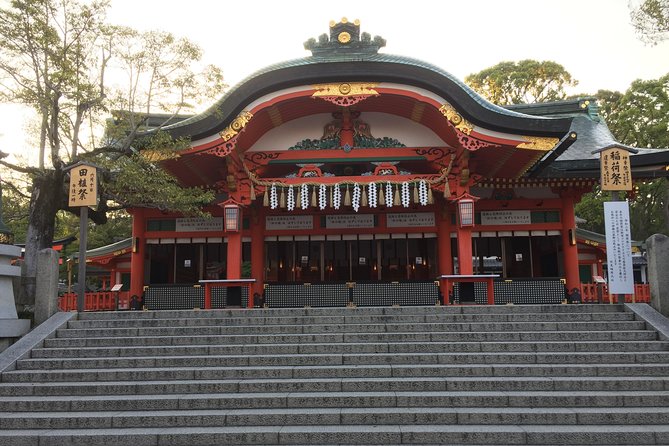
Next comes a short pause at the main hall. That brief stop works well because it’s not an all-day museum stop. It’s a reset point. You’ll likely notice how your eyes feel different once you’ve been given context—less like you’re viewing a set of buildings and more like you’re witnessing a living ritual space.
Then you’ll hear about wabisabi. You might think “wabi-sabi” is more of a design idea than a shrine concept. But in practice, it changes how you notice materials, age, and wear. You’ll start seeing weathering and imperfections as part of the shrine’s character instead of something to ignore while you chase perfect symmetry in photos.
The Senbon Torii walk: your pace through the 1,000 gates
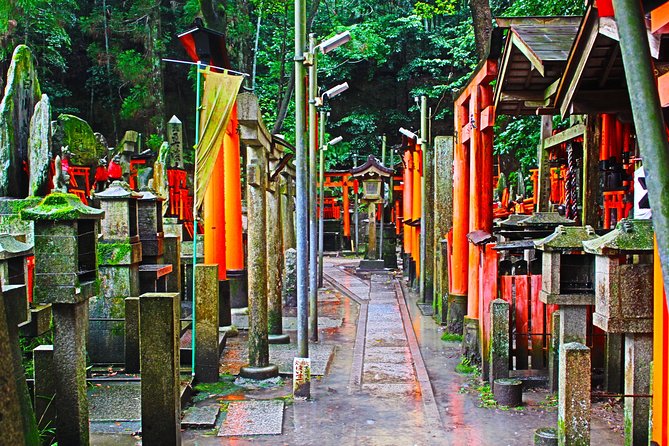
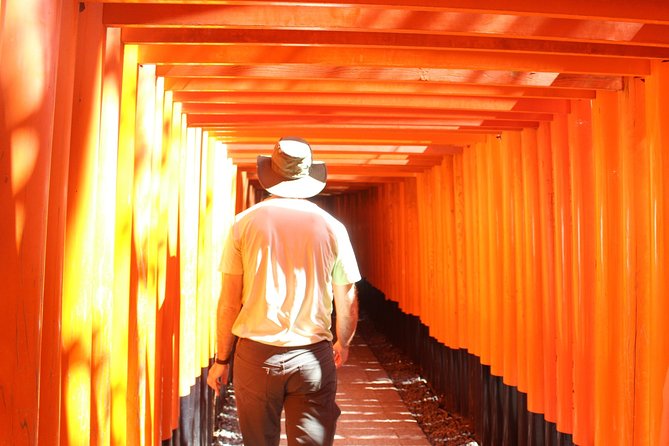
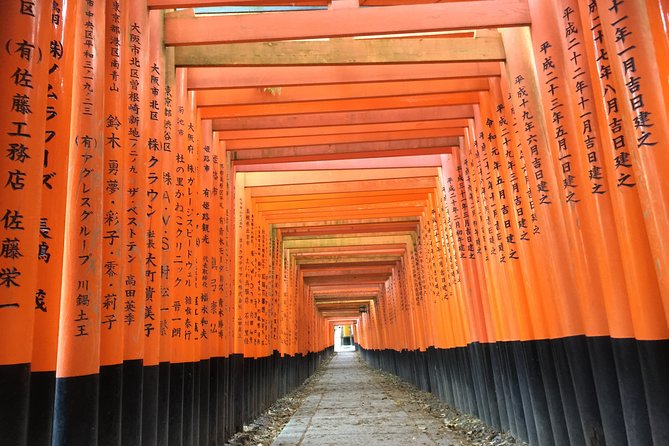
The main event is the Senbon Torii—the tunnel of gates people come from all over to see. The audio tour guides you through it, and it does one important thing: it gives you structure without forcing speed.
There are two consecutive points along the Senbon Torii stretch. That works because the torii corridor can blur as you walk. Two guided segments help you stay oriented, and they also help you avoid the common problem of rushing to the “best view” and missing what’s in front of you along the way.
Here’s how I’d use the time: don’t only aim for the first iconic shot. Instead, watch what changes as you move deeper—how the path funnels sightlines, how the light shifts between gates, and how the pace of foot traffic changes as you go. You’ll likely notice it’s easier to feel calm once you’re past the most packed area.
And yes, you’ll still take photos. But try to do it in short bursts, then put the phone away for a minute. The gates feel best when you’re inside the rhythm of walking, not when you’re constantly stopping and restarting.
Okusha and the Root up Pine Tree: what you’ll learn off the main photo line
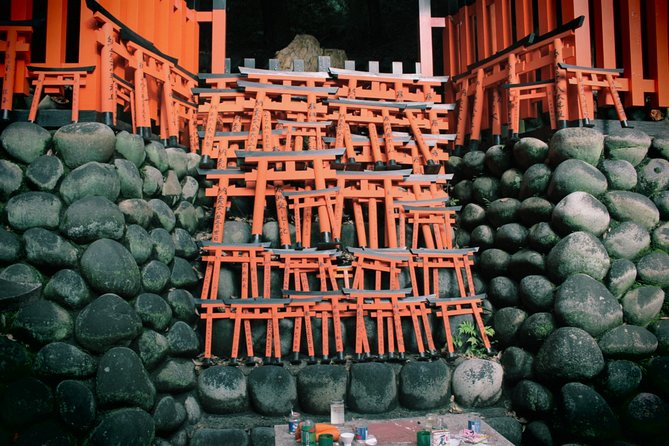
Past the torii corridor, the audio stops turn more interpretive, and that’s where the tour earns its value.
You’ll learn about the Okusha shrine at one point on the route. Even without a live guide standing next to you, the audio explanation helps you understand why this area exists in the larger shrine system. It gives your walk a goal beyond simply “go farther until the crowd thins.”
Then you’ll make a brief stop by the Root up Pine Tree, where the tour adds more context. This kind of detail is exactly why an audio tour can beat a standard sightseeing loop. Without the prompts, these features can become background. With the prompts, they become part of the meaning.
Also watch for the Heavy-Light Stone. The tour’s landmarks include it specifically, and it’s tied to making a wish. This is the sort of moment you can easily miss if you’re just moving by instinct. When you’re told to look for it, it becomes a highlight rather than a random object on the path.
You can also read our reviews of more tours and experiences in Kyoto

Time it right: how the 45–60 minutes works in real life

The tour is listed at about 45 minutes to 1 hour. That’s a sweet spot for Fushimi Inari if you want to enjoy it without turning it into a whole-day plan.
How you use that time matters. If you try to do everything at once—photos, reading, sightseeing, shopping—you can stretch longer. But because this is self-paced, you can keep it honest. Do the route straight, take a few pauses, then finish at the pond near the end point.
A practical tip from people who used the tour well: download everything before you reach the shrine. That simple step prevents the most common self-guided failure—running into offline issues mid-walk. If you go in with low battery or without headphones, you’ll feel it quickly, because the audio guide is the whole point.
Price and value: $5.99 for lifetime access and offline audio
For $5.99 per person, you’re getting more than “a recorded walk.” The tour includes lifetime access, the VoiceMap app on Android and iOS, plus offline access to audio, maps, and geodata. That combination is what makes it feel like a value for repeat visits.
It’s also good for budgeting. You’re not paying extra for museums or other attractions en route, and the tour itself doesn’t require timed entry tickets. What you do pay for is attention—audio explanations that help you see more than the postcard version.
If you’re visiting Kyoto on a tighter budget, this is a smart way to get meaning per dollar. If you’re the type who likes to move freely, it can replace a pricier guided add-on without feeling like you’re short on context.
Should you book this Fushimi Inari audio tour?
Book it if you want to see Fushimi Inari in a way that feels thoughtful without slowing you down. This is best for you if:
- You like self-guided pacing and don’t want to feel rushed.
- You care about Shinto rituals and symbolism, not just the photo spot.
- You want a route that keeps you oriented and nudges you toward specific features.
I wouldn’t book it if you’re expecting a fully guided, Q&A-style experience. This is audio-led, and it relies on your phone and headphones. If you’re comfortable with that, it’s a great match for a 45–60 minute visit that still feels like it has substance.
FAQ
Where does the tour start?
It starts at the fox statue at the entrance to Fushimi Inari Taisha Shrine, opposite Inari station.
How long is the audio tour?
It’s approximately 45 minutes to 1 hour.
What does the tour include?
Lifetime access to the tour in English, plus the VoiceMap app for Android and iOS with offline access to audio, maps, and geodata.
What do I need to bring?
You’ll need a smartphone and headphones. Food, drink, and transportation aren’t included.
Is the tour self-guided?
Yes. It’s a private activity, with only your group participating, and the route is self-guided using the app.
Where does the tour end?
It ends at the Kumataka Shrine area, deep in the shrine’s complex near a pond.
Does it cover the Senbon Torii gates?
Yes. You’ll walk through the Senbon Torii, the famous 1,000 torii gates, as part of the experience.
What opening hours are listed?
The listing shows hours as 12:00 AM to 11:59 PM (as shown for the date range provided).
Is the audio available offline?
Yes. Offline access to audio, maps, and geodata is included.
Can I cancel for a refund?
No. The experience is non-refundable and cannot be changed for any reason.
If you want, tell me your visit day and roughly what time you’ll be at Fushimi Inari, and I’ll suggest a simple plan to fit this route without getting trapped in the heaviest crowd moments.