REVIEW · KYOTO
Geisha at Dusk: A Stroll Through Old Kyoto
Book on GetYourGuide →Operated by Reelu inc · Bookable on GetYourGuide
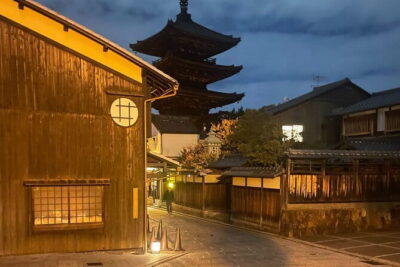
Dusk turns Kyoto streets into a film set, and this 2-hour walk takes you into Gion and Higashiyama when the atmosphere finally slows down.
I love the timing: you’re out for sunset and those after-dark scenes that make Kyoto feel extra cinematic.
What I like even more is the start at Kyoto Ebisu Shrine and the coin-toss ritual for prosperity. You also get temple grounds and classic wooden-townhouse streets, but a key consideration is that you might not always spot a maiko or geiko along the route.
In This Review
- Key highlights at a glance
- A 2-hour Geisha-at-dusk route that’s all about timing
- Donguri-bashi Park: your meeting point and photo start
- Kyoto Ebisu Shrine: the coin-toss ritual for prosperity
- Kennin-ji Temple grounds: quiet before the streets get loud
- Hanamikoji Street: the townhouse corridor and maiko/geiko chances
- Gion Shirakawa and the Shirakawa River at dusk
- Price and pace: does $20 feel worth it?
- Guide quality matters: why Romi’s style stands out
- What to bring (and what can trip you up)
- Who should book this dusk stroll, and who might not love it
- Should you book Geisha at Dusk?
- FAQ
- How long is the tour?
- Where is the meeting point?
- Is the tour in English?
- What’s included in the price?
- Is a meal included?
- What should I bring?
- What places does the tour include?
- Is the maiko or geiko sighting guaranteed?
- What is the Ebisu Shrine ritual?
- What is the cancellation policy?
Key highlights at a glance
- Ebisu Shrine coin-toss for a playful, prosperity-focused ritual you won’t see at every shrine
- Kennin-ji Temple grounds and the famous Wind and Thunder Gods artwork
- Hanamikoji Street townhouses with photo stops in the most atmospheric section of the old streets
- Gion Shirakawa at dusk for riverside walking and traditional wooden architecture
- English guide with small-group attention (Romi’s style stands out in the feedback)
- A practical 2-hour pace built for seeing a lot without feeling rushed
A 2-hour Geisha-at-dusk route that’s all about timing
This is a short walking tour, and that’s part of the value. Instead of trying to cram multiple neighborhoods into one long day, you get a focused evening loop designed for the light changing over Kyoto.
You’ll start at Donguri-bashi Park (団栗橋公園). From there, the route flows into Kyoto’s classic old-street world—wooden townhouses, temple calm, and the river-side mood that makes people fall for Kyoto in the first place. If you’re the type who likes photos but also wants context, a local guide is the difference between seeing pretty streets and actually understanding what you’re looking at.
One practical note: this is still a walking experience. Comfortable shoes matter more than you think, especially around uneven stone and older lanes.
You can also read our reviews of more tours and experiences in Kyoto.



Donguri-bashi Park: your meeting point and photo start
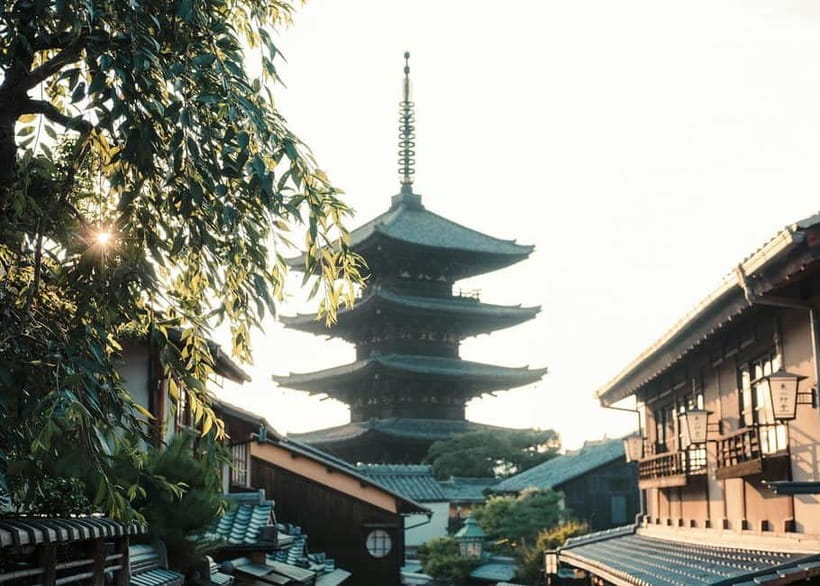
You meet your guide at Donguri-bashi Park. It’s a smart setup because it gives you an easy reference point and a natural starting moment before you begin moving into the historic core.
Expect a quick orientation and then a short run of photo stops and guided moments. Those early “pause and look” segments matter, because Kyoto streets can feel like one long postcard when you first arrive. Having someone point out what to notice—especially in the evening—keeps you from wandering past the best angles.
If you like planning around light, this start helps. The evening shift in Kyoto is real: shop signs, temple gates, and lantern-style lighting don’t hit the same way at midday.
Kyoto Ebisu Shrine: the coin-toss ritual for prosperity
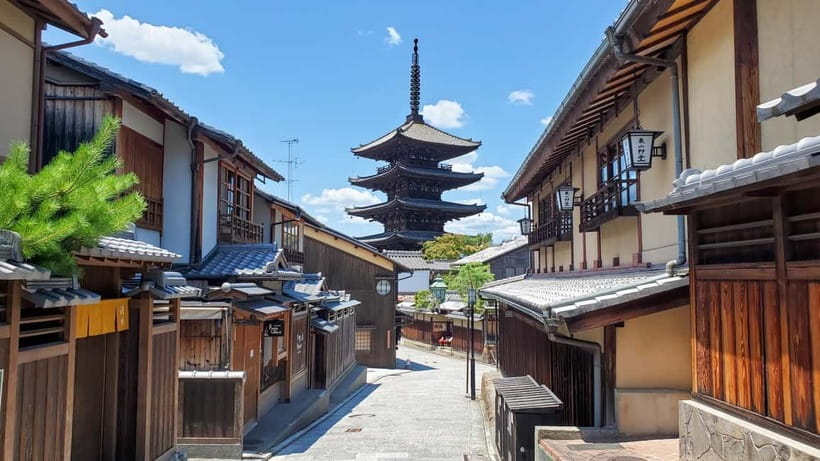
The tour’s first major stop is Kyoto Ebisu Shrine, dedicated to Ebisu, one of Japan’s Seven Lucky Gods and the deity of prosperity. That detail matters, because it turns a quick shrine visit into something you can actually connect to.
The standout part is the unique ritual: you toss a coin into a box beneath Ebisu’s smiling face. It’s fun, simple, and memorable—exactly the sort of interactive moment that makes a guided walk feel different from a self-paced wander.
Why it’s worth caring about:
- It gives the shrine a purpose beyond viewing. You’re participating, not just passing through.
- Ebisu’s prosperity theme fits the dusk timing: it feels like a hopeful start to the evening.
- It’s the kind of local odd-but-meaningful tradition you can’t easily recreate from memory later.
If you’re traveling with curiosity (and a camera), this is the moment to slow down and take a few photos. Your guide can also help you understand what you’re seeing beyond the surface.
Kennin-ji Temple grounds: quiet before the streets get loud
From Ebisu, the route moves into Kennin-ji Temple grounds. This is where the tour gives you contrast: from shrine ritual to temple calm.
You’ll pass through the main gate of Kennin-ji, a place known for cultural treasures, including the famous “Wind and Thunder Gods” picture. Even if art isn’t your top priority, this kind of stop changes the whole feel of the evening. You get that shift from street motion to stillness, which makes the later lanes along Hanamikoji and Gion feel even more special.
What to look for during this section:
- The atmosphere of the temple grounds itself, not just one specific “thing to photograph”
- The gate area as a transition point—Kyoto really does “shift gears” as you move between street and sacred space
- The Wind and Thunder Gods reference as your anchor for understanding why Kennin-ji is remembered
A small drawback: temples can mean less formal sightseeing time. If you’re looking for nonstop street views, this is still worth it, but it’s a calmer segment.
Hanamikoji Street: the townhouse corridor and maiko/geiko chances
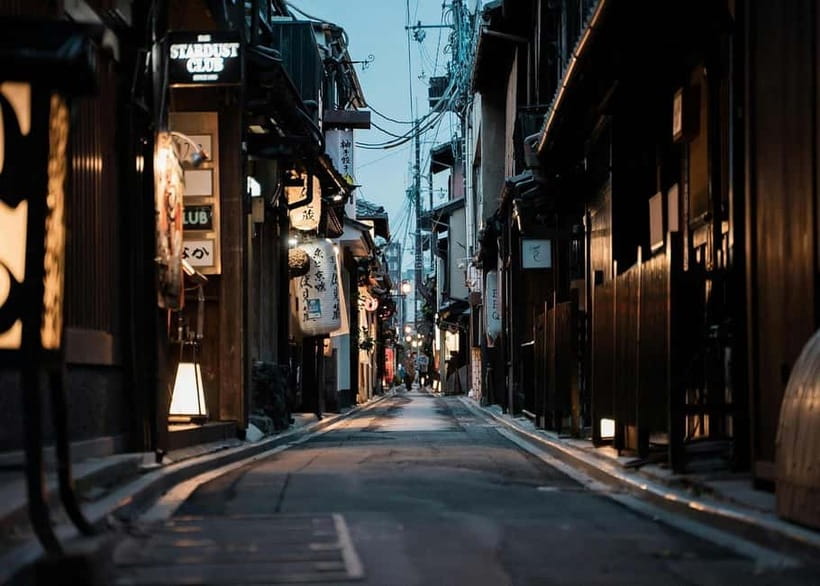
Then comes Hanamikoji Street—Kyoto’s famous old-street mood in one concentrated stretch. This is the part of the walk where the atmosphere turns from quiet to lively and unforgettable.
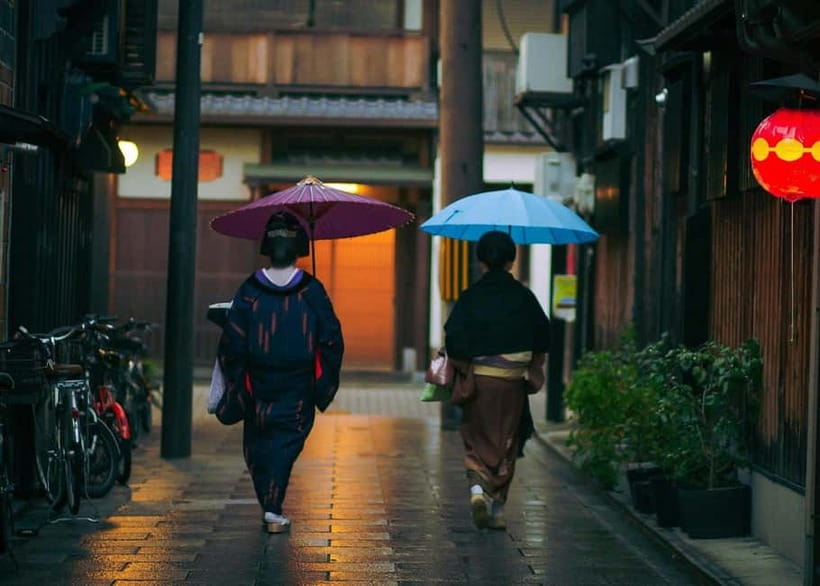
You’ll stroll along the preserved traditional townhouses and take in the street’s energy. This is also the area where, if you’re lucky, you may catch a glimpse of a maiko or geiko passing by.
Important expectations to manage:
- You’re not guaranteed to see performers.
- Evening is a good time to look, but Kyoto scheduling and routes vary.
I like this section because it teaches you how to look. With a guide, you start noticing the details that make Hanamikoji feel “Kyoto” rather than just scenic: the townhouse style, the street rhythm, and the way the neighborhood holds its identity even with visitors around.
If your goal is photography, this is a good place to pause often. A few minutes with the right viewing angle beats rushing for a single perfect shot.

Gion Shirakawa and the Shirakawa River at dusk
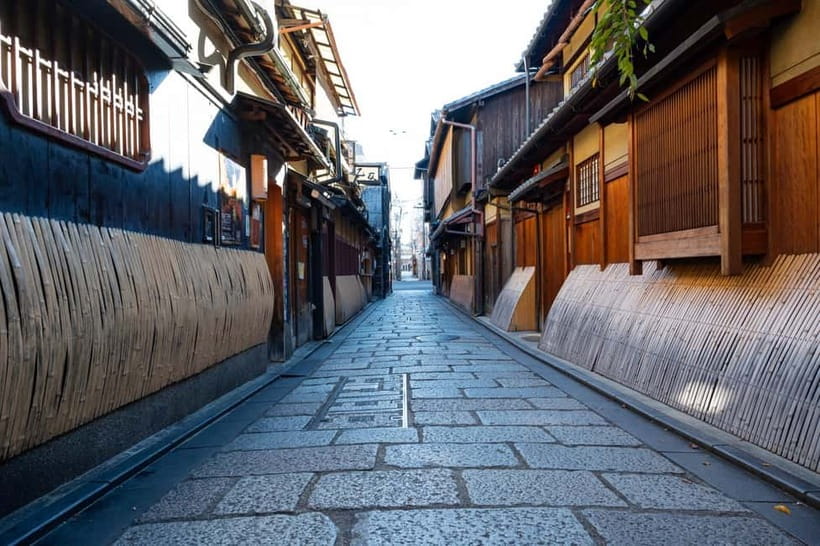
The tour’s final big visual payoff is Gion Shirakawa. Here you walk along cobblestone paths lined with traditional wooden townhouses by the Shirakawa River.
This area is all about how Kyoto looks when the light softens. At dusk, the river-side scenes feel less like sightseeing and more like you’re walking through a story that’s already been running for centuries. The clear river and the wooden structures create a strong sense of place even if you’re not a “history nerd.”
Why this ending works well:
- It’s timed for mood, not just landmarks.
- The river and cobblestones naturally slow you down.
- It wraps the evening with that classic Kyoto look—especially after you’ve seen Ebisu Shrine and Kennin-ji.
If you’re the type who likes to linger, this is the best segment to do it. Just don’t forget you’re on a guided timing plan, so stay close when your guide moves you to the next section.
Price and pace: does $20 feel worth it?
At $20 per person for a 2-hour guided walk, the value comes down to what you’re buying: context, timing, and a route that connects the major “Kyoto feeling” stops without wasting your evening on guesswork.
Here’s what you’re getting:
- A local English guide
- A compact route linking Ebisu Shrine, Kennin-ji, Hanamikoji Street, and Gion Shirakawa
- A few photo stops plus walking time where your guide can point out details that are easy to miss alone
What you’re not getting:
- A meal (so plan your timing for dinner after)
The best way to judge the cost is to compare it to how much effort it would take to stitch together these stops on your own while also learning what’s meaningful. If you enjoy asking questions, this format pays off quickly. One of the standout points in the feedback was that the tour is set up as a small-group experience, so the guide can answer questions instead of talking at you the entire time.
Guide quality matters: why Romi’s style stands out
The guide’s approach can make or break short tours, and the name Romi shows up repeatedly in the feedback. What people appreciated most wasn’t just information—it was the way Romi connected details to everyday understanding.
A few things that come through clearly:
- Romi explains significance in Japanese culture, so stops feel more than scenic
- There’s an easy question-friendly vibe, so you don’t feel locked into a one-way lecture
- Communication ahead of time can be simple, including WhatsApp-style contact
- The tone is warm and friendly, which helps you enjoy the evening rather than just “complete the route”
Also, the group size being kept small helps here. In Kyoto, lots of people just want a quick photo and move on. With a smaller group, your guide can adapt and answer what you actually care about.
What to bring (and what can trip you up)
Come prepared so the walk feels good, not like a chore.
Bring:
- Comfortable shoes
- A camera
Be ready for:
- Some walking on cobblestones and older paths
- The fact that a maiko or geiko sighting isn’t guaranteed
- Evening temperatures and changing light, which can affect how long you want to stop for photos
If you’re prone to getting impatient when a tour includes slower temple or river sections, you’ll want to mentally budget for that calm. This tour earns its payoff by spacing the quiet and lively moments in a sensible way.
Who should book this dusk stroll, and who might not love it
This tour is a great fit if you:
- Want a focused evening walk rather than an all-day itinerary
- Like cultural context, not just landmark checkmarks
- Enjoy photography, especially around dusk light
- Want a playful shrine moment, like the Ebisu coin-toss ritual
You might consider skipping or swapping to a different option if you:
- Only care about one type of attraction (like exclusively street scenes)
- Get annoyed by the uncertainty around seeing a maiko or geiko
- Need a tour that includes food during the 2 hours
Should you book Geisha at Dusk?
Yes, if you want Kyoto in a tight, well-timed package. The route hits the emotional sweet spots: a shrine ritual with meaning, temple calm with iconic art, and classic old-street + river-side scenes at dusk. For $20, the guide-led context and the emphasis on evening atmosphere make it feel like real value, not just a walk for the sake of walking.
Book it with one expectation in mind: it’s about the feeling and the culture, not guaranteed performer sightings. If you go in curious and patient, you’ll come away with more than photos—you’ll understand what the places are telling you.
FAQ
How long is the tour?
The tour lasts 2 hours.
Where is the meeting point?
Meet your guide at Donguri-bashi Park (団栗橋公園).
Is the tour in English?
Yes, the live guide speaks English.
What’s included in the price?
A local guide is included.
Is a meal included?
No, meals are not included.
What should I bring?
Bring comfortable shoes and a camera.
What places does the tour include?
The experience includes Kyoto Ebisu Shrine, Kennin-ji Temple grounds, Hanamikoji Street, and Gion Shirakawa (along the Shirakawa River area).
Is the maiko or geiko sighting guaranteed?
No. You may not always encounter maiko or geiko during the tour.
What is the Ebisu Shrine ritual?
You toss a coin into a box beneath Ebisu’s smiling face.
What is the cancellation policy?
Free cancellation is available up to 24 hours in advance for a full refund.