REVIEW · KYOTO
Hanakoushi cotton Scarf Class
Book on Viator →Operated by Kyoto Shibori Museum · Bookable on Viator
Handmaking a scarf in Kyoto feels like time travel. This private sekka shibori class at the Kyoto Shibori Museum teaches the hanakoushi shibori method and ends with a scarf you can actually use back home. You also get a museum visit during the dyeing process, so it is not just craft, it is craft plus context.
Two things I especially like are the short, focused format and the fact it is private for your party, so you are not squeezed into a big group. The other win is that the teacher walks you through the core steps: pick a color, fold the fabric in the specific way, then dye it and wait for it to set.
One consideration: it is brief—about 30 minutes up front and sometimes up to 60 including drying and museum time—so if you want a longer, more elaborate workshop with tons of different techniques, this may feel too compact.
In This Review
- Key points before you go
- Kyoto Shibori Museum: the kind of workshop that teaches by doing
- How the 30- to 60-minute sekka shibori session actually flows
- Choosing your color and learning hanakoushi folding without getting lost
- What to do while your scarf dries: museum time that makes the lesson stick
- Private class benefits: why paying $43.35 can feel like more than a souvenir
- What you take home (and how to think about scarf type)
- Museums plus shopping: plan to spend, but spend smarter
- Practical details: where it is, how long you should plan, and what to bring
- Who should book this Kyoto shibori scarf class
- So, should you book it
- FAQ
- What will I make in the class?
- How long does the Hanakoushi cotton Scarf Class take?
- Is it a private class?
- Where do I meet for the class?
- Can I use a mobile ticket?
- What do I do while my scarf dries?
- What is the cancellation policy?
Key points before you go

- Private class for your party: you get instruction without sharing your attention with strangers.
- Sekka shibori + hanakoushi folding: you learn a traditional folding-and-dye approach tied to Japanese handcraft.
- You choose a color and dye a scarf: the hands-on part is the main event.
- Drying time becomes museum time: you browse shibori art, tools, and samples while your scarf sets.
- You leave with a wearable souvenir: the finished scarf is the takeaway.
Kyoto Shibori Museum: the kind of workshop that teaches by doing
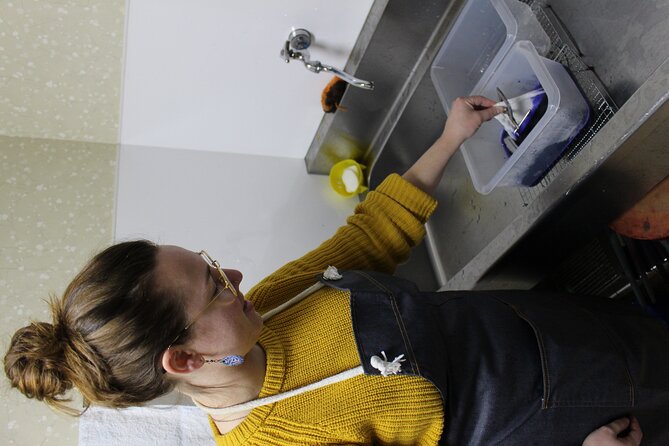
If you like Japan’s crafts, you already know the secret: the fastest way to understand is to make something yourself. This class is built around that idea. You work at the Kyoto Shibori Museum, where the shop and displays support what you are learning, so the scarf in your hands makes the museum feel real, not like window dressing.
A nice detail here is the framing. You are not just given a finished craft kit and told to follow steps. You learn how shibori works—how folding choices affect the patterns—and that makes your scarf feel tied to the method, not random.
The venue matters too. The museum is small enough that you can realistically see plenty in the waiting window, but it still has enough material (art pieces, tools, and samples) to give you something to look at while the dye is drying.
You can also read our reviews of more tours and experiences in Kyoto

How the 30- to 60-minute sekka shibori session actually flows
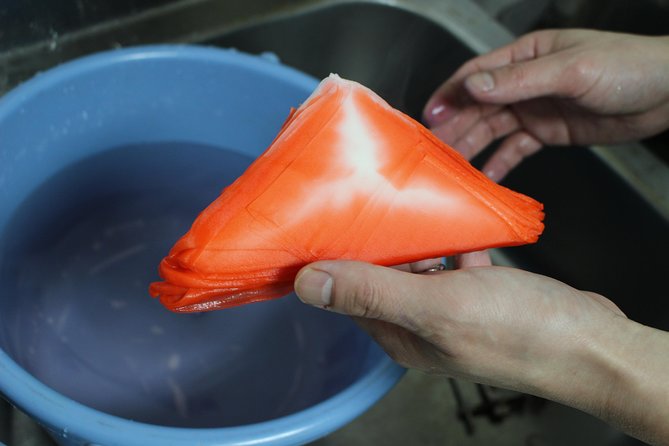
The core lesson runs about 30 minutes to 60 minutes per class. The workshop description is short and sweet: you will dye a 70-inch x 17-inch (175 cm x 50 cm) cotton scarf using the hanakoushi shibori method.
Here’s the rhythm you should expect:
First, you start with color choice. Then you learn the specific folding pattern used for the method. This part is where shibori stops being a craft word and becomes a practical skill: the fold is the plan, the dye is the execution.
Next comes the dye step. You dye your folded fabric with your chosen color. After that, you wait while it dries. That drying time is not dead time; it is when you explore the museum displays.
By the end, you leave with your finished scarf. That is what makes the class feel complete. You are not just watching dye happen; you end with proof of the process.
Choosing your color and learning hanakoushi folding without getting lost
The class starts with a clear decision: pick your favorite color. That is more than personal preference. Color is part of the final character of shibori patterns, so choosing early helps you feel ownership from the beginning.
Then comes the folding. The folding you learn is tied to the hanakoushi approach within the broader sekka shibori family. Even if you do not memorize the terminology, you will understand the logic quickly: fold in a particular way, then dye. The pattern you see at the end comes from what the fabric is doing under the dye and what it is protecting from it.
One helpful thing from participant feedback is that instruction tends to be friendly and easy to follow. People mention being guided in plain English, and I like that the process is described as simplified for tourists rather than slowed down into a multi-hour knot-tying exercise.
If you have never done fabric crafts, this is a good first stop. You are learning the key mechanics—folding and dyeing—without needing prior experience.
What to do while your scarf dries: museum time that makes the lesson stick
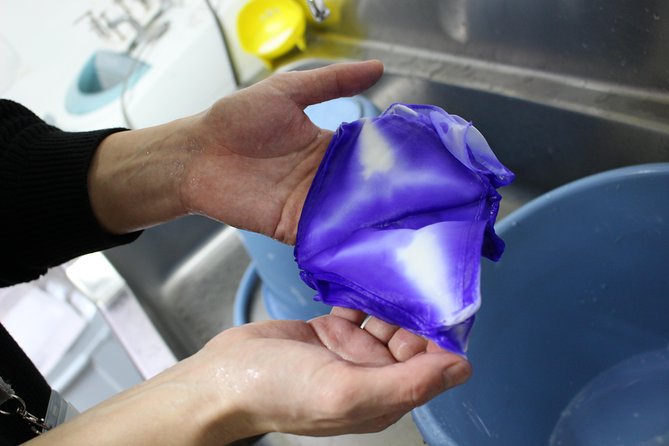
The workshop builds in a smart pause: about 30 minutes of drying time. This is perfect because you get to shift from hands-on work to seeing how shibori shows up as art.
While the dye sets, you can browse:
- shibori art pieces
- tools and samples
- displays that help you connect your scarf to the wider craft world
This is where the value increases. A lot of craft classes turn into a repeatable action with no context. Here, the museum gives you context while you are already waiting, so you do not waste time.
You also get a chance to see quality up close before shopping. That helps you avoid impulse buying. You can compare items and fabrics you like against what you learned in class, then decide what is worth carrying home.
Private class benefits: why paying $43.35 can feel like more than a souvenir
At $43.35 per person, you are paying for more than a scarf. You are paying for a short private instruction session focused on a traditional technique, plus museum access during the drying period.
The private format is a real advantage in a craft class. When it is just your party, you can ask questions at the exact moment they matter. It also makes the lesson calmer. You are not taking turns while dye steps are happening.
Also, because you are making a specific-sized scarf (70 x 17 inches / 175 x 50 cm), you end up with something substantial. This matters if you care about practical souvenirs—things you can actually wear or gift, not just a small trinket.
One thing I’d factor in: if your group is small, the private setup can be especially worth it. For two people, it becomes a shared activity with a tangible end result. If you are traveling solo, it can also work well; one person feedback described being guided through the process with close attention.




What you take home (and how to think about scarf type)
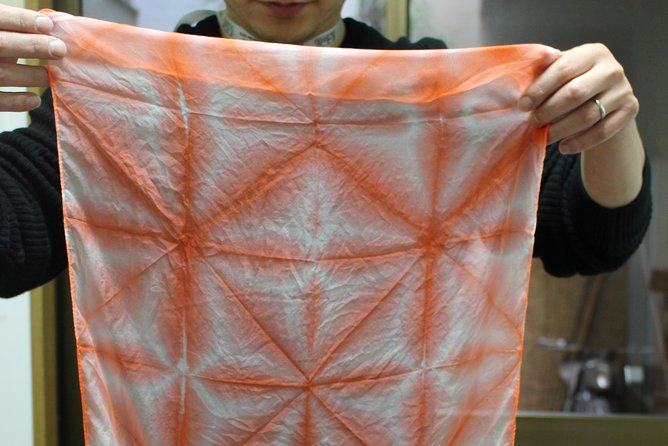
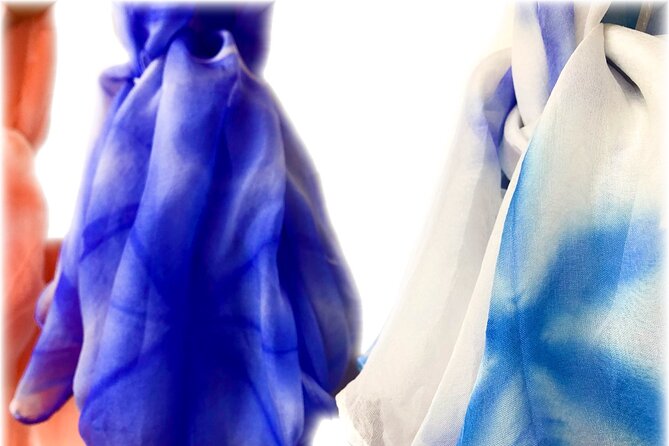
The workshop description is clear about the input: you work with a cotton scarf. The finished item is presented as a scarf souvenir from Kyoto, made from the dyed fabric you create.
Some participant notes mention silk in connection with the finished scarves. Since the official class format you have here emphasizes a cotton scarf, you should treat any silk mention as something to confirm when you book. A quick question to the provider can save disappointment if you are buying for a specific fabric preference.
Either way, shibori scarves tend to look best when they have that handmade texture and pattern contrast. If you like crafts with visible process—fold marks, dye boundaries, and pattern control—this is the kind of souvenir you will enjoy for years.
Museums plus shopping: plan to spend, but spend smarter
The museum shop is part of the experience. During and after the lesson, you can browse shibori items, souvenirs, and fabrics.
Here’s how I’d shop with a clear head:
- First, look at the items that connect to what you learned: shibori patterns and fabric applications.
- Then check what you are buying in terms of use. A scarf is easy. Bags or smaller textile items can be a good add-on if you want something lighter.
- Finally, decide whether you want to buy for decoration or for daily wear.
A few people mention buying extra items—like purses and clothing-like textile pieces—for family. That is a good approach: treat the scarf as the personal keep, then pick one or two additional items that match your loved ones’ styles.
Practical details: where it is, how long you should plan, and what to bring
Meeting point: Kyoto Shibori Museum, 135-5 Shikiamichō, Nakagyo Ward, Kyoto, 604-8261, Japan.
The activity ends back at the meeting point.
Timing: Expect the class to be around 30 minutes for your hands-on portion, with total time often 30 to 60 minutes depending on drying and museum time. I’d block at least an hour in your day so you do not feel rushed.
Ticket format: You receive a mobile ticket, so you can keep everything in your phone.
Getting there: It is near public transportation, so it works well even on a packed Kyoto schedule.
How many people: It is private for your party, so you are not competing with strangers for space or instruction.
Language: Most people can participate, and feedback includes that staff speak solid English. Still, if you have specific questions about fabric care or the method, having those written down helps.
What to bring: The essentials are just yourself and a bit of curiosity. If you are sensitive about dye scent or stains, wear clothes you do not mind getting a little close to the dye process. Nothing is described that requires special gear, so keep it simple.
Who should book this Kyoto shibori scarf class
This class fits best if you want a short, hands-on Kyoto activity that is genuinely creative and practical. It is also a great pick if you enjoy learning traditional crafts in a place that has actual displays, not just a one-room studio.
I especially think it is a good match for:
- couples who want a shared activity that ends with something wearable
- solo travelers who like calm, one-on-one attention in a small museum setting
- anyone shopping for gifts and preferring handmade items tied to a method
If you are looking for a long, step-by-step deep technical course with multiple dyeing rounds, this may feel too short. But if you want a memorable Kyoto souvenir that comes from your own hands, it hits the sweet spot.
So, should you book it
I’d book it if you want a Kyoto-made keepsake with real craft context and you like the idea of learning how folding controls pattern. The private setup makes it feel personal, and the built-in museum time means you still get value even during the drying pause.
I would hesitate only if your schedule is so tight you cannot afford about an hour, or if you want a more advanced class with lots of variations. For most people seeking a hands-on cultural activity in Kyoto, this is the kind of workshop that makes your trip feel handmade.
FAQ
What will I make in the class?
You will learn how to dye a scarf using the hanakoushi shibori method. The class description specifies a 70-inch x 17-inch (175 cm x 50 cm) cotton scarf, and you leave with the finished scarf as a Kyoto souvenir.
How long does the Hanakoushi cotton Scarf Class take?
The experience is listed as about 30 minutes. The workshop notes that classes usually take between 30 minutes and 60 minutes per class.
Is it a private class?
Yes. It is a private tour/activity, so only your group participates.
Where do I meet for the class?
You meet at Kyoto Shibori Museum, 135-5 Shikiamichō, Nakagyo Ward, Kyoto, 604-8261, Japan. The activity ends back at the meeting point.
Can I use a mobile ticket?
Yes. The activity uses a mobile ticket.
What do I do while my scarf dries?
While your fabric is drying (about 30 minutes), you can learn more about shibori and browse art pieces, tools, and samples in the museum. The museum shop is also available.
What is the cancellation policy?
Free cancellation is available. You can cancel up to 24 hours in advance for a full refund. If you cancel within 24 hours of the start time, no refund is provided.