REVIEW · KYOTO
Kyoto Early Bird English Tour: Fushimi-Inari and Arashiyama
Book on Viator →Operated by Tomodachi Tours · Bookable on Viator
Kyoto hits different before the tour buses wake up. This early start makes Fushimi Inari and Arashiyama feel calmer, and you’ll get more time for photos without shoulder-to-shoulder chaos. The main gotcha: the price doesn’t include the separate transit fee (¥390), and if you’re a stamp collector, you may find not everything opens as early as you hope.
I like that this is a small-group format (max 8), so your English-speaking guide can actually pace the walk and answer questions. You also get a mobile ticket, which makes check-in easier when you’re half-asleep near Kyoto Station.
In This Review
- Key highlights to know before you go
- Why this early Kyoto route feels worth it
- Meeting at Kyoto Station: the start that sets the tone
- Stop 1: Fushimi Inari-taisha before the torii stampede
- Stop 2: Arashiyama Bamboo Forest street, with breathing room
- Stop 3: Tenryu-ji Temple and its Zen garden pause
- Stop 4: Togetsu-kyo Bridge for Heian-era “moon crossing” photos
- English guide value: pacing, history, and getting your photos right
- Price and what you still pay: is it good value?
- Logistics you’ll care about on the ground
- Who should book this tour (and who should skip it)
- Should you book the Kyoto Early Bird English Tour?
- FAQ
- What sights are included in the Kyoto Early Bird tour?
- Is the Tenryu-ji Temple admission fee included?
- How big is the group for this tour?
- Where is the meeting point?
- How long does the tour last?
- Is transportation included in the price?
- Do I need to bring money for food and drinks?
- Can I cancel and get a full refund?
Key highlights to know before you go
- Early-morning timing for calmer torii gates and less crowded bamboo paths
- Small group size (max 8) for smoother pacing and easier photo stops
- UNESCO Tenryu-ji included with the admission fee handled for you
- Public transportation as part of the day (you’ll cover the ¥390 transit fee)
- Guide support for the route and photo spots, often with extra attention to pictures
Why this early Kyoto route feels worth it
Kyoto’s best-known places are famous for a reason. The trick is timing. When you arrive early, you trade the later-day crush for that rare feeling of moving through temples at human speed.
This tour pairs two heavyweight icons—Fushimi Inari and Arashiyama—plus a world-class temple stop (Tenryu-ji) and a classic river crossing (Togetsu-kyo Bridge). The total time is about 4 to 5 hours, so you’re not spending your whole day “commuting between postcards.”
The small-group cap (up to 8 travelers) matters. In big groups, you rush, you lose the line you want, and you spend time waiting for everyone to catch up. Here, you’re more likely to get that gentle flow where you can pause, look up, and still stay on schedule.
You can also read our reviews of more tours and experiences in Kyoto.



Meeting at Kyoto Station: the start that sets the tone
The tour meets at a very specific spot: the 7-Eleven Heart-In at JR Kyoto Station Central Entrance Store, on Karasuma-dori side (烏丸通塩小路下ル Higashishiokojicho, Shimogyo Ward, Kyoto).
That detail matters because Kyoto Station can feel like an entire city inside one building. Having a clear meeting anchor means you spend less time wandering and more time walking the day you came for.
Also note: the tour ends back at the meeting point. So you’re not stuck hunting down your way back at the end, when your legs are already negotiating with you.
Stop 1: Fushimi Inari-taisha before the torii stampede
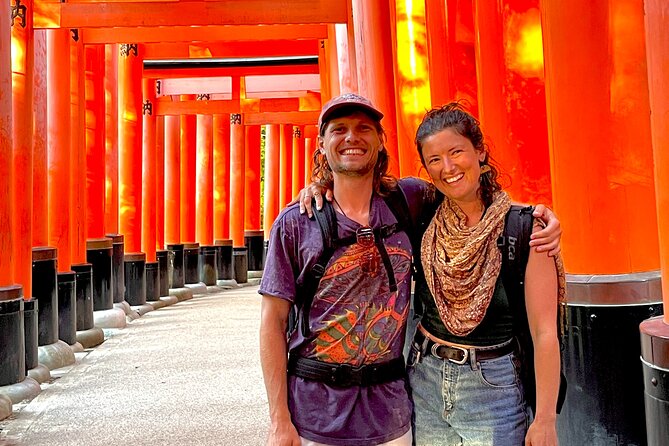
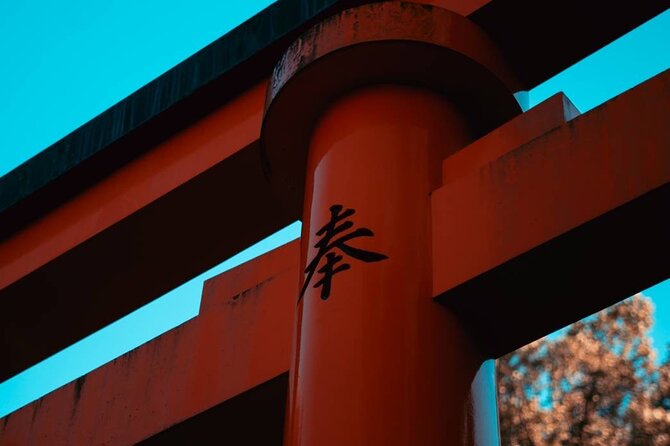
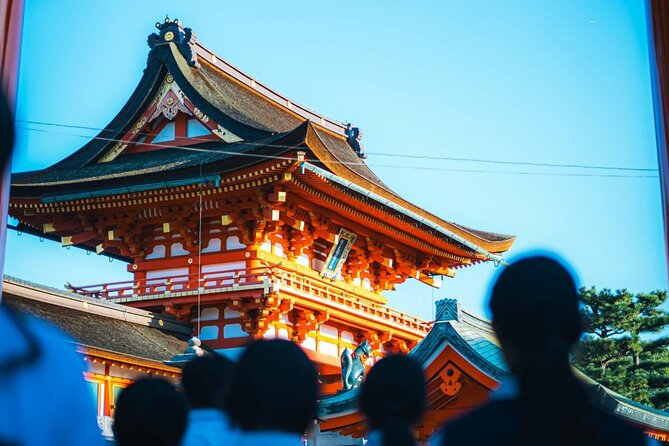
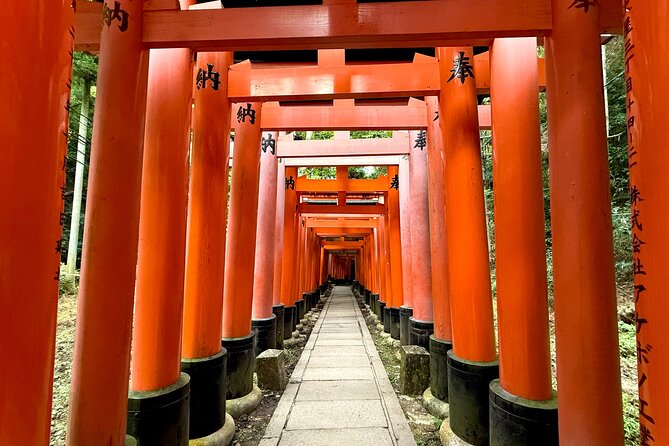
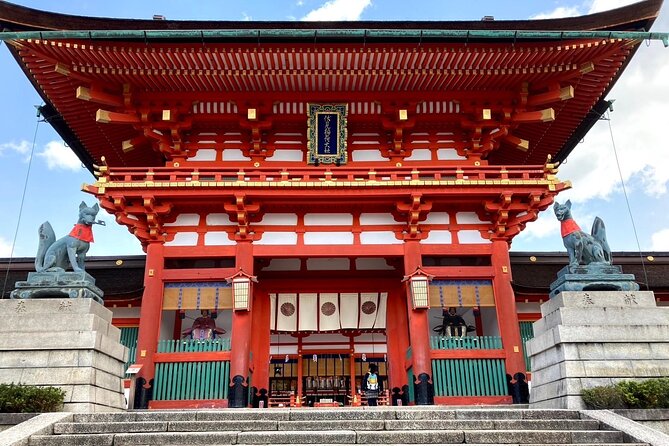
Fushimi Inari-taisha is the spiritual heart of Kyoto’s Inari worship, and the famous torii gates are what make you stop in your tracks. The gates climb upward on Mount Inari, and even the walk through the lower sections feels like you’ve stepped into a long, narrow tunnel of color and texture.
In the tour you’ll spend about 1 hour 30 minutes here, which is a good amount of time for doing two things at once: enjoying the shrine atmosphere and still having the energy to continue rather than going full mountain-climb mode.
What I especially like about starting early is how it changes the whole vibe:
- You’re more likely to notice the smaller shrine details that people rush past later.
- You can take photos without constantly repositioning around moving crowds.
- The route feels less like a theme-park line and more like a pilgrimage path.
One caution if you care about stamps: one review noted that a temple wasn’t actually open early enough for collecting a stamp, forcing a return later. I can’t promise the exact same situation for every stop on every day, but if you’re collecting goshuin (or similar stamps), build in some flexibility or double-check opening times on the day.
Stop 2: Arashiyama Bamboo Forest street, with breathing room
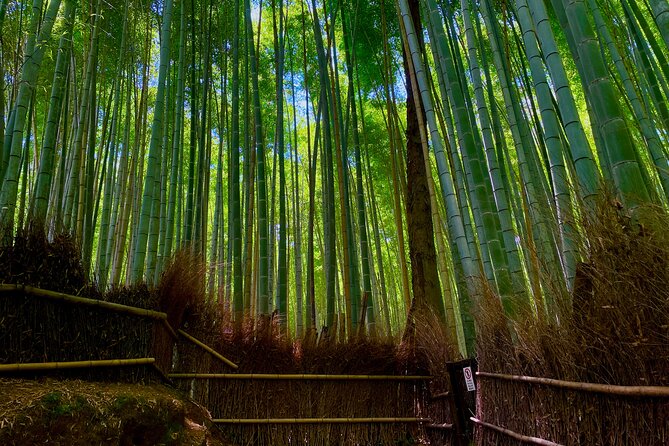
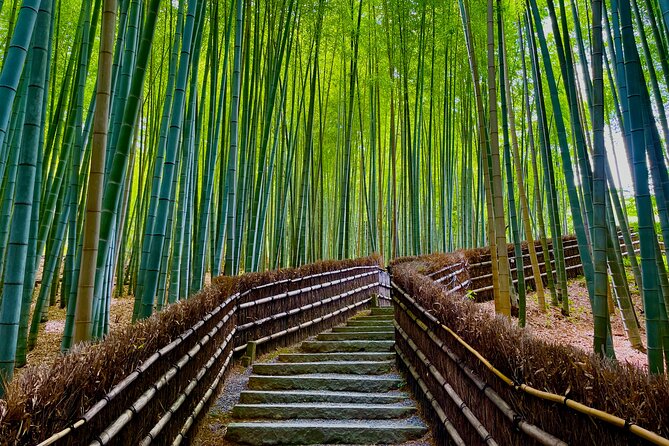
Then you head to Arashiyama’s bamboo area, where the main attraction is simple: tall bamboo stalks, narrow paths, and that light-and-shadow look you can’t fake with a camera.
This stop is about 1 hour. That’s enough time to:
- walk into the grove
- step back out to reset
- grab photos from angles that won’t be swallowed by crowds later in the day
The bamboo forest is one of those Kyoto sights that can feel overcrowded fast. The early timing is the whole point of the tour here. When you go first, you’re more likely to see the space between stalks instead of just seeing heads and phones.
A practical tip: if you want clean photos, wear shoes you can trust on Kyoto sidewalks and keep your camera ready during the transitions—right at the entrance and along the first bend is where lighting often looks best.
Stop 3: Tenryu-ji Temple and its Zen garden pause
Next up is Tenryu-ji Temple in Arashiyama. It’s UNESCO World Heritage, and it’s known for its Zen garden design and mountain views.
You’ll have about 1 hour here. The admission fee is included, so you’re not dealing with ticket counters mid-walk. That’s a small thing, but it matters: it keeps your schedule smooth and reduces that moment of confusion when everyone is standing around figuring out payment.
Tenryu-ji works well in an early itinerary because it’s a slower contrast to the shrine and bamboo sections. Even if you’re not a “sit and meditate” person, you’ll probably enjoy having a place where the pace naturally lowers.
If you’re sensitive to weather, this stop can be a bonus. One experience in the tour notes that rain showed up during the day and crowds were still lighter than usual. Kyoto weather can turn your plans into a slightly different day, but early starts often keep the crowd pressure lower even when conditions change.

Stop 4: Togetsu-kyo Bridge for Heian-era “moon crossing” photos
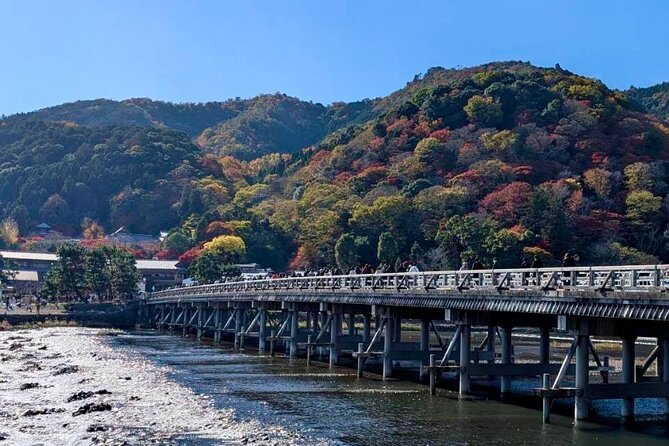
Togetsukyo Bridge is short stop energy—in a good way. It means “Moon Crossing Bridge,” and the current bridge dates to 1934, with origins tied to the Heian Period.
You’ll spend about 15 minutes here and it’s mostly about the quick photo window and the river perspective. This is a nice final capstone because:
- you get a classic Arashiyama landmark
- you can take a few photos without adding more walking fatigue
- the day ends before you hit late-afternoon exhaustion
If your goal is photos of the bridge without a wall of people, this is another reason the early timing matters. Even 15 minutes can feel generous when you’re not dodging nonstop foot traffic.
English guide value: pacing, history, and getting your photos right
This tour’s biggest invisible value is the guide. It’s not just “here’s what you’re seeing.” It’s more like, they help you understand why it matters, and they help you avoid wasting time.
Based on the guide names shown in past departures, English guides have included Vincent, Caleb, Hiro, Jem, Eri, Haruka, and Cade. You’ll likely notice a similar pattern across them: clear instructions, smooth group movement, and history explained in a way that keeps you interested while walking.
A couple of details that stood out in the feedback:
- Guides helped people navigate the city and public transport as a group.
- Some guides took extra effort with photo timing—getting you into the right spots and even helping take pictures.
- Many guides kept the pace controlled so you got time for photos without the day falling apart.
One more human note: small-group tours mean you’re in closer proximity to the guide and other people. One review mentioned an issue with body odor at the meeting point. I can’t control that for you, but if you’re very sensitive to smells, consider using a strong deodorant and being aware that there’s no magical elimination of human factors on any walking tour.
Price and what you still pay: is it good value?
The tour price is $96.83 per person, and it includes an English-speaking guide and admission fees for the included sights (Tenryu-ji), plus access through Fushimi Inari and Arashiyama bamboo paths as listed.
But you do need to budget extra:
- Transportation fee: ¥390 per person (not included)
- Food and drink: not included
- Hotel pick-up/drop-off: not included
So is $96.83 good value? For the right traveler, yes. You’re paying for three things you’d otherwise have to manage on your own:
1) timing and route design that helps you beat crowds
2) a guide who can keep the experience moving and explain what you’re looking at
3) included admissions for Tenryu-ji, which simplifies one part of the day
The cost feels less compelling if you’re the type who already knows exactly how to get there early and you’d rather spend that money on breakfast, coffee, or extra temple visits. The tour is best when you want someone else to handle the logistics and you want a clean, efficient morning.
Logistics you’ll care about on the ground
This is a walking-and-transit morning. You’re near public transportation at the start, and the tour includes public transit as part of the route, but the ¥390 transit fee isn’t included.
You’ll also want to plan for:
- comfortable shoes (you’re walking between big-name sites)
- weather layers (Kyoto mornings can feel cool at first, then warm fast)
- a camera strategy (decide in advance what you want, then let your guide help you hit good photo spots)
If you’re traveling with a baby or small child, several experiences mention guides being accommodating and flexible. That can make a big difference when your time is limited and you’re trying to keep everyone comfortable.
Who should book this tour (and who should skip it)
Book it if you:
- want an early start to beat crowds at Fushimi Inari and Arashiyama
- like small groups (max 8) with a guide who can manage the flow
- want guided context at Tenryu-ji, not just photos
- value convenience, including Tenryu-ji admission handled for you
You might skip it if you:
- already have a solo plan for the morning and you don’t need a guide
- dislike paying extra transit fees on top of the tour price
- are a strict stamp collector and you can’t handle the risk of early opening limitations at certain places
Should you book the Kyoto Early Bird English Tour?
If your priority is to see Kyoto’s top highlights before the day gets crowded, I think this is a smart booking. The early timing plus the small-group size are the real engines here, and the itinerary hits two must-sees plus Tenryu-ji and Togetsu-kyo Bridge without turning the day into a marathon.
My recommendation is to book if you’re willing to start early and walk comfortably for a few hours. If you’re the sort of traveler who loves freedom over structure, or you’re determined to collect stamps at every stop, add a little extra planning time for opening hours.
FAQ
What sights are included in the Kyoto Early Bird tour?
The tour includes Fushimi Inari-taisha Shrine, the Bamboo Forest in Arashiyama, Tenryu-ji Temple, and Togetsu-kyo Bridge.
Is the Tenryu-ji Temple admission fee included?
Yes. The tour includes the admission fee for Tenryu-ji Temple.
How big is the group for this tour?
This activity has a maximum of 8 travelers.
Where is the meeting point?
The meeting point is 7-Eleven Heart-In at JR Kyoto Station Central Entrance Store, located on Karasuma-dori side near Shimogyo Ward.
How long does the tour last?
The tour duration is about 4 to 5 hours.
Is transportation included in the price?
No. A transportation fee of ¥390 per person is not included.
Do I need to bring money for food and drinks?
Yes. Food and drink are not included.
Can I cancel and get a full refund?
Yes. You can cancel up to 24 hours in advance for a full refund. If you cancel less than 24 hours before the start time, the amount paid is not refunded.