Kyoto matcha becomes personal fast. This private tea ceremony in a hidden townhouse turns a short visit into a step-by-step lesson, with your group getting real attention instead of waiting your turn. I especially like the stone-milling focus and the hands-on cup you make yourself, plus the calm setup that works for families with children. The one trade-off: the whole experience is about 45 minutes, so it’s a taste of the craft, not a slow, multi-session deep study.
You start with a short film and some matcha prep, then move into the demonstration and your own tasting. There’s also time set aside for photos, which matters in Kyoto when you want memories without sprinting between crowds.
In This Review
- Key highlights worth your time
- A hidden townhouse tea ceremony that feels unhurried
- The 45-minute structure: film, stone-milling, and hands-on cups
- 1) Watch footage of tea plantations
- 2) Make matcha powder with stone-milling
- 3) Tea ceremony demonstration
- 4) Hands-on tea making, tasting, and making a latte
- Learning matcha techniques you can actually recreate at home
- What the ceremony feels like for families and kids
- Photos in the right moment, not the wrong one
- Price and value: what $51.24 gets you in Kyoto
- Where to meet and how the session ends
- Who should book this private tea ceremony (and who might not)
- Should you book it?
- FAQ
- FAQ
- How long is the private tea ceremony experience?
- Where do I meet for the tour?
- Is this activity private or shared?
- What do you do during the tea ceremony?
- Is it suitable for children?
- Do I get a mobile ticket?
- How much does it cost?
- Can I cancel for a full refund?
- Who is the experience provider?
Key highlights worth your time
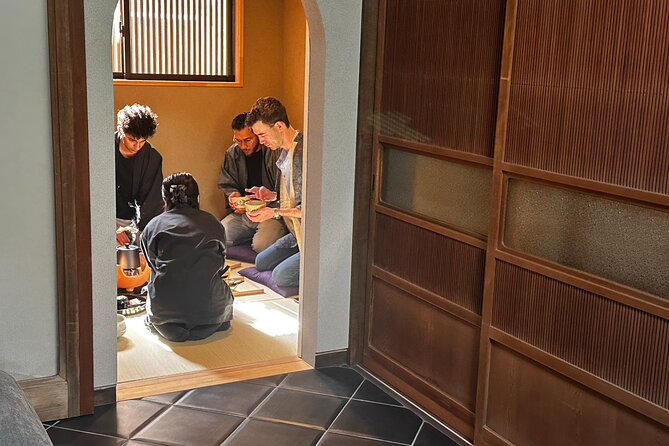
- Private, family-friendly pacing with only your group in a hidden townhouse setting
- Stone-milling matcha powder so you understand what changes when the grind is done right
- A full hands-on sequence: tea making, tasting, and even making a latte
- Photos built in so you don’t have to ask at the worst moment
- A clear, repeatable process you can recreate at home after you leave
A hidden townhouse tea ceremony that feels unhurried
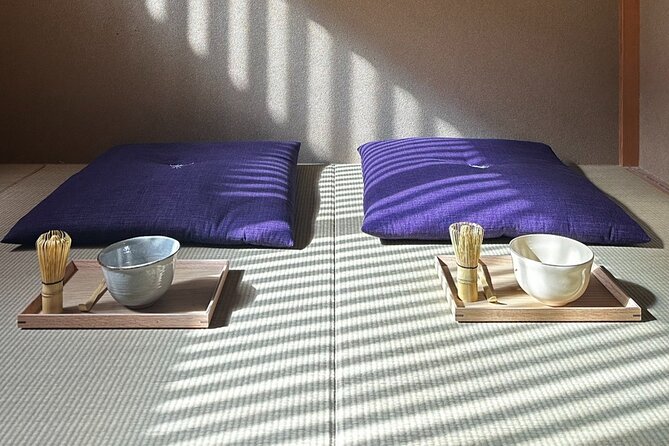
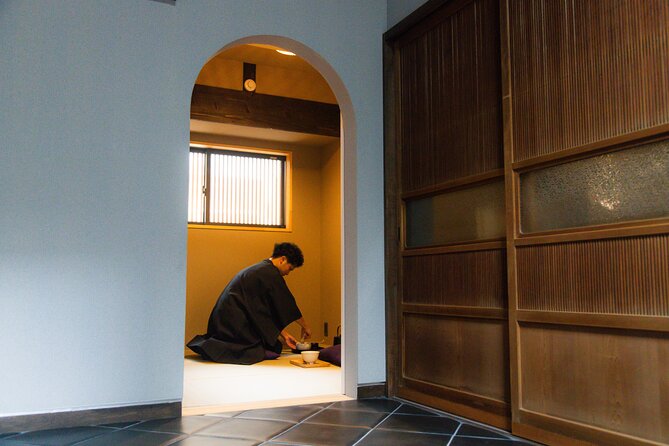
Kyoto tea culture usually comes with crowds, set schedules, and that look you get when you ask a question. This format swaps that out. You meet at WOM-Way of Matcha in Jurakuchō (Kamigyo Ward), then the session happens in a hidden townhouse location tied to the experience.
The biggest value here is not just the setting. It’s the flow. Because it’s private, you’re not competing with other groups for space around the host or the tools. In practice, that means you get time to understand what you’re doing—especially with matcha—without someone rushing you forward.
And yes, this is made to work for kids. Children are welcome, and the experience is described as suitable for families. That matters because Kyoto can be a lot for little ones: lots of walking, long waits, and quiet rules that feel strict. This keeps things short, structured, and interactive.
You can also read our reviews of more private tours in Kyoto


The 45-minute structure: film, stone-milling, and hands-on cups
The session runs about 45 minutes, and the timeline is very clear. Here’s the order you can expect, and what each part is actually teaching you.
1) Watch footage of tea plantations
You begin with viewing footage about tea plantations. It’s not a “lecture theater” moment. It’s there to give you context for what matcha is, where the raw material comes from, and why the details in cultivation matter.
What you’ll get out of this: even if you never become a matcha nerd, you’ll know that matcha starts long before the bowl hits your hands. That makes the later steps feel more meaningful.
2) Make matcha powder with stone-milling
Next comes the hands-on part that people remember: making matcha powder using stone-milling. This is the heart of the experience, because milling affects texture and aroma. You’re not just watching someone do it—you’re learning how the powder process fits into the whole ceremony.
Practical takeaway: if you ever try matcha at home, you’ll better understand why people talk about freshness, grind, and whisking technique. Even if you don’t have stone-milling at home, the logic is now in your head.
3) Tea ceremony demonstration
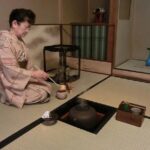
After the prep, the host shows the tea ceremony demonstration. This is where you learn the sequence: what comes first, what tools are involved, and how the motions connect to the taste and texture you’ll see in the bowl.
This part is also a buffer for first-timers. Even if you’ve never seen a ceremony, you’re guided through the “why,” not just the “do this, then that.”
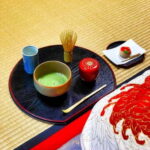
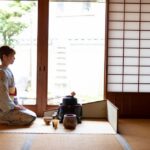
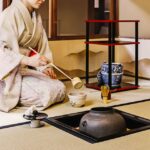
4) Hands-on tea making, tasting, and making a latte
Then it’s your turn. You’ll do tea making and tasting, and the program includes making a latte as well.
That’s a smart add-on for kids and beginners. Tea ceremonies can feel intimidating when you think it’s only for perfect bowls and perfect whisking. Making a latte shifts the tone from strict tradition to hands-on learning. You still get the culture, but you also get a friendly payoff you can understand fast.
One thing to keep in mind: the session is short. You’ll get the key steps, but you won’t have hours of repetition. Go in with curiosity, and you’ll leave with a repeatable process rather than memorized motions.
Learning matcha techniques you can actually recreate at home
A private tea ceremony only has value if you can take something with you. This one is built around matcha preparation techniques you can recreate later.
Here’s what this usually means in real life:
- You’ll learn how the powder preparation connects to what you taste.
- You’ll see the ceremony sequence clearly enough to re-create it without guessing.
- You’ll understand how whisking and serving style influence texture.
The practical advantage of doing this in a private format is that you can ask a direct question when you hit confusion. In a group tour, those questions often get cut off. Here, your group’s pace matters more.
Also, the latte component helps you practice in a different way. If your end goal is a drink you can make for family back home, latte-making becomes a bridge between ceremony and everyday cooking. You can keep the cultural ritual and still make it fit your lifestyle.
What the ceremony feels like for families and kids
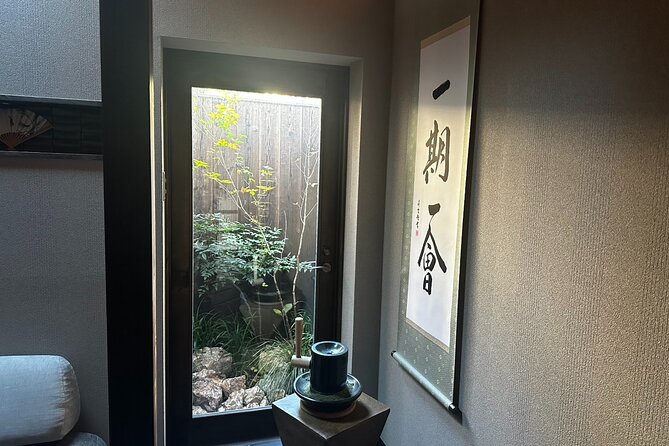
The tour is explicitly described as family-friendly, and children are welcome. That’s a big deal because kids don’t do well with long stillness.
This experience stays structured:
- short film
- a hands-on preparation step
- a guided demonstration
- then your turn to make and taste
That rhythm gives kids something to do at every stage. It also helps adults. You’re not stuck in a silent waiting room while someone else takes photos. You’re moving through a sequence that keeps attention active.
From the host side, past guests have highlighted a warm, careful teaching style. One named example you can take seriously is Yuki, praised for being polite, friendly, and informative. That kind of communication style is exactly what families need in a cultural experience—clear steps, patience, and explanations that don’t talk down to anyone.
Possible consideration: kids might tire quickly if they’re sensitive to small indoor spaces or hands-on steps that require attention. Since the whole thing is about 45 minutes, it’s still a manageable length. Just know it’s interactive, not a passive show.
Photos in the right moment, not the wrong one
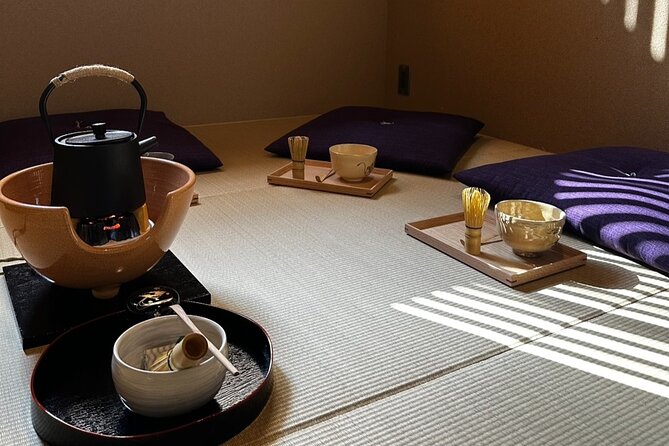
Kyoto is photo-friendly, but tea ceremonies can be tricky. You want pictures, yet you also don’t want to disrupt the experience.
This one builds in time to capture photos of your tea ceremony moment. That’s a real value add because you avoid the awkward timing where everyone is trying to pose while the bowl is at its peak moment.
What to do to get the best shots:
- Pay attention during the steps first, then photograph.
- Treat the bowl and whisking as the “real action,” not just the final mug.
- Let the host’s demonstration set the pace so your photos look natural, not staged.
Because it’s private, you’re also less likely to feel rushed by strangers shifting around you.
Price and value: what $51.24 gets you in Kyoto
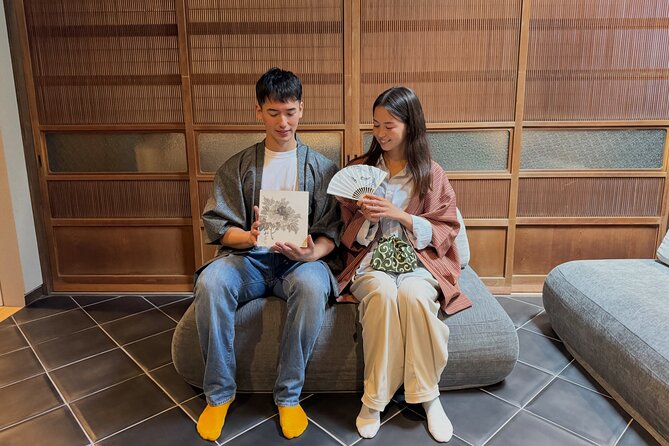
At $51.24 per person, this is not the cheapest thing in Kyoto. But it’s also not priced like a one-size-fits-all group show.
Here’s why it can feel like good value:
- It’s private, so your group gets focused attention.
- The session includes a short film plus step-by-step tea making.
- You do the stone-milling matcha prep.
- You taste what you make.
- You also make a latte.
Many experiences in Kyoto charge for the setting or the performance. This one includes instruction and hands-on participation, which is what usually makes cultural activities worth the money.
Duration matters too. At around 45 minutes, you get a complete experience without eating your entire day. If you’re trying to balance Kyoto sightseeing with something calmer, this fits nicely.
Where to meet and how the session ends
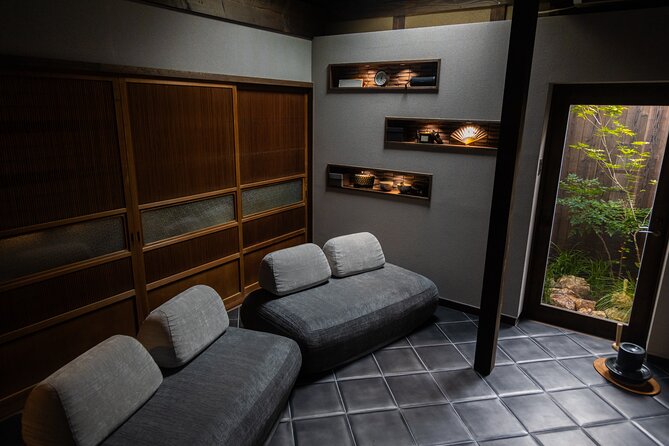
You start at the private tea ceremony location tied to WOM-Way of Matcha: kyoto863-41 Jurakuchō, Kamigyo Ward, Kyoto 602-8156, Japan.
Your session ends back at the meeting point. That keeps things straightforward. You don’t have to plan a second leg right after your tea lesson ends, and you can stack it with nearby walking time once you’re done.
The experience uses a mobile ticket, which is handy if you’re juggling a busy Kyoto itinerary. Confirmation is received at booking, so you should have the details you need before you go.
Who should book this private tea ceremony (and who might not)
This is a strong pick if:
- you want a private Kyoto cultural experience without competing for attention
- you’re new to matcha and want a structured, teachable process
- you’re traveling with kids and want something short, hands-on, and not too stiff
- you care about making a drink you can repeat later, including latte-style
You might think twice if:
- you want a long, slow ceremony with extensive repetition
- you’re mainly after sightseeing and don’t want a structured activity
- you’re expecting a large, open-air Kyoto event (this is a townhouse setting)
Should you book it?
I’d book it if your ideal Kyoto day includes one calm, meaningful stop where you learn something you can do again. The private format, the stone-milling component, and the fact that you make and taste your own tea (plus latte) give you more than a quick photo moment. And for families, the 45-minute structure plus the welcome for children makes it much easier to manage than many longer cultural programs.
If you’re short on time, this also makes sense. You get a complete sequence in one sitting, and you don’t need to squeeze in extra logistics right afterward.
FAQ
FAQ
How long is the private tea ceremony experience?
It lasts about 45 minutes.
Where do I meet for the tour?
You meet at WOM-Way of Matcha, kyoto863-41 Jurakuchō, Kamigyo Ward, Kyoto 602-8156, Japan.
Is this activity private or shared?
It is private. Only your group participates.
What do you do during the tea ceremony?
You watch footage about tea plantations, make matcha powder with stone-milling, take part in a tea ceremony demonstration, and do hands-on tea making and tasting, including making a latte.
Is it suitable for children?
Yes. The experience is described as suitable for families with children, and children are welcome.
Do I get a mobile ticket?
Yes. It uses a mobile ticket.
How much does it cost?
The price is $51.24 per person.
Can I cancel for a full refund?
Yes, free cancellation is available. You can cancel up to 24 hours in advance for a full refund, based on local time.
Who is the experience provider?
The provider is OHINERI.