REVIEW · KYOTO
Original rugs handmade in Kyoto
Book on Viator →Operated by Atelier NIN · Bookable on Viator
Kyoto gives you ideas for days. This hands-on rug class turns those ideas into something you can actually hang at home, right after time with Shimogamo Jinja. I like the small-group feel (max 6) and the patient, step-by-step teaching that helps even first-timers. One possible drawback: the rug is limited to about 30 cm in size, so it’s more of a statement piece than a full-room floor rug.
You’ll start near Shimogamo Shrine and then work through a classic Kyoto trio: Ginkakuji Temple and the Kamogawa Delta at Kamogawa Park before you settle into the studio work. The tufting part is practical and fun, with equipment provided and you picking from roughly 60 thread options. If you’re going on a hot or rainy day, plan around the fact that an air-conditioned vehicle isn’t included.
In This Review
- Key highlights you’ll care about
- Why this Kyoto rug workshop feels different from a typical class
- Getting to the meeting point near Shimogamo (without stress)
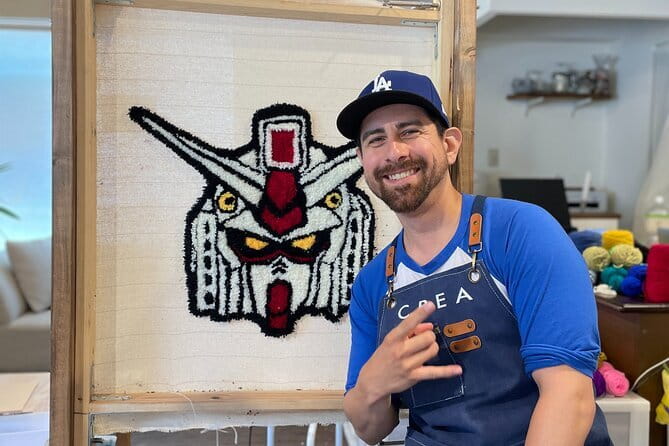
- What you make: a 30 cm tufted rug with your own design
- The Kyoto walk part: Shimogamo to Ginkakuji to the Kamogawa Delta
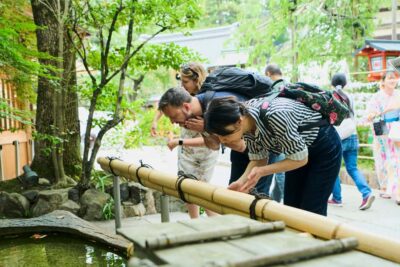
- Stop 1: Shimogamo Jinja
- Stop 2: Ginkakuji Temple
- Stop 3: Kamogawa Delta (Kyoto Prefectural Kamogawa Park)
- Inside the tufting studio CREA: what actually happens in the workshop
- Thread choices and design planning: making it look intentional
- Take it home the same day, and place it where it matters
- Price and value: $84.70 for making something real
- Who should book this (and who might not love it)
- Should you book this Kyoto rug experience?
- FAQ
- FAQ
- How long is the rug-making experience?
- What does the experience cost?
- Where do I meet for the experience?
- How big of a rug can I make?
- What’s included in the workshop?
- Is transportation provided with air-conditioning?
- What is the cancellation policy?
Key highlights you’ll care about
- Studio time that produces a finished rug you can take home the same day
- About 60 thread colors to choose from while you tuft
- A teacher-led process that works well for beginners (including first-time students)
- Max 6 people, so the staff can actually help you troubleshoot
- Kyoto sightseeing woven in with Shimogamo Jinja, Ginkakuji Temple, and Kamogawa Delta
Why this Kyoto rug workshop feels different from a typical class
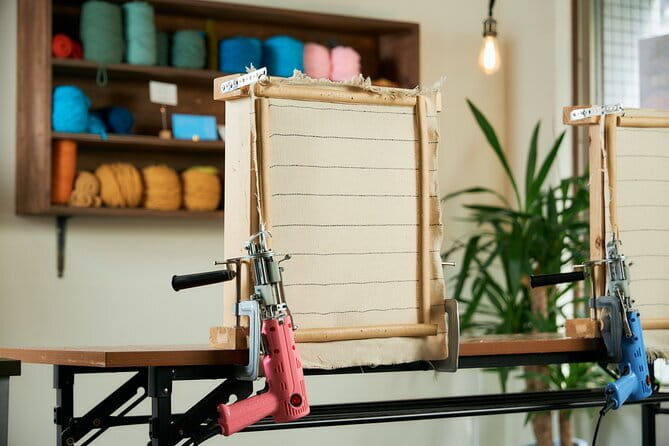
This is not just a craft demo where you watch and then leave. You’re using a specialized tufting machine to build a real rug based on your own plan, in a session that’s long enough to feel satisfying but short enough to fit a day of sightseeing.
I especially like the way the studio location anchors the experience. You’re a very short distance from Shimogamo Jinja, and the area has restaurants nearby, so the whole outing doesn’t feel like a detour that eats your day. For me, that’s a big value point: you get art-making energy plus real Kyoto wandering.
The other standout is the teaching style. The staff are professional and provide careful instruction, which matters because tufting is physical and a little technical. In one of the instructor experiences, Hayato stood out as a great guide for a first-time go-around, and that matches what you’re aiming for: confidence, not frustration.
You can also read our reviews of more tours and experiences in Kyoto.



Getting to the meeting point near Shimogamo (without stress)
You meet at tufting studio CREA 1F, 7-1 Shimogamo Nishibayashichō, Sakyo Ward, Kyoto. The studio is about one minute away from Shimogamo Shrine, which is a gift if you like starting your day with a landmark you can orient around.
Getting there is straightforward. The area is described as near public transportation, and you can get there by bus from Kyoto Station. That combo is the sweet spot for visitors who don’t want to gamble on complicated connections.
Also, the group size is small (max 6). So you’re less likely to feel lost while everyone funnels into the same spot, and it’s easier for staff to guide you without rushing.
What you make: a 30 cm tufted rug with your own design

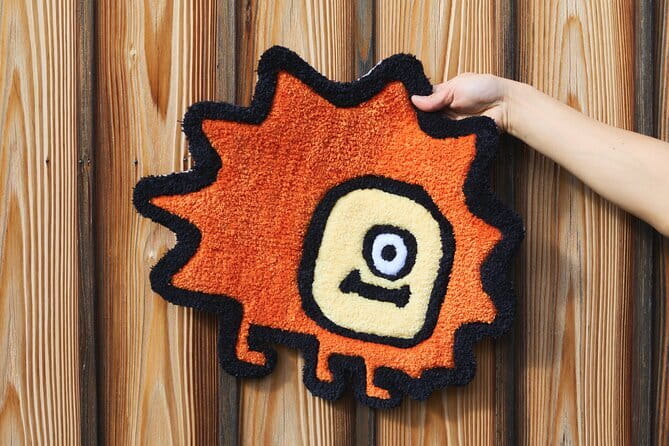
In the studio at Atelier NIN, you can make a rug up to about 30 cm square or rectangular using your own design. That size limit sounds small at first, but it actually works well as a souvenir and wall décor. Think: entryway accent, living room texture, or a piece you hang up like art.
Here’s how the creative control works. You can choose your thread from about 60 kinds of lineup in the studio. That means you’re not stuck with a single color set, and you can plan contrast and rhythm instead of just picking the prettiest option.
You’re also given an apron so your clothes don’t take the hit. That’s practical for real travel life because you don’t want to go hunting for laundry supplies right after.
The big takeaway: this is a design-to-object experience. You’re shaping ideas into a physical rug, which is a different kind of souvenir than a postcard or a shop-bought item.
The Kyoto walk part: Shimogamo to Ginkakuji to the Kamogawa Delta
The itinerary blends sightseeing with making. It’s not random. It’s built so you get a sense of Kyoto’s settings—shrine area, temple area, then riverside park mood—before and around the studio work.
Stop 1: Shimogamo Jinja
You begin at Shimogamo Jinja. Since the studio is about one minute away from the shrine, this stop also helps you get your bearings fast. If you like the feeling of stepping into a neighborhood rather than sprinting between far-apart attractions, this start style works.
One practical note: even when stops are close, the day still involves moving on foot. Comfortable shoes help, because you’ll be out and about before you settle into the tufting session.

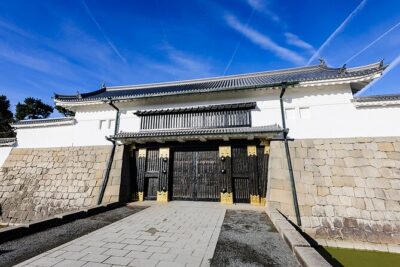
Stop 2: Ginkakuji Temple
Next is Ginkakuji Temple. This portion gives you a calm, “temple” pause in the middle of the outing’s more hands-on crafting energy.
Since no transport detail is provided beyond what’s included or not, keep your timing flexible. It’s safer to assume you’ll be on the move between sites rather than waiting around in a car.
Stop 3: Kamogawa Delta (Kyoto Prefectural Kamogawa Park)
You finish the sightseeing side at the Kamogawa Delta in Kyoto Prefectural Kamogawa Park. The point of this stop, from a visitor comfort angle, is that it’s a different setting after shrine and temple time.
Also, it gives you a breather. When you later do machine work in the studio, it’s nice if the day has already included some visual variety and open space.
Inside the tufting studio CREA: what actually happens in the workshop
Your rug-making time happens at tufting studio CREA and it’s run by the provider Atelier NIN. The experience includes renting the specialized tufting machine, plus help from staff so you’re not left to figure things out alone.
The session length is about 2 hours. That’s enough time to get from idea to a completed rug you can take home, but you shouldn’t expect a multi-day artistic process. Go in ready to commit to your design choices quickly, because the result is the point.
You’ll likely be guided through the workflow: preparing to tuft, selecting thread, and working your design into the rug. The staff provide detailed explanations, and that matters most at the start when you’re learning what the machine wants from you.
What you’ll love here is the feedback loop. As you tuft, you can see your plan taking shape in real time. In the reviews, the instructor experience and relaxed studio atmosphere are specifically called out, which matches how you want this kind of craft class to feel: focused, but not stressful.
Thread choices and design planning: making it look intentional

You get thread options from about 60 choices, so your biggest challenge isn’t running out of choices—it’s deciding quickly what fits your idea. I recommend you think in terms of contrast first. A small rug shows off your lines and shapes, so bold separation between colors tends to look cleaner than subtle variations.
If you’re traveling as a couple, this format can be ideal. You can agree on a shared theme and then split responsibility for shape and color. If you’re with kids, it can work as a structured creative project: pick a design, pick thread colors, then watch it come alive under staff guidance.
If you’re a beginner, the best move is to keep your design simple. A rug this size is small, and tufting is hands-on. Simple shapes usually look more intentional than overly complex sketching.
Take it home the same day, and place it where it matters
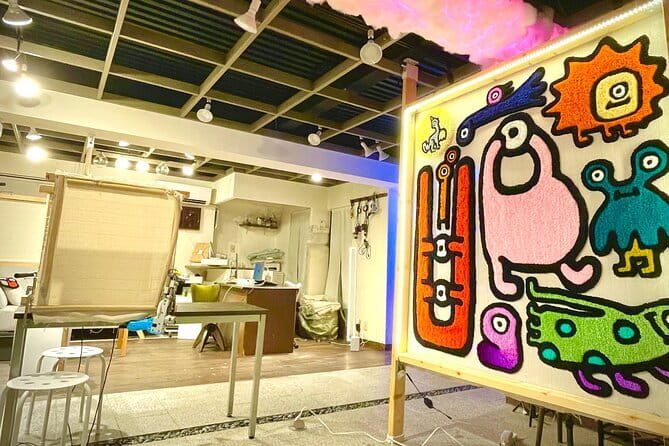
The completed rug can be taken home on the same day. That’s a huge practical advantage in Kyoto, where packing space is limited and days are busy. It’s also a value point because you’re not waiting for shipping or planning return shipments.
You can hang it in your entryway, living room, or on the wall. The “how you display it” detail matters because a 30 cm rug is more about texture and art than covering a floor. If you want a souvenir you’ll actually use visually, this is one of the better formats.
The small size is also a travel-friendly detail. It’s easier to carry than a larger floor rug, and it’s less likely to mess up your luggage plans.
Price and value: $84.70 for making something real
At $84.70 per person, this isn’t a budget-only activity, but it’s also not priced like a luxury atelier purchase. You’re paying for three things that matter in value terms:
- the special machine and equipment
- hands-on instruction you can rely on
- a finished rug that becomes a takeaway souvenir the same day
Also, you’re in a small group (max 6). For crafting experiences, that usually translates into more individual help when something feels off.
Booking timing adds one more reality check: it’s often booked about 19 days in advance on average. That suggests demand, so if your Kyoto dates are fixed, don’t treat it as a last-minute option.
Who should book this (and who might not love it)
This is a great fit if you want a hands-on Kyoto memory that goes beyond photos and shopping bags. It also suits families and couples well, since the experience is described as beginner-friendly and staff-led.
You might want to choose something else if:
- you’re expecting a larger, floor-covering rug (this is about 30 cm)
- you hate any chance of getting materials on yourself, even with an apron
- you’re trying to fit this into an ultra-rushed schedule, because it’s part class and part outing time
But if you’re open to making something small and personal, you’ll probably feel proud walking out of the studio with your own design in hand.
Should you book this Kyoto rug experience?
Yes, if you want a creative souvenir that’s genuinely handmade in the Kyoto setting and you like the idea of turning your own ideas into something you can hang at home. The biggest strengths are the small group limit, the careful instruction, and the fact you’ll make a finished rug you take home the same day.
I’d book it sooner rather than later, given the average advance booking window. And if your travel style is part sightseeing and part doing something with your hands, this hits that balance nicely.
FAQ
FAQ
How long is the rug-making experience?
It lasts about 2 hours.
What does the experience cost?
The price is $84.70 per person.
Where do I meet for the experience?
Meet at tufting studio CREA 1F, 7-1 Shimogamo Nishibayashichō, Sakyo Ward, Kyoto, 606-0817, Japan.
How big of a rug can I make?
You can make up to about 30 cm square or rectangular rugs.
What’s included in the workshop?
The workshop includes renting a special tufting machine and lending you an apron.
Is transportation provided with air-conditioning?
No. An air-conditioned vehicle is not included.
What is the cancellation policy?
You can cancel for free up to 24 hours in advance for a full refund. If you cancel less than 24 hours before the start time, the amount paid is not refunded.