REVIEW · KYOTO
Kyoto: Kifune Shrine and the Sacred Kifune Valley Day Trip
Book on GetYourGuide →Operated by DeepExperience, Inc. · Bookable on GetYourGuide
Mountain quiet beats Kyoto crowds.
This day trip trades city noise for Kifune Valley stream air and wooded footpaths, then adds meaning with a visit to the Kifune Shrine grounds. I especially like the calm pace and the fact that you’re not just taking photos—you’re learning what to look for as you move from the main areas toward the middle shrine.
Two things I really like: the scenic train portion on the Eizan Railway route, and the guided time at the sacred sites (including the main hall area and the Nakamiya stop). One drawback to plan around is that it’s not wheelchair-friendly and you’ll be on your feet, so comfy shoes matter.
In This Review
- Key highlights at a glance
- Getting to Kifune: Kyoto Station, Demachiyanagi, and the Eizan Railway
- Arrival at Kifune-guchi: why the valley feels different
- Kifune Shrine’s main hall area: 30 minutes of forest-and-water focus
- Nakamiya (the middle shrine): adding meaning without adding chaos
- The rare Mizu-ura water fortune ritual: what to expect and how to enjoy it
- Timing and walking: how a 90-minute to 4-hour day trip really plays
- Price and value: why $81 can feel fair for this kind of day
- Who should book this Kifune day trip (and who should skip it)
- Should you book this Kyoto: Kifune Shrine and Sacred Kifune Valley Day Trip?
- FAQ
- How long is the day trip?
- Where does the tour start?
- What route do you take to get to Kifune?
- What parts of Kifune Shrine are included?
- Is the Mizu-ura water fortune ritual included?
- Do I need to bring meals?
- What should I bring and wear?
- Is the tour wheelchair accessible?
- What’s the return time to Kyoto?
Key highlights at a glance
- Eizan Railway scenery: a slower, calmer ride out of Kyoto that sets the tone before you even arrive.
- Kifune Shrine main hall area: about 30 minutes in the forested sacred grounds.
- Nakamiya (middle shrine): a deeper spiritual stop that keeps your visit focused.
- Mizu-ura water divination: a rare water-based fortune ritual included on the tour.
- Private group with a live guide: Japanese and English guidance during your walking time.
- Return to Kyoto by 16:00: a half-day feel that’s easier to fit into a packed itinerary.
Getting to Kifune: Kyoto Station, Demachiyanagi, and the Eizan Railway
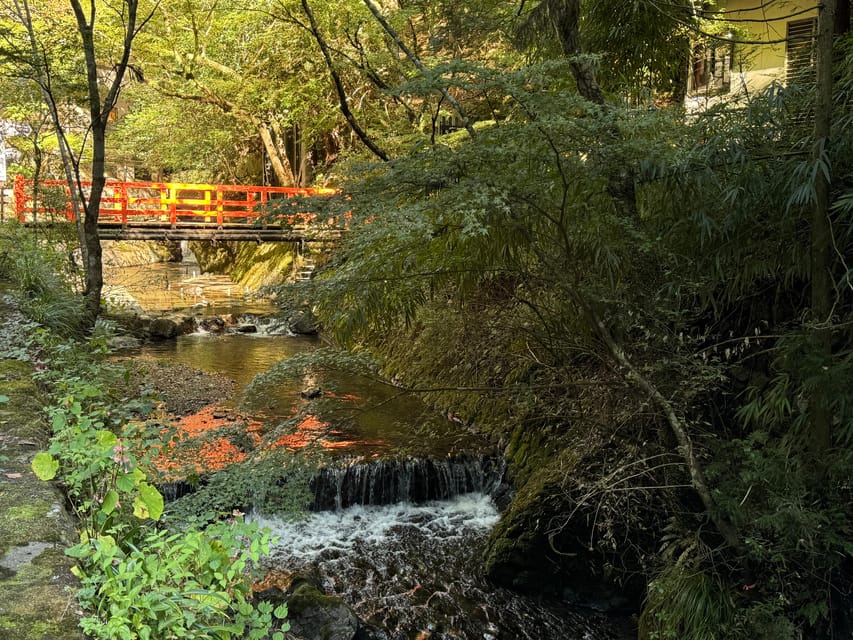
You start at Kyoto Station’s JR West Exit, then head toward Demachiyanagi Station. From there, you board the Eizan Railway and ride out through the countryside toward Kifune.
I like this part because it’s not just transportation. The train ride is your warm-up: you watch the urban feel fade, and by the time you arrive, you’re already in “slow travel” mode. It’s also a simple route to follow on a day when you don’t want to fight multiple transfers.
Because the tour has 2 starting options, your exact meeting location may differ. If you’re the type who hates last-minute confusion, check your specific pickup spot ahead of time and show up a few minutes early so you can get your bearings fast.
You can also read our reviews of more tours and experiences in Kyoto

Arrival at Kifune-guchi: why the valley feels different
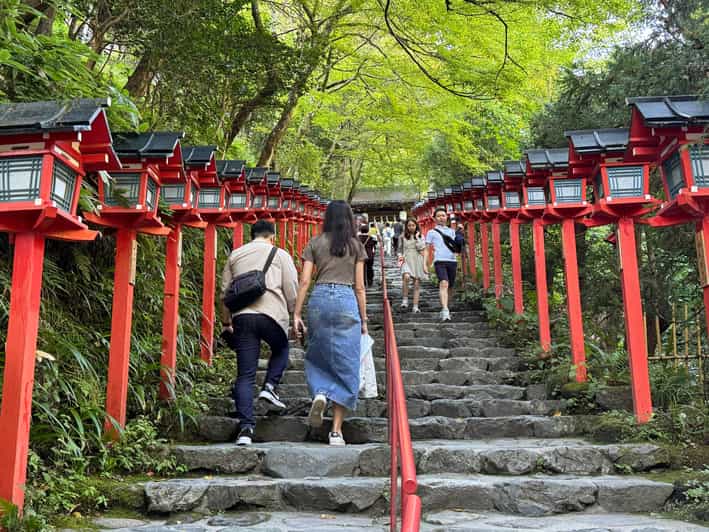
Once you reach Kifune-guchi Station, the change is immediate. The valley air and the sound of clear water make the whole area feel more private, even though it’s only outside Kyoto.
This is where your day trip becomes more than a checklist. Instead of rushing from one famous site to another, you arrive and gradually let the setting do the work—trees, water, and footpaths guiding where you look and what you notice.
You should also expect a short walk connection from the station area to the shrine site. That’s why comfortable walking shoes are one of the most practical things you can bring. You’ll get more out of the day if you’re not thinking about sore feet.
Kifune Shrine’s main hall area: 30 minutes of forest-and-water focus
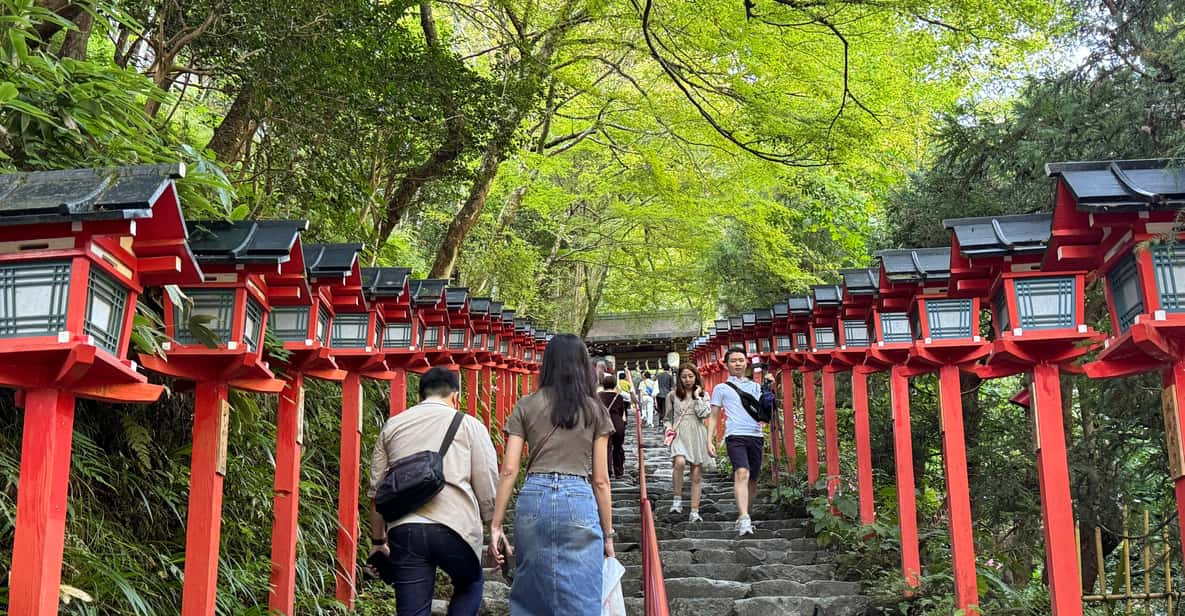
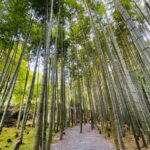
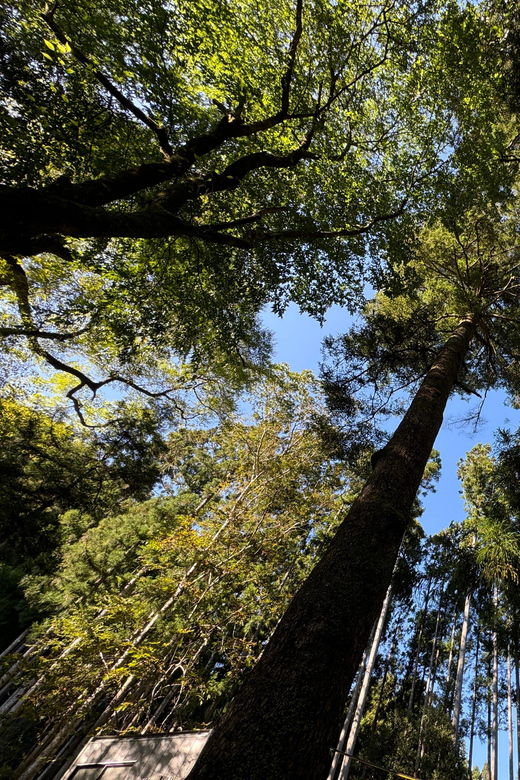
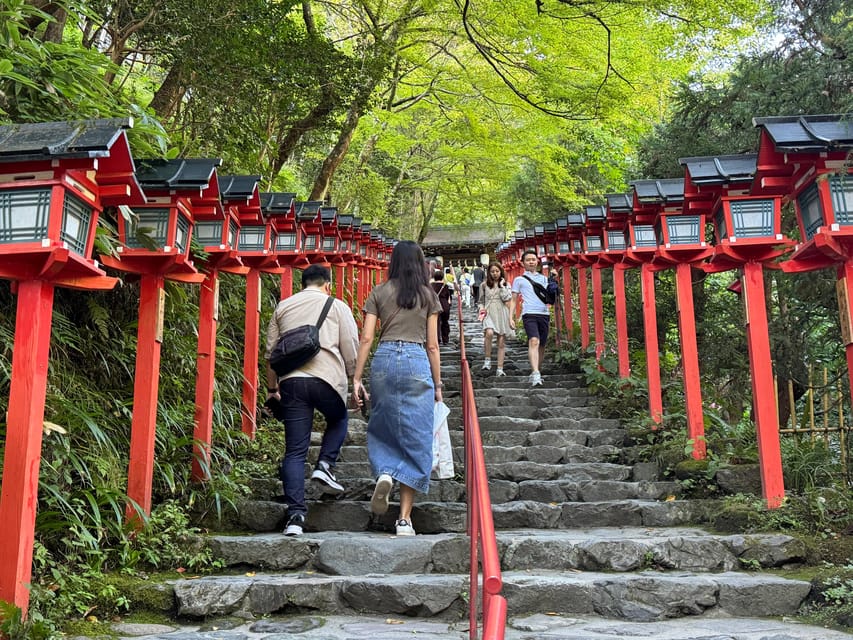
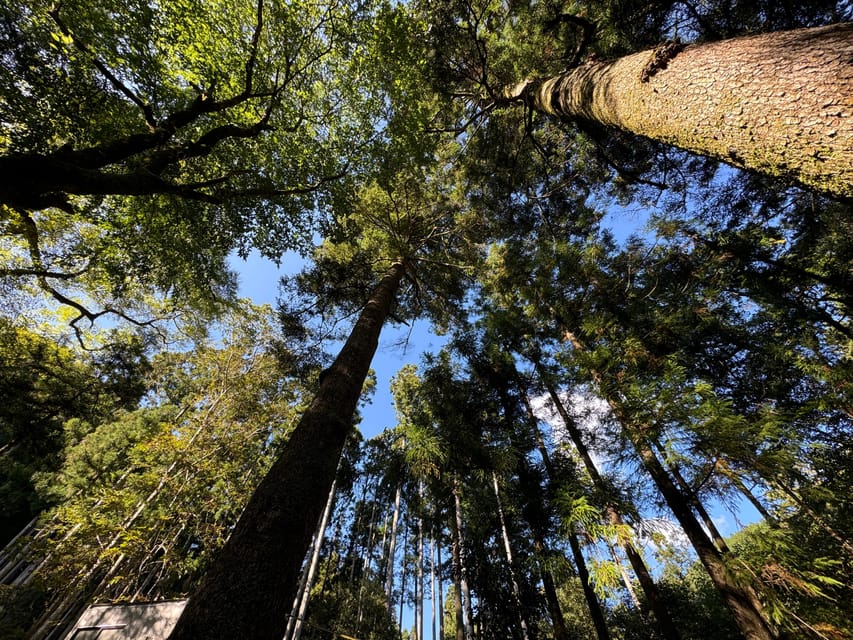
At the main site of Kifune Shrine, you spend about 30 minutes exploring the sacred grounds. This is the core of the experience: the main hall area, surrounded by dense forest and crystal-clear streams.
I like that this isn’t a super-long stop. You get enough time to slow down, take photos, and understand what makes the shrine environment special, without feeling like you’re trapped in one spot for an hour while your legs cool off.
A guided visit here helps you read the space. You’re not just walking through trees—you’re moving through a sacred setting with specific visual cues tied to the shrine’s traditions. Bring your camera, but also take a moment to put it away. The water sound and the quiet feel are part of why people enjoy this day trip.
Nakamiya (the middle shrine): adding meaning without adding chaos
After the main area, you visit the middle shrine (Nakamiya). This stop is your chance to go a step deeper and keep the story of the site connected as you move through the grounds.
I find Nakamiya especially valuable because it changes the vibe from general sightseeing to a more focused, reflective walk. The surrounding quiet makes it easier to slow down and actually notice details—how the path leads, how the setting frames the shrine spaces, and how the spiritual atmosphere feels different from the first stop.
The trade-off is time. This is still a short day trip, so you won’t linger endlessly at every corner. If you’re the type who wants to sit for long stretches, you may want to plan for that after the tour ends, or keep an eye on where your guide pauses so you don’t miss the moment.
The rare Mizu-ura water fortune ritual: what to expect and how to enjoy it
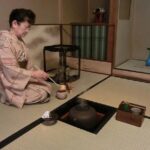
One of the most distinctive inclusions is the Mizu-ura fortune ritual, a water divination experience that’s included on the tour. This is not the kind of thing you typically stumble into on your own, which is exactly why I think it’s worth choosing a guided day trip.
I’d approach the ritual like this: treat it as a hands-on cultural moment, not a magic trick. Follow the guide’s cues, stay attentive, and don’t worry about taking photos unless your guide indicates it’s okay in that moment.
Practical tip: bring water and stay hydrated. Sounds basic, but walking through a mountain shrine area can surprise you with how warm you feel, even if the air feels cool and refreshing.
If you’re into omamori, shrine etiquette, or the meaning behind Japan’s seasonal traditions, this ritual is one of the most “you’ll remember it later” parts of the day.

Timing and walking: how a 90-minute to 4-hour day trip really plays
The tour duration can run 90 minutes to 4 hours, depending on your start time and how the schedule is set up for your booking. Regardless of the exact timing, the day trip is designed to feel like a half-day escape.
A typical flow feels like:
- Travel from Kyoto toward the valley by train
- Explore the main shrine grounds (about 30 minutes)
- Continue to Nakamiya
- Return to Kyoto Station by 16:00
Walking is part of the experience, but it’s not described as an all-day hike. Still, you should plan on comfortable shoes and a calm pace. If you’re carrying a heavy backpack, consider traveling light. You want your day focused on the shrine setting and ritual experience, not on logistics.
Also note meals and beverages aren’t included. That’s not a problem, but it does mean you should decide ahead of time where you’ll grab food in Kyoto after you return. You can also bring a light snack if that helps your energy level.
Price and value: why $81 can feel fair for this kind of day
At $81 per person, this tour isn’t bargain-basement. You’re paying for three things that add real value: a live guide, transportation support within the route, and an included cultural experience (the Mizu-ura water fortune ritual).
Here’s how I judge value for a day trip like this:
- If you plan to do the shrine visit with context, a guide helps you get more meaning per minute.
- If the water fortune ritual matters to you, the inclusion makes the price easier to justify than piecing it together on your own.
- If you’re trying to escape crowds and still keep your day organized, the private-group approach can make the logistics feel smoother.
If you only want one quick photo stop at a shrine and you’re not interested in the ritual, then the cost might feel high. But if you want a structured, calm visit with guidance in Japanese or English, this price feels in line with what you’re getting.
Who should book this Kifune day trip (and who should skip it)
I think this is a great fit if you:
- Want a quieter day outside central Kyoto
- Like shrine experiences where you can learn what you’re seeing
- Want one memorable cultural moment (the Mizu-ura water divination)
- Prefer a private group pace over crowded tour-land
You might want to reconsider if:
- You need wheelchair accessibility (it isn’t suitable for wheelchair users)
- You’re unwilling to do any walking or standing
- You’re trying to fill a full-day schedule with lots of stops, since this one is built to be a compact, spiritual nature escape
For couples, solo travelers, and friends who like calm travel and clear planning, this works especially well.
Should you book this Kyoto: Kifune Shrine and Sacred Kifune Valley Day Trip?
Yes—if you want a structured, meaningful break from Kyoto’s busiest areas. The best reason to book is the combination of scenic transit, a guided visit to Kifune Shrine’s main grounds, a second shrine stop at Nakamiya, and the included Mizu-ura water fortune ritual. That blend is hard to replicate without spending time figuring out the parts yourself.
I’d book especially if you like the idea of exchanging city sightseeing for forest-and-water calm, with a guide who can explain what you’re seeing in English or Japanese. If your top priority is only speed and photos, you might skip it and do it on your own. But if you want a day that feels peaceful and purposeful, this is the kind of tour that delivers.
FAQ
How long is the day trip?
The tour duration is listed as 90 minutes to 4 hours, depending on the starting time and schedule.
Where does the tour start?
Starting location can vary based on the option booked. The listed starting options are 貴船一ノ谷観光トイレ and 鞍馬山大天狗.
What route do you take to get to Kifune?
You go from Kyoto Station (JR West Exit) to Demachiyanagi Station, then ride the Eizan Railway to Kifune-guchi Station before continuing to Kifune Shrine.
What parts of Kifune Shrine are included?
You visit the Kifune Shrine main site (including guided time around the main hall area) and then the middle shrine (Nakamiya).
Is the Mizu-ura water fortune ritual included?
Yes. The Mizu-ura Fortune Ritual is included as part of the tour.
Do I need to bring meals?
Meals and beverages are not included, so plan to eat on your own before or after the tour.
What should I bring and wear?
Bring a camera and water, and wear comfortable walking shoes.
Is the tour wheelchair accessible?
No. It’s not suitable for wheelchair users.
What’s the return time to Kyoto?
The tour concludes by 16:00, returning you to Kyoto Station.