REVIEW · KYOTO
Kyoto: Kiyomizudera, Sanjusangendo, Kodaiji, and Gion.
Book on GetYourGuide →Operated by Benzaitentours · Bookable on GetYourGuide
Kyoto’s classics, packed into one smooth loop. I love how this route starts with Sanjusangendo, where the sheer scale of 1,001 Kannon statues (and that long hall) hits you right away, not after a long warm-up. In a small group limited to 10, you get a guided, human-paced way to see Kyoto’s most iconic traditional corners.
My second favorite part is the combo of temple drama plus old-street wandering: Kiyomizudera for the hillside terrace views, then the cobbled lanes of Higashiyama that feel like they’ve been paused mid-scene. The only real catch is the pace: you’ll walk some steep-ish and stone-paved sections, and you’ll also use buses, so plan for comfortable shoes and basic transit cash or an IC card.
In This Review
- Key highlights at a glance
- A smart way to see Kyoto: Sanjusangendo → Gion, not Kyoto-by-accident
- Sanjusangendo’s 1,001 Kannon: the day’s big punch
- Kiyomizudera and the hillside terrace views
- Sannenzaka and Ninenzaka: the old streets feel real here
- Hōkan-ji (Yasaka Pagoda): the postcard shot with context
- Kodai-ji’s bamboo forest: calm after the famous crowds
- Yasaka Shrine and Gion: seeing geisha culture without the guessing game
- Price and logistics: does $86 buy real value?
- Who this tour is best for (and who might want a different plan)
- Should you book this Kyoto Kiyomizudera and Gion tour?
- FAQ
- What time and where does the tour start?
- How long is the tour?
- What language is the guide?
- How big is the group?
- Is the tour mostly walking?
- How much cash should I bring for transportation?
- Are baby carriages allowed?
Key highlights at a glance
- Start at Sanjusangendo with its 120-meter-long hall and 1,001 Kannon statues
- Kiyomizudera terrace views plus a guided stroll through the Higashiyama lanes
- Sannenzaka and Ninenzaka cobbled streets with traditional houses and craft shops
- Hōkan-ji (Yasaka Pagoda) for that postcard-style pagoda framed by old streets
- Kodai-ji bamboo forest inside a temple tied to the Toyotomi family
- Yasaka Shrine and Gion to understand geisha culture and see the neighborhood up close
A smart way to see Kyoto: Sanjusangendo → Gion, not Kyoto-by-accident
This is the kind of Kyoto day I like: focused. You’re not hopping all over the map chasing random sights. You’re moving in a story line through Higashiyama and nearby areas, mixing major temples with the streets people actually enjoy walking.
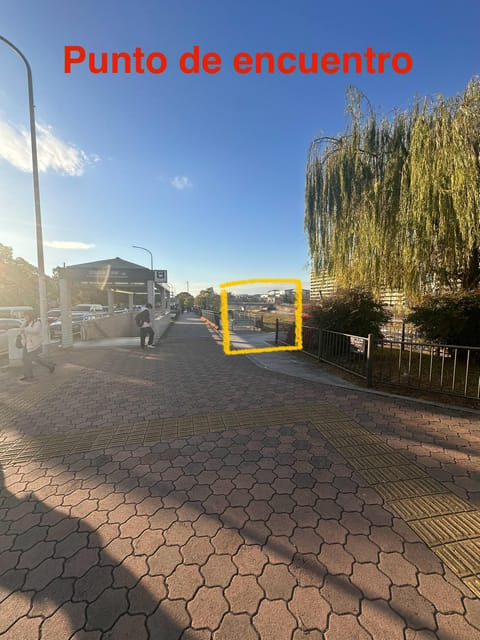
You start at Shichijō Station (Exit 1) at 9:00 a.m. That early start matters. Kyoto crowds are real, and temple lines don’t get friendlier just because you brought good intentions. Also, the tour runs 7 hours, so it’s long enough to feel like a proper day, but short enough to keep you from turning into a sweaty museum zombie.
And because it’s a small group with a live Spanish guide, the experience tends to feel more like a guided walk than a stressed checklist. If your guide happens to be Manuel, you’ll likely appreciate the way he’s described as attentive and good at explaining what you’re seeing. In a couple of past outings, he was also credited with helping people find a good place to eat—useful if you want your day to stay smooth.
You can also read our reviews of more tours and experiences in Kyoto.



Sanjusangendo’s 1,001 Kannon: the day’s big punch
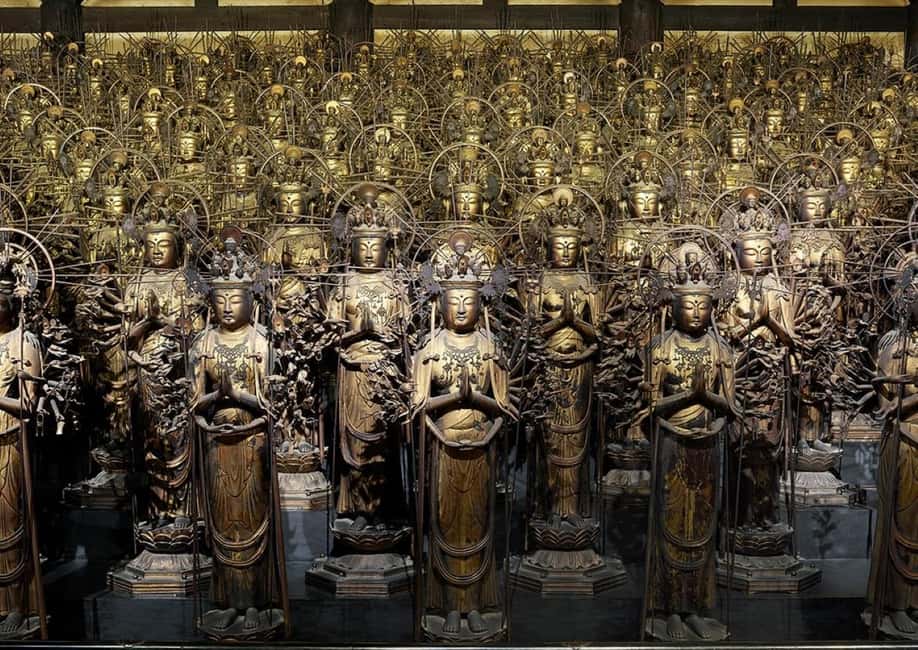
You begin at Sanjusangendo Temple, famous for its enormous hall—about 120 meters long—housing 1,001 statues of Kannon, the goddess of mercy. Even if you don’t know the details of the Buddhist iconography, the visual impact does the work for you. It’s a scale thing, the kind that reorganizes your sense of “small temple” expectations.
What you’ll likely notice first is the length. The hall is not subtle. The statues line up in a way that makes you feel like you’re standing inside a human-made forest of carved figures. Your guide’s job here is to keep it from becoming a blur of stone faces. With guidance, you’ll get context about why Kannon is so central and what the repetition is meant to communicate.
Practical tip: this is one of those interiors where your body still feels the distance. The tour gives you about 1 hour at Sanjusangendo, which is usually enough to see what matters without rushing. If you’re someone who likes time to look at details (hand positions, expression, different statue groupings), you’ll likely want to slow down during the guided portion.
Also, if you’re planning photos: the hall is a strong “wide angle” moment. Don’t just zoom in on one face—step back when you can.
Kiyomizudera and the hillside terrace views
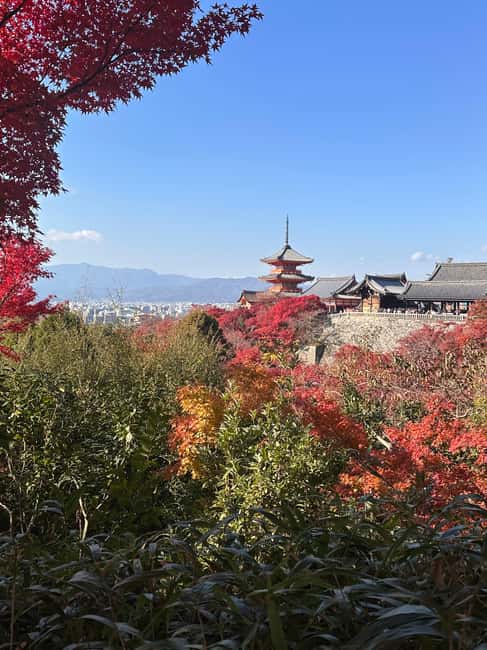
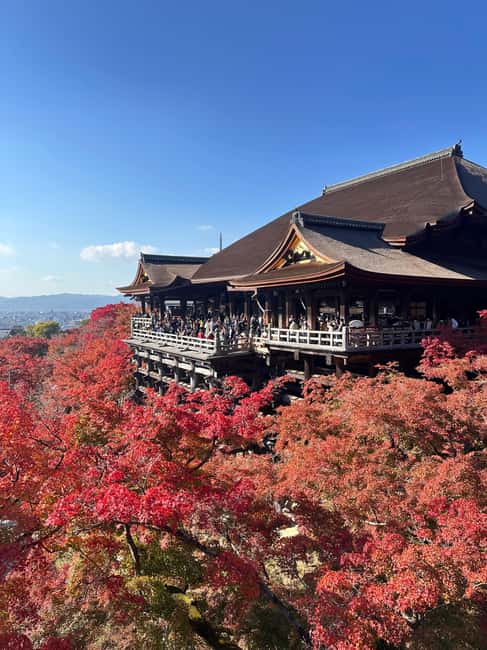
Next up is Kiyomizudera, one of Kyoto’s most famous temples, and for good reason. It’s known for its wooden terrace that projects from the hillside, giving you spectacular views over Kyoto.
This stop is where the tour balances two things: a guided look at a major temple, plus the “why do people come here?” experience. Views from temple terraces are easy to hype, but Kiyomizudera’s setting gives the whole place a sense of vertical drama—temple architecture hanging over the city.
In the tour flow, you get about 1 hour guided time at Kiyomizudera, then you start transitioning into the surrounding Higashiyama walking zone. That’s a good pacing choice. The terrace moment resets your day, then you move into the neighborhood atmosphere while your legs are still warmed up (not when they’re already regretting everything).
Practical note: Kiyomizudera area can involve stairs and uneven paths. Even if your guide keeps a comfortable rhythm, bring shoes you’d wear for a long city day, not “Sunday clean” sneakers.
Sannenzaka and Ninenzaka: the old streets feel real here
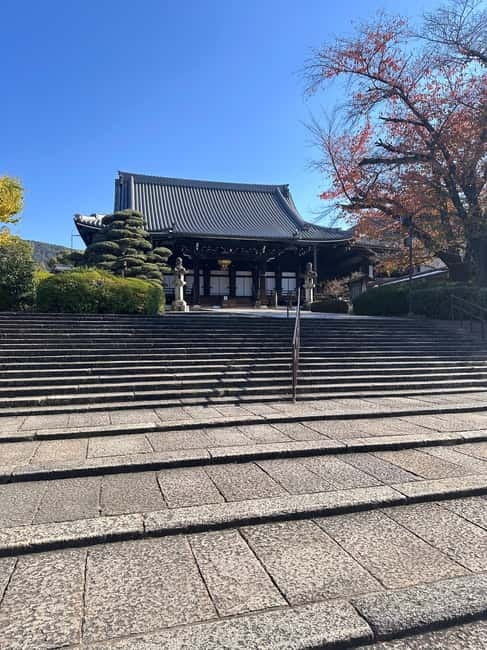
After Kiyomizudera, you descend into Higashiyama Ward and walk through Sannenzaka and Ninenzaka. These are cobbled streets lined with traditional wooden houses, craft shops, and old-school street corners that genuinely feel frozen in time.
This is where you start noticing Kyoto as a lived-in place, not just a series of photographed structures. The lanes are narrow enough to slow you down. Shop windows and small storefronts aren’t just decorative; they shape how you move, what you stop to read, and when you actually look up from your phone.
What I like about including these streets right after Kiyomizudera: you’re still in the temple mood, but now you’re in the street mood. Your brain gets to switch from architecture to atmosphere.
Timing detail: you’ll have about 1 hour for sightseeing in this Higashiyama area. That’s enough to walk, browse a little, and take photos without turning it into a sprint.
If you’re traveling with family or friends who prefer “see it, then breathe,” this portion is a good compromise. And if you love crafts and small shops, it’s a rare chance to slow down in a place that normally feels like a conveyor belt for photos.
Hōkan-ji (Yasaka Pagoda): the postcard shot with context
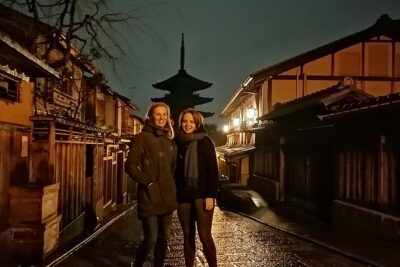
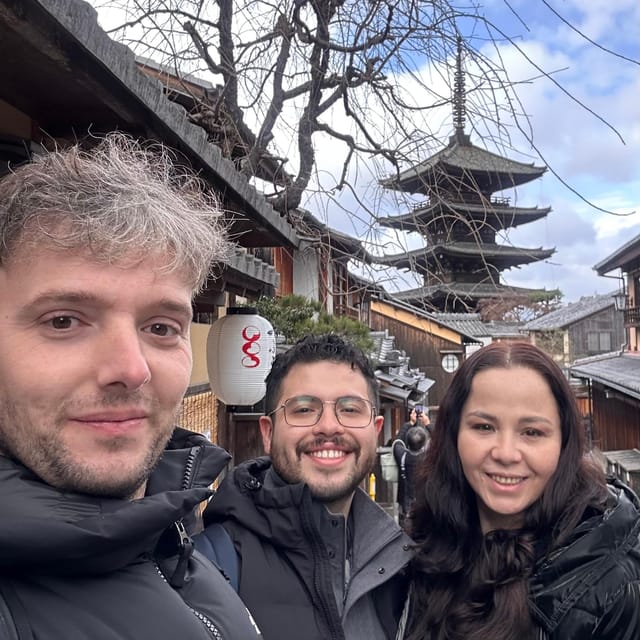
On the way through Higashiyama, you’ll see Hōkan-ji, also known for the Yasaka Pagoda—one of Kyoto’s most photographed icons. The tour makes a point of stopping here so you can connect the pagoda image with the neighborhood around it.
A pagoda in a busy tourist area can feel like just a photo spot. With a guide, it becomes more. You learn how it fits into the temple landscape and why it shows up in people’s Kyoto memory in the first place.
You’ll have about 30 minutes at this stop, which is the right length for a “look, understand, photo, move” moment. Don’t expect a long, deep museum style visit here. This stop works as a visual anchor between the bigger temples and the next temple experience.
Photo tip: try to frame the pagoda with the traditional houses nearby. It’s the street setting that makes the image work—not just the tower itself.

Kodai-ji’s bamboo forest: calm after the famous crowds
Then comes Kōdaiji Temple (Kodai-ji), dedicated to the Toyotomi family, one of Japan’s key historical clans. You’ll also get to a feature that many Kyoto days miss: the bamboo forest inside the temple.
Bamboo forests can be touristy in theory. But inside a temple compound, it feels different. You get a quieter, softer soundscape, even when you know you’re still in the city. The bamboo creates a natural corridor effect—your brain relaxes because the space does.
This is a guided about 1 hour stop, which matters. If you rush it, bamboo looks like scenery. If you linger a bit (within the time you have), you get the mood shift: from “icon Kyoto photos” to “walk and let the place slow you down.”
Why it’s valuable on this specific tour: it balances the heavy-hitter sites. You start with a long hall of 1,001 statues, you go up to hillside terrace views, you walk the cobbled streets, you see the pagoda. Then Kodai-ji gives you a different kind of beauty—more peaceful, more sensory.
Yasaka Shrine and Gion: seeing geisha culture without the guessing game
Finally, you move into Gion, one of Kyoto’s best-known traditional districts. Before roaming the neighborhood, you’ll also visit Yasaka Shrine (guided about 30 minutes).
Yasaka Shrine is closely tied to the rhythms of the area, and the guide’s explanations help you understand what you’re looking at rather than just noticing details. Then Gion itself becomes more than streets and souvenir shops. You start connecting the geography to the cultural story of the district, including the history around geisha and the way tradition continues.
You’ll have about 1 hour exploring Gion with your guide. That time is useful because Gion is easy to misunderstand if you only do it by wandering randomly. With a guide, you learn where to look, what to notice, and how to read the neighborhood without turning it into a scavenger hunt.
A note I appreciate: the tour doesn’t promise you’ll meet geisha. It’s not that kind of gimmick. Instead, it aims to teach you the context so the area makes sense when you’re standing in it.
Practical tip: Gion evenings can feel different than daytime. If your tour ends later in the day, you’ll likely get a calmer, more atmospheric walk than you would at peak midday hours.
Price and logistics: does $86 buy real value?
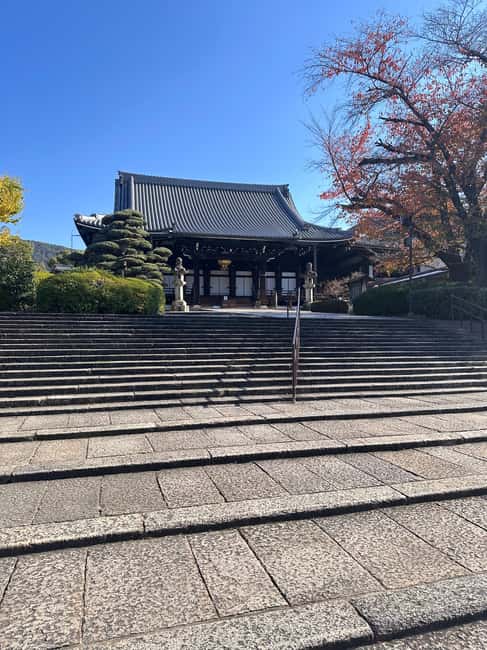
At $86 per person for a 7-hour guided outing, this tour is built for value: you’re getting a structured circuit through multiple major Kyoto sites, plus guided interpretation and transport between points.
What you’re really paying for isn’t just the temples. It’s the efficiency and the guidance. Kyoto can be beautiful and confusing at the same time. A route like this saves you from planning fatigue and from missing the meaning behind what you’re seeing.
Logistics are straightforward:
- Small group (max 10) keeps the experience from feeling like a herd
- Spanish live guide means you’ll get explanations in Spanish, and some content may be shown in its original language
- You’ll use buses along the way
- Bring 230 yen in cash or use a transport card like ICOCA, SUICA, or PASMO for transit needs you may have during the day
Walking reality check: you should expect some walking throughout the day, including stone and uneven sections. Comfortable shoes are not optional. Also, baby carriages aren’t allowed, so plan accordingly if you’re traveling with a stroller.
One more practical thought: the tour ends in the Higashiyama Ward, which is great if you plan to keep exploring nearby afterward. It also means you’ll want to have a game plan for your next ride back.
Who this tour is best for (and who might want a different plan)
This Kyoto route is ideal for you if:
- you want classic Kyoto temples plus classic streets in one day
- you like guided context, especially for big icon sites like Sanjusangendo and Kiyomizudera
- you want a small-group experience with a Spanish-speaking guide
- you enjoy walking but still want the day to feel organized
It may be less ideal if:
- you’re very sensitive to walking or stairs (there’s real foot time here)
- you need stroller access (baby carriages are not allowed)
- you prefer total freedom with no schedule at all (this is structured, and you’ll move with the group)
If you’re a first-time Kyoto visitor, this tour gives you a strong foundation. If you’ve been to Kyoto before, it still helps because it strings together areas—Sanjusangendo, Higashiyama lanes, Kodai-ji, and Gion—that you can otherwise see separately and forget as unrelated dots.
Should you book this Kyoto Kiyomizudera and Gion tour?
I’d book it if you want a day that hits Kyoto’s most recognizable spiritual and street-scene highlights without wasting time figuring out the connections. The biggest reason is simple: the pacing works. Start with Sanjusangendo, hit Kiyomizudera, then shift into Higashiyama’s old lanes, add Hōkan-ji for that pagoda icon moment, get peace in Kodai-ji’s bamboo, and finish with the cultural atmosphere of Yasaka Shrine and Gion.
You’ll get a lot for your time, and the small group size makes it easier to ask questions and follow explanations. Just be honest with yourself about walking: if your feet are already fragile, you might want a lighter plan or pair this with downtime later.
If you’re ready for Kyoto that feels both traditional and practical, this is a very solid way to spend 7 hours.
FAQ
What time and where does the tour start?
The meeting point is at Shichijō Station, Exit 1, at 9:00 a.m. The tour finishes in Higashiyama Ward.
How long is the tour?
The total duration is 7 hours.
What language is the guide?
The live tour guide speaks Spanish.
How big is the group?
The group is small, limited to 10 participants.
Is the tour mostly walking?
There is some walking, and you’ll also take buses between stops. Comfortable shoes and clothes are recommended.
How much cash should I bring for transportation?
It’s advisable to bring 230 yen in cash, or use a transport card such as ICOCA, SUICA, or PASMO.
Are baby carriages allowed?
No. Baby carriages are not allowed on this activity.
If you want, tell me your travel dates and whether you’re visiting in hot summer or cool winter, and I’ll suggest the best time to wear layers and how to plan your shoes for the stone lanes.