REVIEW · KYOTO
Discover the Secrets of Fushimi Inari and Gion with a Local Guide
Book on Viator →Operated by Sparrow Travel · Bookable on Viator
Torii gates and old streets in one walk. This small-group half-day tour strings together Gion, key shrines, major temples, and ends at Fushimi Inari in a smart route.
I especially like the small-group size, up to 8 people, because you get real answers without feeling rushed through Kyoto like a stamp-collecting machine.
I also like that some of the most time-hungry stops come with admission handled for you: Kōdai-ji and Kiyomizu-dera are included. The main thing to consider is logistics: the train ride is not included (¥220 per person), and it’s still a good amount of walking over about four hours.
In This Review
- Key things to know before you go
- A four-hour East Kyoto plan that doesn’t waste your time
- Start at Minamiza Theater, end at Fushimi-Inari Station
- Gion in focus: machiya houses, teahouses, and cobblestones
- Yasaka Shrine: a 1,350+ year Shinto landmark
- Kōdai-ji Temple: Zen Buddhism tied to Toyotomi Hideyoshi’s circle
- Yasakanoto (Hōkan-ji Temple) and its pagoda silhouette
- Kiyomizu-dera: Mount Otowa slopes and the wooden stag detail
- Fushimi Inari: thousands of red torii gates in one hour
- The guide factor: pace, explanations, and matching your comfort level
- What the price really covers (and what it doesn’t)
- Who should book this tour, and who might skip it
- Should you book Sparrow Travel’s Fushimi Inari and Gion tour?
- FAQ
- How long is the tour?
- How much does the tour cost?
- What’s included in the price?
- Are there admission fees at the other stops?
- What is not included?
- Where do I meet, and where do I end?
- How big is the group?
- Is there free cancellation?
Key things to know before you go
- Max 8 travelers keeps questions flowing and pacing comfortable
- Local guide storytelling across Shinto shrines and Zen Buddhist temples
- Included temple entry at Kōdaiji and Kiyomizu-dera (you show up and go in)
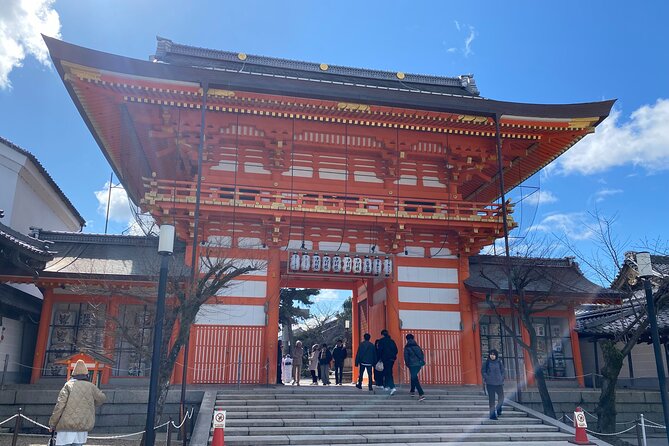
- Free major sights along the way, including Yasaka Shrine and Yasaka Pagoda (Hōkan-ji)
- One-hour Fushimi Inari slot to explore the torii gates without turning it into a full-day hike
- Mobile ticket helps keep entry simple
A four-hour East Kyoto plan that doesn’t waste your time
This tour is built for people who want Kyoto flavor fast, but without the chaos of constantly negotiating where to go next. You’ll work through Kyoto’s east side on foot, moving from the famous streets of Gion to the iconic hillside of Fushimi Inari.
The big win is balance. You get both sides of Kyoto’s spiritual life—Shinto shrines and Buddhist temples—plus a dose of everyday streetscape, not just monuments. And with a group limited to 8, the guide can slow down when the crowd thickens or speed up when you’re moving well.
You can also read our reviews of more guided tours in Kyoto

Start at Minamiza Theater, end at Fushimi-Inari Station
You begin at Minamiza Theater (Kyoto, Higashiyama Ward), and you finish near Fushimi-Inari Station. That end point matters because it’s close to the shrine area, and it’s on the Keihan Line, which makes it easier to keep your day going after the tour.
You’ll still want comfortable shoes. The route is walk-based and spans several neighborhoods, so plan for steady walking over four hours, not a quick stroll with frequent sit-down breaks.
Also note the practical cost piece: the tour price is $78.04 per person, but train transportation (¥220 per person) is not included. That doesn’t kill the value, but it’s worth budgeting so you don’t get surprised once you’re in Kyoto.
Gion in focus: machiya houses, teahouses, and cobblestones
Your tour starts in Gion, one of Kyoto’s most recognized historic districts. You’ll take in the traditional streetscape, including machiya (traditional wooden townhouses), teahouses, and the characteristic cobblestone streets around Shijo Avenue.
What I like about starting here is that it sets the tone. Before you jump into shrine gates and temple halls, you get Kyoto as a living neighborhood—old architecture, tight lanes, and the sense that you’re walking through a district with rules and rhythms.
Practical tip: Gion can feel photogenic at every turn, but keep your head on a swivel for pedestrians and local traffic. Short stop time (about 20 minutes) means you’ll want to move with purpose: look up, then step aside before you stop for photos.
Yasaka Shrine: a 1,350+ year Shinto landmark
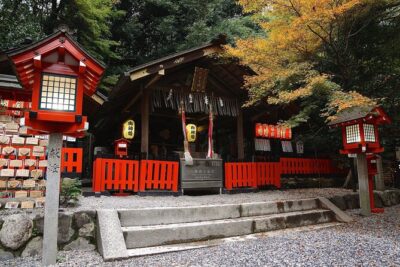
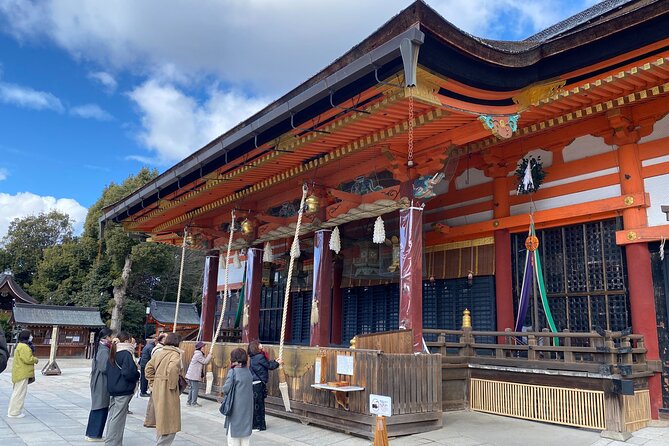
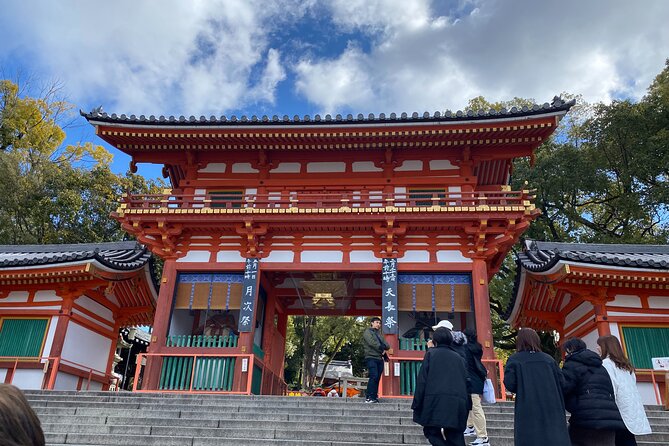
Next comes Yasaka Shrine, at the eastern edge of Gion. The shrine is dedicated to Susanoo-no-Mikoto and was founded over 1,350 years ago, which is the kind of age that turns a site from impressive to oddly personal once the story clicks.
This stop works well because it’s not just architecture. You’re learning how Kyoto’s Shinto tradition shows itself in everyday life—where people come for blessings, seasonal rituals, and local identity. Even if you only spend around 30 minutes, you’ll get enough context to recognize what you’re seeing instead of just taking pictures and moving on.
Drawback to consider: shrines can get crowded, especially in peak hours. If your schedule is flexible, choosing a calmer time of day helps your photos and your patience.
Kōdai-ji Temple: Zen Buddhism tied to Toyotomi Hideyoshi’s circle
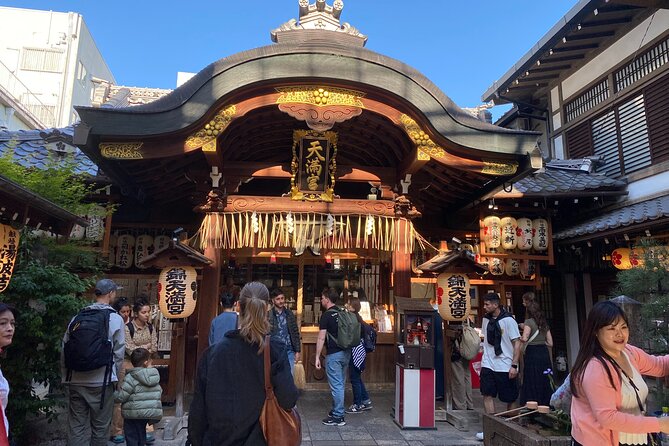
Then you’ll head to Kōdai-ji, a Zen Buddhist temple near Gion. It was founded in 1606 by Toyotomi Hideyoshi’s wife, and that connection gives the temple an extra layer beyond its appearance.
Why this stop is worth it: Kōdai-ji sits in that sweet spot where you can feel the calm of a Zen space while still understanding how powerful political families shaped temple culture in Kyoto. It’s a quick 30-minute visit, but the foundation story helps you look longer without getting stuck in information overload.
One small consideration: Zen temple areas often encourage quiet and slow movement. If you like to rush through sights, you may feel slightly “forced” to slow down here. That’s not a problem; it’s part of the design.






Yasakanoto (Hōkan-ji Temple) and its pagoda silhouette
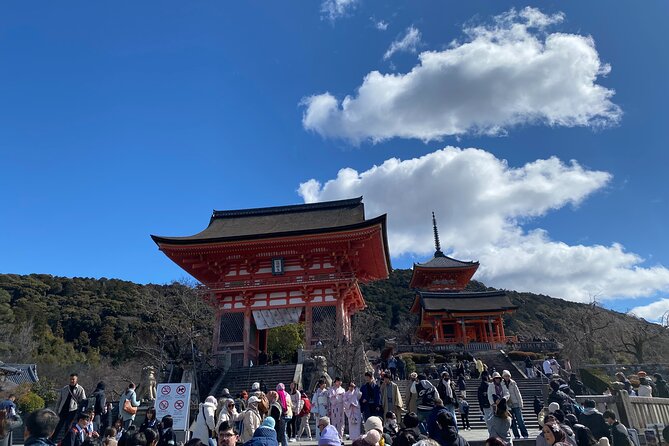
Your next stop is Yasakanoto, officially Hōkan-ji Temple. You’re looking at a five-story pagoda, described as originally built in the 6th century, in the historic Higashiyama area near Gion.
This is the kind of stop that’s short but memorable. A pagoda is visual shorthand for Kyoto’s religious style, and the five-story scale makes it stand out even from street level. You’ll have about 30 minutes, which is enough for photos and a bit of context without turning it into a long detour.
Practical tip: pagodas photograph best when you can get a clear line of sight. If you’re arriving during a busier period, be ready to shift your position slightly for the cleanest view.
Kiyomizu-dera: Mount Otowa slopes and the wooden stag detail
After the pagoda, you’ll reach Kiyomizu-dera, one of Kyoto’s most famous temples. It sits on the slopes of Mount Otowa, was founded in 778, and is renowned for its impressive wooden stag.
Kiyomizu-dera is included with admission, which is a nice value detail. It means you’re not spending your limited tour time hunting ticket info while the line grows.
Why this stop lands: it’s a reminder that Kyoto’s spiritual landmarks weren’t built as single-time attractions. They’re long-standing centers of worship, built into the mountain terrain. The “Mount Otowa” setting also gives you a sense of elevation even before you fully climb into the temple experience.
Possible drawback: because Kiyomizu-dera is famous, the approach can feel crowded. If you’re the type who likes wide open spaces, you’ll still enjoy the temple halls, but you may have to work around foot traffic.
Fushimi Inari: thousands of red torii gates in one hour
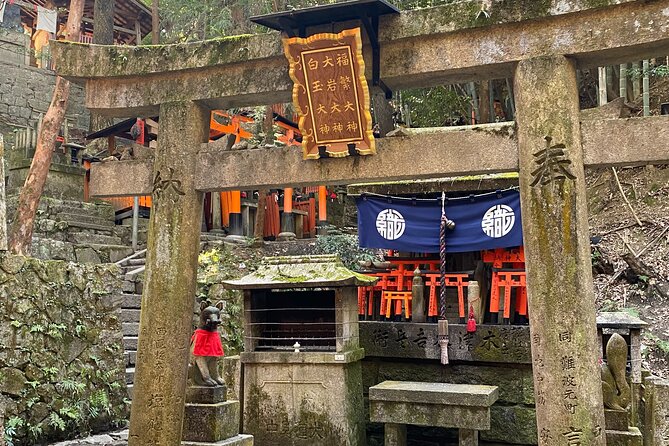
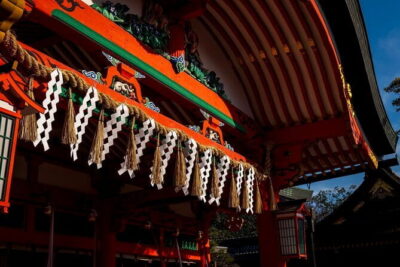
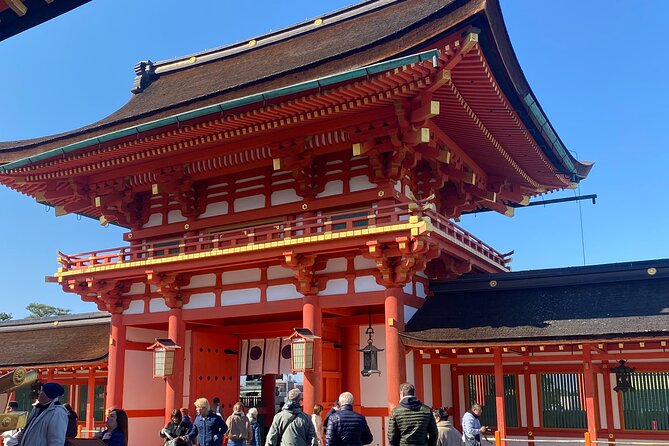
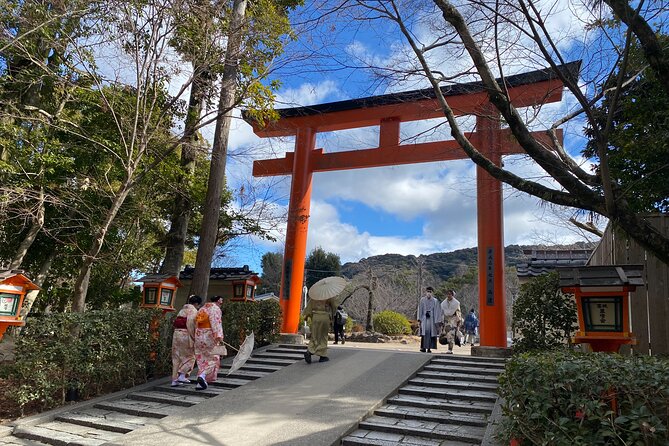
Now the headliner: Fushimi Inari-taisha. This shrine is famous for its thousands of vibrant red torii gates that form winding paths up Mount Inari, and it was established in the early 8th century.
You get about 1 hour here, and that’s the right time window if you want the atmosphere without turning the day into a full hike. In one hour, you can choose your own style: follow the gates partway for the iconic “tunnel of red” feeling, or push further if you still have energy.
This is also where your guide’s explanations can make a real difference. If you know what you’re looking for, the maze-like paths feel purposeful instead of overwhelming. And because the tour is small, you can usually keep a comfortable pace rather than getting dragged along at someone else’s speed.
Practical tip: bring water and plan for steps. Torii gates mean ongoing walking, and the “winding paths” are part of the charm and the workout.
The guide factor: pace, explanations, and matching your comfort level
A key part of making this tour feel worth it is how the guide handles pacing. The tour is designed as a walking half-day, but the guide can adjust your pace so the day feels comfortable rather than stressful.
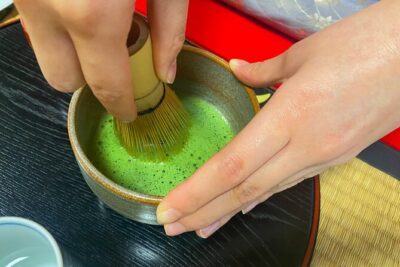
In at least one experience example, a guide named Tomoki was praised for connecting temple and shrine stories with modern architecture, plus sharing how Kyoto’s long presence shaped local culture like traditional sweets and matcha. Even if you don’t get the same guide, the point is clear: you’re not just collecting sights. You’re getting a guided thread through Kyoto’s past and present.
If you’re traveling solo, this matters even more. A good guide fills the gaps between stops, so you leave with a clearer mental map.
What the price really covers (and what it doesn’t)
At $78.04 per person for about 4 hours, you’re paying for two big things: guide costs and specific admission fees. The included admissions are for Kōdai-ji and Kiyomizu-dera, which helps control the day’s extra costs and keeps you moving.
What’s not included is also clear: train transportation (¥220 per person) and meals and drinks. So think of this as a walking tour plus entry handling for two major temples, not an all-inclusive day.
Value check: if you’d otherwise try to DIY these stops, you’d still face ticket lines at the two included temples plus the time cost of figuring out the route across neighborhoods. This tour pays that “time tax” for you.
Who should book this tour, and who might skip it
This is a strong fit if you want:
- A small-group Kyoto overview without juggling transit and tickets
- A blend of Gion streets, Shinto shrines, and Buddhist temples
- A paced day where you can ask questions and keep moving comfortably
You might consider a different format if:
- You hate walking for four hours with limited breaks
- You want a slower, deeper, one-site-at-a-time experience rather than a chain of stops
- You prefer to do Fushimi Inari at a very specific time of day and would rather control the full length of your climb
Should you book Sparrow Travel’s Fushimi Inari and Gion tour?
If you want a practical Kyoto day that covers the highlights and still gives you context, I think this is a smart choice. The combination of max 8 people, included Kōdai-ji and Kiyomizu-dera admission, and an end location near Fushimi-Inari Station makes it efficient in a good way.
But if you’re the type who wants to linger for hours in one place, you may feel “time-aware” on this schedule. For most people, though, that structure is exactly why it’s a great half-day option.
FAQ
How long is the tour?
The tour lasts about 4 hours.
How much does the tour cost?
It costs $78.04 per person.
What’s included in the price?
The price includes guide costs, a personal guide, and admission fees for Kōdaiji and Kiyomizu-dera.
Are there admission fees at the other stops?
Admission is listed as free for Gion, Yasaka Shrine, Yasakanoto (Hōkan-ji), and Fushimi Inari-taisha. Kōdaiji and Kiyomizu-dera include admission fees.
What is not included?
Transportation by train is not included (¥220 per person), and meals and drinks are also not included.
Where do I meet, and where do I end?
You meet at Minamiza Theater. The tour ends at Fushimi-Inari Station, close to Fushimi Inari shrine.
How big is the group?
The group has a maximum of 8 travelers.
Is there free cancellation?
Yes. Free cancellation is available up to 24 hours in advance for a full refund.