REVIEW · KYOTO
Private & Custom KYOTO Walking Tour – your Travel Companion
Book on Viator →Operated by Japan Private Tours · Bookable on Viator
Kyoto gets complicated fast, and this tour helps you win. This is a private, custom walk through the city’s big hits, with an English-speaking guide handling navigation so you can focus on temples, shrines, streets, and the little stops in between. I especially like the tailor-made route and the hands-on help with planning and tickets, so the day runs on your interests instead of a rigid script.
One thing to keep in mind: entrance fees and meals are not included, and the itinerary packs in a lot of walking. It’s a great match if you’re ready for a full day on foot and you’re comfortable paying temple prices as you go.
In This Review
- Key things that make this Kyoto tour work
- Price and what you’re really buying
- 8 hours on foot: the pace, the rhythm, and how to prep
- Kinkaku-ji and Kiyomizu-dera: start with Kyoto’s headline temples
- Sannenzaka, Yasaka Shrine, and Fushimi Inari: old streets plus big shrine energy
- Arashiyama’s bamboo forest and Tenryuji: the “slow down” chunk
- Nishiki Market and Gion: food browsing and geisha-district atmosphere
- Ginkaku-ji, Sanjusangendo, and Kyoto Imperial Palace: variety across time periods
- Nijō Castle and Eikando Zenrinji: Edo-era walls and autumn-leaning beauty
- How the guide turns walking into a plan you can enjoy
- Tickets, food, and photos: practical moves that save your day
- Should you book this Kyoto walking tour?
- FAQ
- How big is the group?
- How long is the Kyoto walking tour?
- Is pickup available?
- Do I need to buy temple and shrine tickets?
- Are meals included?
- Is there an English-speaking guide?
- Where does the tour start and end?
- What areas and sights are included?
- Is it refundable if my plans change?
- Most people can participate, right?
Key things that make this Kyoto tour work
- Private and custom routing: you set the interests, and the guide builds the day around you
- No getting lost: someone handles directions and pacing for the group
- English-speaking help: communications for photos, vendor questions, and on-the-spot adjustments
- Ticket and itinerary assistance: help figuring out what to book ahead vs on the day
- Classic Kyoto lineup: Golden Pavilion, Kiyomizu-dera, Fushimi Inari, Arashiyama, Gion, plus more options
Price and what you’re really buying
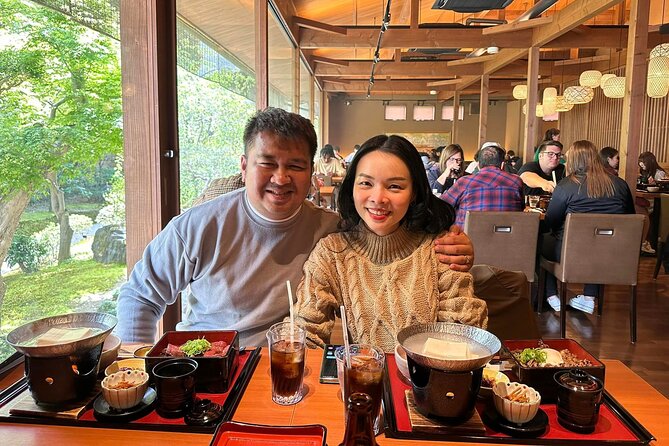
At $265.82 per group (up to 5), you’re not paying for a “seat.” You’re paying for a guide plus planning time, route flexibility, and human problem-solving in Kyoto’s maze of neighborhoods.
Think about what usually goes wrong on a self-guided day: stations to temples don’t line up cleanly, you arrive at the wrong time, lines eat your day, and you waste energy on translations and small logistics. With this setup, the idea is simple: you hand over the hard parts, and you get to enjoy the walking.
Still, the math only makes sense if you’ll use the benefits. If you’re the type who loves planning every train transfer and booking every ticket yourself, you might feel the cost more than the convenience. If you want a guided day with less stress and more seeing, this price can look pretty reasonable.
You can also read our reviews of more walking tours in Kyoto


8 hours on foot: the pace, the rhythm, and how to prep
The tour is about 8 hours, and it’s a walking experience with a guided route. Pickup is offered, and the tour ends back at the meeting point, which helps your day feel contained even when you’re moving across different districts.
You’ll want to dress for uneven sidewalks, temple steps, and crowds. Comfortable shoes matter more than you think, especially on days when you’re mixing hills (like around Kiyomizu-dera) with long shrine walks (like Fushimi Inari).
If you’re choosing what to do, remember a simple rule: the more you add, the more your “best moment” will be whatever you’re least rushed for. Since the route is personalized, bring a short priority list on day one—top sights, plus one or two “nice if we have time” ideas.
Kinkaku-ji and Kiyomizu-dera: start with Kyoto’s headline temples
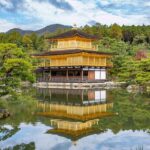
Most custom plans begin with Kinkaku-ji, the Golden Pavilion. It’s a Zen temple tied to Shogun Ashikaga Yoshimitsu’s era, and even if you’ve seen photos, it hits differently in person. The whole area has that sense of controlled calm, and it’s a great place to begin because the contrast between old temple grounds and modern Kyoto feels clear right away.
A practical note: admission tickets are not included, so you’ll pay on arrival. Also, the time on-site is short, around 30 minutes in the plan, so you’ll get the “see it well” experience, not an all-day study session.
From there, the route often moves to Kiyomizu-dera, the Pure Water Temple. The wooden stage that juts out above the hillside views is the big draw, built as part of the main hall and giving you a strong sense of elevation.
Here’s the value of having a private guide early: they can steer you toward photo angles, help you time your visit for calmer moments, and explain what you’re looking at without turning it into a lecture.
Admission isn’t included here either, so plan a budget line for entry fees across the day.
Sannenzaka, Yasaka Shrine, and Fushimi Inari: old streets plus big shrine energy
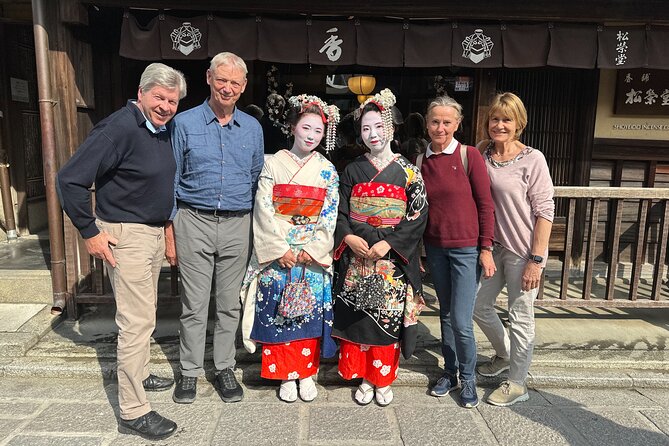
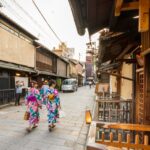
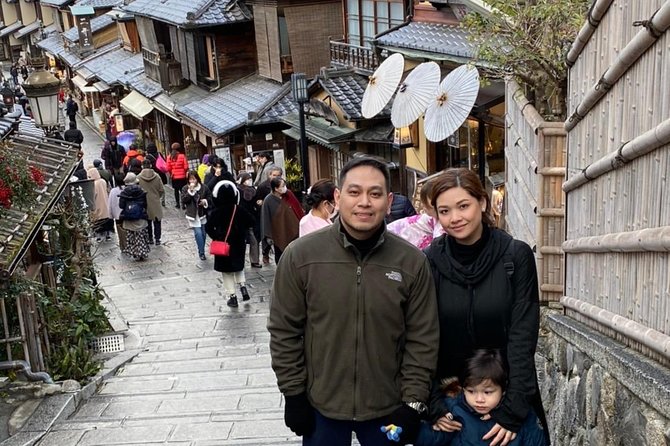
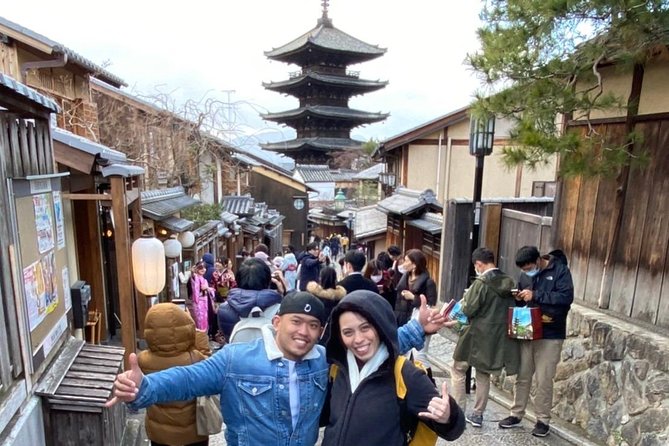
Next up are the preserved lanes around Sannenzaka and Ninenzaka. These streets are known for their traditional streetscape feel, and they’re a good place to slow down, browse, and photograph the kind of Kyoto that lives in postcards—but still has real craft shops and snack stops.
Then the route can shift toward Yasaka Shrine (Gion Shrine). It’s tied to the Gion Matsuri, the famous festival held every July. Even if you’re not in festival season, the shrine area carries that sense of celebration. The plan typically gives you about 30 minutes here.
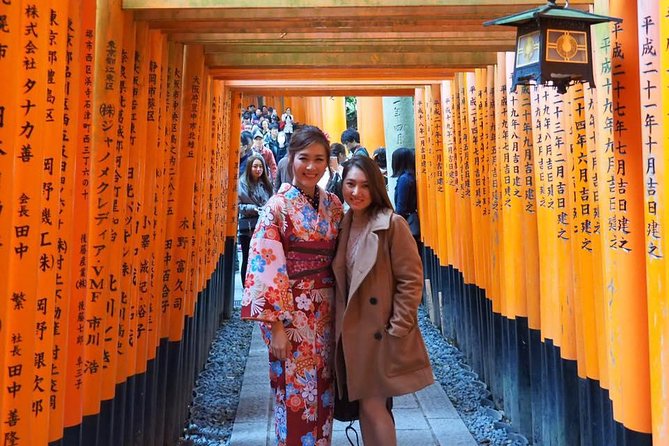
Fushimi Inari-taisha is the “torii gate experience” on a different scale. The vermillion gates march behind the main sanctuary along trails, and the sight is so distinctive that you’ll instantly get why people keep coming back. In the plan, it’s a quick stop—around 15 minutes—so you’ll likely focus on the best views rather than trying to hike the entire route end-to-end.
If you want more than a quick taste, ask your guide early. Because the tour is custom, you can trade time from another stop if your heart is set on the Inari trails.
Both Fushimi Inari and the nearby street areas often have free entry, which helps make this part of the day flexible.
Arashiyama’s bamboo forest and Tenryuji: the “slow down” chunk
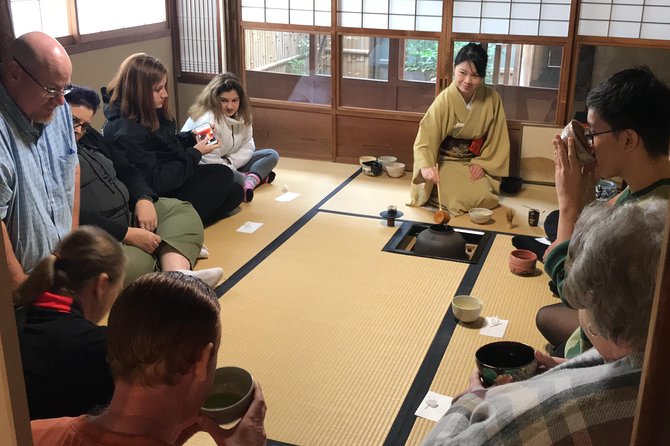
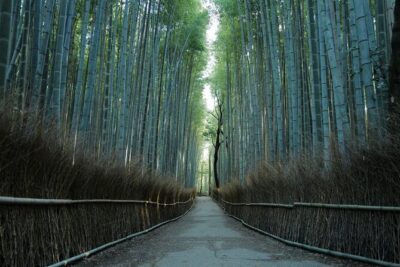
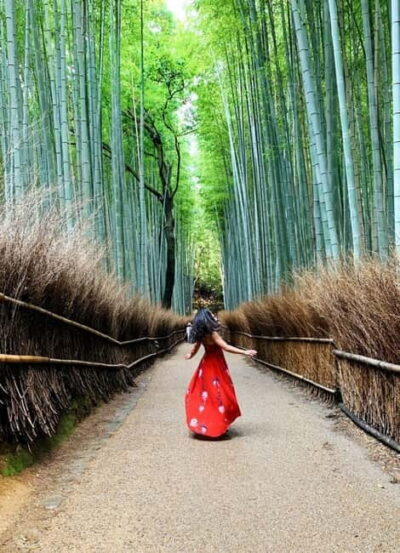
Arashiyama is one of Kyoto’s top sightseeing districts, and the plan includes a major nature moment: the Bamboo Forest. It’s iconic, but the real payoff is how it changes the mood. You go from shrine bustle and street crowds into a more hushed, rhythmic feeling.
After that, the route often includes Tenryuji Temple, founded in 1339 and associated with Kyoto’s five Zen temples tradition. Even with a short visit (about an hour in the plan), it’s enough time to see the temple grounds and connect the setting to the Zen atmosphere.
Admission fees aren’t included, so factor that in. Also, this stop is where you’ll feel the day’s walking accumulation. If you’re tired, tell your guide. A good companion will adjust pacing so you don’t end up sprinting through the parts you actually wanted to see.
You can also read our reviews of more private tours in Kyoto
Nishiki Market and Gion: food browsing and geisha-district atmosphere
Nishiki Market Shopping District is Kyoto’s kitchen in street form: a narrow, multi-block shopping area lined with shops and places to eat. The plan gives about 40 minutes, which is long enough to wander, sample if you want, and compare prices without feeling trapped.
This is also where having help pays off. If you want something specific—diet needs, a favorite snack style, or just a quick recommendation—your guide can help with communicating and choosing something that fits your taste.
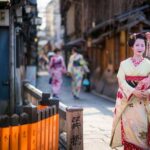
Then comes Gion, Kyoto’s famous geisha district. The plan keeps this to around 30 minutes, which works well as a stroll-and-take-it-in stop rather than a deep dive. It’s best used for atmosphere: streets, old architecture, and the feel of the neighborhood.
Both Nishiki Market and Gion stops are listed with free entry, which is a good budget saver.
Ginkaku-ji, Sanjusangendo, and Kyoto Imperial Palace: variety across time periods
One of the nicer things about this tour is that it doesn’t stay stuck in one vibe. After Gion, the plan often swings back toward temples and quieter, more “readable” cultural sites.
Ginkakuji Temple (the Silver Pavilion) is paired with a short visit (about 30 minutes). Built by Ashikaga Yoshimasa, it offers a different feel than Kinkaku-ji. It’s still about aesthetics and Zen influence, but the mood is less “flashy” and more reflective.
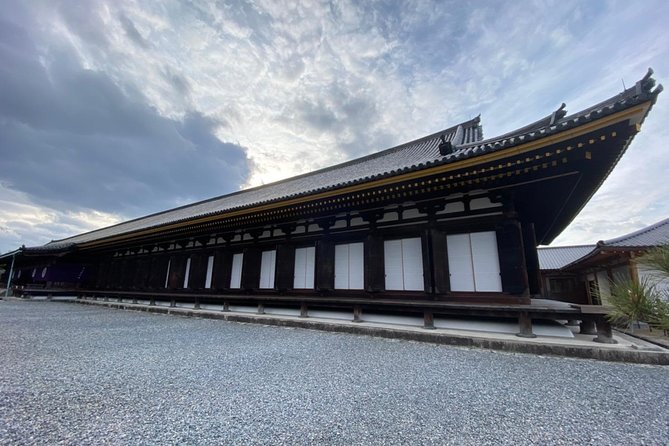
Sanjusangendo (Sanjūsangendō) is a change of pace. It’s famous for 1001 statues of Kannon, the goddess of mercy. The plan usually allows about 30 minutes, which is enough to grasp the scale and see why this temple is tied so tightly to devotion and visual impact.
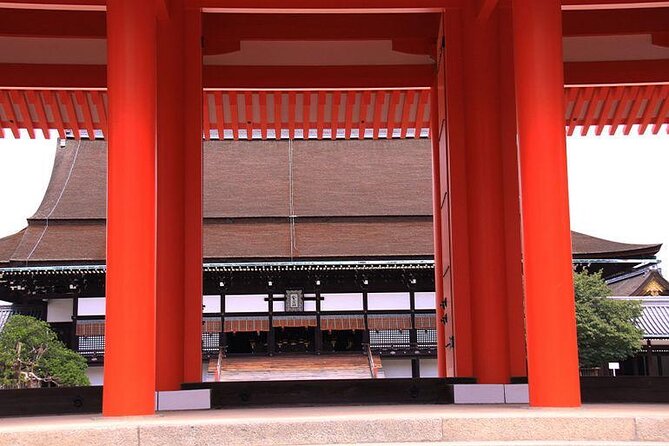
Finally, Kyoto Imperial Palace (Kyōto Gosho) adds an official, historic backdrop. The palace was home to Japan’s Imperial Family until 1868, when the emperor and capital moved to Tokyo. The tour’s plan gives about 30 minutes, which is usually the sweet spot for seeing the main areas without turning the day into museum fatigue.
Both Ginkaku-ji, Sanjusangendo, and the Imperial Palace are listed with free admission.
Nijō Castle and Eikando Zenrinji: Edo-era walls and autumn-leaning beauty
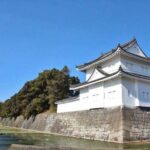
Nijō Castle is a big pivot into Japan’s more political past. Built in 1603 as Tokugawa Ieyasu’s Kyoto residence, it became more complete when his grandson Iemitsu finished the palace buildings 23 years later. Expect a clear “castle and grounds” experience rather than a quick shrine stop, with the plan listing around 45 minutes.
Admission isn’t included, so budget for entry fees again.
Then there’s Eikando Zenrinji Temple. It’s tied to the Jodo sect, and it’s especially famous in autumn. Even if you’re not going in fall, the temple is still worth it for its character and the way it fits into Kyoto’s long list of spiritually focused sites. The plan gives about 45 minutes here, which helps.
Admission isn’t included, so yes, you’ll likely pay at more than one stop today.
How the guide turns walking into a plan you can enjoy
This is where the experience can go from good to excellent. Kyoto rewards people who know how to move between areas and how to explain what you’re seeing without drowning you in facts.
The tour emphasizes an English-speaking guide plus hands-on help like taking photos, communicating with local vendors, and assisting with booking tickets and restaurant plans. That’s not fluff. It’s the difference between wandering and actually getting what you want out of your limited time.
The guides you might meet can include names like Jinshi, Rio, Femina, Karl, or Dalivanh. In the best cases, you get someone who answers questions smoothly, stays patient when your group is moving slower, and keeps the day fun instead of stiff.
There’s also a reality check. Some experiences can suffer if the guide’s familiarity with Kyoto or Japan isn’t strong. That’s not something you can fully predict from the booking page, but you can reduce risk by setting expectations up front. Send a short message with your top sights and any preferences, and ask your guide to confirm the order and the ticket approach for the paid stops. A confident guide will be clear about timing.
Also, remember this is a private tour for your group only. That matters because your guide can pace around your needs instead of forcing everyone into one speed.
Tickets, food, and photos: practical moves that save your day
Here’s what you can count on from the tour data: entrance fees are not included, and meal costs are not included. So you’ll want cash or a card ready for temple admissions and small purchases.
It also helps to think in “paid stops” and “free stops.” In this route, Kinkaku-ji, Kiyomizudera, Arashiyama’s Tenryuji, Ginkaku-ji, Sanjusangendo, Nijō Castle, and Eikando are all listed as not including admission tickets. Some other stops are listed as free entry, like Sanneizaka and Ninenzaka, Fushimi Inari, Nishiki Market, Gion, and Kyoto Imperial Palace.
For photos, don’t assume the best angle is always obvious. A guide can help you position at the right moments and choose where you’ll stand without blocking anyone.
Food-wise, the tour explicitly leaves meals out of the price. The upside is flexibility: your guide can help with restaurant ideas and possibly booking, but you’re not locked into a set menu you didn’t choose.
Should you book this Kyoto walking tour?
Book it if you want a customized, private day where someone else handles routing and daily logistics, and you’re happy to pay temple admissions as you go. It’s a strong choice for small groups that want a mix of big-name sites and neighborhood texture without the stress of figuring out everything alone.
Skip it or consider a different option if you dislike walking for long stretches or if you’re trying to keep the day extremely budget-tight. Entrance fees stack up across multiple stops, and since the tour is non-refundable, it’s best to book only when you’re confident your dates and pace are right.
If you do book, my best advice is simple: send your priorities before the day starts, wear good shoes, and treat paid temples as planned highlights instead of surprise expenses. With that approach, you’ll spend your energy on Kyoto’s sights—not on navigating them.
FAQ
How big is the group?
It’s a private tour, and the price is per group for up to 5 people.
How long is the Kyoto walking tour?
The duration is listed as about 8 hours.
Is pickup available?
Yes, pickup is offered.
Do I need to buy temple and shrine tickets?
Admission fees are not included. Several stops list admission tickets as not included, so you should expect to pay for entry on multiple sites.
Are meals included?
No. Meals are not included (breakfast, lunch, and dinner costs are separate).
Is there an English-speaking guide?
The tour includes an English-speaking guide, and you’ll also get help with planning and communication during the day.
Where does the tour start and end?
It ends back at the meeting point.
What areas and sights are included?
The plan includes major Kyoto sights such as Kinkaku-ji, Kiyomizu-dera, Yasaka Shrine, Fushimi Inari-taisha, Arashiyama (including the Bamboo Forest and Tenryuji Temple), Nishiki Market, Gion, Ginkakuji, Sanjusangendo, Kyoto Imperial Palace, Nijō Castle, and Eikando Zenrinji Temple.
Is it refundable if my plans change?
The experience is non-refundable and cannot be changed for any reason.
Most people can participate, right?
Most people can participate, and the tour is described as available for a wide range of travelers.