REVIEW · KYOTO
Kyoto/Osaka: Nara, Fushimi Inari Taisha, Arashiyama Bus Tour
Book on GetYourGuide →Operated by Japan Visionary Tour · Bookable on GetYourGuide
Torii gates make the day feel like a movie. This tour strings together Nara Park deer time, the Fushimi Inari gate tunnel, and Arashiyama’s calmer temples and bamboo—without you having to plan trains or routes. I also like that the guide keeps the day organized and fun, with names you’ll see in the guide lineup such as Willa, Christine, Amy, Fiona, Laura, and Frederick.
The second big reason I’d do this again is walking the long red corridors at Fushimi Inari and then switching gears to Arashiyama’s Zen-style quiet. The only real trade-off: the schedule is fixed, so if you want to linger for slow photos or extra wandering, you may feel a bit time-pressed.
In This Review
- Key Things That Make This Tour Worth It
- From Osaka to Kyoto: The Bus Day That Keeps You From Getting Lost
- Nara Park Deer Feeding: Cute, Sacred, and Slightly Chaotic (In a Good Way)
- Fushimi Inari Taisha: Walking Through Vermilion Torii Gates
- Arashiyama: Bamboo Forest Calm and Temple-Style Pauses
- Bamboo Forest stop (about 15 minutes)
- Nonomiya Shrine (about 15 minutes)
- Tenryu-ji Temple: World Heritage Gardens for People Who Love a Good Setting
- Togetsukyo Bridge Views, Kimono Forest Photos, and the Foot Bath Reset
- Togetsukyo Bridge (about 15 minutes)
- Kimono Forest (about 15 minutes)
- Arashiyama Station foot bath (free time)
- Price and Value: What $52 Covers (and Where You Still Spend)
- The Guide Factor: Why This Feels Easier Than DIY
- Who This Tour Is For (and Who Might Feel Cramped)
- Should You Book This Kyoto Nara Fushimi Inari Arashiyama Tour?
- FAQ
- How long is the Kyoto/Osaka day trip?
- What’s included in the tour price?
- Is food included?
- Which stops are included, and how long do you spend there?
- Do I have to pay extra for Tenryu-ji Temple?
- Where do I meet the tour?
- Is this tour suitable for wheelchair users or mobility impairments?
Key Things That Make This Tour Worth It
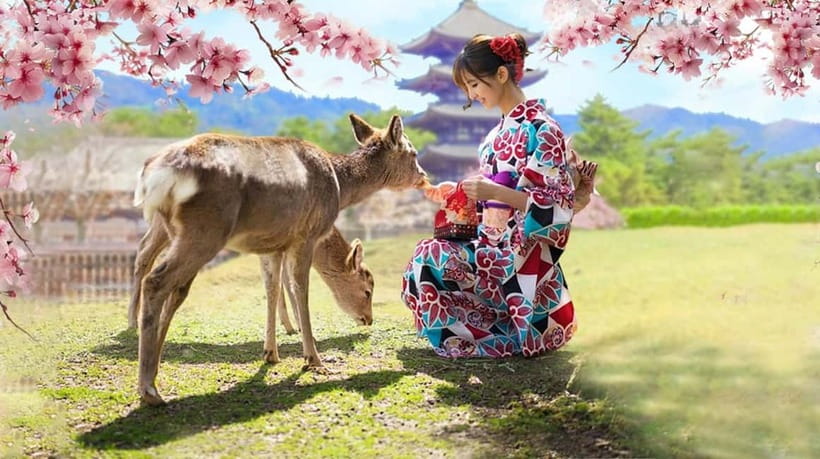
- Feeding Nara’s deer with shika senbei crackers, then stepping back to watch them roam
- Vermilion torii at Fushimi Inari: the climb through 10,000+ gates for prosperity vibes
- Arashiyama bamboo with guided timing, plus optional temple time at Tenryu-ji
- Heian-era Nonomiya Shrine stop for love and academic blessings
- Fast photo moments like the Kimono Forest art installation and the Togetsukyo Bridge views
- A real break after walking with Arashiyama’s foot bath and self-guided time to choose your pace
From Osaka to Kyoto: The Bus Day That Keeps You From Getting Lost
This is a long, single-day circuit designed for convenience. You’ll leave Osaka at 8:00 AM, then Kyoto at 9:00 AM. The day runs about 9–10 hours, moving by air-conditioned coach and pausing at the main sights long enough to feel them, not just glance at them.
You’ll usually start at one of these pick-up options: Harimaya Nippombashi (Kyoto Station Hachijo Entrance Square Sunken Garden is another option). At the end, you’ll drop off in Osaka or Kyoto—whichever you choose when booking. If you don’t choose, drop-off defaults to the pick-up point.
Two practical tips that make this day smoother:
- Show up 10–15 minutes early. The bus leaves on time.
- Bring comfortable shoes, a small umbrella, and water. Even when you get “free time,” you’ll still be walking.
The guide experience is a big part of why this works. In the names I’ve seen linked with this route—like Willa, Christine, Amy, Fiona, Laura, Frederick, and Tracy—the common theme is clear communication and a good sense of timing. Expect short briefings before each stop so you know where to go and what to look for.
You can also read our reviews of more tours and experiences in Kyoto.



Nara Park Deer Feeding: Cute, Sacred, and Slightly Chaotic (In a Good Way)
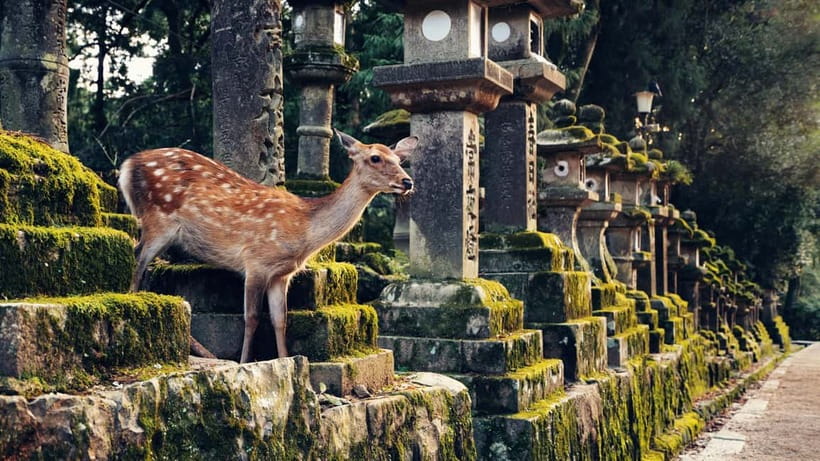
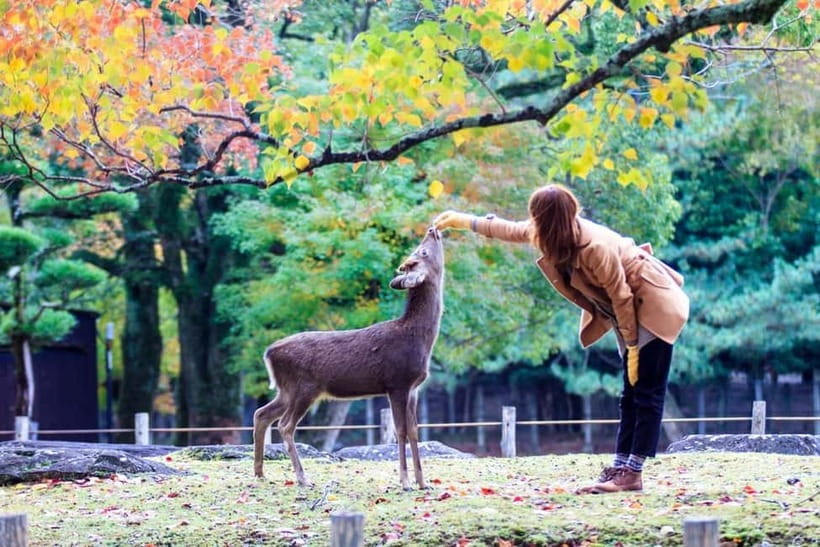
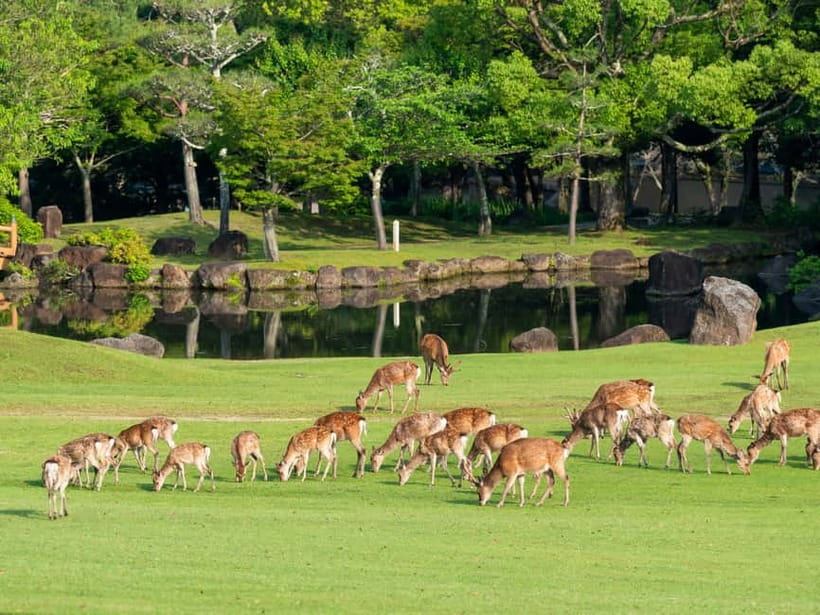
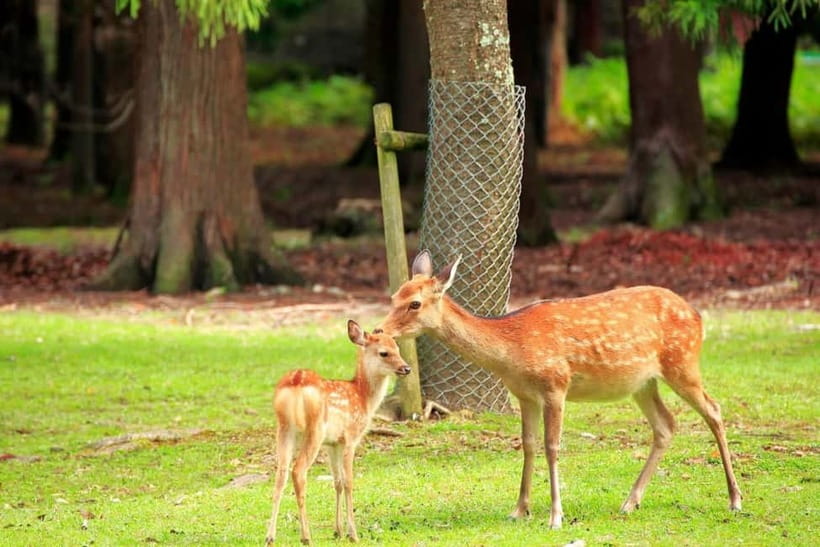
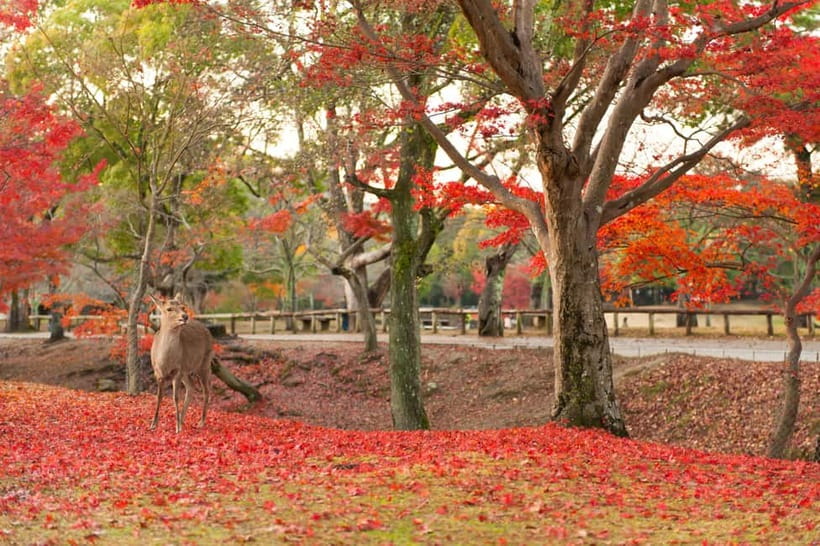
Nara is your first major hit: you get about 1 hour at Nara Park. The setting is famous for a reason—there are over 1,000 deer roaming freely. They’re treated as divine messengers, so you’re not just feeding animals for fun. You’re joining a long-standing ritual that locals and visitors both participate in.
Your guide brings you into the moment with shika senbei, the deer crackers you feed by hand. This is one of those experiences where the photos look adorable—but the real value is the interaction. Deer are curious, calm enough for first-time visitors, and fast enough that you’ll learn quickly to pay attention.
What I love about this stop:
- It’s high-reward with low effort. You don’t need a plan once you’re there.
- It gives you an emotional reset before the busier shrine crowds later.
What to watch for:
- Deer can crowd closer than you expect. Keep your hands controlled, follow your guide’s cues, and avoid sudden movements.
- If you’re not a fan of animals near your feet, you might prefer to watch from the edge rather than go all-in with feeding.
This is also a good place to grab a snack if your morning’s empty. Food isn’t included on the tour, so you’ll want to plan your hunger.
Fushimi Inari Taisha: Walking Through Vermilion Torii Gates
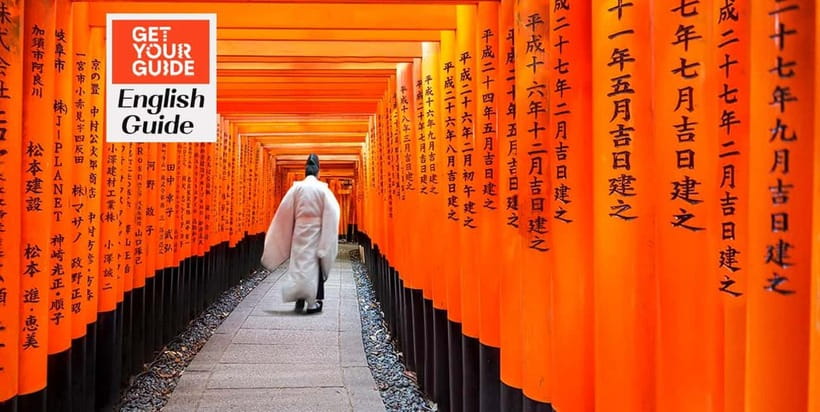
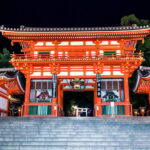
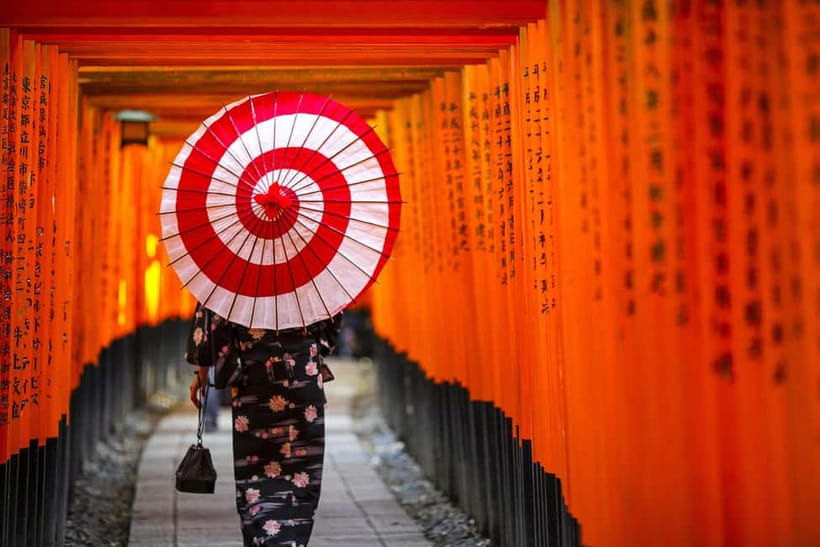
After Nara, you head to Fushimi Inari Taisha for about 70 minutes. This is the shrine most people picture instantly: a tunnel-like climb through 10,000+ vermilion torii gates winding up the hillside.
Here’s why this stop matters beyond the photos. Fushimi Inari is one of Japan’s most recognizable spiritual visuals because it turns belief into architecture. The gates create a moving corridor—each step feels like you’re walking deeper into the shrine’s story, not just standing in front of it.
Your guide will frame it around prosperity and how the shrine’s fame has spread through pop culture. It’s even been tied to media like Memoirs of a Geisha and Detective Conan, which is a fun way to connect what you’re seeing with wider Japanese storytelling.
How to use your time best in 70 minutes:
- Start by walking into the gates early, then decide how far up you want to go.
- If it’s crowded, keep moving steadily rather than stopping at every single gate view. You’ll still get plenty of photo angles.
- If you prefer quieter photos, look for a slower path moment even if it’s not the postcard spot.
Trade-off to be aware of: this is a landmark people travel specifically for, so it can feel busy. If you want a slow, uninterrupted climb, your tour time will feel short. Still, you’ll get the full “torii tunnel” effect, which is the whole point.
Arashiyama: Bamboo Forest Calm and Temple-Style Pauses
Your Arashiyama block is about 2.5 hours total, with several quick, focused stops. This part of the day shifts the mood away from large-city shrine crowds and toward a softer walking pace.
Bamboo Forest stop (about 15 minutes)
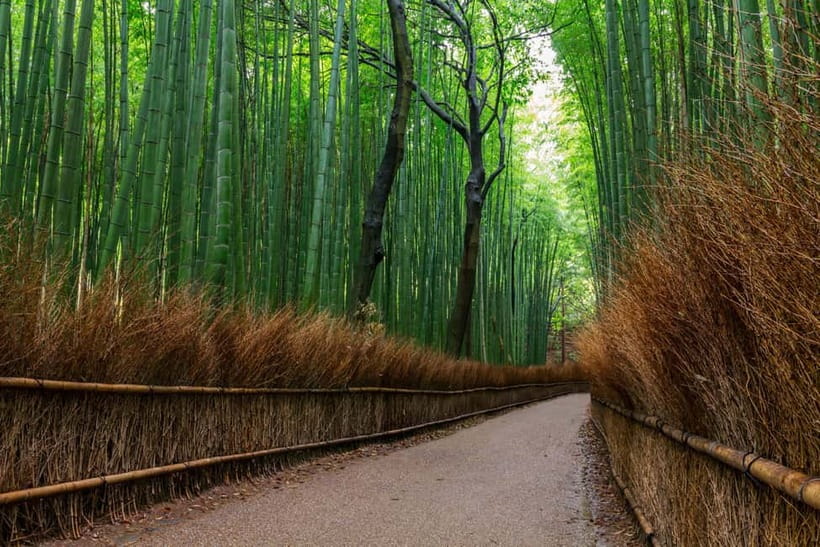
First up is the famous bamboo forest. The timing is short—on purpose. You get the iconic scene: tall stalks, light filtering through, and a quieter feeling than you might expect on a busy day.
My advice: don’t treat it like a “walk forever” place on this schedule. Think of it as a mood check. Stand still for a few minutes, then move on. If you try to force more time out of a short stop, you’ll end up frustrated.


Nonomiya Shrine (about 15 minutes)
Next is Nonomiya Shrine, dating back to the Heian Period (1,000+ years). It’s especially known for blessings connected to love and academic success. A big highlight here is the Kuroki Torii, an unpainted gate that rises quietly within Arashiyama’s bamboo setting.
This stop is small but meaningful. It’s the kind of detail your brain remembers later because it breaks the “big landmark only” pattern.
Tenryu-ji Temple: World Heritage Gardens for People Who Love a Good Setting
You’ll have Tenryu-ji Temple as an optional extra-fee stop. It’s a UNESCO World Heritage Site, and it’s especially famous for the Sogenchi Garden, where the design uses borrowed scenery—views outside the garden that become part of the composition.
Even if you don’t consider yourself a “garden person,” this is a strong choice because gardens like this are built for attention. They reward quiet looking, not just sightseeing.
Should you add Tenryu-ji if you’re on the fence?
- If you like Zen spaces and careful atmosphere, yes.
- If you’re more into photo stops and fast movement, you might skip it and spend that time on the walkways near the bridge and shops.
Your tour timing will still protect you from missing the core Arashiyama highlights.
Togetsukyo Bridge Views, Kimono Forest Photos, and the Foot Bath Reset
Arashiyama also includes a few well-placed “see it now” stops that help you understand the area fast.
Togetsukyo Bridge (about 15 minutes)
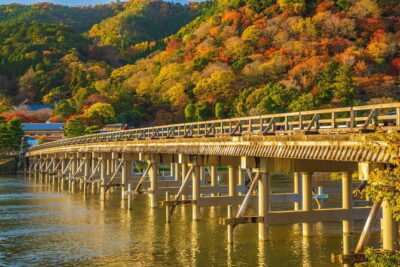
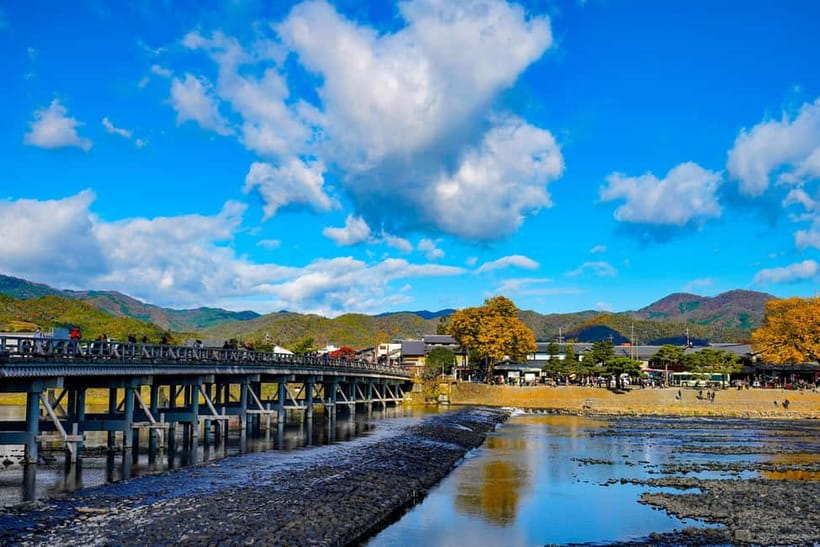
From Togetsukyo Bridge, you get sweeping Arashiyama views. It’s also a classic spot for a bit of nostalgia: you might see rickshaws passing, which helps the whole area feel like it belongs to old Japan, not just a modern day-trip circuit.
Kimono Forest (about 15 minutes)
Then comes the Kimono Forest, an art installation with 600 colorful pillars featuring patterns inspired by Kyoto’s Kyo-Yuzen textiles. This is pure photo fuel, but it also works as a mental break. After temples and gates, it’s a bright, playful change of pace.
Arashiyama Station foot bath (free time)
Last, you’ll get time for the Arashiyama foot bath. It’s a small thing, but after a full day of walking and standing, it feels like a reset button. Even if you skip the soaking, the point is: you get a decompression moment before the ride back.
Also, you’ll likely notice this area has plenty of street snacks and local restaurants. If you’re hungry later in the day, plan for it. The tour doesn’t include food or beverages.
Price and Value: What $52 Covers (and Where You Still Spend)
At $52 per person for 9–10 hours, the value is mostly about what you don’t have to do:
- You pay for transportation (including parking and gas)
- You get an English-speaking live guide (English and Chinese)
- You get help coordinating timing across three major zones
What you don’t get:
- Food and beverages are not included
- Tenryu-ji has an extra fee if you choose it
So the real cost depends on your appetite and whether you add Tenryu-ji. But even with those extras, this still tends to pencil out well for first-timers. You’re not spending brainpower on train transfers, and your guide handles the “when to leave, where to meet” piece.
One more value note: this tour is rated highly for transport quality, with many reviews giving perfect scores for the ride comfort and driving smoothness. That matters on a long day. When the bus is comfortable and punctual, your energy holds up for the walking parts.
The Guide Factor: Why This Feels Easier Than DIY
If you do this on your own, you can absolutely plan it. But the tour makes it easier in two ways: timing and tone.
The named guides I saw in the reviews—Willa, Christine, Amy, Fiona, Laura, Frederick, Tracy, Sofia, and others—sound like they share a few practical habits:
- Clear instructions before each stop
- A way of keeping the group together so no one feels left behind
- Humor and warmth that keeps the day from feeling like a checklist
That soft-skill stuff is hard to measure, but you’ll feel it. When your guide explains what to notice at Nonomiya or sets expectations at Fushimi Inari, you stop treating the day like random photos and start seeing the place with context.
Who This Tour Is For (and Who Might Feel Cramped)
This tour is a great fit if you:
- Want a first-time highlights loop across Osaka/Kyoto → Nara → Arashiyama
- Prefer guided pacing with enough free time to wander
- Like cultural stops but also want playful moments like deer feeding and the Kimono Forest
You might feel the limits if you:
- Want to stay in one place for a long time (this day is built for multiple stops)
- Don’t like group schedules
- Have mobility limits, since it’s not suitable for wheelchair users or people with mobility impairments
Also, you’ll be on your feet. Even though some stops are short, the day adds up.
Should You Book This Kyoto Nara Fushimi Inari Arashiyama Tour?
If you’re visiting Kyoto and Osaka for the first time and you want the big hits—Nara deer, Fushimi Inari torii, and Arashiyama bamboo—this tour is a strong, value-focused way to do it. The price buys you guided coordination and a comfortable ride for a full day, and your time in each place is structured so you experience the core without losing the whole day to transit.
I’d book it if you’re comfortable with walking and you like a tour that moves at a steady pace. I’d think twice if you’re the type who needs hours in one shrine or one neighborhood. This one is built for variety, not slow lingering.
If that’s your travel style, go ahead and reserve. Bring comfy shoes, plan to purchase meals on your own, and enjoy the fact that your best moments are spread across the spiritual, the scenic, and the playful.
FAQ
How long is the Kyoto/Osaka day trip?
The tour runs about 9 to 10 hours total.
What’s included in the tour price?
You get an English-speaking live guide, an air-conditioned vehicle, and all taxes, parking fees, gas fees, and handling charges.
Is food included?
No. Food and beverage are not included, so you’ll want to budget for meals and snacks.
Which stops are included, and how long do you spend there?
Nara Park is about 1 hour, Fushimi Inari Taisha is about 70 minutes, and Arashiyama is about 2.5 hours with shorter stops for the bamboo forest, Nonomiya Shrine, Tenryu-ji (extra fee), Togetsukyo Bridge, Kimono Forest, plus additional free time like the foot bath.
Do I have to pay extra for Tenryu-ji Temple?
Yes. Tenryu-ji Temple is listed as an extra fee stop.
Where do I meet the tour?
Meeting points can vary by the option you book. Common pick-up options include Harimaya Nippombashi 1-chome and Kyoto Station Hachijo Entrance Square Sunken Garden.
Is this tour suitable for wheelchair users or mobility impairments?
No. It is not suitable for people with mobility impairments or wheelchair users.