REVIEW · KYOTO
One-Day Walking Tour of Amazing 8th Century Capital Nara
Book on Viator →Operated by KAMNAVI Tours · Bookable on Viator
Eight hours in Nara beats the guesswork.
This private walking tour strings together Nara’s big sights into one smooth day—starting in Naramachi and ending at Todai-ji—so you spend less time figuring out directions and more time looking closely. You’ll also get the classic Nara bonus: wild deer wandering through the day, including time in Nara Park.
I like that the tour is led by a real person who can steer you through the story of Japan’s ancient capital. Guides such as Satomi, Tomoko, Fumiko, Noriko, and Fuji are highlighted for being flexible and answering questions on the spot (even helping a guest with a bad knee keep the day comfortable). The one thing to keep in mind is that it’s private, but it isn’t fully customizable—you should still expect a set route, plus some costs not included up front.
In This Review
- Quick take: what makes this Nara day work
- Why Nara feels different than Kyoto
- The 8-hour plan: how it saves time (and stress)
- Naramachi: temple-town roots and lanes with old houses
- Kasuga Grand Shrine: Fujiwara influence you can actually see
- Todai-ji Temple: UNESCO scale and the giant Buddha effect
- Nara Park deer time: fun, but manage the moment
- Guide style matters: flexibility, pacing, and real answers
- Price and value: what $137 really buys
- Logistics that matter: timing, walking, and where it ends
- Who this tour fits best
- Should you book this Nara walk?
- FAQ
- How long is the One-Day Walking Tour of Amazing 8th Century Capital Nara?
- What time does the tour start, and is it near public transportation?
- Is this tour private?
- What is included in the price?
- What additional costs should I budget for?
- Does the tour include Nara deer at Nara Park?
- What happens if the weather is bad?
- Is there a cancellation window for a full refund?
Quick take: what makes this Nara day work
- Naramachi first: old temple-town roots turned into merchant streets, with traditional latticed houses that feel like time travel.
- Kasuga Grand Shrine without the confusion: you get context for the Fujiwara clan connection and what you’re actually looking at.
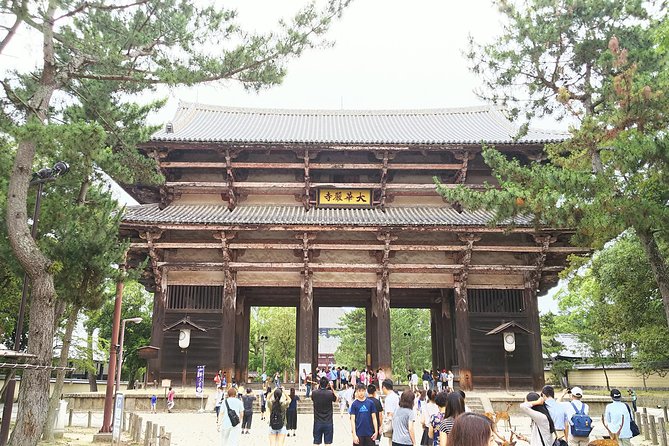
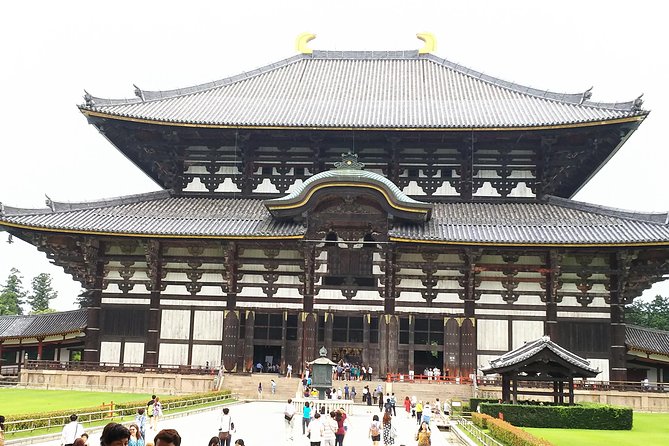
- Todai-ji as the main event: you’re guided into the scale of a UNESCO World Heritage complex and the famous giant Buddha setting.
- Deer time in Nara Park: you’ll have a real chance to see the animals up close during the walk.
- A guide who adjusts to your needs: flexibility shows up in how the day is handled, including pace changes for mobility limits.
Why Nara feels different than Kyoto
Kyoto is famous for style. Nara is famous for age. This tour focuses on the “old capital” side of Japan—the 8th-century roots that still show up in places like shrine traditions and the massive temple complex at Todai-ji.
That difference is exactly why I think a guided day works so well. Left on your own, it’s easy to see buildings without understanding why they matter. With a guide, you get the stories behind the stones and structures while you’re standing right in front of them.
And yes, Nara still delivers on the small, fun moments. The deer aren’t just a photo op. They’re part of the lived-in atmosphere of the park area, and the guide helps you time the day so you get to experience them without feeling rushed.
You can also read our reviews of more walking tours in Kyoto


The 8-hour plan: how it saves time (and stress)
The tour runs about 8 hours and starts at 8:30am. That early start matters in Nara, because you’ll beat some of the midday crowd crush and have a better chance to move calmly between stops.
Instead of building your own route from scratch, you follow a walking path that hits the essentials. That’s the big value of hiring someone local: not just directions, but interpretation. A guide helps you connect the dots between the merchant-town history you see in Naramachi and the religious power visible at Kasuga Grand Shrine and Todai-ji.
One practical note: the tour ends in a different location than where it starts. That’s normal for a walking loop in big sightseeing areas, but it means you should plan your onward travel accordingly.
Naramachi: temple-town roots and lanes with old houses
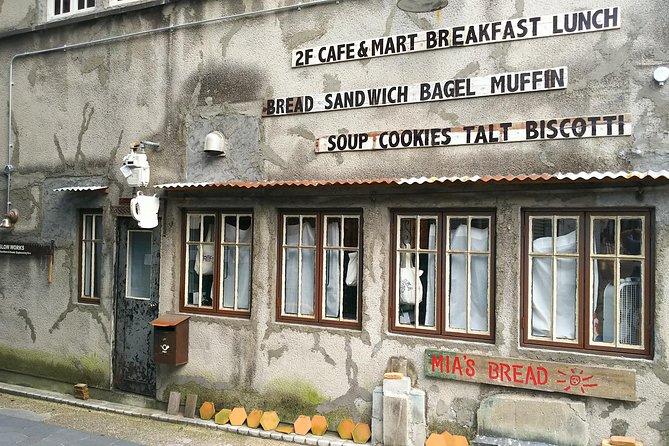
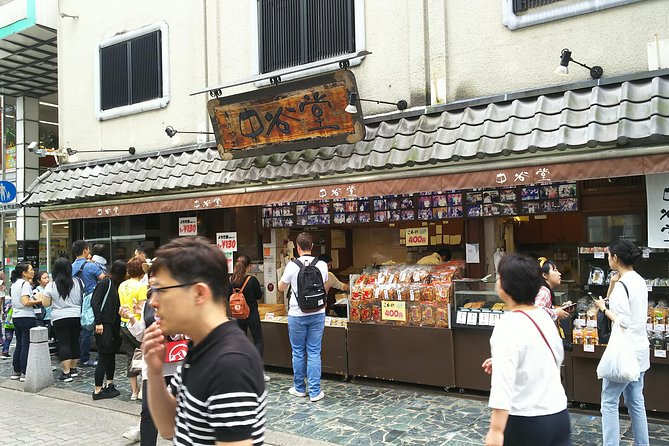
You start in Naramachi, an area that traces back to the 8th century. It began as a temple town and later shifted into a merchant town, which explains the vibe: it’s not just scenic streets. It’s a neighborhood shaped by the flow of daily life around major religious activity.
Expect traditional-style latticed houses, including buildings that are about 100 years old and older. Even if you’re not an architecture nerd, you’ll feel the difference. The way the lanes work, the way the storefront-style facades sit along the street—this is the kind of detail that makes Nara feel less like a museum and more like a living place with memory.
Time on this stop is generous (around 1 hour 30 minutes), and that’s a good thing. Naramachi isn’t just one landmark. It’s a street-level look at how people historically lived alongside religious power. If you like wandering with a purpose, you’ll appreciate this pacing.
Kasuga Grand Shrine: Fujiwara influence you can actually see
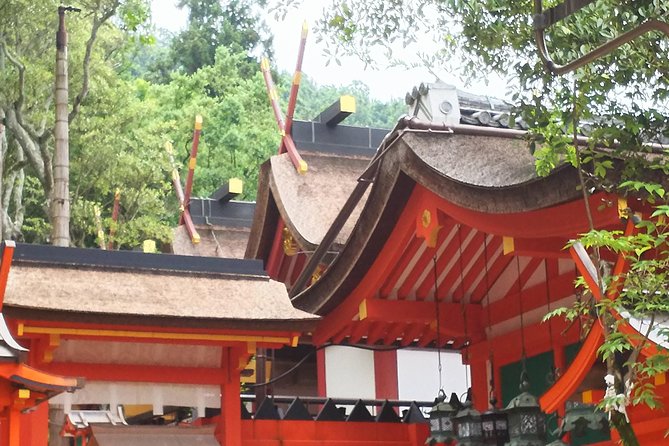
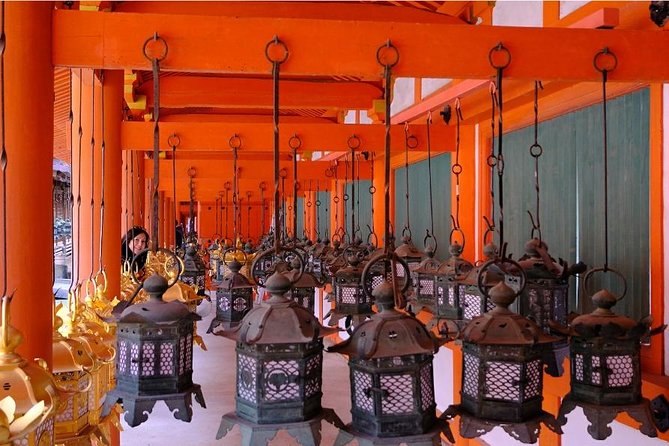
Next up is Kasuga Grand Shrine, tied to the Fujiwara clan. This shrine was founded in the 8th century, and the Fujiwara clan’s status as one of Japan’s powerful aristocratic families helps explain why this place became so significant.
Your visit comes with useful context so you’re not just ticking off a shrine name. The guide can point out the meaning behind what you’re seeing, including the ongoing tradition connected to the shrine’s head priest being a descendant linked to the Fujiwara lineage.
Kasuga Grand Shrine is listed at about 1 hour. That’s enough time to take in the setting and slow down where needed, without turning the day into a marathon. The main drawback here is simple: shrine areas can get crowded, especially later in the day. Going early helps, but you’ll still want to keep your expectations flexible on timing.
Todai-ji Temple: UNESCO scale and the giant Buddha effect
Todai-ji is the anchor stop, and it’s not hard to see why. The temple was founded by Emperor Shomu more than 1,300 years ago, and it’s designated as a UNESCO World Cultural Heritage site. Built beneath Mt. Wakakusa inside a huge precinct, Todai-ji isn’t just one building—it’s a whole world of structures and sacred space.
This is the moment where “a day in Nara” starts to feel big. You come in expecting a temple visit, then you realize you’re stepping into a major historical complex with serious scale. The famous giant Buddha setting is part of that effect, but what makes it worthwhile with a guide is the framing: what you’re looking at, and why it exists in this specific landscape.
Your time here is about 1 hour. If you love photography or want to linger for quiet moments, you might wish you had more time. Still, as a day plan, it works because the guide keeps you focused on the highlights while you’re inside the complex.





Nara Park deer time: fun, but manage the moment
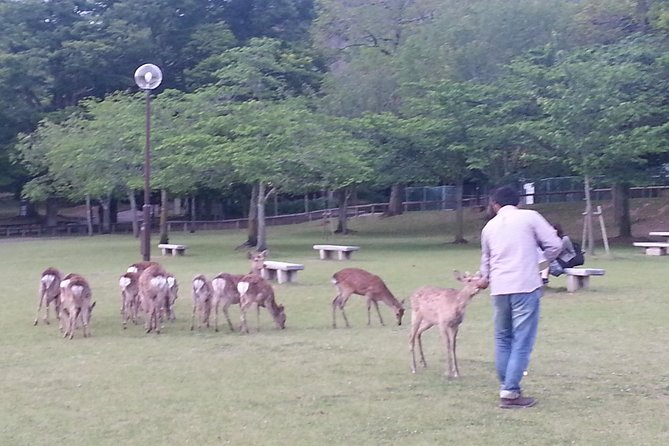
The tour includes a chance to see the wild deer of Nara Park. This is one of those Nara experiences that can become either charming or chaotic, depending on how you handle it.
A guide is helpful here because deer aren’t just background animals—they react to the crowd and to what people are carrying. Having someone in your corner means you can watch the deer, enjoy the weirdly magical feeling, and still keep moving at a comfortable pace through the park area.
If you’re sensitive to animals being close (or you don’t love being approached), tell your guide at the start of the day. It’s a walking tour, so you’ll likely spend less time stuck in one spot and more time walking through the areas where you can enjoy the deer without getting trapped in a crowd.
Guide style matters: flexibility, pacing, and real answers
What I like most about this kind of private tour is how much the day depends on the guide. Here, the guides have shown up in real-life situations with practical problem-solving.
You’ll see examples like:
- Satomi helping with a spontaneous detour to the Nara National Museum and still making the day feel connected.
- Tomoko adjusting for a guest with a bad knee so the experience stayed comfortable.
- Emi (including Emi Rigano) being flexible and keeping the day relaxed.
- Noriko and Fuji steering the flow with patience and strong explanations, turning big sights into understandable stories rather than random landmarks.
Even when a tour isn’t fully customizable, a good guide can still make it feel personal. They manage pacing, answer questions as you go, and help you keep your bearings fast—especially when temples and shrine precincts start to feel like a maze of paths.
Price and value: what $137 really buys
The price is listed at $137.17 per person, and it’s described as a private walking tour with a professional guide plus mobile ticket. There are also notes about group discounts, so if you’re traveling with someone, you may find the per-person value improves compared with booking solo.
Here’s the honest value math: you’re paying for time savings and interpretation. If you tried to do this on your own, you’d need to research opening hours, map the route, and figure out how to connect Naramachi history to Kasuga Shrine and Todai-ji in a way that actually makes sense while you walk.
Then there’s the money you still need to budget separately. The tour does not include:
- Public transportation fare: ¥2,000 per person
- Entrance fees for Todai-ji Temple and Kasuga Taisha Shrine: ¥1,500 per person
So the all-in cost depends on how you travel locally and what you pay at the entrances. Still, I’d treat the guide as the main cost driver, because that’s what turns the day from sightseeing into understanding. If you want a calm, guided route with fewer planning hours, this price can feel reasonable.
If you’re the type who loves building your own itinerary and enjoys reading up before you go, you might decide you don’t need the guide. But if you want to cut the planning time and get the stories in the moment, the structure is doing real work.
Logistics that matter: timing, walking, and where it ends
Start time is 8:30am, and the tour lasts around 8 hours. That combination usually means you’re walking for most of the day, with breaks while you enter and observe each main site.
The meeting is near public transportation, which is helpful if you don’t want to worry about complicated pickup rules. The end location is different from the start, so make sure your next stop (train, bus, or dinner) is planned with that in mind.
Also, this experience requires good weather. If weather is poor, you may be offered a different date or a full refund. That matters in Japan where rain can change the comfort level of long outdoor walking.
Who this tour fits best
This one-day Nara walking tour is best for you if:
- You want to hit the main Nara highlights without spending your vacation hours planning.
- You like history and culture explanations that help you understand what you see in real time.
- You enjoy a walking day, and you’re okay with mixing temple/shrine time with street-level wandering in old neighborhoods.
- You might appreciate flexibility on pace—guides have handled mobility limits for at least one guest based on past experiences.
It may not be ideal if you’re chasing total control. Since the route is private but not portrayed as fully customized, you should expect a structured flow through Naramachi, Kasuga Grand Shrine, and Todai-ji.
Should you book this Nara walk?
I’d book it if you want one smart day in Nara with a guide who can explain the 8th-century story and keep the day moving. The combination of Naramachi old streets, Kasuga’s Fujiwara connection, and the Todai-ji UNESCO scale, plus deer time in Nara Park, is a strong bundle for a single outing.
Skip it if you’re allergic to extra fees (because entrance costs and local transport aren’t included) or if you want a fully customized route. Also, if you’re planning a day around weather-sensitive walking, build in flexibility.
If you do book, go in with comfy shoes and a little patience for crowds around the major sites. Nara is worth it—and with a good guide, it stops feeling like a checklist and starts feeling like a coherent story you can actually walk through.
FAQ
How long is the One-Day Walking Tour of Amazing 8th Century Capital Nara?
It’s listed at about 8 hours.
What time does the tour start, and is it near public transportation?
The start time is 8:30am, and the meeting is near public transportation.
Is this tour private?
Yes. It’s a private tour/activity, meaning only your group will participate.
What is included in the price?
The tour includes a professional guide and uses a mobile ticket.
What additional costs should I budget for?
Public transportation fare is listed as ¥2,000 per person, and entrance fees for Todai-ji Temple and Kasuga Taisha Shrine are listed as ¥1,500 per person. Naramachi is listed as free for entry.
Does the tour include Nara deer at Nara Park?
Yes. The tour includes a chance to see the wild deer of Nara Park.
What happens if the weather is bad?
This experience requires good weather. If it’s canceled due to poor weather, you’ll be offered a different date or a full refund.
Is there a cancellation window for a full refund?
Yes. You can cancel up to 24 hours in advance for a full refund. If you cancel less than 24 hours before the start time, the amount paid won’t be refunded.