Kyoto can get crowded fast in Arashiyama. This tour keeps you on quieter local paths with a small group, and it adds optional Tale of Genji storytelling for a deeper way to read the place. The main trade-off is simple: you’ll walk around 3 km total, and a warm day plus shoe-off temple visits can feel like a lot.
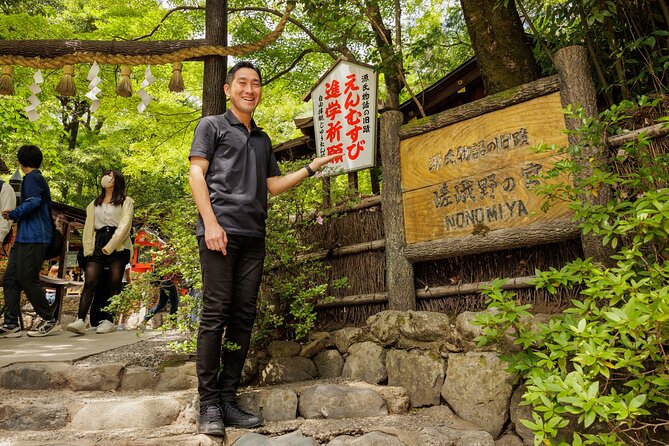
I really like how the route mixes big Arashiyama icons with calm, lesser-trodden corners—starting at Nonomiya Shrine and moving through temples like Seiryoji and Daikaku-ji. Your guide, Yusuke Tanaka, is hands-on with comfort and photos, which matters because the best spots are easy to miss if you’re just rushing on your own.
In This Review
- Key highlights you’ll actually feel
- Why Arashiyama feels calmer when you’re not in a rush
- Meet Yusuke Tanaka and the small-group approach
- Price and what you get for $89
- The Tale of Genji option: literature meets walking
- Stop-by-stop: what each place adds to your day
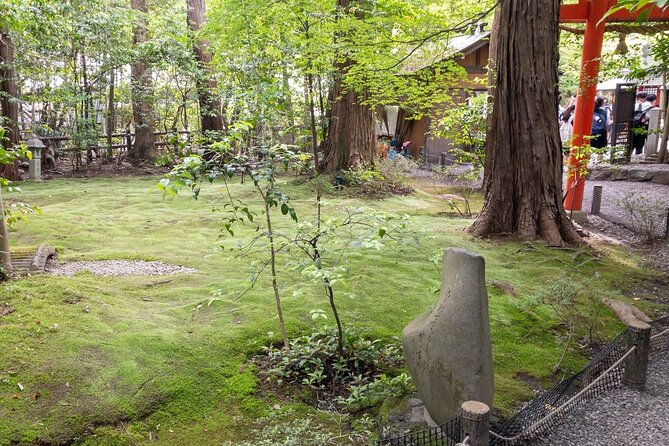
- Stop 1: Nonomiya Shrine, the black torii and the moss garden
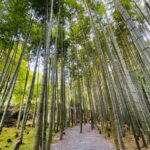
- Stop 2: Arashiyama Bamboo Forest, soundscape plus photos
- Stop 3: Seiryoji Temple, 1,200 years old and shoe-off calm
- Stop 4: Daikaku-ji Temple, Saga Gosho without the typical crowd pressure
- Stop 5: Osawaike, Japan’s oldest artificial pond and seasonal scenery
- Logistics that can make or break your experience
- What kind of traveler will love this most?
- Should you book this walking tour?
- FAQ
- What is the tour duration?
- How much do you walk?
- What does the $89 price include?
- Are temple and pond admission fees included?
- What is the max group size?
- Where does the tour start and end?
- Is there an option related to The Tale of Genji?
- Do I need to take off my shoes?
- Are there food options near the end?
- What if the weather is bad?
- Can I return to the starting point?
Key highlights you’ll actually feel
- Black wooden torii at Nonomiya Shrine plus moss and proper shrine/temple etiquette
- Bamboo Forest with a photo moment and attention to the soundscape, not just the selfie line
- Seiryoji Temple’s 1,200-year story and the Shaka Nyorai Buddhist statue (a national treasure)
- Daikaku-ji as Saga Gosho—a former imperial palace feel without the same crowd pressure
- Osawaike, Japan’s oldest artificial pond with seasonal scenery and a quieter bamboo backdrop
- Small group cap of 6 so you can ask questions and slow down when you need to
Why Arashiyama feels calmer when you’re not in a rush
Arashiyama is famous for a reason, but the popular loop can turn into a conveyor belt. This walking tour is built as a relief valve. You’re not just going from landmark to landmark; you’re moving through calmer pockets of the district, so you can actually see details—wood, moss, temple gates, and the way paths open into views.
What makes it work is the pacing. The full tour is about 3 to 4 hours. Even with walking built in (about 3 km / 55 minutes), the stops are long enough for real time: look around, take photos, and listen to the story your guide is tying to what you’re standing in front of.
You can also read our reviews of more walking tours in Kyoto

Meet Yusuke Tanaka and the small-group approach
This is a guided experience led by Yusuke Tanaka, a local Kyoto guide who designed and guides the route himself. His experience guiding over 3,000 guests shows in the small stuff: you’ll get practical guidance on how to visit, where to stand for better photos, and what to notice so you don’t feel like you’re just following footsteps.
The group size matters here. With a maximum of 6 travelers, you avoid the long-distance shuffle that happens on big tours. It also means you can ask questions without your guide talking over you.
And yes, he helps with photos. He mentions learning photography as a hobby, which comes through as an easy, no-stress photo strategy—especially in the bamboo forest area where the lighting can be tricky and everyone wants the same angle.
Price and what you get for $89
The tour costs $89 per person and runs about 3 to 4 hours. For that price, you get guiding, an original tour booklet (around 15 pages), and photo help.
Important part: some temple and pond entrances are not included. You’ll pay extra on the ground for:
- Seiryoji Temple: ¥500
- Daikaku-ji Temple and Osawa-no-ike Pond: listed as ¥800 per person
- Osawaike (pond): also noted as 300 JPY in the stop description
So the value is best if you like guided context and you’re okay paying a few entrance fees. If you’re the type who only wants to buy one ticket and sprint through everything, this may not be the best match.
Also, bring your expectations down to earth: this is a walking tour with cultural stops, not a bus tour with a quick drop-off at each photo spot.
The Tale of Genji option: literature meets walking
If you choose the The Tale of Genji option, your route visits the same places as the standard tour. The difference is added literary storytelling and historical context during the walk.
One nuance: the bamboo forest is specifically called out as an exception for the Genji connections. That keeps the story tied to what you’re actually seeing, instead of forcing the novel onto every corner.
If you’ve read The Tale of Genji—or even if you know the basics—you’ll likely enjoy the way names, scenery, and mood get linked to the setting. If you haven’t, the tour still works fine as a cultural walking experience; you just get fewer story layers.
Stop-by-stop: what each place adds to your day
Stop 1: Nonomiya Shrine, the black torii and the moss garden
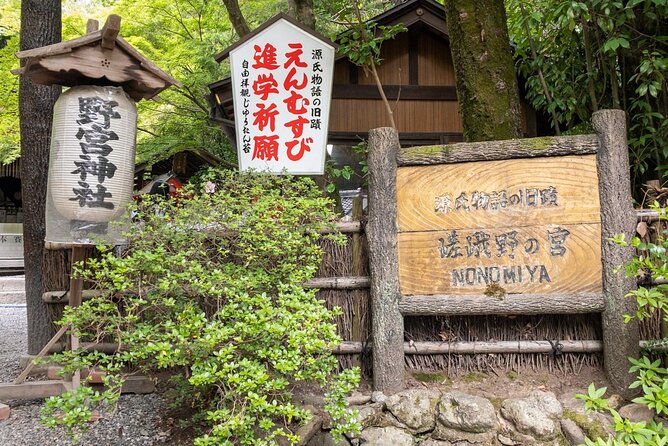
Your tour starts at Randen-yaJapan, inside the hansnari hokkorI square area at Arashiyama Station. From there, it’s straight into a shrine experience that feels different from the usual red-tori crowd.
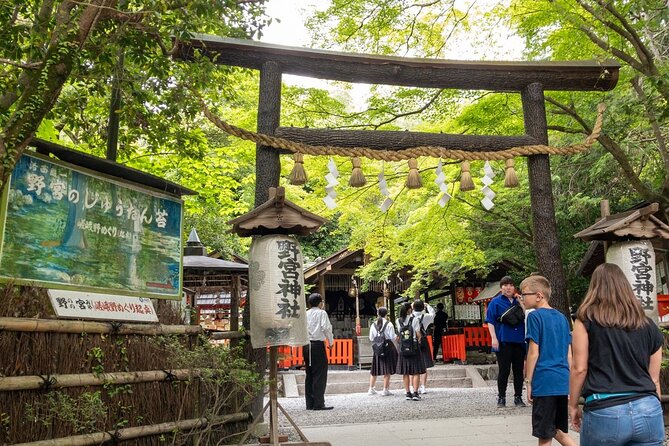
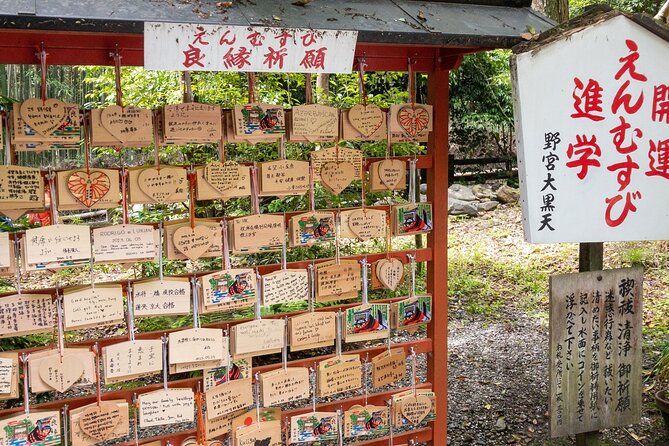
At Nonomiya Shrine, you’ll see a black wooden torii gate. The tour emphasizes that only two shrines in Japan have black torii gates, which instantly gives this stop a special “don’t miss it” quality.
You’ll also spend time with a moss garden, and you’ll learn how to visit and pray properly. If you’ve ever felt unsure about shrine etiquette, this is where a guide earns their fee. You’ll also get the differences between shrines and temples, which makes the later stops click faster.
Possible drawback: shrine stops encourage stillness. If you’re traveling with someone who hates waiting, keep them engaged by asking the guide questions early. The guide’s plan gives you enough motion to stay comfortable.
Stop 2: Arashiyama Bamboo Forest, soundscape plus photos
Then you get to the bamboo forest—yes, it’s popular, but this tour is designed to soften the experience. You’ll get a focused window (about 15 minutes) that includes:
- time to enjoy the bamboo and its soundscape
- a set photo time
- help from your guide for memorable pictures
The practical idea here is simple: don’t just stand there in the first swarm you meet. Your guide times and positions the visit so you can actually take in what makes bamboo forest photos work—vertical lines, light changes, and the quiet mood that disappears when you rush.
If you’re sensitive to crowds, this is still Arashiyama, so it won’t feel empty. But the vibe is more respectful and less frantic when you’re moving with purpose.
Stop 3: Seiryoji Temple, 1,200 years old and shoe-off calm
Next up: Seiryoji Temple. This is a longer stop (about 55 minutes), and it’s where the tour leans into history you can feel.
You’ll learn that the temple was built about 1,200 years ago originally, and that the current building is about 300 years old. The scale of time changes the way you look at the architecture. It stops being “a temple” and becomes “a place that has survived many eras.”
You’ll also see the Shaka Nyorai Buddhist statue, identified here as a Japanese national treasure. That’s a major cultural anchor—this isn’t just a scenery stop.
One important logistics point: you have to take off your shoes to enter inside at Seiryoji Temple. If you’re wearing hard-to-remove footwear or you’re traveling with low patience for socks-on practice, plan ahead. Wear slip-on shoes you can manage quickly.
Possible drawback: shoe-off rules can be uncomfortable in cold weather or if your feet run hot/cold easily. The tour’s worth it, but it’s good to know.
Stop 4: Daikaku-ji Temple, Saga Gosho without the typical crowd pressure
Then you head to Daikaku-ji Temple, about 50 minutes. The highlight here is its identity as Saga Gosho, described as a former imperial palace area built about 1,200 years ago.
This stop is framed as a quieter experience: you get a traditional imperial-palace feel without being stuck in the most obvious tourist choke points. Even if you’ve seen photos of Kyoto temples, the palace-to-temple transformation is what changes the atmosphere.
Again, there’s a shoe-off requirement for entry inside at Daikaku-ji. So treat this as a second “reset your shoes” moment, not an afterthought.
If you’re the kind of traveler who likes details—materials, gate rhythms, garden layouts—this is where you’ll appreciate the pacing. You’re not just passing through.
Stop 5: Osawaike, Japan’s oldest artificial pond and seasonal scenery
Finally, you wrap up at Osawaike, also called Osawa-no-ike in the ticket description. It’s described as the oldest artificial pond in Japan, and that single fact gives the scenery extra weight.
This stop is about 20 minutes. You’ll enjoy the quiet bamboo forest scenery around the pond, and you’ll learn that the views change with the seasons.
Entrance is extra here. The tour notes 300 JPY for Osawaike in the stop description, and also references a combined fee for Daikaku-ji Temple & Osawa-no-ike Pond. In other words, bring some cash for small fees even if you plan to pay digitally elsewhere in Kyoto.
The ending matters: there aren’t many restaurants around the finish point. If you’re hungry later, grab a snack earlier or pack something small. The tour suggests bringing snacks, and I agree—Kyoto can be charming and still inconvenient for last-mile food planning.
Logistics that can make or break your experience
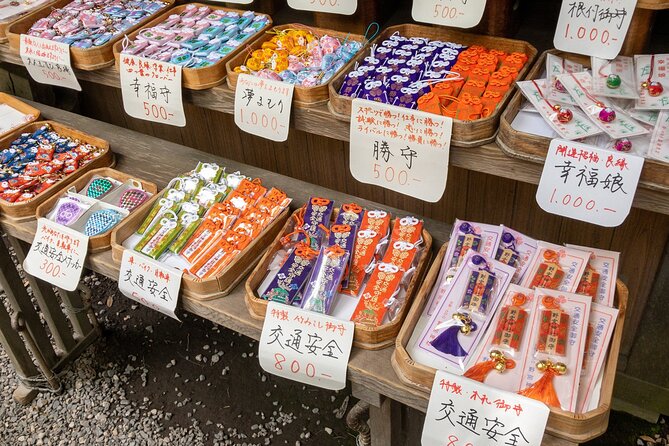
Here are the practical things you’ll thank yourself for later:
Mobile ticket: You’ll use a mobile ticket, which makes check-in easier once you’re in the area.
Walking distance: Expect about 3 km of walking during the tour, and around 55 minutes of that as walking time. It’s not a hike, but it’s enough that you’ll notice it in your legs—especially if it’s hot.
Shoes off twice: You’ll remove shoes to enter inside at Seiryoji and Daikaku-ji. Wear footwear that’s easy to handle.
Group size 6: If you’re sensitive to crowds or prefer questions over silent photo-taking, this small limit is a real benefit.
Season and weather: The tour notes that it requires good weather. If weather forces a change, you’ll be offered a different date or a full refund.
What kind of traveler will love this most?
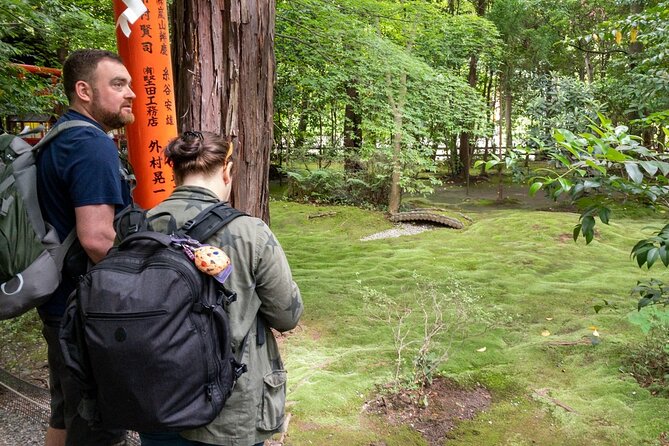
This is a great fit if you:
- want a quieter, more local Arashiyama route rather than the fast tourist circuit
- like learning how shrines and temples work, not just where to stand for photos
- care about history and story connections, especially with the optional Tale of Genji mode
- enjoy small-group travel where your guide can adjust to you
It may be less ideal if you:
- hate walking or struggle with heat
- need easy, restaurant-based pacing at every stage
- want a tour where every admission is included (here, several entrance fees are extra)
One useful perspective from experience style: if you’re traveling with someone older, pack extra water and plan for slower moments. The route is manageable, but warm weather can make any temple-walk feel longer.
Should you book this walking tour?
I’d book it if your goal is Arashiyama with breathing room and meaning. You’ll get the famous bamboo forest, yes—but you’ll also get the places that feel calmer, the shrine etiquette that prevents awkward mistakes, and the temple context that helps you understand why these spots matter.
If you’re only interested in a quick photo checklist, you’ll probably prefer a less structured plan. But if you want your Arashiyama day to feel thoughtful—without getting bogged down—this route led by Yusuke Tanaka is an excellent use of time.
FAQ
What is the tour duration?
It runs about 3 to 4 hours total, including walking time.
How much do you walk?
You’ll walk about 3 km (about 55 minutes of walking time) during the tour.
What does the $89 price include?
It includes guiding, an original tour booklet (around 15 pages), and help taking good photos. It also includes a mobile ticket.
Are temple and pond admission fees included?
No. Entrance tickets for Seiryoji Temple and Daikaku-ji Temple/Osawa-no-ike Pond (plus the Osawaike pond fee noted in the stop details) are not included.
What is the max group size?
The tour has a maximum of 6 travelers.
Where does the tour start and end?
Start: Randen-yaJapan inside the hansnari hokkorI square area at Arashiyama Station.
End: Daikaku-ji Temple area at Sagaosawacho.
Is there an option related to The Tale of Genji?
Yes. The Tale of Genji option adds deeper literary storytelling. Both options visit the same locations, and the bamboo forest is noted as an exception for Genji connections.
Do I need to take off my shoes?
Yes. You must remove your shoes to enter inside at Seiryoji Temple and Daikaku-ji Temple.
Are there food options near the end?
The tour notes that there are not many restaurants near the ending point, so it’s smart to bring snacks if you want them.
What if the weather is bad?
The experience requires good weather. If it’s canceled due to poor weather, you’ll be offered a different date or a full refund.
Can I return to the starting point?
If you prefer to go back to the starting point, the guide offers a free returning walking tour.
![Kyoto: Personalize, private tour (3h, 5h, 8h) [W/Car Option] - Meeting José in Kyoto: start points that make logistics painless](https://l.discoveringkyoto.com/wp-content/uploads/kyoto-personalize-private-tour-3h-5h-8h-w-car-option-400x267.jpg)