REVIEW · KYOTO
Authentic Maiko Experience&Kyoto Dinner (Free drink) at Noh Stage
Book on Viator →Operated by 舞妓さんと楽しむ京都の四季 · Bookable on Viator
A Maiko night on a Noh stage is unusual. This one is built around real ozashiki hospitality, not a simplified tourist show, with live shamisen and conversation-based moments in a small-capacity setting.
I especially love how close you get to the performance, with the maiko dancing right on the Noh stage while you’re seated for the action. I also like the two-shot photo and Q&A setup, because it turns the evening into an actual cultural exchange, not just watching from afar.
The only real consideration: you’ll need to follow the venue rules (especially for stage time), like wearing tabi-style socks and avoiding food or drinks during the photo window.
In This Review
- Key things I’d circle on your Kyoto plan
- Why a Maiko Night on a Noh Stage Feels Different in Kyoto
- The 17:50 Arrival and the 1st-Floor Café Reset
- Getting Seated on the Noh Stage: Photo Rules and the Tabï Moment
- Dinner Meets Live Shamisen: Toast, Kaiseki, and the Maiko Entrance
- Kimono, Kanzashi, and Q&A That Actually Adds Context
- Two-Shot Photo and Ozashiki Games: Hospitality Up Close
- Drinks, Timing, and What Two Hours Really Means
- Location on Okazaki: Easy to Reach, Built for Evening Comfort
- Price and Value: Is $150 Worth It for a Maiko Dinner?
- Who This Kyoto Maiko Dinner Fits Best
- Should You Book This Maiko Dinner at Noh Stage?
- FAQ
- FAQ
- What time does the experience start and end?
- Where do I meet, and do I go back there afterward?
- What’s included in the price?
- Are drinks unlimited?
- Can I take photos, and what are the rules?
- Is there an interpreter?
- What’s the group size limit?
- What’s the cancellation policy?
Key things I’d circle on your Kyoto plan
- Small, invitation-style format (max 20 people): fewer people means more real interaction.
- Live shamisen on a Noh stage: the sound and the timing feel traditional, not staged.
- Kaiseki dinner plus unlimited drinks (2 hours): dinner isn’t an afterthought.
- Kimono and kanzashi intro with Q&A: you get practical context for what you’re seeing.
- Ozashiki games with the maiko: playful, structured, and part of the etiquette.
- Tabi/socks required for stage photo time: plan ahead so you’re not scrambling.
Why a Maiko Night on a Noh Stage Feels Different in Kyoto

Kyoto has plenty of “Maiko shows.” Most are designed to be easy to watch in a big room. This experience is built for closeness and refinement instead.
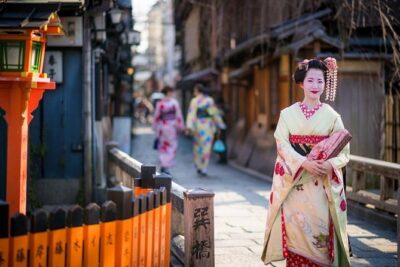
You’re not just watching a dance. You’re part of the rhythm of an ozashiki-style evening—where conversation, introductions, and small games all sit alongside performance. The maiko’s dance happens on the same Noh stage space, with a live shamisen player (jikata) in the middle of everything, so the evening feels like one continuous flow rather than separate acts.
That matters, because it changes your role. You’re more likely to notice details—how the kimono is presented, how the pacing works, and how etiquette shapes the interaction. It also helps explain why the format stays small.
You can also read our reviews of more tours and experiences in Kyoto
The 17:50 Arrival and the 1st-Floor Café Reset

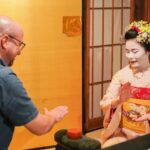
Doors open at 17:50, and if you arrive early, you can relax in the 1st-floor café space. I like this kind of buffer in Kyoto evenings, because it gives you time to calm down before the cultural portion starts.
Once you’re there, you can get oriented without rushing. Use this time to check your socks/tabi situation, especially if you’re the type who only realizes a rule after you’ve already taken your shoes off. (You’ll want to be ready for the stage photo segment later.)
Then at 18:00, the group gathers on the 2nd floor of the Noh stage area. This is where the evening locks into its schedule.
Getting Seated on the Noh Stage: Photo Rules and the Tabï Moment

At 18:00, you gather on the 2nd floor, and you get free photo time on the Noh stage. Here’s the part that can catch people off guard: you need to wear socks or tabi. Bare feet are not part of the plan.
You’ll also need to follow the rule of no eating or drinking during that stage photo window. That’s normal for venues like this, but it’s still worth planning for. If you show up hungry, the good news is dinner and a welcome toast come right after.
This stage-photo segment is more than a souvenir pause. Being allowed onto the stage area creates a feeling of proximity. You’re physically near the performance space, so when the maiko enters later, it feels like the same stage continues its story—rather than you watching from a distant seat.
Dinner Meets Live Shamisen: Toast, Kaiseki, and the Maiko Entrance

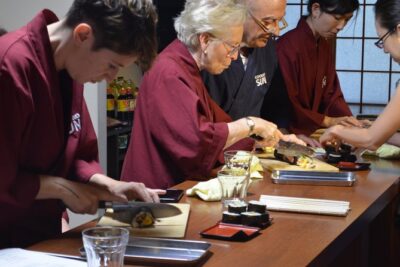
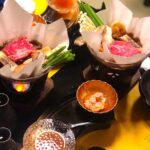
The evening starts with a welcome toast and then dinner. The food is a kaiseki style meal, served as part of the cultural program rather than as a quick pre-show snack.
The schedule is paced so you don’t feel like you’re waiting around for “the real part.” After dinner begins, the maiko and jikata enter, and the live shamisen becomes the soundtrack of the night. Then the maiko performs her dance on the Noh stage.
This live music piece is a big deal for your experience quality. When shamisen is performed live, you feel the tempo and transitions in real time. It’s not just sound—it’s structure. You notice how the dance aligns with the instrument, and the whole thing feels closer to a traditional performance setting.
Also, the format includes unlimited drinks for the program duration (for two hours). That helps keep the energy relaxed while still staying respectful of the formal atmosphere.
Kimono, Kanzashi, and Q&A That Actually Adds Context

After the dance, the program shifts from performance into interaction. There are greetings and self-introductions, then a kimono and kanzashi presentation.
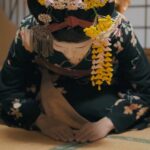
This is where you’ll likely get the most “I didn’t realize that” moments. The kanzashi (hair ornaments) and the way kimono details are explained give you a framework for what you’re seeing. Even if you don’t know anything about styles, the introduction makes the visuals make sense.
Then there’s Q&A, and this is where a Kyoto-certified interpreter guide becomes important. The program includes interpretation support, so you can ask questions and get clear answers instead of guessing.
Based on the kind of questions people ask in this format, you’ll probably want to focus on practical topics: what training looks like, what certain presentation choices mean, and how etiquette guides the evening. This isn’t the setting for broad “tell me about Japan” questions. It’s better for specific curiosity.
You can also read our reviews of more tours and experiences in Kyoto

Two-Shot Photo and Ozashiki Games: Hospitality Up Close

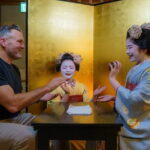
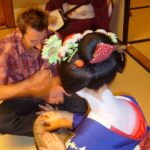
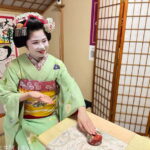
You’ll get a two-shot photo with the maiko on the Noh stage after the Q&A segment. This isn’t a rushed line where you stand, smile, and vanish. The program keeps a conversational pace around it, which makes the photo feel like part of the evening rather than an add-on.
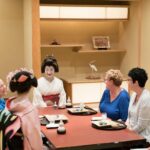
Then you have conversation time with the maiko. This is the heart of the experience for many people, because it turns what could be passive entertainment into something personal.
After that comes the ozashiki games on the Noh stage, livened up by the live shamisen. This is where you see how refined hospitality can still be playful. Ozashiki culture isn’t about being stiff all night—it’s about structured friendliness, with rules that keep everything smooth.
Also, note the small-format feel. With a maximum of 20 travelers, you’re less likely to be stuck as background noise. You’ll probably find the atmosphere calmer, with more space to pay attention.
Drinks, Timing, and What Two Hours Really Means

The whole thing runs about two hours, ending at 20:00. That’s a good length for this kind of evening. Long enough to include dinner, music, dance, explanation, and games. Short enough that you’re not exhausted by the time it’s over.
You’ll also want to think about timing around your Kyoto day. This experience starts at 6:00 pm, which means it works well right after a late afternoon walk through the historic parts of town. Plan your earlier sights so you’re not sprinting across Kyoto at 5:30 pm.
Because drinks are unlimited for two hours, you can treat it like a meal-out experience, not just a cultural event. Still, keep an eye on the “no food or drink” photo rule and general etiquette expectations. If you arrive tipsy, you’ll feel awkward fast. If you arrive relaxed, the evening clicks.
Location on Okazaki: Easy to Reach, Built for Evening Comfort

The meeting point is in Kyoto’s Sakyo Ward, Okazaki Enshōjichō at 91-65, and it’s near public transportation. That’s a practical win—Kyoto evening routes can get annoying if you rely on taxis only.
You’ll start and end at the same meeting point. So once you’re done at 20:00, you’re not stuck figuring out where the group disperses. It’s a straightforward end to the night.
The setting is described as a historic house for the meal side of the experience, while the performance happens on the Noh stage. That pairing is part of the magic: formal performance space plus a more intimate dining atmosphere.
Price and Value: Is $150 Worth It for a Maiko Dinner?

At $150, this isn’t a budget activity. But the value isn’t just “watch maiko dance.” You’re paying for several high-cost pieces at once:
- A real performance setting with live shamisen on a Noh stage
- Kaiseki dinner plus unlimited drinks for two hours
- Direct interaction time, including conversation and Q&A
- A two-shot photo included in the program
- Small group capacity (max 20), which affects the quality of interaction
If you want a big, generic show with distant seating, you’ll likely find cheaper options. But if your goal is closeness and context—kimono details, structured conversation, and ozashiki games—this price starts to make sense.
The other value piece is time. Two hours in Kyoto at the right moment is worth something. You’re not piecing together multiple reservations, meal plans, and performance tickets.
Who This Kyoto Maiko Dinner Fits Best
This experience is a strong match if you’re the type who likes to understand what you’re seeing, not just photograph it. The kimono and kanzashi intro plus Q&A are built for people who ask “why” questions.
It’s also a good fit if you want a more relaxed Kyoto night. The program pace includes games and conversation, so you won’t feel like you’re sitting rigidly the whole time.
And because the group stays limited (max 20) and runs with interpretation support, it works well for visitors who want the experience to feel smooth even if their Japanese isn’t strong.
If you’re very sensitive to formal rules, keep in mind the stage-photo requirements. You’ll want to be comfortable wearing socks/tabi and following “no food or drink” during the stage window.
Should You Book This Maiko Dinner at Noh Stage?
I’d book it if you want the rare Kyoto combination: live traditional performance + kaiseki dinner + conversation + interactive games, all within a small group. The Noh stage setting and the ozashiki-style structure are what make it feel more serious than a standard tourist performance.
I’d pause if your main goal is watching a dance and leaving quickly. This program asks you to participate—through introductions, questions, and games—so it’s less “sit back and forget” and more “show up curious.”
If you’re aiming for an authentic-style Kyoto evening that feels refined without feeling distant, this is the kind of evening that tends to stick with you long after the photos are over.
FAQ
FAQ
What time does the experience start and end?
It starts at 6:00 pm and ends around 8:00 pm (approximately 2 hours).
Where do I meet, and do I go back there afterward?
You meet at Okazaki Enshōjichō, 91-65 in Kyoto (Sakyo Ward), and the experience ends back at the meeting point.
What’s included in the price?
Meals and free drinks are included, along with the maiko’s dance performance, a two-shot photo, conversation time, and ozashiki games.
Are drinks unlimited?
Yes. Drinks are unlimited during the program for two hours.
Can I take photos, and what are the rules?
You get free photo time on the Noh stage. Socks or tabi are required, and you cannot eat or drink during the photo time.
Is there an interpreter?
Yes. The experience includes a Kyoto-certified interpreter guide.
What’s the group size limit?
The program has a maximum of 20 travelers.
What’s the cancellation policy?
You can cancel for a full refund up to 24 hours before the experience starts. Cancellations made less than 24 hours before the start are not refunded.