REVIEW · KYOTO
Kyoto Casual Evening Pontocho Food Tour
Book on Viator →Operated by Arigato Japan KK · Bookable on Viator
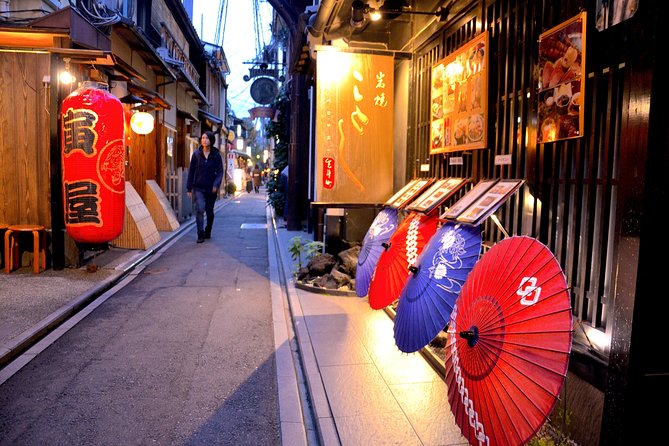
Kyoto at dinnertime has a pulse. This Pontocho Food Tour sends you through candlelit lanes, tea-house streets, and classic Gion corners while pairing the walk with multiple tastings and cultural context. It’s a practical way to see Kyoto’s atmosphere without doing everything alone.
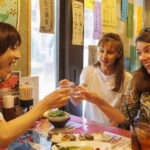
I especially like the small group size (max 10), which keeps the pace human and makes it easier to ask questions. I also like that you get 4 food stops and 2 drinks across different venues, so you’re not just collecting samples from one place.
One thing to keep in mind: food is central here, and while it’s vegetarian friendly, it’s listed as unadvisable for vegans and gluten-free. If you have strict dietary needs, you’ll want to plan ahead.
In This Review
- Key points to know before you go
- Pontocho at 4:30 pm is the sweet spot for Kyoto food
- Small group (max 10) means more than comfort
- What you’ll actually eat and drink (and why it’s better than one big meal)
- Getting oriented fast: Statue of Izumo-no-Okuni and the Gion frame
- Tatsumi Bridge: a photo spot with a purpose
- Tatsumi Daimyojin Shrine: understanding the quiet stops
- Another Izumo-no-Okuni mention: why it matters in Gion
- Nishiki Tenmangu Shrine: a calm break before the food momentum
- Gion Corner: the cultural stop that supports what you taste
- Nishiki Market: where your food stops can feel like a finale
- Price and value: $221 for a 3-hour guided food + culture walk
- Timing, pace, and physical comfort
- Drinks included, but age rules matter
- Vegetarian friendly, but don’t assume vegan or gluten-free is workable
- Weather, substitutions, and flexibility on a walking route
- Who should book the Pontocho Food Tour?
- Should you book it? My take
- FAQ
- What time does the Kyoto Casual Evening Pontocho Food Tour start?
- How many people are on the tour?
- What’s included in the tour price?
- Are hotel pickup and transportation included?
- Is the tour family-friendly, and are kids allowed?
- Is it suitable for vegans or gluten-free travelers?
- What’s the cancellation policy?
Key points to know before you go
- Max 10 people keeps the tour personal and easy to follow
- 4 food stops + 2 drinks spreads your tastings across several venues
- Pontocho and Gion Shirakawa walking route helps you connect the street scenes to history
- Local English-speaking guide explains what you’re seeing as you move
- Vegetarian friendly, but not a great match for vegans or gluten-free
- Start at 4:30 pm for the best “evening Kyoto” timing
Pontocho at 4:30 pm is the sweet spot for Kyoto food
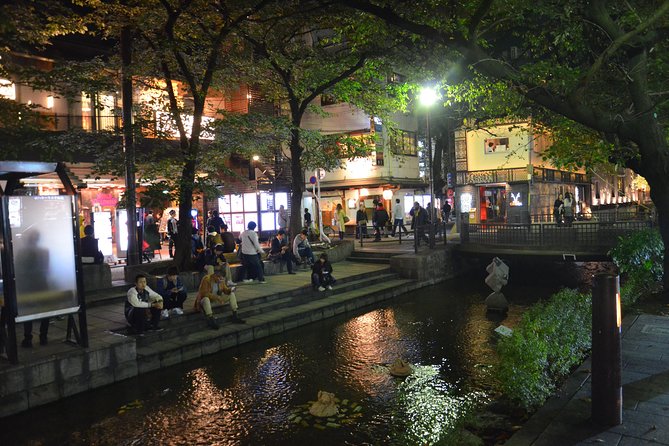
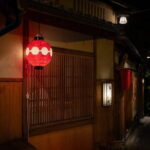
The time matters. A 4:30 pm start puts you in that window where Kyoto shifts from daytime sightseeing to evening rhythm—shops start to hum, restaurants settle in, and the backstreets feel more like a lived-in neighborhood than a postcard.
This tour is built for that moment. You’re walking Pontocho and the Gion Shirakawa area, then stopping for food and drinks along the way, so the walk doesn’t feel like dead time between meals. It’s also small-group sized (up to 10), which helps you keep up without feeling rushed.
You can also read our reviews of more food & drink experiences in Kyoto

Small group (max 10) means more than comfort
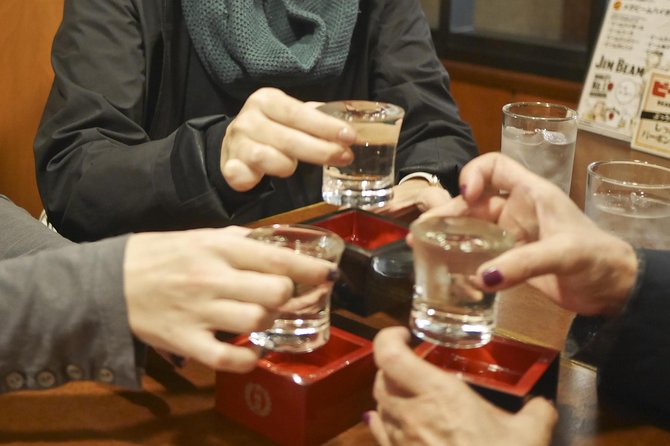
With a group this size, you get two big advantages. First, your guide can slow down for questions instead of speaking at you while everyone shuffles forward. Second, you can actually notice details you’d normally miss—signs, shrine surroundings, and the way streets funnel toward waterways and old alleys.
I like that the tour calls out this cap clearly. If you’ve ever been stuck in a big pack on a walking food tour, you know how quickly the “local perspective” turns into “follow the leader.” Here, the goal is personal pacing.
Also, the tour is family-friendly, which typically helps the atmosphere feel calmer rather than like a late-night party. Just remember: the minimum drinking age is 21, since drinks are included.
What you’ll actually eat and drink (and why it’s better than one big meal)
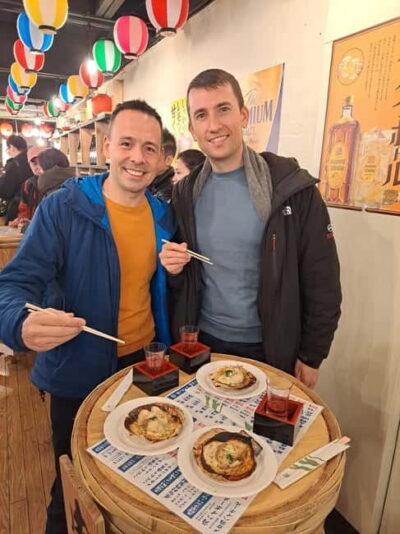
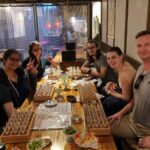
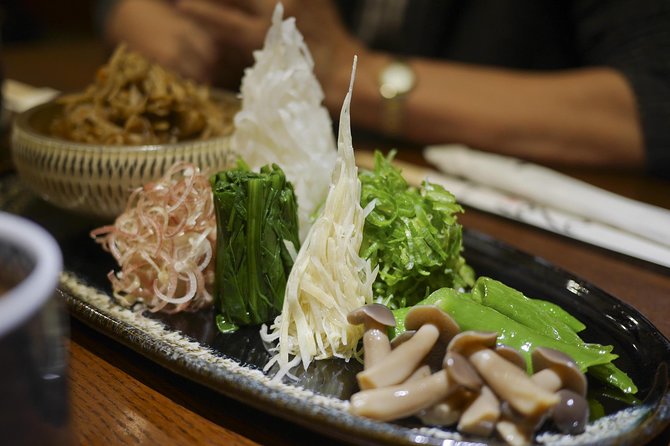
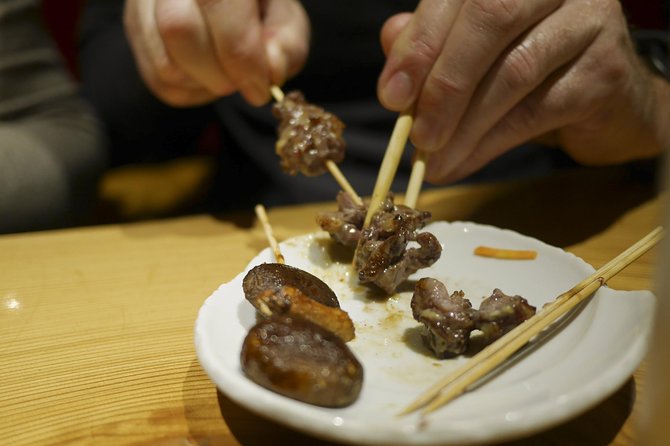
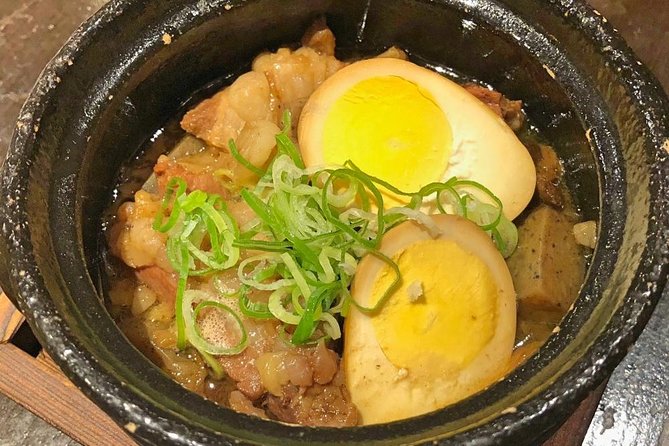
This experience includes 4 food stops and 2 drinks. That setup is smart if your goal is variety. One meal can be great, but you’ll leave with only one kind of food memory. Four stops across several venues means you get a broader snapshot of what people eat and how food culture works street by street.
The tour also includes historic area sightseeing, so each tasting is paired with context—what the area is known for, and why certain places feel important. That’s a big part of why food tours in Kyoto can feel more meaningful than a simple “try this, then that.”
Diet notes are important. It’s vegetarian friendly, but it’s listed as unadvisable for vegans and gluten-free. If you’re vegan or gluten-free, don’t assume you’ll be able to swap easily. You might need to choose different options for yourself before or after the tour.
Getting oriented fast: Statue of Izumo-no-Okuni and the Gion frame
Your walk starts at the Statue of Izumo-no-Okuni in Higashiyama Ward (Kawabatacho area). This is a strong first anchor because it ties you to the cultural identity of the Gion side of town, where performance history and traditional entertainment are part of the street story.
From there, you head through the early part of the route that sets the tone. You’ll be in an old-street mood quickly—so by the time you reach the food venues, you’re not just hungry, you’re oriented. That makes the rest of Kyoto feel easier, later, when you go explore on your own.
Stop details you’ll encounter along the way include the Tatsumi Bridge and nearby heritage points, plus shrine and theater-related spots that help you understand why these streets look the way they do.
Tatsumi Bridge: a photo spot with a purpose
Tatsumi Bridge is on your route, and it’s the kind of stop that helps you feel the geometry of the area. Bridges in Kyoto aren’t random. They connect movement paths and they frame the visual relationship between water and the old streets around it.
You’re not just stopping for photos. You’re using these moments to learn the layout—how the street bends, how alleys open, and how the neighborhood feels designed for wandering. That’s one of the practical perks of a guided walk: you get a mental map while you’re still in the thick of it.
You can also read our reviews of more tours and experiences in Kyoto

Tatsumi Daimyojin Shrine: understanding the quiet stops
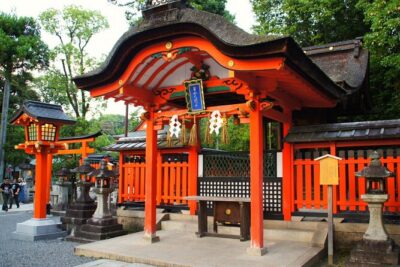
Next is Tatsumi Daimyojin Shrine. Shrines can feel like “just another stop” on some tours, but here they fit the overall theme of history and local culture. You’ll get a sense of how everyday life and tradition overlap in this part of Kyoto.
The value isn’t only the shrine itself. It’s the pacing around it. Moments like this give your group a chance to slow down, catch your breath, and reset before the next stretch of walking toward food.
Another Izumo-no-Okuni mention: why it matters in Gion
You’ll see the Statue of Izumo-no-Okuni referenced as part of the route more than once. Whether you’re revisiting the idea or it’s simply part of how the route is structured, it’s an intentional cultural marker. This is the kind of name you’ll hear again if you keep exploring Gion after the tour.
If you like learning “why this place has a specific reputation,” this section helps. It gives you a reason to notice the entertainment-historical layer behind the streets you’re walking.
Nishiki Tenmangu Shrine: a calm break before the food momentum
The route continues to Nishiki Tenmangu Shrine. Tenmangu shrines are associated with Sugawara no Michizane, and even without going deep into names, the takeaway is that these shrines anchor Kyoto’s spiritual landscape close to everyday walking routes.
This stop also serves a practical function. After several cultural checkpoints, you’re building awareness without the walk feeling like one long line to dinner. It’s a good rhythm for a tour that lasts about 3 hours.
Gion Corner: the cultural stop that supports what you taste
Then you’ll reach Gion Corner. This is a recognizable “culture hub” concept for the area, and it fits the tour’s promise: you’re not only eating; you’re learning what the neighborhood represents.
Even if you’re not there for a performance, it helps to have a reference point. It’s easier to connect what you see on the street to the traditions Kyoto is known for when you’ve got a guide explaining the links.
Nishiki Market: where your food stops can feel like a finale
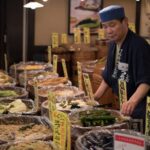
The route includes Nishiki Market, and it’s a big reason this tour feels satisfying. Nishiki is one of those places where food culture becomes visible fast—there are lots of stalls, lots of snacks, and lots of energy.
For you, the benefit is timing and context. By the time you arrive, you’re already primed. You know what kind of neighborhoods you’ve been walking through, and your guide has already set the cultural frame—so your food choices feel less random and more connected.
A quick consideration: markets can be busy even during tours. The small group size helps, and your guide’s job is to keep the flow moving while still letting you taste what’s included.
Price and value: $221 for a 3-hour guided food + culture walk
At $221 per person for about 3 hours, this isn’t a budget food tour. But you’re also paying for a few specific value pieces:
- Small group (max 10) instead of a crowd
- 4 food stops + 2 drinks included
- Local English-speaking guide
- Guided sightseeing across multiple heritage points (Pontocho and Gion Shirakawa)
If you were to build your own plan, you’d likely spend a lot of time figuring out where to go and what to order. The tour compresses that work into a guided route, and it reduces the risk of wasting time on places that don’t match your taste.
Still, it’s worth being honest about who it fits best. If you’re the type who wants to roam freely and snack casually, you might find the price heavy. If you want a focused evening with structure—food variety plus cultural context—then this price starts to feel reasonable.
Timing, pace, and physical comfort
The tour starts at 4:30 pm and runs about 3 hours. That usually means you’ll be walking at an evening city pace—enough steps to feel like a walk, not so much that it becomes a workout.
You’ll want moderate physical fitness, since the route is built for walking through several areas. If you’re comfortable with urban walking and short transitions between stops, you’ll be fine.
For logistics, it’s near public transportation and you get a mobile ticket, so you’re not wrestling with complicated paper vouchers.
Drinks included, but age rules matter
Two drinks are included, and the minimum drinking age is 21. That’s a straightforward rule, but it matters if you’re traveling as a mixed-age group.
It also means the tour can have a more adult-friendly vibe than purely kid-focused attractions, even though the tour is described as family-friendly. If you’re traveling with kids, make sure an adult accompanies them, and note that passport information is required for kids 10 and above.
Vegetarian friendly, but don’t assume vegan or gluten-free is workable
The tour is listed as vegetarian friendly. If you eat dairy and eggs and can handle typical Japanese cuisine ingredients, you have a strong chance of being able to participate comfortably.
On the other hand, it’s listed as unadvisable for vegans and gluten-free. Since this is an organized tasting route, you shouldn’t expect lots of substitutions on the fly. Plan around that—either choose other food options for your strict diet, or contact the provider before booking if you need clarity.
Weather, substitutions, and flexibility on a walking route
This experience is described as requiring good weather. If it’s canceled due to poor weather, you’ll be offered a different date or a full refund.
If weather or restaurant schedules shift, the tour may substitute spots. Practically, that means you should stay flexible in your expectations. Your goal is the overall evening route through these neighborhoods, not a single fixed shop.
Who should book the Pontocho Food Tour?
This tour fits best if you want:
- A guided walk through Pontocho and Gion Shirakawa with historic context
- Food variety (4 stops) instead of one long meal
- A small group experience that doesn’t feel like a cattle line
- A smoother way to learn what to look for when you explore Kyoto later
It’s also a strong choice for solo travelers who want structure. The provider specifically notes that solo travelers should email for support.
If you’re vegan or gluten-free, you might find it less suitable. If your idea of a great evening is free-form wandering with no schedule, a walking tour with included stops may feel too structured.
Should you book it? My take
I think this is a smart booking for most people doing Kyoto for the first time, or anyone who wants a guided evening that actually changes how they see the city. The combination of small group size, four food stops, and the Pontocho/Gion Shirakawa focus is the core reason the value works.
Book it if you want an evening plan that’s both tasty and educational, with minimal decision-making on your side. Skip or reconsider if you have strict dietary needs beyond vegetarian, or if you prefer a completely self-led food crawl.
If you want Kyoto to feel like a neighborhood—at the hour locals actually start thinking about dinner—this tour is built for that.
FAQ
What time does the Kyoto Casual Evening Pontocho Food Tour start?
The start time is 4:30 pm, and the tour runs for about 3 hours.
How many people are on the tour?
It’s a small-group tour with a maximum of 10 travelers.
What’s included in the tour price?
The tour includes 4 food stops, 2 drinks, a local English-speaking guide, and historic area sightseeing.
Are hotel pickup and transportation included?
No. Hotel pick-up is not included, and you’ll also need to cover transportation costs on your own.
Is the tour family-friendly, and are kids allowed?
Yes, it’s described as family-friendly. Children must be accompanied by an adult, and for kids 10 and above a copy of passport information is required.
Is it suitable for vegans or gluten-free travelers?
It’s listed as vegetarian friendly, but unadvisable for vegans and gluten-free.
What’s the cancellation policy?
You can cancel for a full refund up to 24 hours before the start time. If you cancel later than that, the amount paid is not refunded. The experience also may be canceled due to poor weather, with a different date or a full refund offered.