REVIEW · KYOTO
Japanese Calligraphy – Shodo – Lesson (near Kyoto Station)
Book on Viator →Operated by Kyoto MK · Bookable on Viator
Ink turns clumsy strokes into keepsakes. This small-group Japanese calligraphy (Shodo) lesson near Kyoto Station lets you learn brush control, ink techniques, and beginner-friendly kanji in about an hour—plus you’ll leave with your own finished pieces. The class is hands-on, with materials provided, and it’s designed to feel friendly even if you’ve never touched a calligraphy brush before.
I love that they keep things practical: you get brushes, ink, and washi paper, so you don’t waste time hunting supplies in Kyoto. I also like the teaching style—patient guidance in English, with instructors such as Haruko, Yoshimura, and May stepping in to explain, assist, and keep the pace comfortable for different ages.
One thing to consider: the meeting spot can be a little tricky the first time, since it’s tied to the MK Taxi VIP Station at the Hachijo Exit area. If you arrive late or confused, you may feel rushed, and the class moves through steps fairly steadily in that one-hour window.
In This Review
- Key highlights you’ll care about
- Why a Shodo Lesson Near Kyoto Station Works So Well
- Meeting Point: Finding MK Taxi VIP Station at Hachijo Exit
- Inside the Workshop: How the 1-Hour Lesson Flows
- Step 1: Brush and Ink Basics (What They Teach First)
- Step 2: Practice Kanji—From One Word to a Scroll
- Step 3: Turn Your Name Into Kanji (With Meaning Support)
- Take-Home Keepsakes: More Than Just a Piece of Paper
- Family-Friendly Shodo: Why Kids Usually Do Great
- Price and Value: What $50.40 Covers
- The Main Trade-Offs (So You Can Decide Fast)
- Should You Book This Japanese Calligraphy Lesson Near Kyoto Station?
- FAQ
- How long is the Japanese calligraphy (Shodo) lesson?
- Where is the meeting point near Kyoto Station?
- Is the group size small?
- What’s included in the lesson materials?
- Can I take my calligraphy home?
- Will the staff help me write my name in Kanji?
- Is it family-friendly?
- Do I need to bring anything?
- Do I receive a mobile ticket?
- Can I cancel for free?
Key highlights you’ll care about
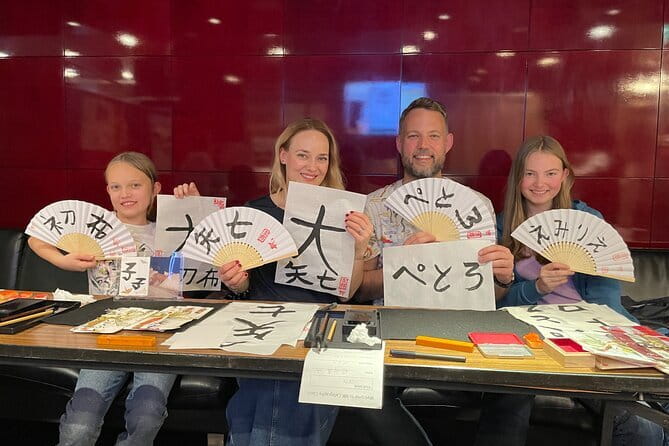
- Small group max 10 people for more hands-on help and fewer bottlenecks at the desk
- Materials provided (brush, ink, washi paper) so you walk in ready
- Practice kanji included for Kyoto-themed characters plus a calligraphy scroll you can take home
- Your name in Kanji with staff help and meaning breakdowns
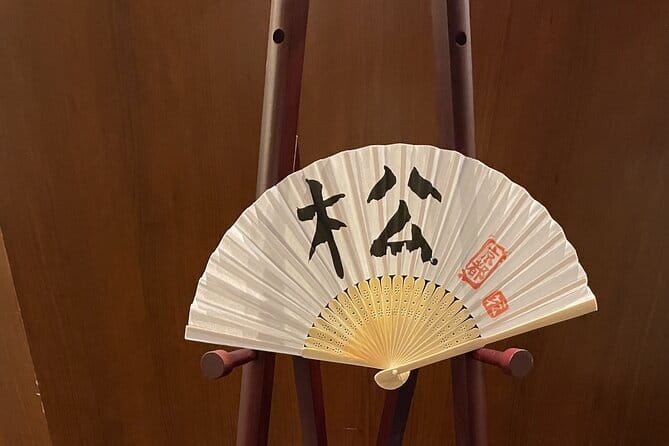
- Fun take-home keepsakes like decorated items, and class examples include custom fans and a photo frame
- Family-friendly with kid activities and an easy lesson structure
Why a Shodo Lesson Near Kyoto Station Works So Well
Kyoto is crowded, and time gets eaten fast—especially if you base yourself near the train area. This Shodo lesson near Kyoto Station is a smart way to add something distinctly Japanese without building a whole day around it. The vibe is also calmer than many “tour-only” experiences because you’re doing the activity with your own hands.
It’s also the kind of activity that fits into real travel schedules. You get about one hour of focused instruction, and then you’re done—no long sit-down, no maze of stops. If your days are packed with temples and markets, this gives your brain a break and your camera a new kind of souvenir.
You can also read our reviews of more tours and experiences in Kyoto


Meeting Point: Finding MK Taxi VIP Station at Hachijo Exit
The class meets at MK Taxi VIP Station, Kyoto Station Hachijo Exit (taxi stand area). The address listed is in the Higashikujō Kamitonodachō area, right by the Ibis Styles Kyoto Station building.
Here’s the practical tip that matters: don’t just exit and look for something calligraphy-shaped. One review advice is to look for the MK building diagonally across the street when you come out of the station exit. If you’re even slightly unsure, give yourself an extra 10–15 minutes. The lesson is quick, so you want to start on time.
Inside the Workshop: How the 1-Hour Lesson Flows
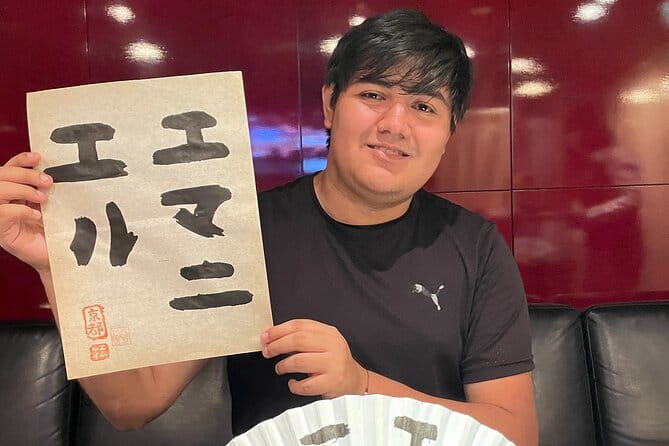
You’re in a maximum group size of 10 people, which changes everything. With a small group, the instructor can check your brush angle, fix your grip, and help you adjust when your ink gets too thick or too light. It also keeps the room from feeling like a production line.
The session is structured as a short sequence rather than a long lecture. Expect an explanation first, then repeated practice, then a personal section focused on your name. At the end, the activity finishes back at the meeting point.
Even if you’re traveling with kids, the format holds up. The pace is easy to follow, and the lesson is built around achievable steps rather than strict performance.
Step 1: Brush and Ink Basics (What They Teach First)
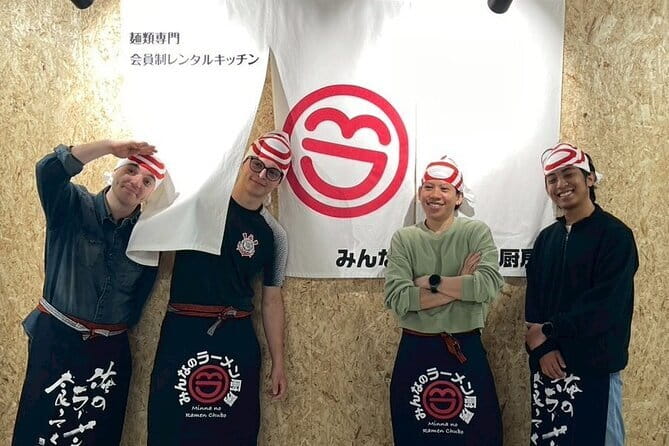
The first part is a straightforward lecture on how to use the brush and how to apply ink. This is the part many people skip when they try calligraphy at home. In real life, ink behavior is the tricky bit: it spreads, it dries, and it reacts to pressure.
That early coaching helps you make fewer mistakes during the practice. You’ll learn what a correct stroke feels like, not just how it should look after it’s finished. The guidance is also set up for beginners, so you don’t need prior skills to participate.
Step 2: Practice Kanji—From One Word to a Scroll
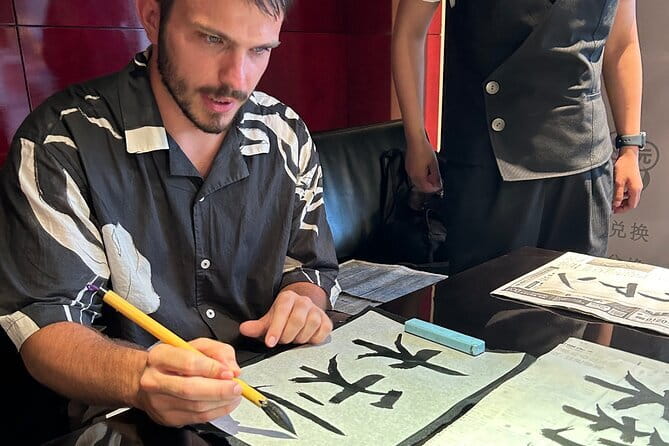
Next comes the fun part: writing basic characters. You’ll practice kanji characters such as one, A, forever, and Kyoto. The goal isn’t speed. It’s control—making each stroke intentional.
Then you assemble what you write into a scroll of the kanji characters. Having it in a scroll format makes the result feel special, even if your first attempt looks wobbly. And it’s also an easy way to remember exactly what you practiced.
A nice benefit here is that you can see improvement in real time. Your second try tends to look cleaner once your grip and pressure are adjusted.




Step 3: Turn Your Name Into Kanji (With Meaning Support)
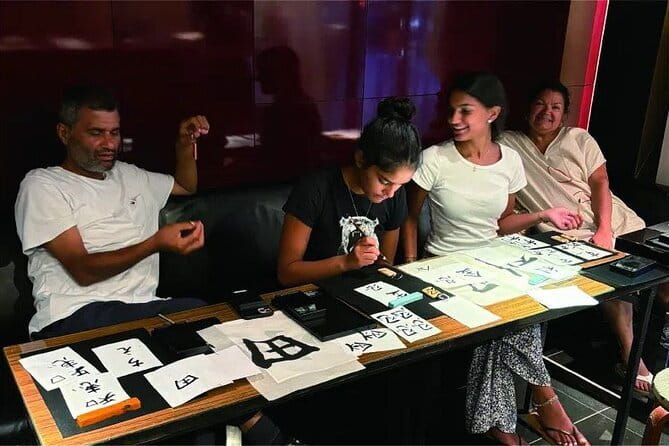
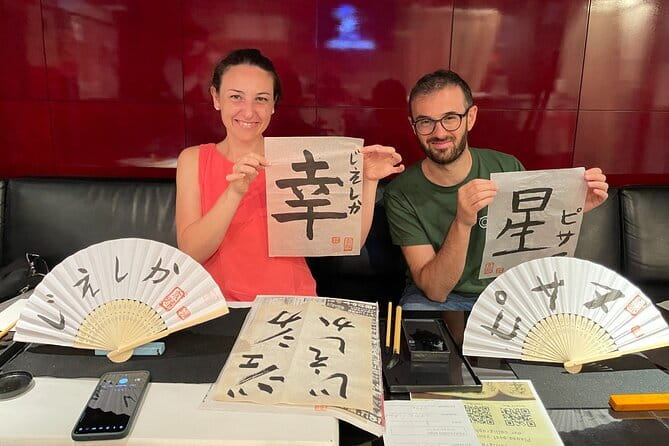
The most personal moment is writing your name in Kanji characters. The class supports you here, including help with possible kanji characters and their meanings.
You also get examples of how this can work. For instance:
- Brian can map to 武礼安, with notes like 武 for martial/bravery, 礼 for politeness/gratitude, and 安 for peace.
- Liz can map to 梨図, with梨 meaning pear and 図 meaning painting.
That meaning layer matters because it turns your calligraphy from random symbols into something with a story. You’re not just copying characters; you’re choosing a version that connects to a concept.
Take-Home Keepsakes: More Than Just a Piece of Paper
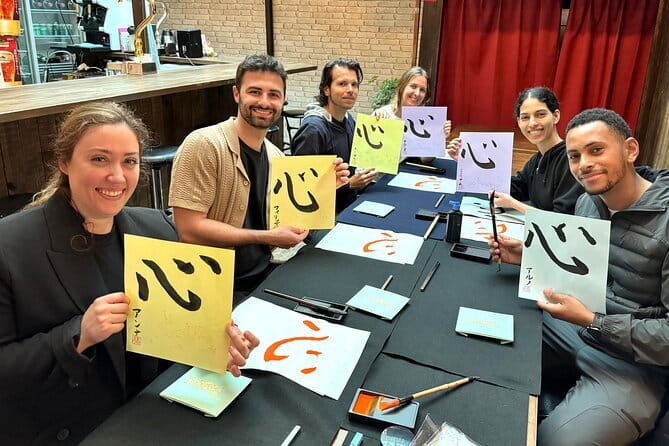
The obvious souvenir is your finished calligraphy—you can take home what you create, including the scroll you make from the practice characters. But the class is built to feel like you leave with more than one flat sheet.
From the session format and examples, you may also create or decorate items tied to your calligraphy. Examples in the provided feedback include custom fans and a photo frame featuring you with your work. Other “decorations” show up as well, which is great if you’re traveling with kids or want something colorful beyond ink on paper.
This is where the experience earns its keep. A lot of activities teach something, but don’t give you a satisfying physical result. Here, your work is the souvenir.
Family-Friendly Shodo: Why Kids Usually Do Great
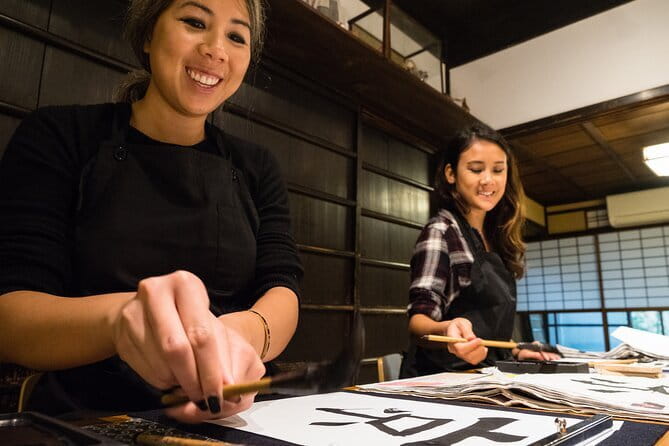
Calligraphy can sound fancy and quiet, but this lesson is designed to be approachable. There’s a family-friendly setup, and the class includes kid-friendly activities.
One of the strongest signals is that a 9-year-old had a great time, and the session felt fun for both child and parent. The reason it works is that the tasks are small, guided, and centered on achievable outcomes—practice characters first, then a personalized name piece. Kids can see progress quickly, and adults get the satisfaction of doing something real rather than watching.
If you want a low-stress family activity near the station, this is the type of workshop that can actually fit into your day without becoming a scheduling headache.
Price and Value: What $50.40 Covers
At $50.40 per person, you’re paying for instruction, materials, and a structured outcome. The materials part is the big value piece: brushes, ink, and washi paper are included. In Kyoto, buying supplies can be easy, but it can also turn into an extra stop and extra cost. Here, you skip the hunt and start writing right away.
You’re also paying for the small-group format. With a max group size of 10, the instructor can give more specific help. That’s hard to replicate when you just self-learn from a book or video.
Then there’s the souvenir factor. A lesson that includes take-home work is different from a “watch and leave” activity. Your name in Kanji, your practice scroll, and the extra decorated items help justify the price because you’re not walking away empty-handed.
The Main Trade-Offs (So You Can Decide Fast)
This experience is excellent for beginners, but it does have limits. First, the session is about one hour, so you won’t master advanced styles or long-form calligraphy. You’ll learn fundamentals and build a working sense of brush control—enough to feel proud, not enough to pretend you’re ready to compete.
Second, because it’s near the station and uses a specific meeting point, you’ll want to arrive a little early. If you’re the type who likes to roam right up to the last second, set a reminder and give yourself buffer time.
Should You Book This Japanese Calligraphy Lesson Near Kyoto Station?
Book it if you want a genuine Kyoto souvenir that doesn’t require museum tickets, perfect timing, or language skills. This is a beginner-friendly Shodo workshop with materials provided, a small group, and a personal result you can take home—especially your name in Kanji with meaning help.
Skip or look for something longer if you want an in-depth calligraphy course or a longer practice session. But if your travel style is short, hands-on, and memorable, this fits beautifully.
For best results, show up early enough to find the MK Taxi VIP Station at the Hachijo Exit area. Then lean into the process: slow down, copy the instructor’s stroke guidance, and treat your first attempts as practice. You’ll still end up with keepsakes you’ll actually want to display.
FAQ
How long is the Japanese calligraphy (Shodo) lesson?
The lesson lasts about 1 hour.
Where is the meeting point near Kyoto Station?
Meet at MK Taxi VIP Station, Kyoto Station Hachijo Exit (taxi stand / Kyoto sightseeing reception area). The address is in Minami Ward, Higashikujō Kamitonodachō, and it’s associated with the Ibis Styles Kyoto Station area.
Is the group size small?
Yes. The class has a maximum of 10 people, which helps keep the experience more personal.
What’s included in the lesson materials?
The class includes the use of brushes, ink, and washi paper.
Can I take my calligraphy home?
Yes. You can take home your finished calligraphy, including a scroll of the practice kanji and a section where you write your own name in Kanji with staff assistance.
Will the staff help me write my name in Kanji?
Yes. The staff helps you with possible Kanji characters and their meanings, and they provide examples for how names can be represented.
Is it family-friendly?
It’s described as family-friendly, with activities available for kids. It’s also noted as fun for both young and older participants.
Do I need to bring anything?
Because the session provides brushes, ink, and washi paper, you generally only need to show up. You may want to wear comfortable clothes since you’ll be working with writing tools.
Do I receive a mobile ticket?
Yes. The tour includes a mobile ticket.
Can I cancel for free?
Yes. You can cancel for a full refund up to 24 hours in advance of the experience start time.