REVIEW · KYOTO
Kyoto and Nara 2-Day Tour: Golden Pavilion, Todaiji, Deer Park
Book on Viator →Operated by KAMNAVI Tours · Bookable on Viator
Golden temples, fast connections, real context. This 2-day Kyoto and Nara tour strings together iconic sights in a tight loop, with a guide helping you manage time and understand what you’re seeing. I especially like that the plan links different styles of Japanese culture, from shogun-era Kyoto power to Nara’s heavyweight temple spaces.
Two big wins for me are practical: admission fees are included for several key stops, and you’re using public transportation with the guide handling the flow. That cuts down on ticket hunting and guesswork, and the mobile ticket format makes it easier to stay on schedule.
One thing to consider: this is an active day-to-day plan with walking and a moderate fitness level, and food and drinks aren’t included. So plan for breaks and bring some cash/card for snacks.
In This Review
- Key highlights and why they matter
- Is This Kyoto–Nara Tour Good Value for $321.93?
- Meeting at Kyoto Station at 9:30 and How the Flow Works
- Day 1: Kinkakuji, Bamboo, Nijo Castle, and Gion at Human Speed
- Stop 1: Kinkakuji Temple (Golden Pavilion)
- Stop 2: Bamboo Forest Street
- Stop 3: Nijo Castle
- Stop 4: Gion
- Day 2: Fushimi Inari, Todai-ji, and Kasuga Grand Shrine
- Stop 1: Fushimi Inari-taisha Shrine (Torii tunnel)
- Stop 2: Todai-ji Temple (The Great Buddha Hall area)
- Stop 3: Kasuga Grand Shrine (Lanterns and shrine precinct feel)
- Why the Guide Actually Changes the Trip
- Tickets, What’s Included, and What You Still Need
- Weather and Day-Ready Reality
- Who This Tour Fits Best
- Should You Book This Tour?
- FAQ
- What cities are covered on this tour?
- How long is the tour?
- Where does the tour start?
- Where does the tour end?
- Is food included?
- What is included in the price?
- Are admission tickets included?
- Is this tour private?
- Do I need to be in good physical shape?
- Can I cancel for a full refund?
- What if the weather is bad?
Key highlights and why they matter
- Guides who set the pace: The guides named in past tours (Naoko, Nick, Ryusuke, Tomoko) are praised for being organized, patient, and full of context.
- Kyoto hits in the right order: Kinkakuji first, then bamboo, then Nijo Castle, then Gion—so your day feels intentional, not random.
- Two major Nara stops: Todai-ji and Kasuga Grand Shrine give you a big dose of temple scale and sacred atmosphere.
- Admission tickets are partly covered: You’ll have tickets included for Kinkakuji, Nijo Castle, and Todai-ji (while several other stops are free).
- Private format for your group: It’s listed as private, so it’s only your group participating, not mixed crowds of strangers all day.
Is This Kyoto–Nara Tour Good Value for $321.93?
At $321.93 per person for about two days, the value depends on how you travel.
If you’re the type who wants to see major sites without spending time researching transit routes and entry timing, this price starts to make sense fast. You’re paying for a guide, public transportation fares, and admission fees for several stops. That matters in Kyoto and Nara, where you can easily burn time moving between neighborhoods and temple zones.
Here’s the fair way to look at it:
- You’re not paying just for sightseeing. You’re paying for a structured day, ticket coverage at multiple points, and a guide who explains what you’re looking at.
- You’re still responsible for the one thing the itinerary doesn’t cover: food & drinks and your accommodation.
So if you’d otherwise spend your morning figuring out where to go, which entrance to use, and when to arrive, the tour can be a strong shortcut. If you prefer total freedom to roam and linger, you might find it less flexible than you’d like.
You can also read our reviews of more tours and experiences in Kyoto
Meeting at Kyoto Station at 9:30 and How the Flow Works
You start at Kyoto Station Building 901 (Higashishiokōjichō, Shimogyo Ward) with a start time of 9:30 am. The tour ends back at that same meeting point.
That’s a practical setup. Kyoto Station is a transport hub, so your first day begins with easy logistics. And the “return to the start” format helps you avoid the end-of-day scramble.
You’ll also get a mobile ticket. That’s a real convenience in Japan, where lines and signage can slow you down if you’re figuring it out alone. Because confirmation is received at booking and the meeting point is clearly defined, you can plan your morning with less stress.
One more note: the tour is set for travelers with moderate physical fitness. In plain terms, expect walking and temple-stair energy, even if most stops are timed and paced.
Day 1: Kinkakuji, Bamboo, Nijo Castle, and Gion at Human Speed
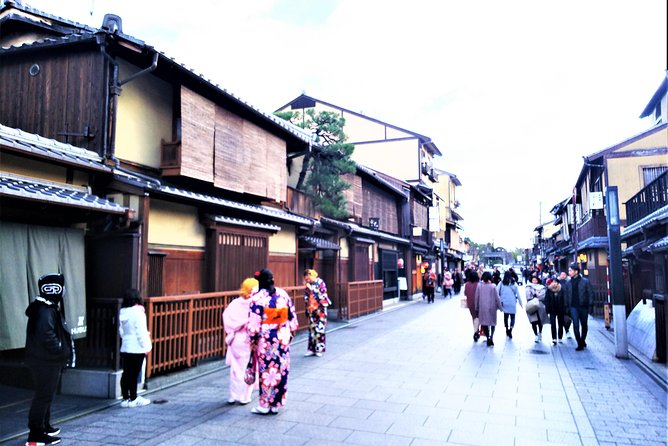
Day one is designed like a story with different chapters. You start with the most visually famous temple in Kyoto, then shift into quieter nature, then pivot to shogun power, and finish with a neighborhood that still feels old-school.
Stop 1: Kinkakuji Temple (Golden Pavilion)
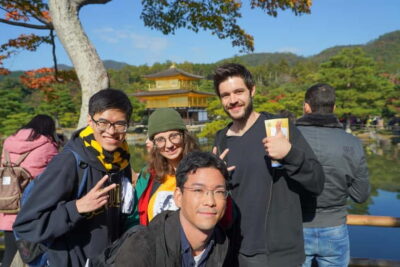
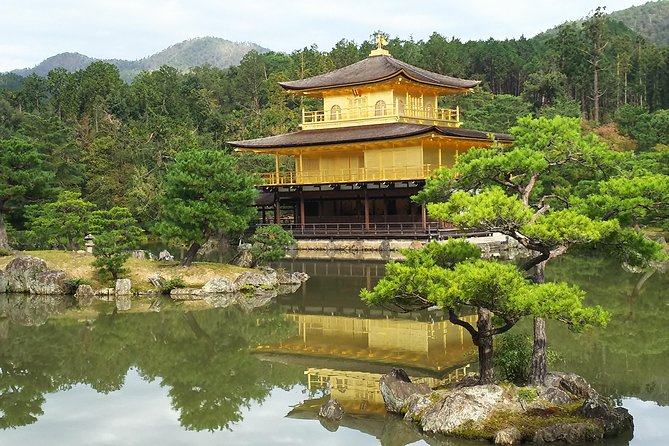
This is the shogun-built Zen temple everyone recognizes. The hall covered in gold leaf is the obvious headline, but the real wow factor is the reflection on the pond—perfect symmetry that makes the place feel almost staged, even though it’s centuries old.
The tour allocates about 45 minutes here and includes the admission ticket. That’s enough time to see the main views without feeling like you’re rushing through.
Practical tip: go in expecting strong photo attention. You don’t need to chase the hardest angle; you’ll get good views from multiple positions, and the pond reflections do a lot of the work for you.
Stop 2: Bamboo Forest Street
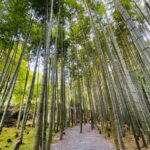
Next comes the famous bamboo forest walk. Think of it as your reset button. The experience here is sensory: bamboo trunks and leaves create a soundscape that feels calmer than the temple crowds.
Time on this stop is about 1 hour 30 minutes, and admission is free. That longer window is useful because bamboo areas can have a slow, wandering pace. You can slow down, breathe, and stop whenever you want without derailing the tour.
Practical tip: bring a light layer. Shaded bamboo paths can feel cooler than the streets outside.


Stop 3: Nijo Castle
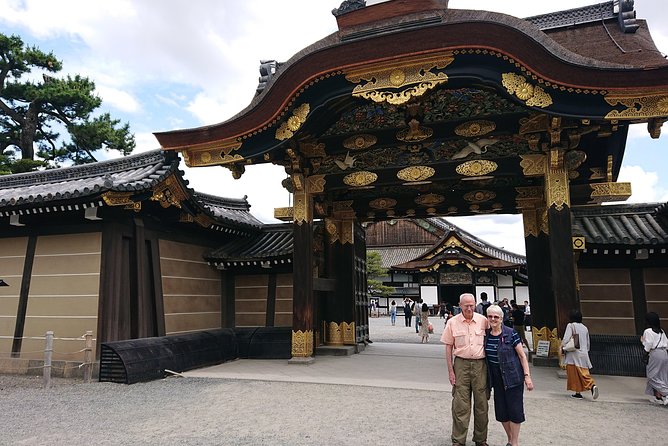
Nijo Castle gives you the political side of Kyoto. It was built as the shogun’s Kyoto lodging after the shogunate shifted focus toward Edo (modern Tokyo). Inside you’ll find over 1,000 gorgeously crafted features referenced in the tour description, which hints at how detailed these spaces are.
This stop runs about 50 minutes and includes the admission ticket. That’s a good match for castle interiors: enough time to see key rooms and take in the vibe, without turning your afternoon into a marathon.
Practical tip: castles can involve walking between rooms and corridors. Keep your water handy and pace yourself.
Stop 4: Gion
You finish day one with Gion, the biggest of Kyoto’s geisha districts. The tour frames it as a traditional Japanese culture zone, and the experience here is more of a stroll than a museum visit.
This stop is about 40 minutes and admission is free. You’re there for atmosphere—old-style streets, historic houses, and the feel of Kyoto that still survives under modern pressure.
Practical tip: keep an eye on respectful behavior. This is a neighborhood, not a theme park. Stick to walkways, avoid blocking entrances, and keep your voice down.
Day 2: Fushimi Inari, Todai-ji, and Kasuga Grand Shrine
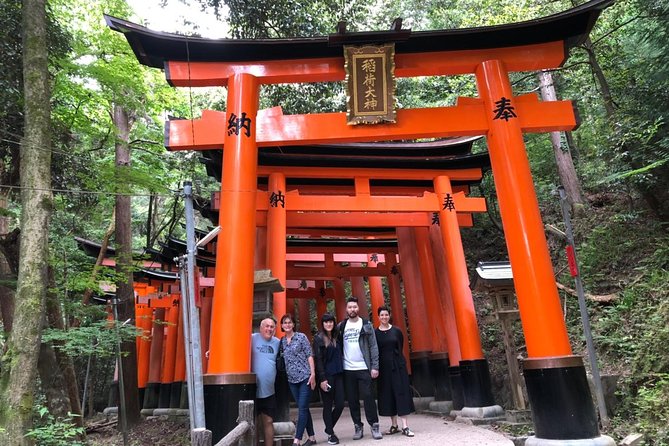
Day two swaps Kyoto’s palace-temple mix for Nara’s heavy hitters. You go from torii tunnel drama to one of the world’s largest wooden hall spaces, then to a shrine area with impressive lanterns and a deep age.
Stop 1: Fushimi Inari-taisha Shrine (Torii tunnel)
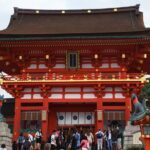
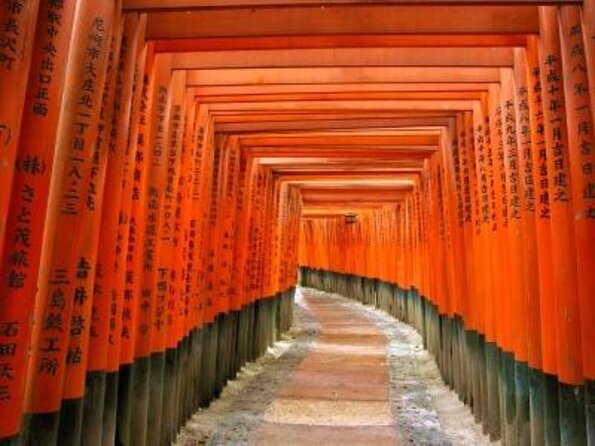
Fushimi Inari-taisha is famous for its tunnel of thousands of vermilion torii gates. The tour gives about 45 minutes here and admission is free.
This is the kind of place where the real experience comes from the repetition: one gate after another, red color pulling you forward. Even if you don’t climb to the upper sections, you’ll get the iconic visuals from the main flow.
Practical tip: wear shoes you trust. Torii paths and steps can be uneven, especially if the ground is wet.
Stop 2: Todai-ji Temple (The Great Buddha Hall area)
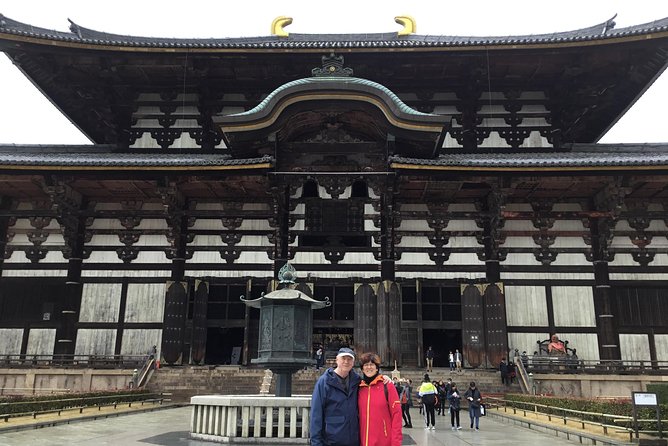
Then you get Todai-ji. The Buddha Hall is known for being one of the largest wooden buildings in the world, and the tour description points out that once you enter the corridor, the space can hit you with scale.
Time here is about 50 minutes, and admission is included. Before heading in, you’ll follow the purifying ritual where hands and mouth are cleansed at a purification area, as described in the tour flow.
Practical tip: even if you’re not religious, the ritual is part of the experience. Watch what others do, move with the flow, and keep it respectful.
Stop 3: Kasuga Grand Shrine (Lanterns and shrine precinct feel)
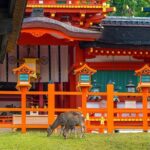
The final stop is Kasuga Grand Shrine, described as being around 1,300 years old. The tour notes that it holds about 1,000 branch shrines across Japan and has more than 3,000 lanterns in its precincts.
This stop runs about 40 minutes and admission is free. Lantern-heavy shrine spaces tend to be a bit magical because light and shadow do the storytelling. The tour’s setup gives you time to walk in the precinct and absorb the atmosphere without feeling rushed.
Practical tip: lanterns and shrine areas are photograph-friendly, but keep your pace slow. If you stop suddenly in a walkway, you’ll disrupt the flow.
Why the Guide Actually Changes the Trip
In Kyoto and Nara, it’s easy to see big names and miss the meaning. The best guides don’t just point. They explain the why.
Past experiences with this operator’s guides highlight a few traits:
- Well-organized pacing so you don’t spend your day lost in transit or waiting without context
- Patience and flexibility, which matters if a group moves slower or if someone needs a restroom break
- History background tied to the sites, so Kinkakuji isn’t just golden and Fushimi Inari isn’t just red gates
You’ll see that kind of interpretive approach in how the itinerary is ordered and explained. For example, Kinkakuji is presented as an icon of samurai culture tied to shogun patronage. Nijo Castle is framed around the shogunate shift to Edo. Todai-ji is anchored by the scale of the Great Buddha Hall. Those aren’t random facts. They shape how you look at each place.
Even the bamboo stop plays a role: it’s not just a photo break. It’s your quieter counterweight before the castle and the city neighborhood.
If you’re traveling solo or with people who get restless in long museum lectures, this balance matters: you get explanations, but you also get movement and variety.
Tickets, What’s Included, and What You Still Need
Here’s what the tour includes:
- Guide fare
- Public transportation fare
- Admission fees (for stops marked as included)
Not included:
- Food & drinks
- Accommodation
Also, some stops are admission-free (like the bamboo forest street, Gion, Fushimi Inari-taisha, and Kasuga Grand Shrine), while others are ticket-included (like Kinkakuji Temple, Nijo Castle, and Todai-ji).
That mix is good for value. You’re not paying entrance fees everywhere, but you are covered on the big-ticket items that tend to be worth budgeting for.
What you should plan yourself:
- Snacks and drinks for the day
- Comfortable shoes
- A small amount of patience for popular sites (Kyoto’s famous places have lines and photo moments)
Weather and Day-Ready Reality
The itinerary requires good weather. That’s not just a legal line. Many Kyoto and Nara walking portions are outside or semi-outside, from bamboo paths to torii-lined approaches.
If the weather turns, you might be offered a different date or a full refund, as stated in the tour’s conditions. So check the day before you go, and keep a flexible mindset.
Who This Tour Fits Best
This one is a solid match if you want:
- A structured, two-day loop connecting Kyoto’s most recognizable cultural spots with Nara’s temple scale
- A guide-led pacing system that saves time
- Admission coverage at several major stops
- A private setup where you’re not squeezed into a huge mixed group
It may be less ideal if you:
- Want to spend extra hours at one site and ignore the rest
- Travel mostly for food hunting and shopping and don’t want scheduled temple time
- Prefer total independence without a fixed meeting point and daily rhythm
Should You Book This Tour?
My straight answer: yes, if you want a high-value, low-stress hit of Kyoto and Nara without building a transit plan from scratch.
Book it when you care about:
- Efficient scheduling across day one and day two
- Included admission for major stops like Kinkakuji, Nijo Castle, and Todai-ji
- Getting cultural context instead of just seeing photos
Skip it (or consider a different style) if:
- You dislike walking through big-name attractions in a set order
- You don’t want a guide shaping the day
- You’d rather roam freely and build your own pace around your interests
One final note on the tour title: you’ll spend your Nara time on Todai-ji and Kasuga Grand Shrine in the scheduled stops listed here. If your top priority is specifically the deer area of Nara, you’ll want to confirm how that’s handled within this plan.
If you’re okay with a guide-led route that prioritizes headline temples and shrines, this tour is a strong way to experience the old capitals without turning your trip into a logistics puzzle.
FAQ
What cities are covered on this tour?
You’ll visit Kyoto and Nara over two days.
How long is the tour?
The tour runs for about 2 days.
Where does the tour start?
It starts at Kyoto Station Building 901, 9:30 am.
Where does the tour end?
The tour ends back at the meeting point.
Is food included?
No. Food and drinks are not included.
What is included in the price?
The price includes the guide fare, public transportation fare, and admission fees.
Are admission tickets included?
Admission is included for some stops (Kinkakuji Temple, Nijo Castle, and Todai-ji Temple). Other stops are listed as admission free.
Is this tour private?
Yes. It is listed as a private tour/activity, so only your group participates.
Do I need to be in good physical shape?
The tour asks for a moderate physical fitness level.
Can I cancel for a full refund?
Yes. You can cancel up to 24 hours in advance for a full refund. If canceled less than 24 hours before, the amount paid is not refunded.
What if the weather is bad?
If it’s canceled due to poor weather, you’ll be offered a different date or a full refund.