REVIEW · KYOTO
Kyoto’s Top City Highlights: 2-Day Private Tour Experience
Book on Viator →Operated by Ahmed Abu Tayeh · Bookable on Viator
Kyoto in two days can feel rushed. This private plan keeps the days structured but not frantic, mixing major sights with a few time-and-place tricks your guide will tailor to you. I like that it covers the big names—Nijo Castle, Kinkaku-ji, Ryoan-ji, Fushimi Inari, Arashiyama, Kiyomizudera, and Gion—without turning your day into a sprint.
The other thing I really like is the human factor: the guides (Yuji, Noriko, Keiko, Marianna, Asano, Moto, and Takaichi) are organized and flexible, and they adjust based on your preferences and even the weather. The only real drawback to weigh is money and logistics: the $980 is for your group, but entry fees and transportation are extra, and those add up per person.
If you want Kyoto’s greatest hits with expert steering—especially on a short visit—this tour is built for you. Just go in knowing it’s a full, long day (about 16 hours total across two days), so comfortable shoes aren’t optional.
In This Review
- Key things to know before you go
- Why this 16-hour “highlights” plan makes sense in Kyoto
- Day 1: Nijo Castle, Kinkaku-ji, and Ryoan-ji in a clean circuit
- Nijo Castle: Edo-era power and the garden mindset
- Kinkaku-ji: the Golden Pavilion and its mirror-pond effect
- Ryoan-ji: the Zen rock garden as a slow-thinking pause
- Midday recharge and the Kyoto Station lunch break
- Nishiki Market and Fushimi Inari: food street energy plus red-gate structure
- Nishiki Market: Kyoto’s kitchen street
- Fushimi Inari Shrine: thousands of torii in structured walking form
- Day 2: Arashiyama bamboo, river views, and Monkey’s Park
- Arashiyama Bamboo Forest and Nonomiya Shrine: atmosphere with purpose
- Tenryu-ji garden: the calm counterweight
- Hozu-gawa river and Togetsu Bridge: a view you can feel
- Monkey’s Park: the effort-for-views trade
- Lunch again at Kyoto Station
- Kiyomizudera and Gion: the hillside icon and Kyoto’s street-life finale
- Kiyomizudera: UNESCO views from the hillside
- Gion: geisha-area streets and an easy evening stroll
- Price and the real cost of convenience for two days
- What makes the guides matter: flexible, preference-based, weather-smart
- Who this private tour fits best
- Should you book this two-day Kyoto highlights tour?
- FAQ
- How many people are included in this private tour?
- What is the duration of the tour?
- Is the $980 price per person?
- Are entry fees included in the price?
- Are transportation and food included?
- Do you get a mobile ticket?
- Where does the tour start and end?
- Which major sites are included?
- Does the tour visit Fushimi Inari Shrine?
- What if the weather is poor or I need to cancel?
Key things to know before you go
- Two days, one smooth flow: You hit temple clusters by region, so you spend less time zig-zagging across the city.
- Early and late pacing matters: The schedule is designed to give you good sightline time, not just standing in crowds.
- Arashiyama includes more than bamboo: You also get Tenryu-ji garden time, river views by Hozu-gawa, Togetsu Bridge, and Monkey’s Park.
- Real Kyoto food stops are built in: Nishiki Market is included for that kitchen-street feeling.
- Guides tailor the experience: Multiple guides are noted for flexibility and for suggesting what to see at better times.
- Not everything costs extra, but plenty does: Some stops have free admission listed, while others use paid entry tickets.
Why this 16-hour “highlights” plan makes sense in Kyoto
Kyoto’s problem isn’t a lack of things to see. It’s that the best places are spread out, and travel time can quietly eat your day. This tour’s strength is that it strings sights together in a way that feels logical: classic temple sites first, then iconic neighborhoods, then Arashiyama, and finally Kiyomizudera and Gion.
Because it’s private (just your group, up to 8), you don’t have to negotiate shared group energy with strangers. You can move at a pace that works for you—especially if you’re balancing photos, rest breaks, and shopping time. And since the tour is managed by a guide, you get the practical “how to do it” info: where to stand, how to time transitions, and what to prioritize when the day gets busy.
There’s also a smart reality baked in: you’re not expected to do everything perfectly. The schedule is long enough to see the main points and still enjoy the atmosphere between stops, rather than just checking boxes.
You can also read our reviews of more city tours in Kyoto

Day 1: Nijo Castle, Kinkaku-ji, and Ryoan-ji in a clean circuit
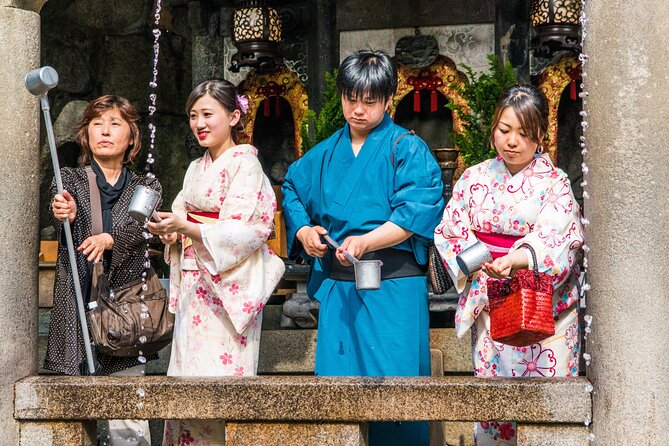
Day 1 is Kyoto at its most recognizable—three heavyweight temple stops that give you a sense of how the city’s history shows up in stone, garden design, and views.
Nijo Castle: Edo-era power and the garden mindset
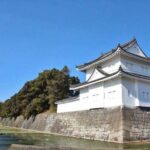
You start at Nijo Castle, a UNESCO World Heritage site known for its Edo-period architecture and gardens. The big value here is contrast: Kyoto often feels like it’s only about old wooden temples and Zen calm, but Nijo Castle adds courtly power and palace-level design.
Plan on using this stop to get your bearings. Even if you’re not a history nerd, the architecture and layout help you understand what later temple spaces are doing—how movement, courtyards, and garden sightlines guide the visitor’s attention.
Kinkaku-ji: the Golden Pavilion and its mirror-pond effect
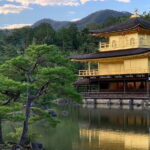
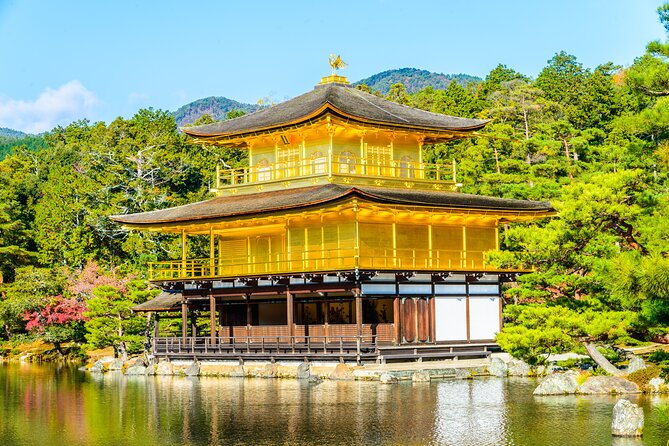
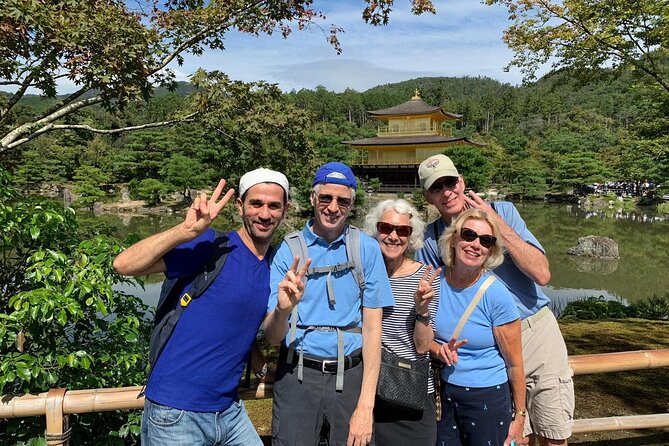
Next is Kinkaku-ji (the Golden Pavilion). It’s iconic for a reason: the setting and reflections are part of the “wow” even before you read anything. You also get garden time, which matters because Kinkaku-ji is more than a single building view—you’re meant to walk and notice how the sight changes from different angles.
One practical tip: bring something to wipe camera lenses or glasses if the air is humid. Not dramatic, just a small thing that keeps your photos crisp.
Ryoan-ji: the Zen rock garden as a slow-thinking pause
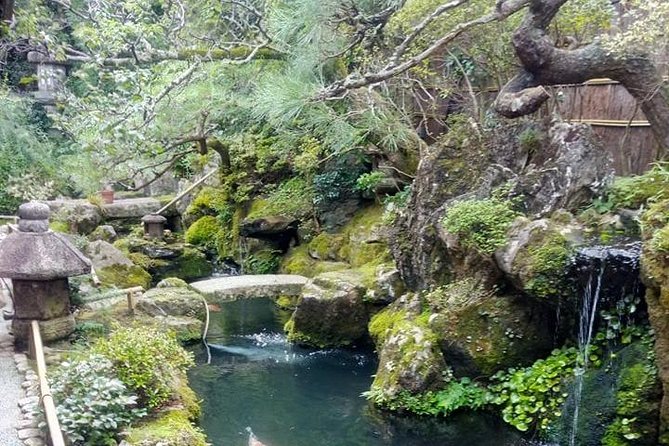
Then comes Ryoan-ji, home to Japan’s famous Zen rock garden. If your day feels like it’s moving too fast, this is the one stop that naturally forces you to slow down. Even if you don’t fully “get” the garden right away, the experience is designed to encourage patient looking.
This is a great transition point between “big spectacle” Kyoto and “quiet focus” Kyoto. It’s also one of the better times to reset your brain before you head into markets and shrine traffic later.
You can also read our reviews of more private tours in Kyoto

Midday recharge and the Kyoto Station lunch break
You’ll have a lunch break at Kyoto Station. That’s useful because it keeps you fed without sacrificing the itinerary rhythm. Kyoto Station can be a little chaotic, but it’s a practical hub that saves you from hunting for food near each attraction.
If you care about maximizing time, lunch at a central hub is a smart move—especially on Day 1 when you still need to reach Nishiki Market and Fushimi Inari later.
Nishiki Market and Fushimi Inari: food street energy plus red-gate structure
After temples, Day 1 shifts gears into two of Kyoto’s most visitor-famous experiences: a food market district and a shrine walk people come back for again and again.
Nishiki Market: Kyoto’s kitchen street
You get Nishiki Market, often called Kyoto’s kitchen. It’s included as free admission in the tour details, and that’s a clue about what it’s meant to be: a walk-through experience with snack options and browsing.
The value isn’t only eating. It’s seeing how Kyoto food culture shows up in small stalls—things you’ll recognize, things you’ll want to try, and things that make good gifts if you buy packaged items.
A practical move: decide early if you want savory snacks, sweets, or a mix. Otherwise Nishiki can steal time from the rest of your day.
Fushimi Inari Shrine: thousands of torii in structured walking form
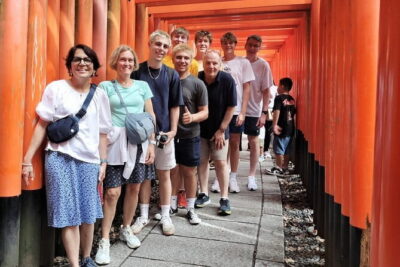
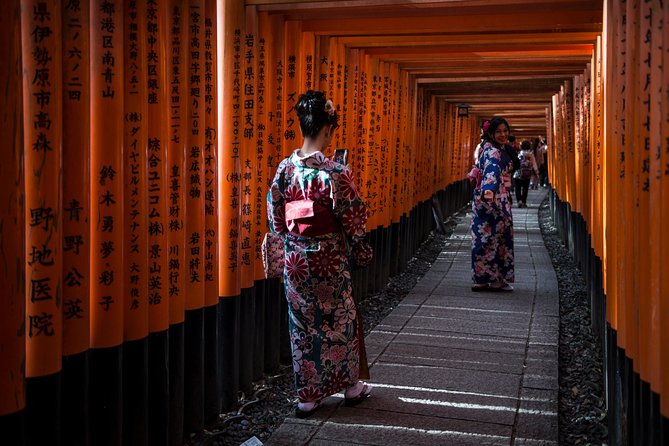
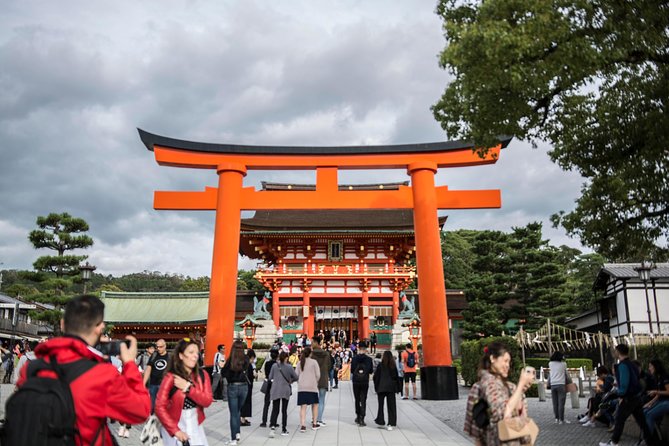
Then you head to Fushimi Inari Shrine, famous for its thousands of iconic red torii gates. You get about an hour, which is enough for a satisfying loop without turning your legs into a cautionary tale.
What makes Fushimi Inari special isn’t only the photo. It’s the way the torii gates organize the path. Your guide can help you choose where to spend your time—because the longer you go, the more the experience becomes about quiet steps and changing views rather than landmark checkpoints.
Day 2: Arashiyama bamboo, river views, and Monkey’s Park
Day 2 is the scenery day—Arashiyama—plus a string of nearby sights that give you a fuller picture of why this area is famous.
Arashiyama Bamboo Forest and Nonomiya Shrine: atmosphere with purpose
You visit the bamboo forest area plus Nonomiya Shrine. This is where Kyoto goes cinematic. Even if you’ve seen bamboo forest photos before, the scale and vertical rhythm can still hit.
Just remember: the bamboo forest is popular, so time matters. A good guide will steer you toward the most comfortable photo moments and keep the stop from feeling like a rush.
Tenryu-ji garden: the calm counterweight
You also stop at Tenryu-ji temple garden, which helps balance the bamboo’s “stand here, look up” energy. Gardens like this are part of Kyoto’s visual language—designed to change as you move.
If you’re tired from photos, the garden is a natural place to slow down and let your eyes rest.
Hozu-gawa river and Togetsu Bridge: a view you can feel
Next is Hozu-gawa River and Togetsu Bridge. This is the kind of spot that gives you a sense of the landscape beyond temples—water, bridges, and the way the valley frames the town.
If you like “postcard views,” this is one of the best payoff moments on the second day. Even on an average weather day, the river setting does a lot of the heavy lifting.
Monkey’s Park: the effort-for-views trade
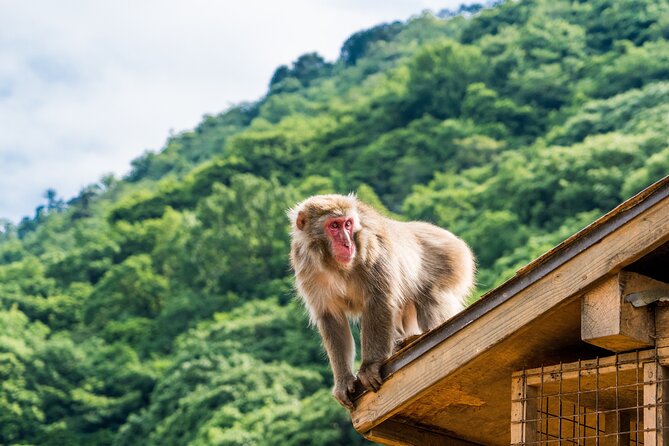
You also visit Monkey’s Park. The name tells you the vibe, but the real reason to include it is the viewpoint payoff. Just be ready for walking and uneven terrain.
If your group has anyone who prefers gentler pacing, tell your guide ahead of time so they can suggest where to take a breath and what to prioritize.
Lunch again at Kyoto Station
You get another lunch break at Kyoto Station. Like Day 1, it’s a practical anchor that keeps the day moving and reduces stress. It also means you’re less dependent on finding one specific food option in a dense area.
Kiyomizudera and Gion: the hillside icon and Kyoto’s street-life finale
The second day closes in a way that feels very Kyoto: Kiyomizudera first, then Gion afterward.
Kiyomizudera: UNESCO views from the hillside
You’ll visit Kiyomizu-dera, another UNESCO World Heritage site, one of Kyoto’s most iconic landmarks. The hillside setting is the point, and the stop is timed so you can appreciate it without losing the rest of the afternoon.
This is also a good place to buy any small souvenirs you want before the walk into Gion—because once you enter Gion, you’re in browsing mode.
Gion: geisha-area streets and an easy evening stroll
After Kiyomizudera, the tour includes Gion. It’s described as Kyoto’s geisha district, and the real experience is walking the narrow streets lined with traditional wooden-style architecture.
You’ll probably want to slow down here. This is one of the best times to notice everyday Kyoto details—signs, small alley angles, and quiet street corners—rather than chasing another landmark.
Price and the real cost of convenience for two days
The price is $980 per group (up to 8) for roughly 16 hours total across two days. That pricing model can be a strong value if you’re traveling with family or friends and splitting the group cost.
But you also need to plan for add-ons. The tour details clearly list that entry fees are not included, with entrance fees of ¥6,950 per person, and public transportation is ¥2,300 per person. Food is also not included, and gratuities are appreciated but never expected.
Then there’s the line that transportation costs are not included in the listed price. Practically, this means your “all-in” cost depends on how you choose to get around (and whether you pay for transit or lean on walking where appropriate). If you’re already comfortable navigating Kyoto on your own, you might think twice. If you’d rather pay to avoid decision fatigue and route planning, the guide-led flow becomes the value.
A quick way to judge value:
- If your group is 4–8 people, the per-person cost drops fast.
- If you want maximum structure in a short stay, the guide’s routing and timing likely pay you back in time saved and fewer wrong turns.
What makes the guides matter: flexible, preference-based, weather-smart
The itinerary alone is impressive. What makes it work is how the guide uses it.
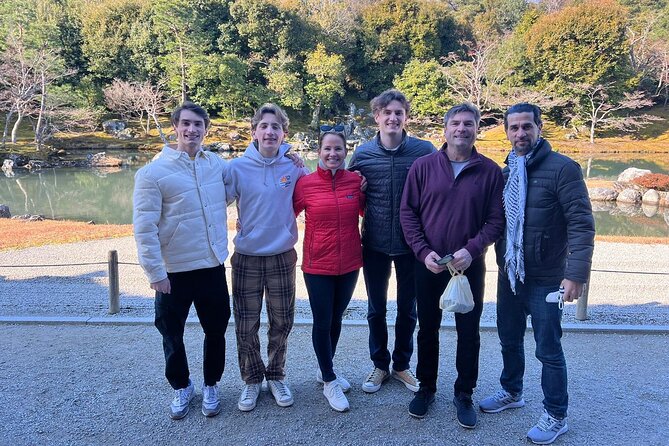
Guides like Yuji and Moto are highlighted for making the pace relaxed while still covering key sights, including Fushimi Inari and Arashiyama Bamboo Grove, without rushing everyone through. Noriko and Keiko get praise for being organized and knowledgeable about Japanese culture and the sites.
Then you see the flexibility theme again and again. Asano is noted for modifying the itinerary based on preferences. Marianna is praised for suggesting the best times and spots to avoid crowds. Takaichi is described as accommodating requests for changes, and even comes with practical advice like lunch recommendations and a sushi expert angle.
Here’s what I’d take from that if you book: email or message your guide before Day 1 with your top 3 priorities and your “must-avoid” list (crowds, lots of stairs, long walks, early mornings, whatever matters to you). A good guide can’t change Kyoto’s popularity, but they can change where and when you experience it.
Who this private tour fits best
This tour is a strong match if:
- You have only two days and want the highlights without spending your whole trip planning.
- Your group prefers private guidance over joining a larger bus crowd.
- You like a mix of big temples, market time, and scenic neighborhoods.
- You want a flexible guide who can adjust if weather or your interests shift.
It may not be the best fit if:
- You want to wander without a schedule at all.
- Your group is allergic to paid entry fees and transit costs.
- You’re traveling solo and don’t like paying for a full private-group structure.
Should you book this two-day Kyoto highlights tour?
Yes—if you want structure, you’re short on time, and you’d rather pay for a smooth plan than gamble on transportation, queues, and route choices. The big payoff is that Day 1 covers Kyoto’s classic temple core, and Day 2 handles Arashiyama scenery plus Kiyomizudera and Gion—so you’re not piecing together a patchwork itinerary.
But book with your eyes open on costs. The $980 group price is only part of the budget. Plan for ¥6,950 entrance fees per person and ¥2,300 public transport per person, plus food. If that extra spending won’t bother you, this tour can turn a tight Kyoto window into a rewarding, well-paced introduction.
FAQ
How many people are included in this private tour?
It’s a private tour/activity where only your group participates, and the price is per group for up to 8 people.
What is the duration of the tour?
The tour is listed at approximately 16 hours.
Is the $980 price per person?
No. The price is $980.00 per group (up to 8).
Are entry fees included in the price?
No. Entry fees are not included, and the listed entrance fees are ¥6,950.00 per person.
Are transportation and food included?
Transportation is not included, and food is also not included. Public transportation is listed as ¥2,300.00 per person.
Do you get a mobile ticket?
Yes. The tour includes mobile ticketing.
Where does the tour start and end?
It starts and ends in Kyoto, Japan. The meeting point is on the spot, and you meet at your hotel in Kyoto.
Which major sites are included?
The tour includes stops such as Nijo Castle, Kinkaku-ji, Ryoan-ji, Nishiki Market, Fushimi Inari Shrine, Arashiyama Bamboo Forest, Tenryu-ji temple garden, Hozu-gawa and Togetsu Bridge, Monkey’s Park, Kiyomizudera, and Gion.
Does the tour visit Fushimi Inari Shrine?
Yes, Fushimi Inari Shrine is included.
What if the weather is poor or I need to cancel?
The experience requires good weather. If it’s canceled due to poor weather, you’ll be offered a different date or a full refund. You can also cancel for a full refund if you cancel up to 24 hours in advance of the experience’s start time.