REVIEW · KYOTO
Kyoto Run & Walk Tour with Locals
Book on Viator →Operated by Soyo · Bookable on Viator
Kyoto wakes up early. This running-and-walking tour turns that calm into your sightseeing plan. You’ll follow English guidance from Soyo, a local with 30+ years in Kyoto, while you jog slowly through temple grounds, quiet neighborhoods, and riverside views—right when the city is still on its first cup of coffee.
I especially like the relaxed pace (around 7–9 min/km) that keeps things fun for beginners. I also like the fact that you’re not stuck sprinting between top sights; you get explanations along the way, plus bottled water included.
One consideration: you will be moving for about 2–2.5 hours, and while the pace is slow, it still helps to have a baseline of fitness and comfortable shoes.
In This Review
- Key things that make this Kyoto run different
- Early-morning Kyoto: why this run beats the daytime crush
- The pace is the secret: 7–9 min/km and walking when you need it
- Where it starts: Starbucks at Kyoto Tower Sando
- Stop 1: Higashi Hongan-ji Temple at morning pace
- Stop 2: Takasegawa and the calm stretch that resets your eyes
- Stop 3: Kamogawa River—where Kyoto feels like Kyoto
- Stop 4: Heian Shrine and the satisfaction of slowing down
- Stop 5: Yasaka Shrine and the start of the classic Kyoto streetscape
- Stop 6: Hanamikoji Street—seeing it before it’s everywhere
- Who this tour is best for
- Price and value: $19.51 for a local-led, small-group morning
- What to bring so you’re comfortable the whole time
- Should you book the Kyoto Run & Walk with Locals?
- FAQ
- How long is the Kyoto Run & Walk tour?
- What pace is the running portion?
- Who is the guide?
- Where do I meet the guide?
- What’s included in the price?
- What should I bring?
- What happens if it rains?
- How big is the group?
Key things that make this Kyoto run different
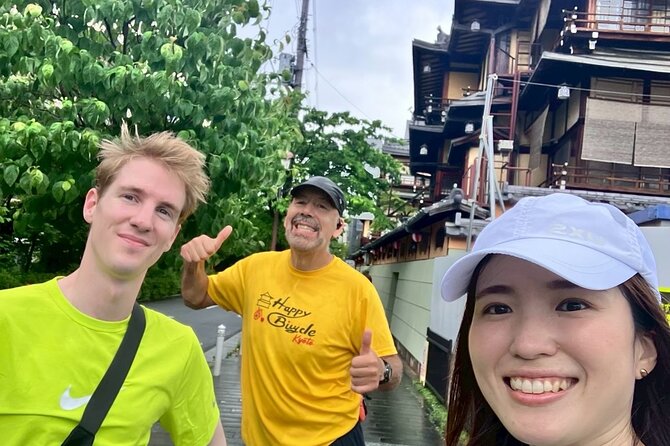
- Local guide (Soyo): English explanations from someone who has lived in Kyoto for 30+ years
- Early start, fewer crowds: better atmosphere and easier photo moments
- Beginner-friendly pace: jog is slow, and there are walking breaks
- Real Kyoto routes: temples and shrines plus rivers and neighborhood streets
- Small group: max 4 travelers, so the tour stays flexible
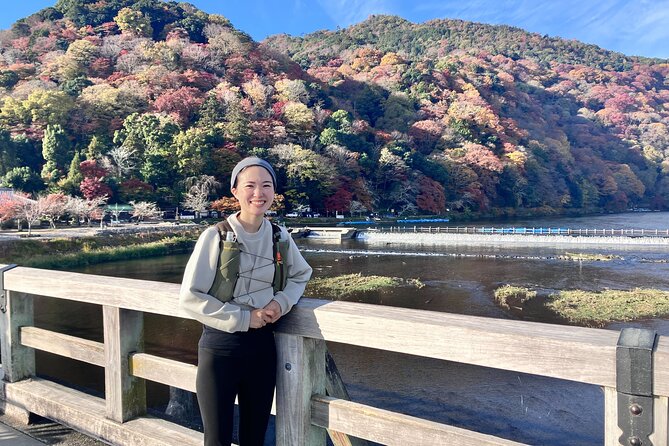
- Seasonal scenery: you might see cherry blossoms or autumn foliage depending on the month
Early-morning Kyoto: why this run beats the daytime crush
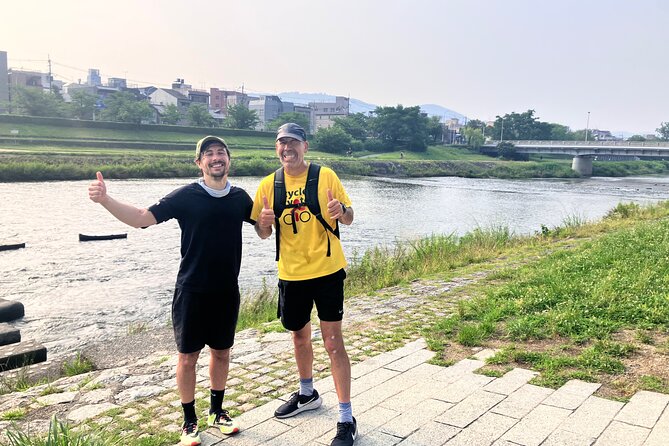
Kyoto is famous for its temples and traditions, but the trade-off is that daytime can get crowded fast. This tour is built around the smarter time of day: you get out early and use the quiet hours to enjoy the scenery without constantly dodging tour groups.
You’re also doing something more engaging than standing still. A slow jog changes how you experience a place—you feel the distance, you notice the streets you would normally walk past on autopilot, and you can keep your attention on the route instead of obsessing over where to stand for photos.
You can also read our reviews of more walking tours in Kyoto


The pace is the secret: 7–9 min/km and walking when you need it
The running portion is intentionally relaxed, listed around 7–8 min/km in one place and 8–9 min/km in another. Practically, that means you can keep your breath under control and still enjoy the stops.
There are pauses for explanations, so the tour isn’t a nonstop workout. This is a good match if you want exercise, but you don’t want your sightseeing ruined by a “try not to die” pace.
If you’re a first-time runner, this tour is designed for you. The emphasis is on moving steadily, not proving fitness. If you already run, you’ll still enjoy it because the group pace stays calm and social, not competitive.
Where it starts: Starbucks at Kyoto Tower Sando
Your meeting point is Starbucks Coffee – Kyoto Tower Sando (Kyoto Tower building area, Shimogyo Ward). The tour ends back at the same starting spot, so you don’t need a complicated end-of-day transit plan.
I like starting at a landmark like Kyoto Tower because it helps you orient quickly. You can also use the area as a buffer for getting there early, grabbing water, or doing a quick check on how you feel before you join the group.
The tour uses a mobile ticket, which is handy if you’re trying to keep your trip paperwork-light.
Stop 1: Higashi Hongan-ji Temple at morning pace
Your first stop is Higashi Hongan-ji Temple. Even if you’ve seen big temple architecture before, arriving early tends to make the space feel calmer and easier to absorb. You’ll be moving through the area rather than just staring at it from one spot, which helps you understand the layout and scale.
What makes this stop valuable on a run-and-walk route is the pacing itself. You’re not rushing from one highlight to the next—you’re meeting Kyoto’s spiritual landmarks with enough time to notice details and then keep going.
Possible drawback: because you’re starting early, the vibe can be very quiet. If you love energetic crowds (sounds weird, I know), you might find this opening moment slightly subdued.
Stop 2: Takasegawa and the calm stretch that resets your eyes
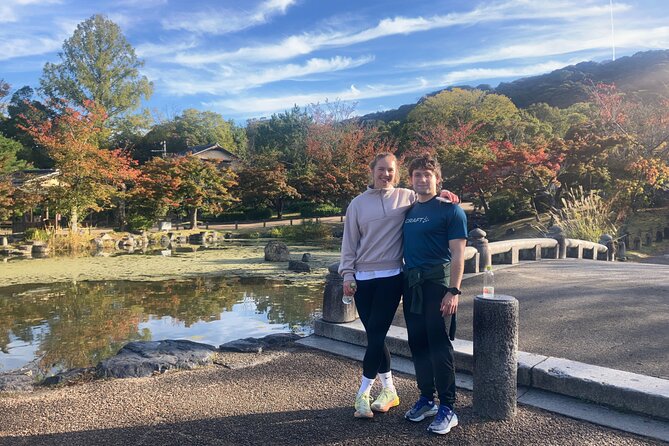
Next up is Takasegawa. This is the kind of stop that works well between major sights: it gives your mind a breather and gives your camera something more fluid than buildings—water, reflections, and a gentler pace to your route.
For a lot of people, river areas are where the city stops feeling like a “schedule” and starts feeling like a place. You’ll get that reset while still staying in motion, which is the whole point of choosing a running tour instead of a standard walking loop.
If you get tired easily, this kind of scenic pause helps. And if you feel great, you’ll appreciate how the scenery keeps you motivated without needing another big landmark.




Stop 3: Kamogawa River—where Kyoto feels like Kyoto
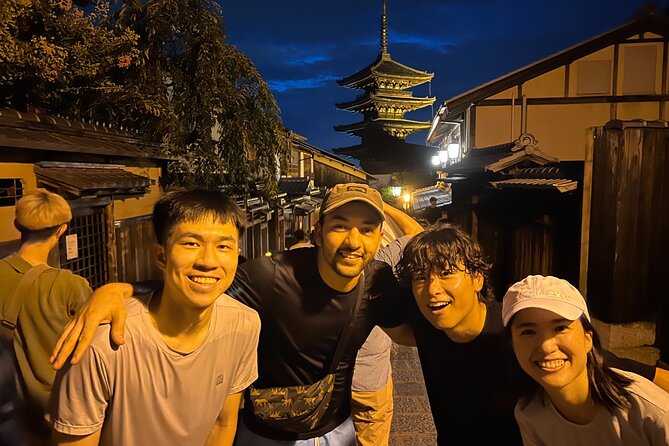
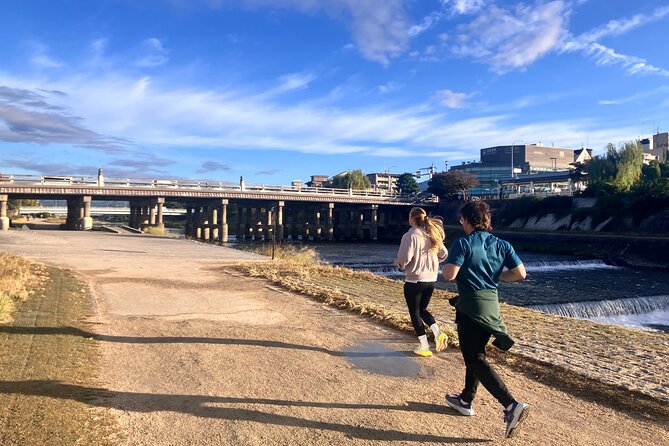
Your third stop is the Kamogawa River. This is one of those Kyoto scenes that’s recognizable even if you’ve never been here: the wide riverside feeling, the bridges and pathways, and the everyday rhythm of city life along the water.
On a tour like this, Kamogawa is especially useful because it shifts you from “temple sightseeing mode” into “street-and-life mode.” You’re still outdoors and still moving, so you start sensing the flow of neighborhoods rather than just ticking off monuments.
Practical note: riverside mornings can be cool, especially in shoulder seasons. Bring a layer you can adjust, and you’ll be happier for the whole route.
Stop 4: Heian Shrine and the satisfaction of slowing down
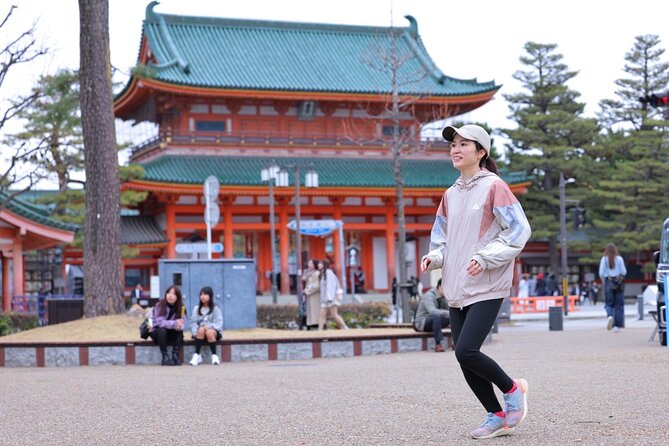
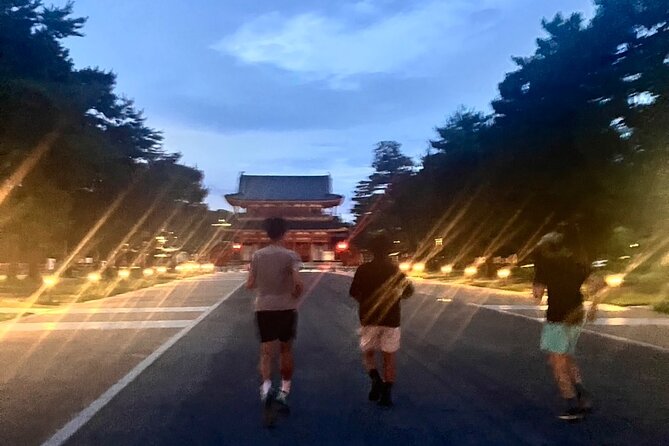
After the rivers, you’ll head to Heian Shrine. Shrines and temple spaces can feel different depending on how you arrive. Here, you’re approaching as part of a continuous walk/run, not as a separate destination from a list.
That matters because it changes what you remember. Instead of only remembering the entrance gate or the main buildings, you tend to remember the approach—the transition from lively streets to a more formal, reflective space.
Possible drawback: if you’re expecting a very “hands-on” experience, this isn’t described that way. It’s about moving through and learning what you see, with stops for explanation rather than a long sit-down.
Stop 5: Yasaka Shrine and the start of the classic Kyoto streetscape
Your next shrine stop is Yasaka Shrine. This is where the scenery starts to feel more characteristically Kyoto in the way people often picture it: traditional shrine energy, nearby lanes, and an atmosphere that hints at the day’s future crowds.
In a run-and-walk format, you’ll also appreciate the transitions. You’re not simply leaving one location; you’re changing your pace, your street context, and your visual focus as you move toward the more well-known walking areas later on.
Stop 6: Hanamikoji Street—seeing it before it’s everywhere
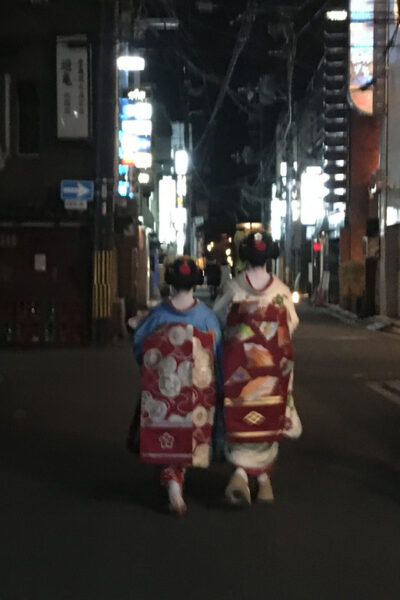
The final listed stop is Hanamikoji Street. Even if you know this street name from photos, seeing it early is a different experience. You’ll get more breathing room, and you can actually look at shopfronts and street textures without fighting the slow-motion crowd wave.
This is a smart ending. By the time you reach Hanamikoji, you’ve already covered temples and rivers, so you understand the contrast. It’s not just a pretty street; it feels like the cultural corridor you’re moving through.
If you’re planning to keep exploring after the tour, this ending point is convenient because it puts you close to the classic Kyoto-area vibe where you’ll likely want to walk around more.
Who this tour is best for
This route is designed for all running levels, including first-time runners, because the jog stays slow. The only real fitness requirement mentioned is a “moderate physical fitness level,” which basically means you should be comfortable walking continuously and handling a gentle jog.
You’ll also like this if you value:
- early starts that help you avoid crowd pressure
- explanations that make landmarks feel more grounded
- a guide who’s easy to talk to and helps the experience feel human, not robotic
The small group size (max 4 travelers) also matters. You’re less likely to feel lost in a big herd, and the pace can feel more personal.
Price and value: $19.51 for a local-led, small-group morning
At $19.51 per person, this is a low-cost way to add structure to your Kyoto morning. You’re paying for three things that are hard to reproduce solo: an English-speaking local guide (Soyo), a route that strings together multiple types of Kyoto scenery, and a small group format that keeps things flexible.
Bottled water is included, which sounds simple, but it’s one less thing to think about when you’re heading out early. The main cost beyond the tour price is what you bring with you—running wear and shoes are not included, and there’s no locker included either.
If you’re looking for a “wow, I learned a lot and still got fresh air” activity at a budget-friendly price, this one fits well.
What to bring so you’re comfortable the whole time
You’ll want to bring your own:
- running wear and shoes
- rain gear if there’s light rain
The tour will run in light rain as a walking tour. If the weather turns bad enough for cancellation, the decision is made by 12:00 p.m. the day before and you’ll be notified. The good news is that the tour won’t charge cancellation fees in cases of prior cancellation, and poor weather should lead to a different date or a full refund.
Even if the day looks clear, Kyoto mornings can surprise you with temperature swings. I’d rather show up slightly layered and remove stuff than sweat through a calm morning walk.
Should you book the Kyoto Run & Walk with Locals?
I’d book it if you want Kyoto in a way that feels lived-in: temples, rivers, and classic streets, all tied together by a local guide and paced so you can enjoy rather than survive.
It’s not the best fit if you want a purely leisurely stroll with no jogging at all, or if you’re unable to handle about 2–2.5 hours of moving. But if you can do a moderate amount of walking and a relaxed jog, this is a strong value morning plan.
FAQ
How long is the Kyoto Run & Walk tour?
It’s listed as about 2 hours, and the course is described as a 2.5-hour experience with stops for explanations.
What pace is the running portion?
The pace is described as relaxed, around 7–8 min/km or 8–9 min/km. It’s slow enough for beginners.
Who is the guide?
The tour is guided in English by Soyo, a local who has lived in Kyoto for over 30 years.
Where do I meet the guide?
You meet at Starbucks Coffee – Kyoto Tower Sando, Kyoto Tower building area (Kyoto, Shimogyo Ward). The tour ends back at the meeting point.
What’s included in the price?
Bottled water is included.
What should I bring?
Bring your own running wear and shoes. If there’s light rain, you should also bring your own rain gear.
What happens if it rains?
The tour runs in the event of light rain as a walking tour. If there is heavy rain, wind, snow, heat wave, typhoon, or similar issues, the provider decides by 12:00 p.m. the day before whether to cancel, and you’ll be notified.
How big is the group?
The group size is limited to a maximum of 4 travelers.