REVIEW · KYOTO
Sekka Cotton Furoshiki Class
Book on Viator →Operated by Kyoto Shibori Museum · Bookable on Viator
Folding fabric, then dyeing it in Kyoto. This private Sekka shibori lesson at the Kyoto Shibori Museum is a hands-on way to make a real souvenir, not just buy one. You’ll learn how to fold your cloth for the sekka shibori pattern and then dye a furoshiki you’ll take home.
Two things I really liked: the personal pace of an exclusive lesson for your party, and the way the waiting time turns into extra culture. The dyeing takes about 30 minutes to dry, and during that pause you can wander the museum displays upstairs. One possible drawback: the dyeing steps can feel a bit standardized and easy, so if you’re expecting an elaborate, unpredictable art project, set your expectations accordingly.
In This Review
- Key things to know before you go
- Kyoto Shibori Museum: a craft workshop with a real museum built in
- Your lesson: how Sekka shibori works (folding, boards, dye)
- The dyeing time becomes part of the experience
- Browsing upstairs: what you’ll see in the museum
- Your take-home souvenir: a furoshiki you actually made
- Price and value: why $43.35 can make sense in Kyoto
- Logistics that matter: timing, meeting point, and how to plan your day
- Who this class is best for
- Small realities to consider (so you’re not surprised)
- Should you book the Sekka Cotton Furoshiki Class?
- FAQ
- How long does the Sekka furoshiki class take?
- What exactly will I make in the class?
- Is this class private?
- Where do I meet for the activity?
- What happens while the fabric is drying?
- Is it easy to get to by public transportation?
- What’s the cancellation policy?
Key things to know before you go
- Private, just your party: You get a focused lesson instead of a crowded group setup.
- You choose the color: Pick what you want before you fold and dye.
- Fold + boards + dye: The sekka shibori method uses folding and compression between boards before dyeing.
- Drying time includes museum exploring: You don’t just sit and wait; you learn and browse.
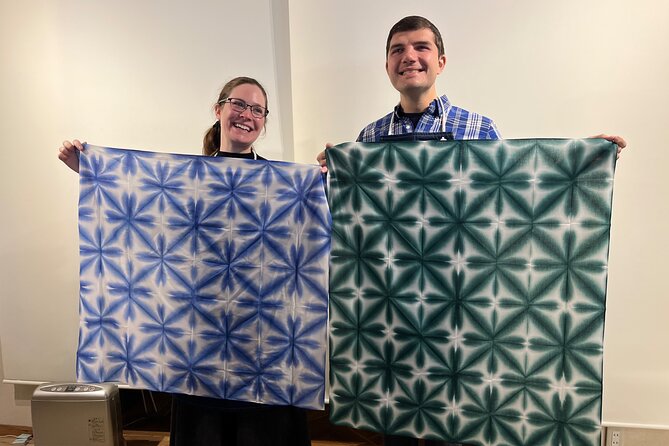
- You take home a full-size wrapping cloth: Your furoshiki is about 86cm x 89cm.
- Plan for extra shopping: The museum shop has plenty of shibori goods if you want to add to your souvenir.
Kyoto Shibori Museum: a craft workshop with a real museum built in
This experience is built around the Kyoto Shibori Museum, which matters more than you might think. A furoshiki class can be just a quick activity. Here, the dyeing part is paired with a museum visit, so you get both the making and the context.
The location is at 135-5 Shikiamichō, Nakagyo Ward, and it’s near public transportation. That makes it easier to slot into a day that already includes Kyoto’s big sights. You’re also not forced into a rushed timeline just to get in and out.
The session runs about 1 hour total. That includes a hands-on portion and time for the cloth to dry. Most classes run 30 to 60 minutes, so your schedule will usually feel manageable even if you’re traveling with kids or teens.
You can also read our reviews of more tours and experiences in Kyoto
Your lesson: how Sekka shibori works (folding, boards, dye)
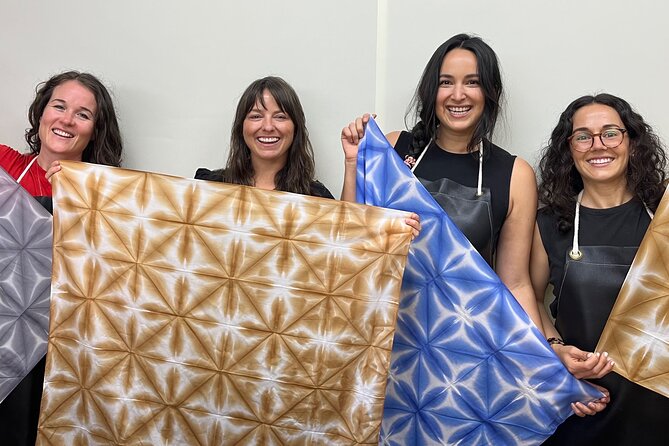
You’ll make a cotton furoshiki using the sekka shibori method. The process is straightforward enough to follow, but it’s still hands-on in a meaningful way.
Here’s the flow of what you do:
- Choose your color first. Your final look starts with this choice.
- Fold the fabric in a specific way for the sekka shibori pattern.
- Place the folded cloth between two boards to hold the shape.
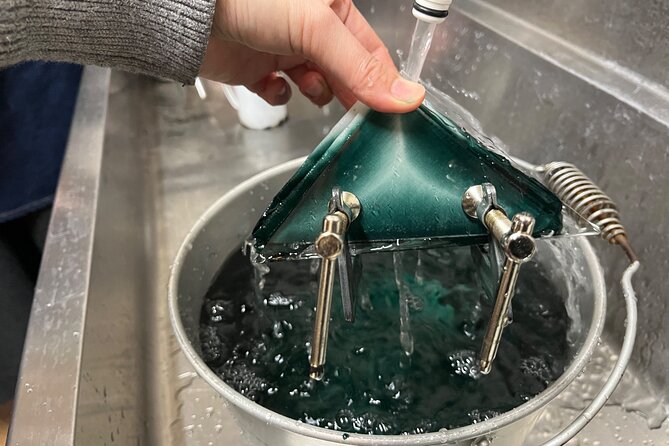
- Apply the dye, then let the piece dry.
The boards step is key. It’s not just folding for effect; the cloth is compressed so the dye breaks in controlled ways. That’s why shibori looks different from one maker to another even when the steps are guided.
You should also expect that you’ll receive clear, practical instruction during the folding and dyeing. In plain terms, this is not a learn-on-your-own situation. It’s structured so you can finish with something you feel proud to wrap with.
The dyeing time becomes part of the experience
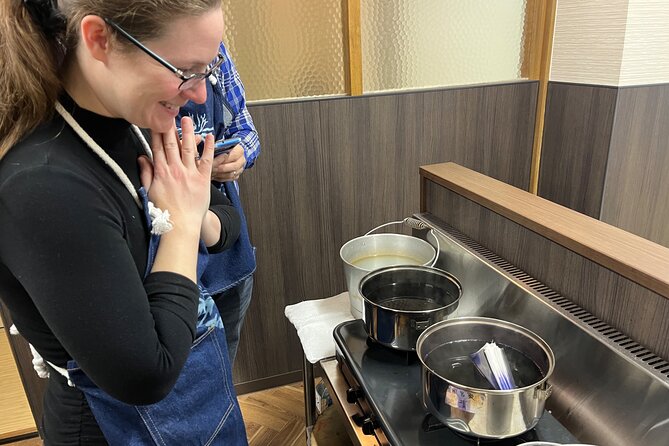
One of the smartest design choices here is what happens while your fabric is drying. Dye needs time, so you don’t want a class that just leaves you waiting in silence.
Instead, you’ll spend about 30 minutes exploring the museum. You can browse art pieces, tools, and samples, and you’ll also learn more about shibori as a technique. Some of the museum experience includes an educational video, which helps put the folding and dyeing steps into a bigger picture.
This is also when I think the value shows up. You’re not paying only for the craft act. You’re paying for the chance to see textiles up close, understand the process behind them, and then return to your own piece with a better sense of what’s happening.
It’s also a good mental reset. You’ll get your hands messy, then your eyes can enjoy the museum displays while everything sets.
Browsing upstairs: what you’ll see in the museum
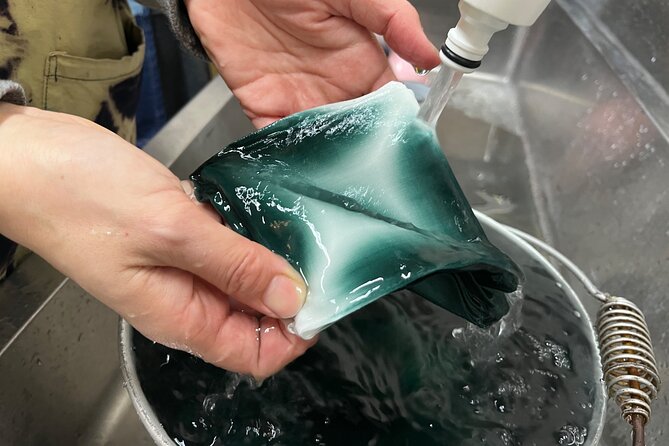
The Kyoto Shibori Museum experience is built around textile art and the tools behind it. You’ll typically see:
- Finished shibori works and displays that show different outcomes of folding and dye
- Tools used for shibori processes
- Samples that help you connect the steps you just did to the visual results
Even if you’re not a textile nerd, it’s fun to compare the look of museum pieces to your own color choice and folding style. You start noticing how small choices change the pattern.
And yes, you can also browse the museum shop while you’re there. Expect to find shibori items, fabric, and other souvenirs. If you like the look of the art, it’s a very natural place to spend a little more.
Your take-home souvenir: a furoshiki you actually made
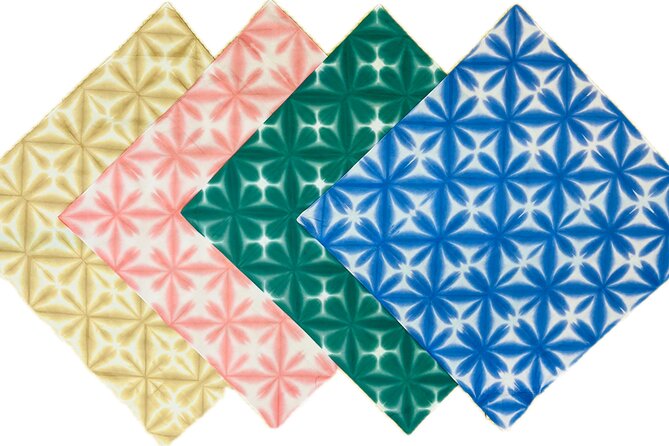
This is one of those rare classes where the souvenir is the actual output of the lesson. You’ll leave with your own cotton furoshiki, sized around 86cm x 89cm, made through the sekka shibori method.
A furoshiki is not just decorative. It’s useful. In Kyoto, where you might bring home snacks, small gifts, or extra souvenirs from other shops, a wrapping cloth is practical. Even if you don’t use it for travel, you can hang it, fold it, or frame it in a way that still feels like craft art.
The best part is the story. You can tell people exactly what you did: choose a color, fold the cloth, compress it between boards, dye it, and watch the pattern develop. That turns it from a store-bought item into something personal.




Price and value: why $43.35 can make sense in Kyoto
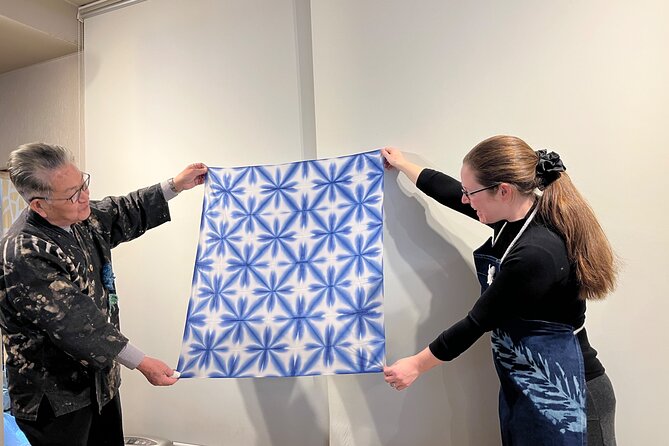
The class costs $43.35 per person, and it’s a private lesson for your party. On paper, that might not look like a “deal” compared with a big-group activity. But the private format changes the math.
You’re paying for:
- Instruction tailored to your group
- A full-sized, take-home craft item
- A museum visit built into the session time
- The structure to finish a dye project without needing specialized materials at home
Also, the class duration is tight—about 1 hour—so it’s not eating your whole day. In Kyoto, where logistics and time can get tricky, that matters.
One note: bring extra money if you want to shop. The museum store has items people tend to want after seeing the museum displays. Even if you skip buying, your cloth is included, and that’s the main value.
Logistics that matter: timing, meeting point, and how to plan your day
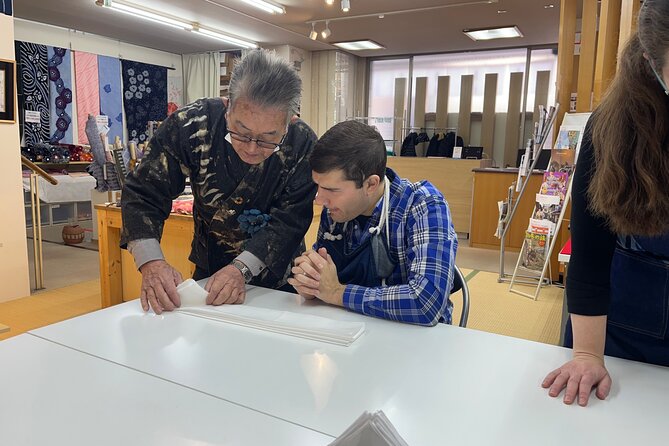
Meeting point is at the Kyoto Shibori Museum (135-5 Shikiamichō, Nakagyo Ward, Kyoto 604-8261). The session ends back at the meeting point, so it’s easy to plan around. It’s also near public transportation, so you can get there without turning it into a taxi mission.
Because the dyeing part takes time, you’ll want to be on schedule. If you arrive late, you can throw off the dye-to-dry rhythm, which is where the museum exploration fits in.
If you’re planning a day of Kyoto sights, I’d treat this as a “craft stop” after you’ve seen a couple neighborhoods already. You’ll be glad you did something hands-on before you move on to shopping and dinner.
Who this class is best for
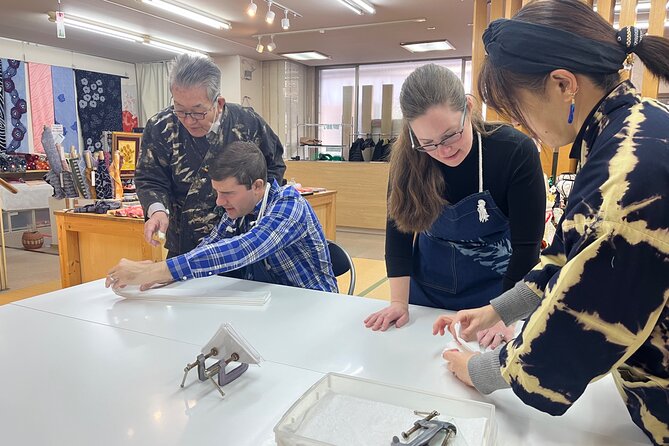
This works especially well if you want a balanced Kyoto day: hands-on making plus cultural context.
It’s a strong fit for:
- Families who want one activity that kids and adults can do together
- Teens who like doing something tangible rather than sitting through tours
- Couples looking for a shared craft with an easy takeaway souvenir
- Solo travelers who still want a guided experience, not a DIY workshop where you guess the steps
One thing to keep in mind: some people find the dyeing portion a little too guided, meaning it can feel quick and predictable. If you’re an experienced maker hoping for lots of experimentation, this may feel more like an introduction than a deep technical workshop.
But if you want a successful outcome you can understand and carry home, that guidance is a plus.
Small realities to consider (so you’re not surprised)
Here are the realistic parts of the experience you should expect:
- The process is hands-on, and you’ll be working with folded fabric and dye, so wear clothes you don’t mind getting slightly stained-risk-wise.
- Your piece needs drying time, which is why the museum exploration is built in. That waiting is part of the schedule.
- The museum shop may tempt you. If you care about shibori items beyond your furoshiki, set aside some extra money.
The upside is that the class is structured for most people to participate, and it’s set up so you finish with something beautiful rather than incomplete materials.
Should you book the Sekka Cotton Furoshiki Class?
Book it if you want a private, hands-on craft experience in Kyoto with a take-home item and a museum visit that adds real context. The combination of making your 86cm x 89cm furoshiki and then browsing tools and textile art while your cloth dries is smart use of time.
Skip it (or reconsider) if you’re hunting for a very complicated, experimental dye process where you control everything and don’t want step-by-step guidance. This class is more guided and outcome-focused than wild and unpredictable.
If you like learning through your hands—and you want a Kyoto souvenir that you can use—this is an easy yes.
FAQ
How long does the Sekka furoshiki class take?
The class is about 1 hour total. The hands-on portion typically runs 30 to 60 minutes, with time built in for the cloth to dry.
What exactly will I make in the class?
You’ll dye a cotton furoshiki (wrapping cloth) using the sekka shibori method. The size is about 86cm x 89cm.
Is this class private?
Yes. It’s a private tour/activity, meaning only your group participates.
Where do I meet for the activity?
You meet at the Kyoto Shibori Museum, 135-5 Shikiamichō, Nakagyo Ward, Kyoto 604-8261, Japan.
What happens while the fabric is drying?
While your fabric dries (about 30 minutes), you’ll learn more about shibori and browse the museum exhibits, including art pieces, tools, and samples.
Is it easy to get to by public transportation?
Yes. The meeting location is listed as near public transportation.
What’s the cancellation policy?
You can cancel for free up to 24 hours in advance for a full refund. Changes within 24 hours of the start time aren’t accepted, and cancellations inside that window aren’t refunded.